Uploaded Tactic
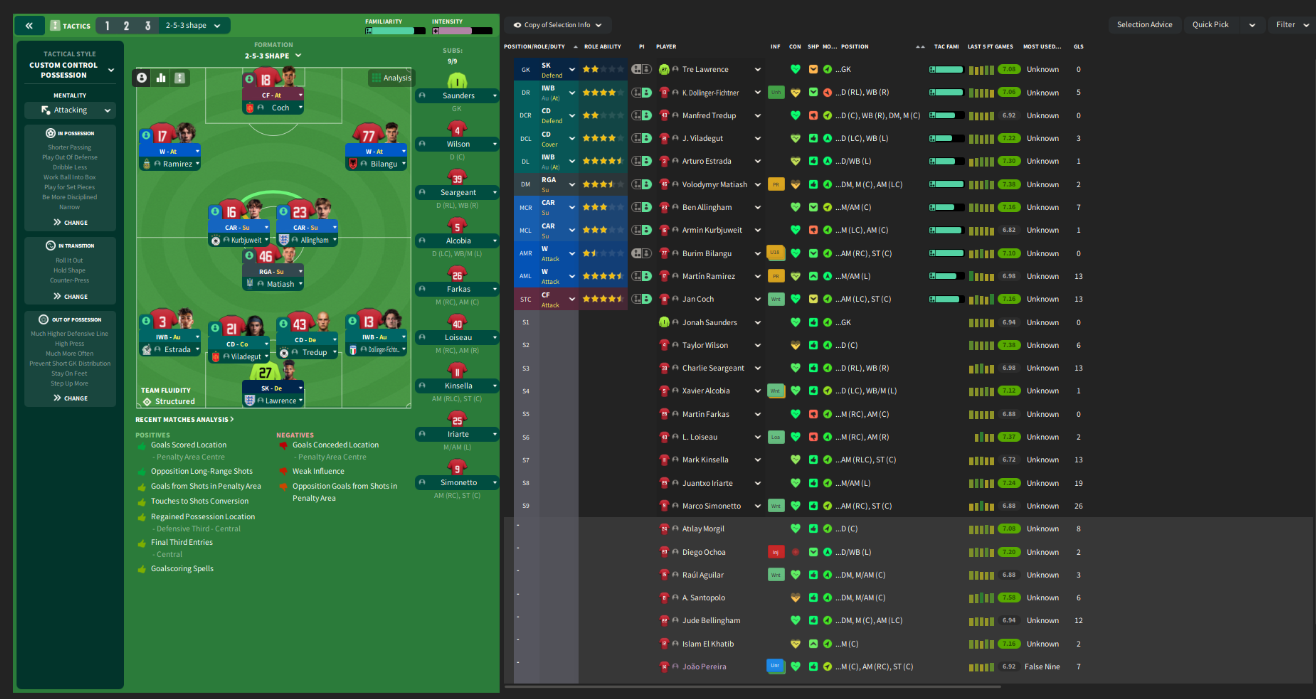
Formation & Style
Tactical Style:Possession
Mentality:Attacking
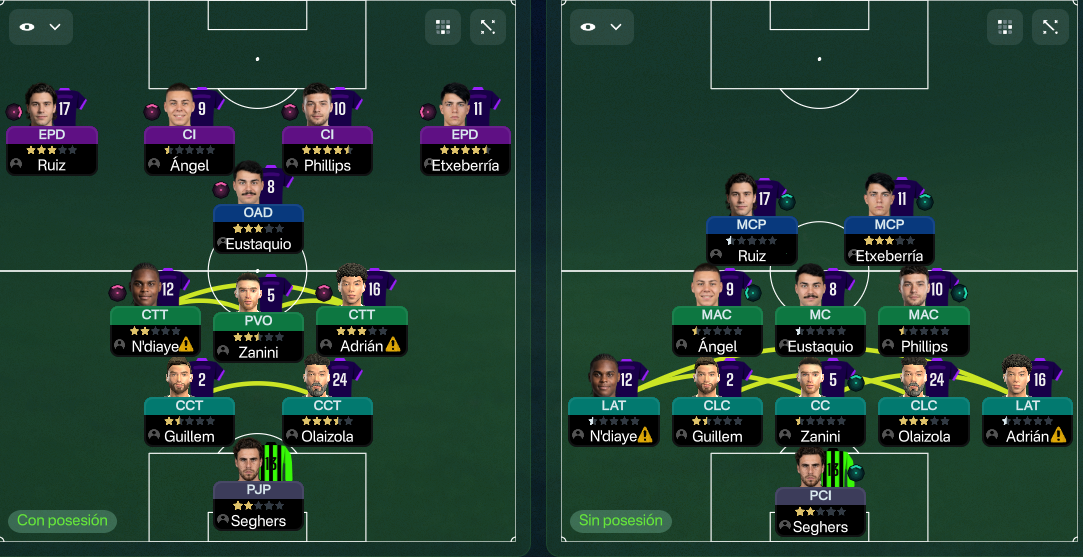
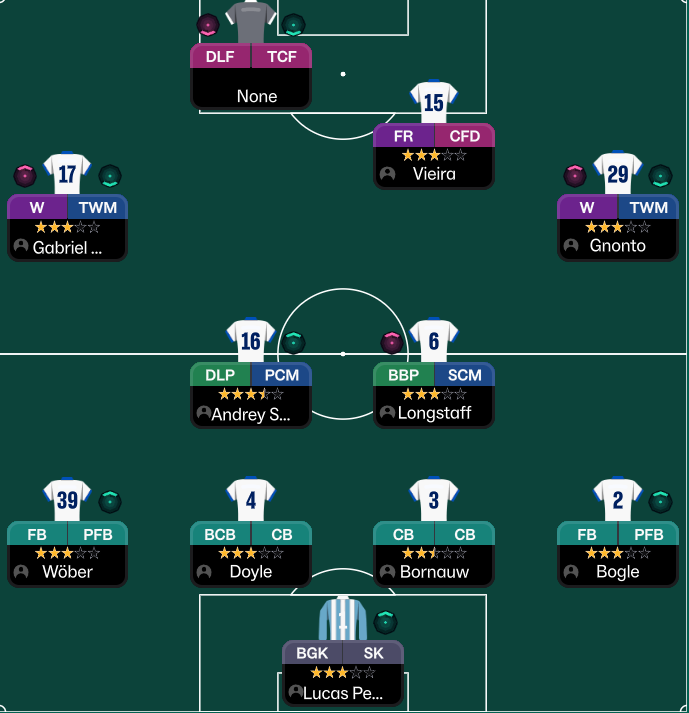
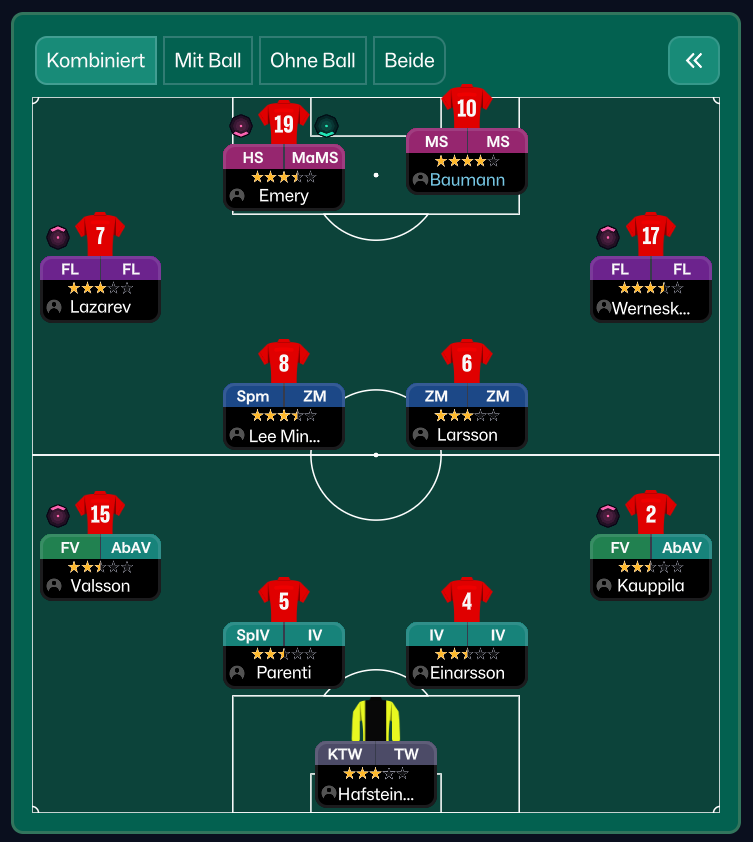
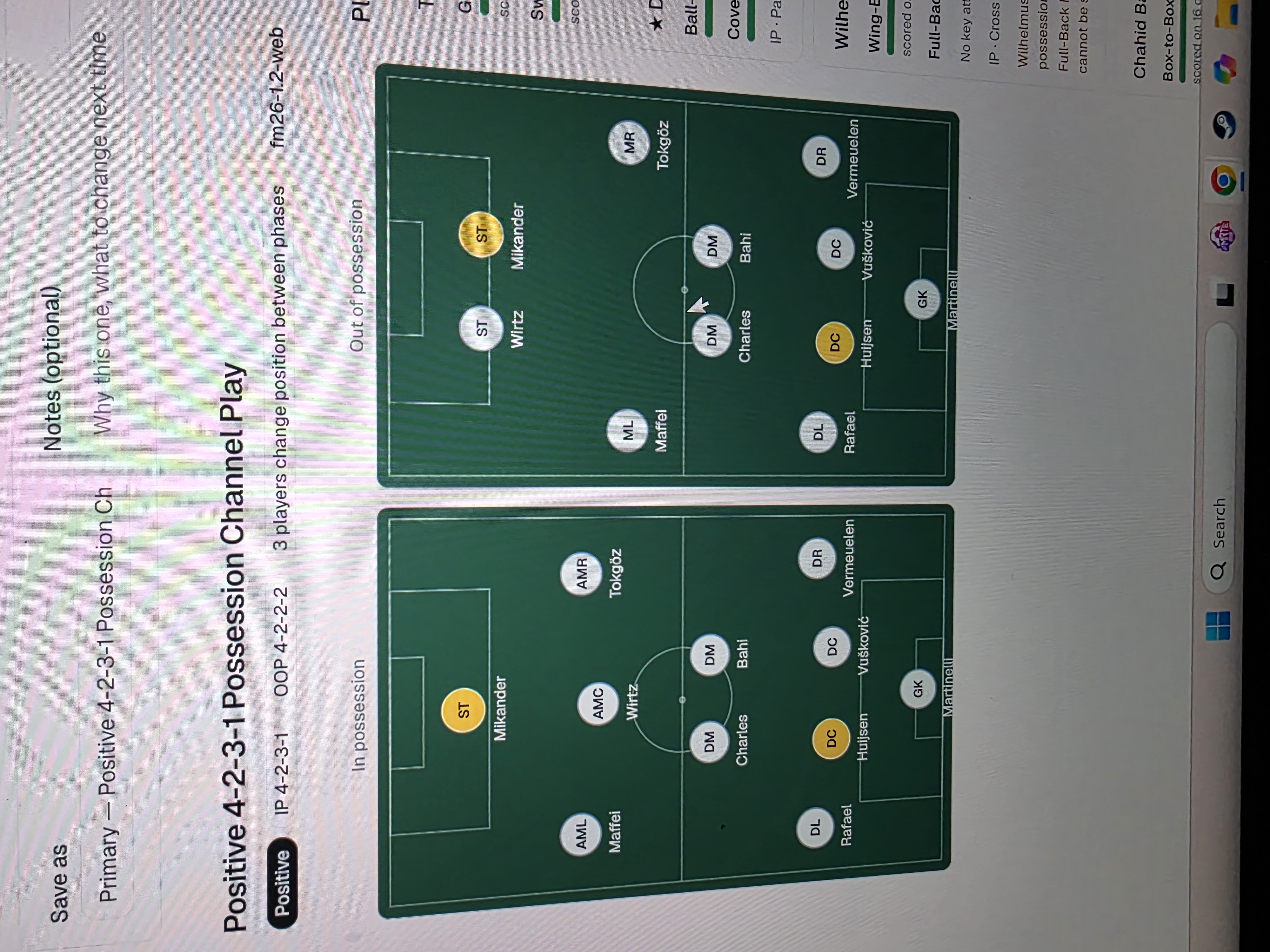
Formation:2-5-3 Shape
Team Fluidity:Structured
In Possession
Short Passing
Work Ball Into Box
Focus Play Down the Wings
Play Out of Defence
In Transition
Counter-Press
Hold Shape
Out of Possession
Higher Defensive Line
Prevent Short Goalkeeper Distribution
Urgent Pressing
Team Shape Without Ball
No team shape without ball data available
Team Shape With Ball
No team shape with ball data available
Key Strengths
Attacking Width
Utilizing wing-backs and inside forwards creates space in the opposition half, allowing for effective attacks and overlaps.
Ball Control
Short passing and emphasis on working the ball into the box enhance possession retention and create higher quality chances.
Defensive Solidity
The double pivot in midfield provides cover for the defense and aids in quick transitions from defense to attack.
Dynamic Attack
Using inside forwards and a complete forward allows flexibility in attacking movements and creates unpredictable offensive patterns.
Conflicting Directions
Midfield Roles Conflict
The attack-dutied central midfielders may leave the defense exposed if the wing-backs are too far up the pitch.
Pressing vs. Hold Shape
Urgent pressing can conflict with the 'Hold Shape' instruction, leading to disorganization in defensive setups.
Higher Defensive Line and Counter-Press
With a high defensive line, pressing may be risky as it can lead to gaps being exploited, particularly against quick counter-attacks.
Wide Play Limitations
Focus play down the wings could be hindered if the opposition effectively congests those areas or if wing-backs are caught out of position.
Tactical Suggestions
Adjust Central Midfield Roles
Consider adopting one more defensive-minded midfielder to balance the attacking responsibilities and provide more stability.
Refine Pressing Strategy
Implement a more selective pressing approach to mitigate the risks of being countered by faster opposing attackers.
Consider Player Swap for Wing-Backs
Evaluate if a more defensive player could replace one of the wing-backs to ensure defensive cover, especially in tougher matches.
Explore Counter-Attack Options
Introduce quick transitions using skilled players in attack to exploit spaces when the opposition overcommits.