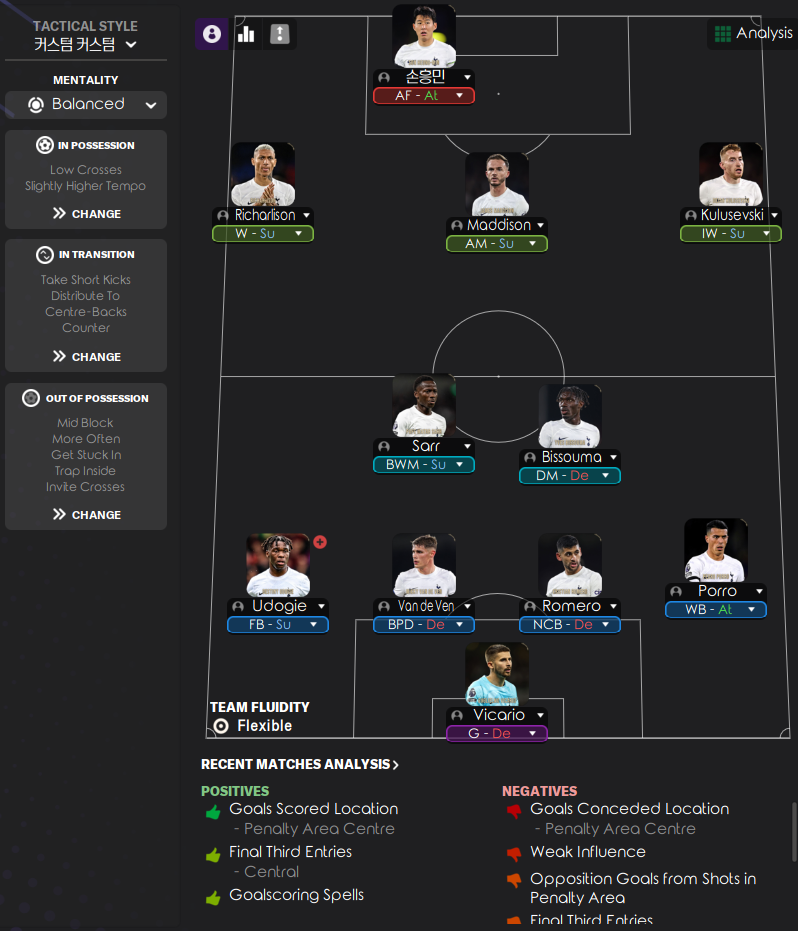
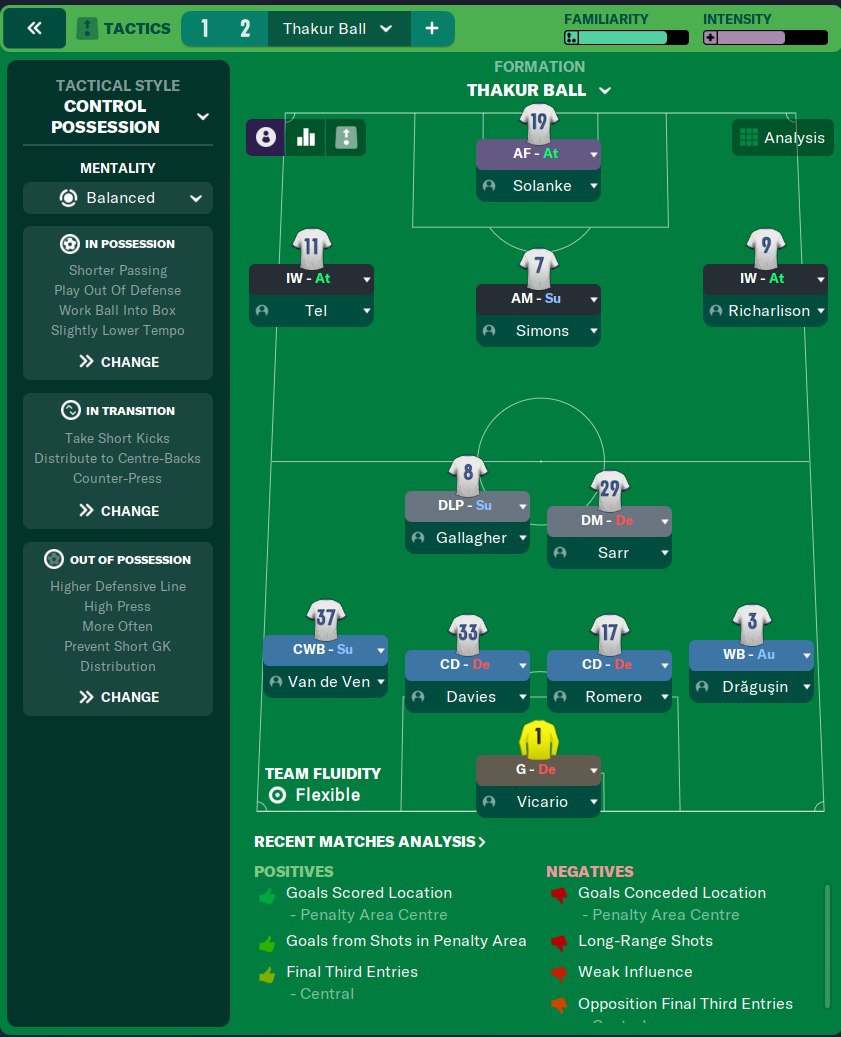
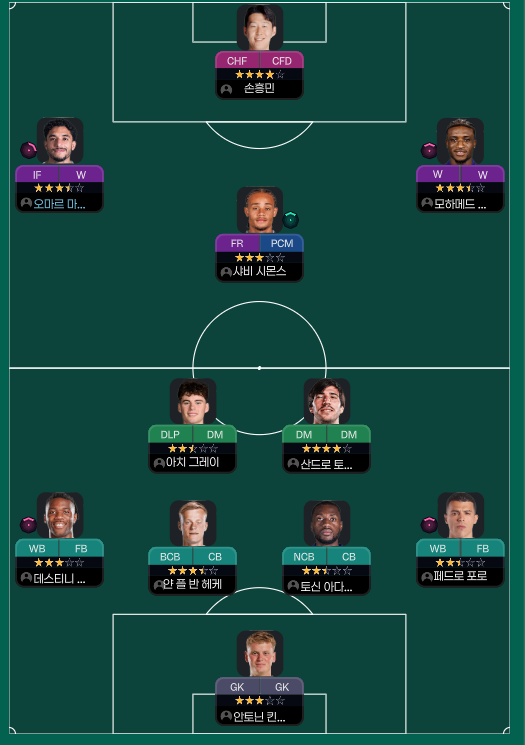
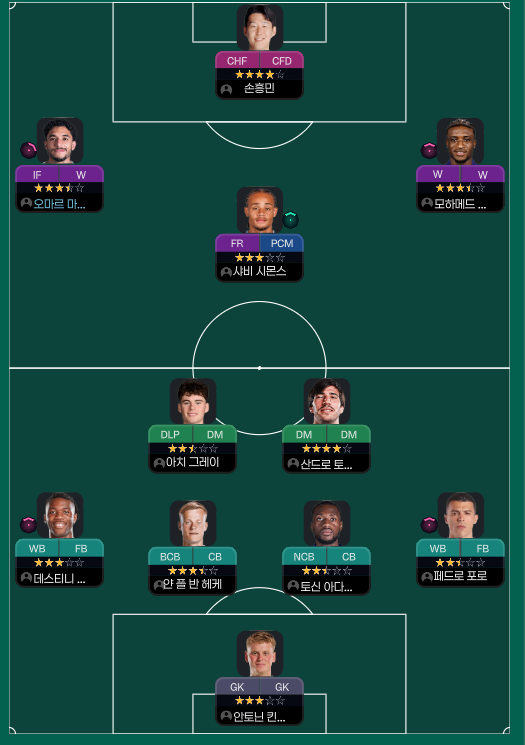
3-2-3-2
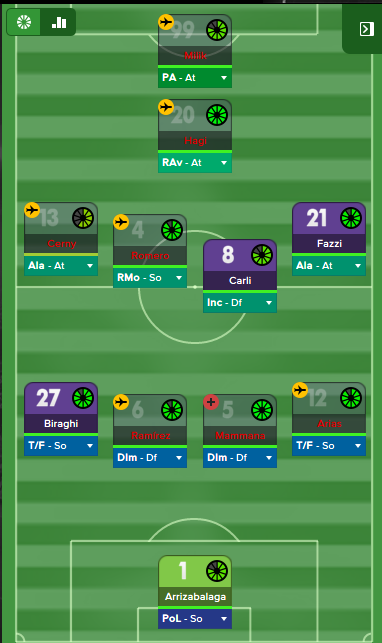
Utilizing the flanks while maintaining a solid defensive structure to absorb pressure. Three defenders ensure stability at the back, making it difficult…
Loading tactical analysis...
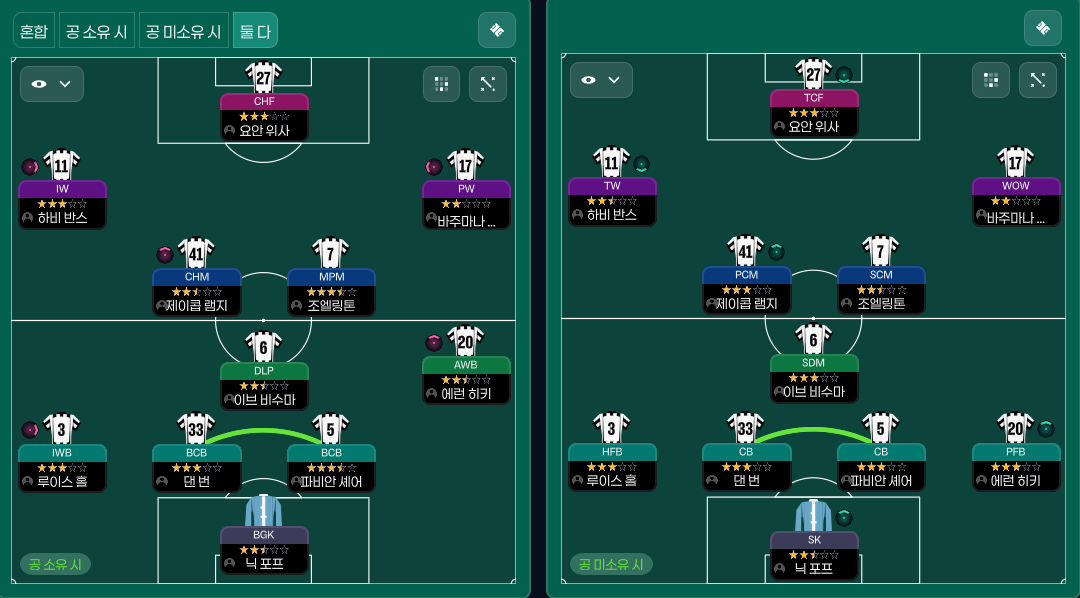
3-2-3-2
Play Out Of Defence
Focus Play Down Both Flanks
Work Ball Into Box
Counter
Counter-Press
Higher Defensive Line
Much More Often Prevent Short GK Distribution
GK
Goalkeeper
Support
DL
Wing-Back
Support
DC
Central Defender
Defend
DC
Central Defender
Defend
DC
Central Defender
Defend
DMC
Deep-Lying Playmaker
Defend
MR
Winger
Attack
MC
Roaming Playmaker
Support
ML
Winger
Attack
ST
Advanced Forward
Attack
ST
Pressing Forward
Attack
Focuses on utilizing wing play through the wingers while allowing the roaming playmaker to create opportunities in central areas.
Quickly transitions to a high block after losing possession, applying pressure to regain the ball.
Utilizing the flanks while maintaining a solid defensive structure to absorb pressure.
Compact 3-2 Shape
The defense holds a compact formation with three central defenders and a deep-lying playmaker providing cover.
3 Central Defenders at [2,2], [2,3], [2,4] with a DLP at [3,3].
Flexible Width
The width of the formation comes from the wingers who stretch the opposing defense, complemented by supporting midfielders.
Wingers at [5,1] and [5,5] with a roaming playmaker at [4,3].
Three defenders ensure stability at the back, making it difficult for opponents to break through.
3 Central Defenders at [2,2], [2,3], [2,4].
The combination of a roaming playmaker and two wingers allows for versatile attacking patterns.
Roaming Playmaker at [4,3], Wingers at [5,1] and [5,5].
A high defensive line may expose the defense if not supported properly, especially with deep-lying roles.
Higher Defensive Line with a DMC at [3,3].
Relying too heavily on wingers risks isolating the strikers if central support is insufficient.
Wingers at [5,1] and [5,5] with only one central midfield option.
Defensive Vulnerability
A high line without adequate pace in defense could be exploited by speedy attackers.
Condition of a high defensive line with no pace-focused defenders.
Winger Isolation
Over-reliance on wingers can lead to them being marked out of the game.
Wingers at [5,1] and [5,5] without adequate support from central areas.
Roaming Playmaker and Wingers
Roaming playmaker draws defenders while wingers exploit space, creating more chances.
Roaming Playmaker at [4,3] working with Wingers at [5,1] and [5,5].
Advanced Forward and Pressing Forward
They work well together to create pressure on the defense, forcing mistakes.
Strikers at [6,3] (AF) and [6,2] (PF) applying pressure on opposing defenders.
How can I enhance creativity in the central midfield?
Should I consider adjusting my high defensive line strategy?
Are my wingers receiving enough support from midfield?
The tactical theory behind the 3-2-3-2: roles, instructions, and the trade-offs that decide whether the system holds up.
Why circulation density and zonal occupation aren't the same thing in FM, and the half-space occupation rule that decides build-up.
How Mentality, Duty, and Role interact in FM, why duty trumps mentality every time, and the role-on-top-of-duty composition rules.
Counter-Press, Regroup, Stand Off, Trigger Press: what each pressing instruction does in FM and how to pair them without contradicting.