Uploaded Tactic
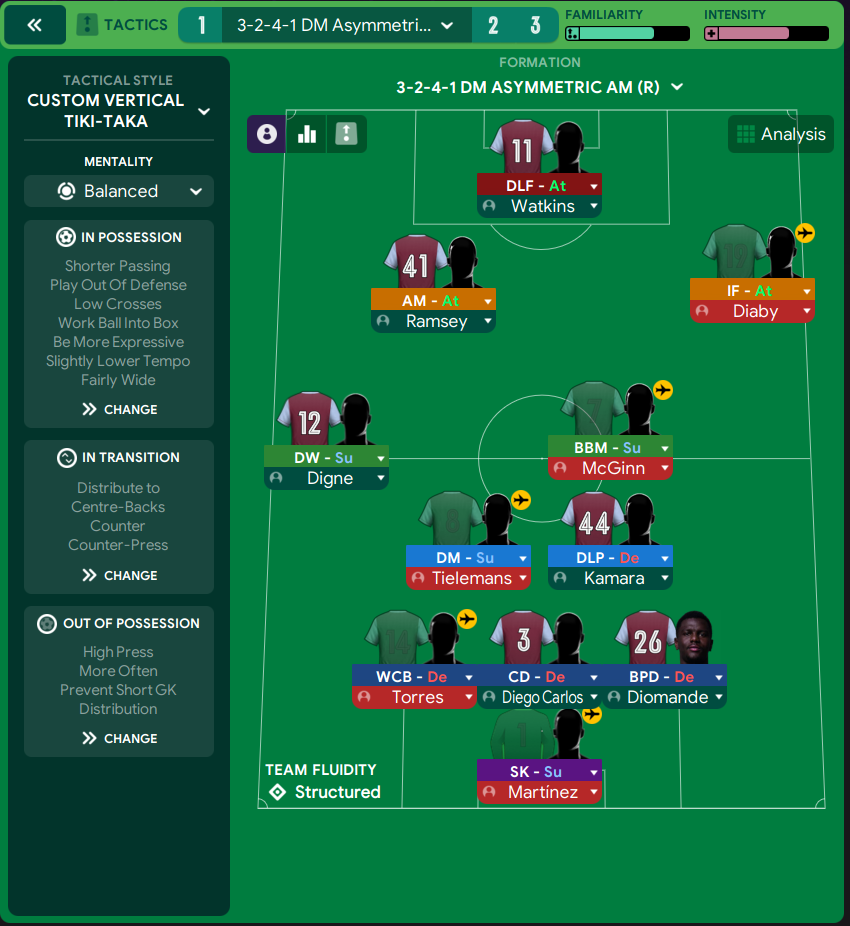
Formation & Style
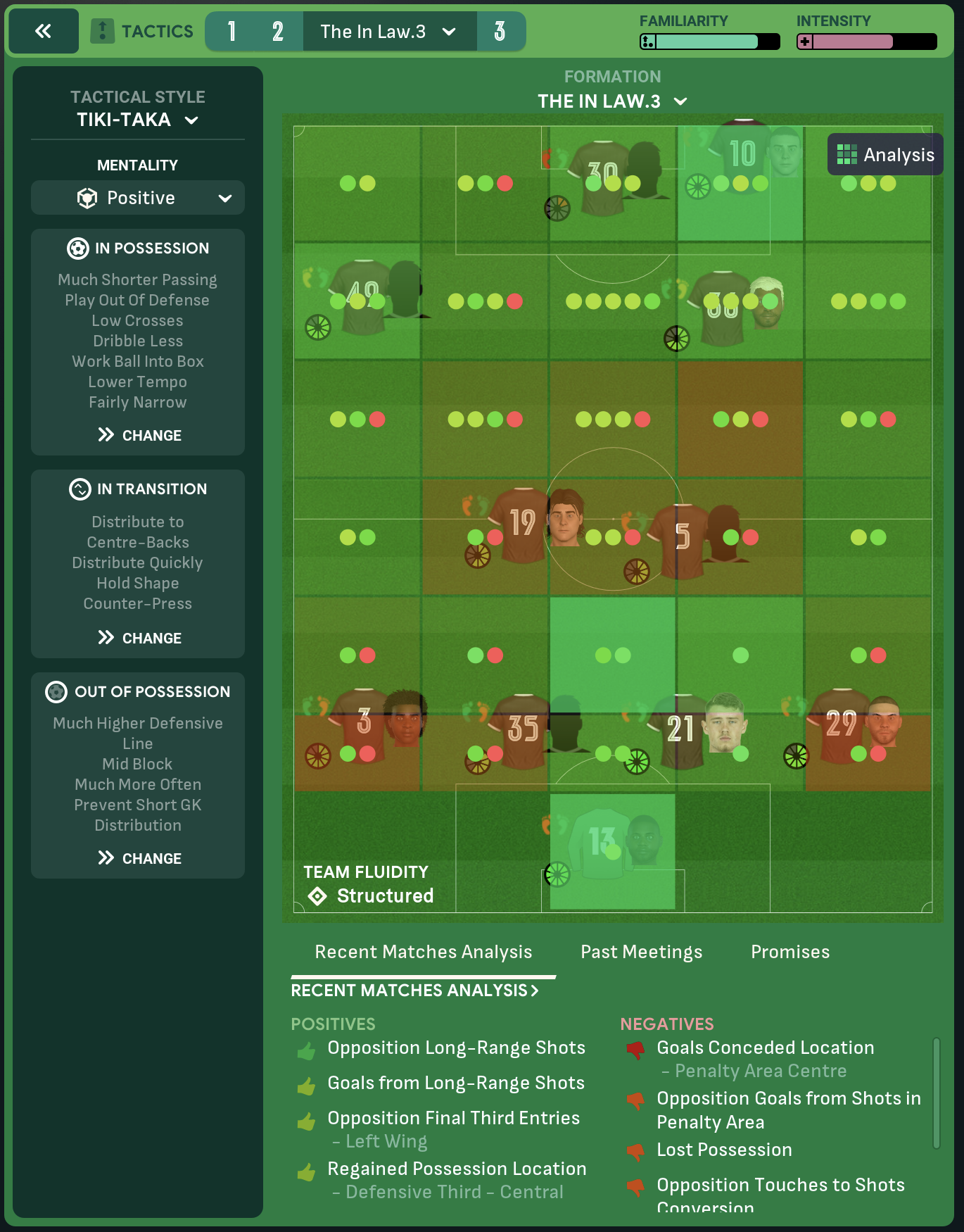
Tactical Style:Tiki-Taka
Mentality:Balanced
Formation:3-2-4-1 Asymmetric
Team Fluidity:Structured
In Possession
Shorter Passing
Play Out Of Defence
Low Crosses
Work Ball Into Box
Be More Expressive
Slightly Lower Tempo
Fairly Wide
In Transition
Distribute to Centre-Backs
Counter
Counter-Press
Out of Possession
High Press
More Often Prevent Short GK Distribution
Team Shape Without Ball
Shape:3-2-4-1
Description:A compact formation that allows for good coverage across the pitch and defensive solidity.
Evidence:The presence of three central defenders and two defensive midfielders providing a strong foundation.
Team Shape With Ball
Shape:3-2-4-1
Description:Utilizes wide players to stretch the opposition and create space for the central attacking players.
Evidence:The inclusion of Inside Forward and Attacking Midfielder stretching the defensive line.
Phase Description
Attacking Play
Focus on maintaining possession through short passing, while looking to exploit spaces created by the movement of the attacking midfielders.
Defensive Transition
Transition quickly from attack to defense to maintain pressure on the opposition during counter-attacks.
Main Focus
Control of the ball and build-up play, utilizing the wide positions with the support of wing-backs.
Key Strengths
Strong Midfield Presence
Having multiple midfielders allows for control in the center and support for both attacking and defensive actions.
Dynamic Wing Play
Wide players can create space and position overloads, stretching the opponent's formation.
Positional Flexibility
The asymmetric setup allows players to interchange positions and adapt in real-time during matches.
Conflicting Directions
Risk of Overloading Defence
With a high pressing style, there is a risk of leaving space at the back if the press is bypassed.
Potential Lack of Width
If the wing players do not track back, there may be vulnerabilities with three central defenders.
Midfield Overrun
The setup could struggle against teams with more dominant midfield configurations, leading to being overrun.
Tactical Suggestions
Adjust Midfield Roles
Consider using a more defensive midfielder or adjusting the roles to ensure greater stability.
Increase Width with Full-backs
Encourage full-backs to overlap and support attacks to stretch the opposition further.
Counters Against High Press
Implement strategies for quick counterattacks when possession is regained, taking advantage of defensive lapses.
Ask Questions About Your Lineup
More Tiki-Taka tactics
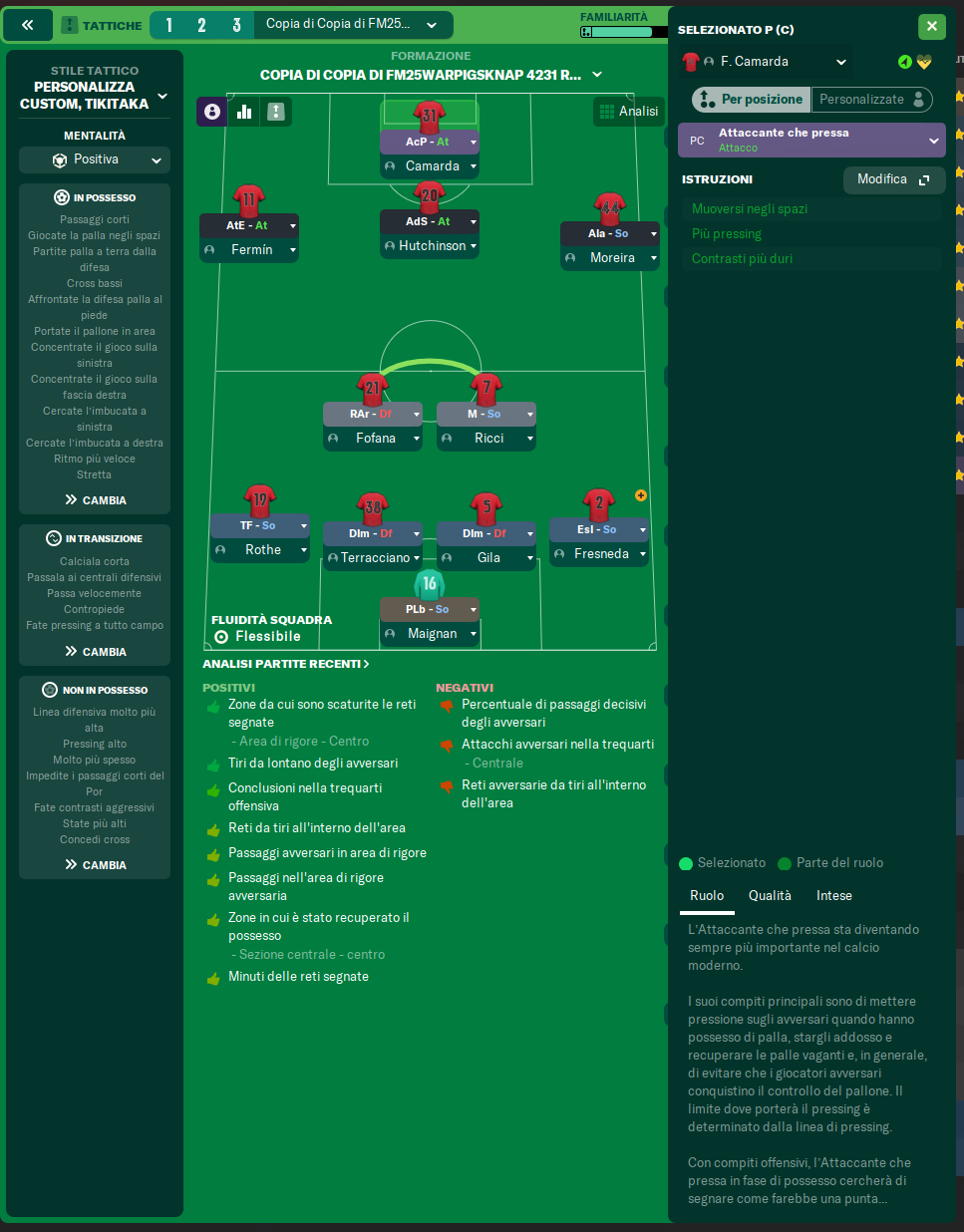
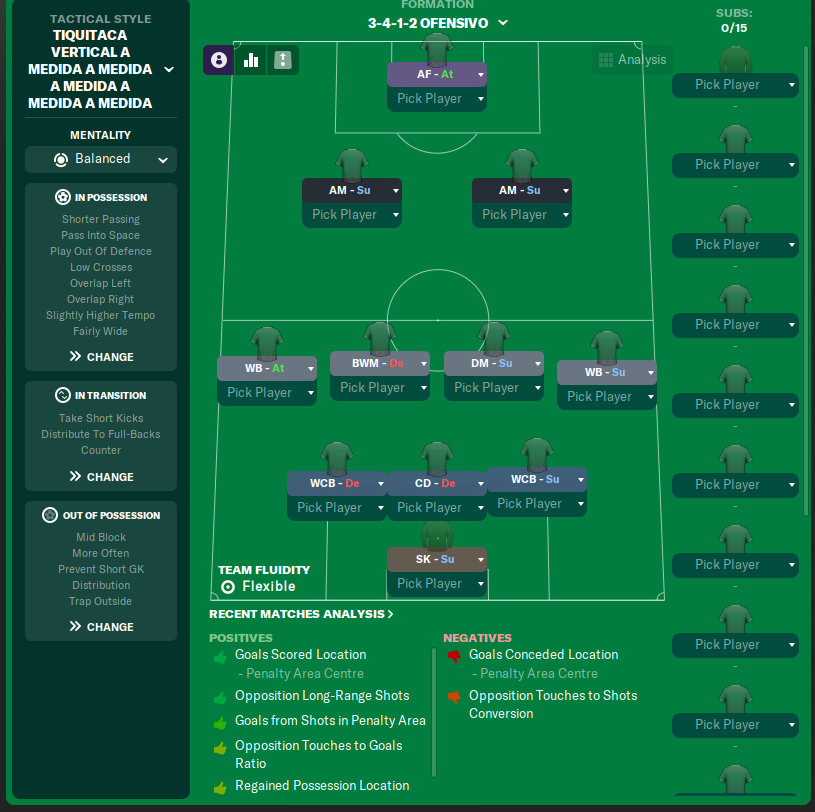
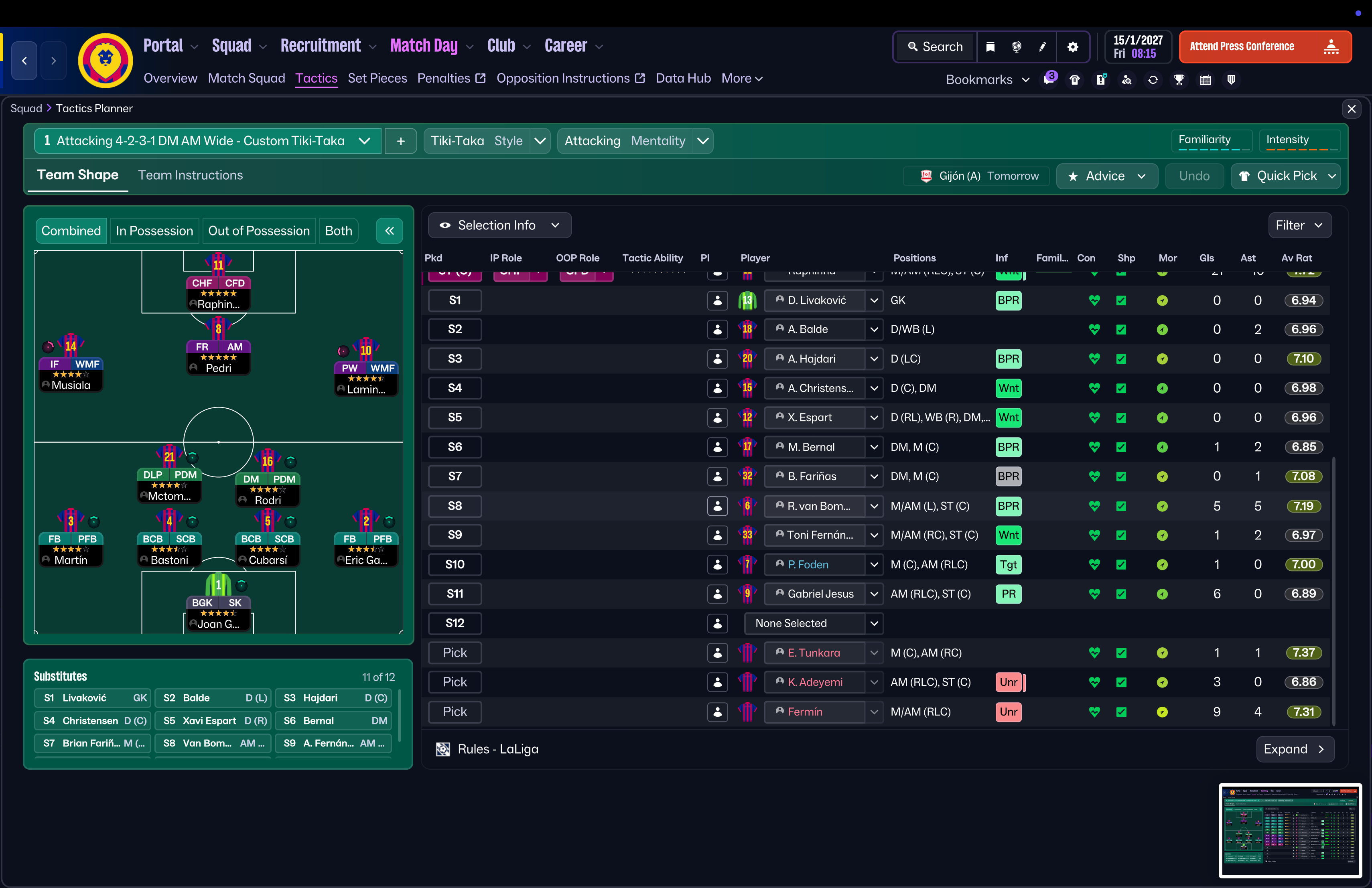
Guides for this formation
The tactical theory behind the 3-2-4-1 Asymmetric: roles, instructions, and the trade-offs that decide whether the system holds up.