Uploaded Tactic
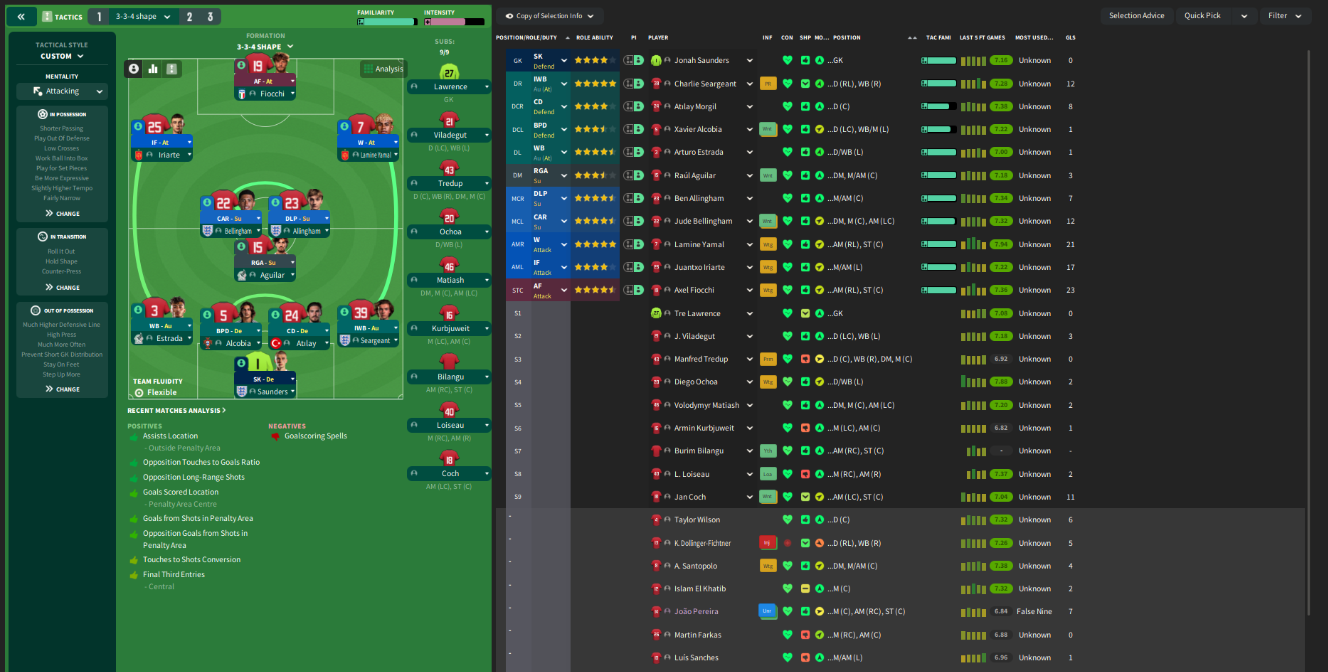
Formation & Style
Tactical Style:Attacking
Mentality:Attacking
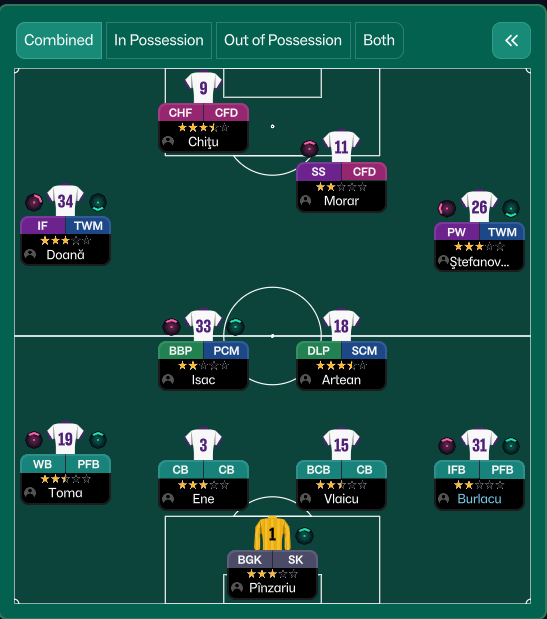
Formation:3-3-4 Shape
Team Fluidity:Flexible
In Possession
Short Passing
Higher Tempo
Play for Set Pieces
Mixed Crossing
In Transition
Counter-Press
Counter
Out of Possession
Much Higher Defensive Line
Tighter Marking
Prevent Short GK Distribution
Team Shape Without Ball
No team shape without ball data available
Team Shape With Ball
No team shape with ball data available
Key Strengths
Fluid Movement
The tactical setup promotes fluid movement among forwards and midfielders, allowing for quick transitions.
Wide Play
The use of Wing Backs provides width, stretching the opposition defense and creating space in the center.
Attacking Intent
The attacking mentality and formation encourage offensive play, increasing goal-scoring opportunities.
Versatile Midfield
Players in midfield roles such as Box to Box and Deep Lying Playmaker provide both defensive cover and creative support.
Conflicting Directions
High Defensive Line vs. Goalkeeper Role
The high defensive line may expose a Sweeper Keeper role, potentially leading to vulnerabilities against counter-attacks.
Attacking Wing Backs vs. Defensive Solidarity
While the Wing Backs add attacking options, their advanced roles may leave the backline vulnerable if possession is lost.
Inverted Forwards and Central Overlap
Inverted Forwards may conflict with the central midfielders' space, requiring careful positioning and timing.
Higher Tempo vs. Fitness Levels
Playing at a higher tempo can lead to fatigue, especially with less physically capable players in the squad.
Tactical Suggestions
Consider a Defensive Midfielder
Introducing a dedicated defensive midfielder could enhance defensive stability and balance in midfield.
Alter Wing Back Roles
Switching one of the Wing Backs to a more defensive role could provide additional protection for the central defenders.
Adjust Mentality for Counter-attacks
A balanced mentality may yield better results against teams likely to counter-attack, given the current defensive setup.
Tweak Player Instructions for Forwards
Exploring option adjustments for the Inverted Forwards to sometimes stay wide may allow for more crossing opportunities.