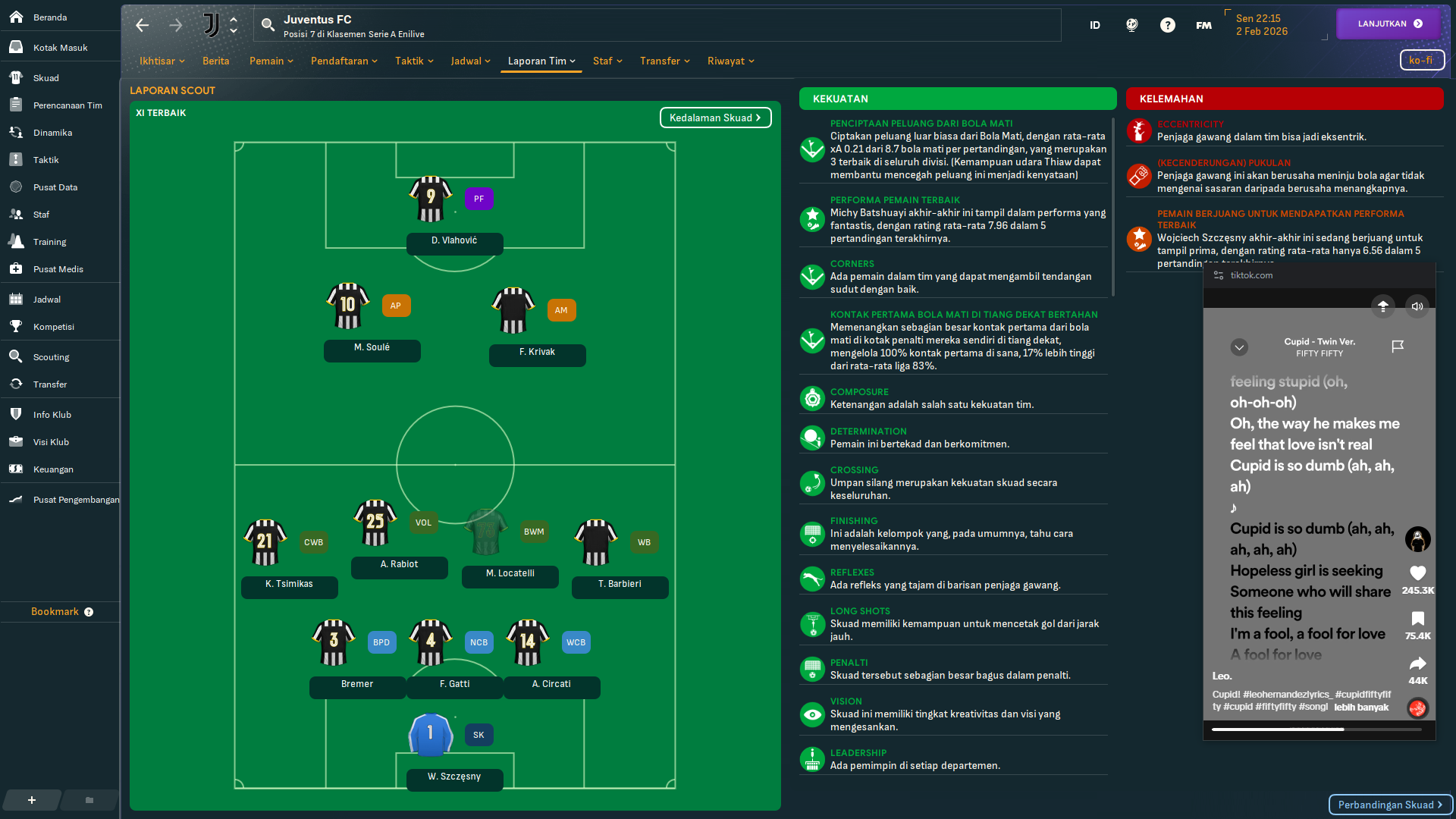
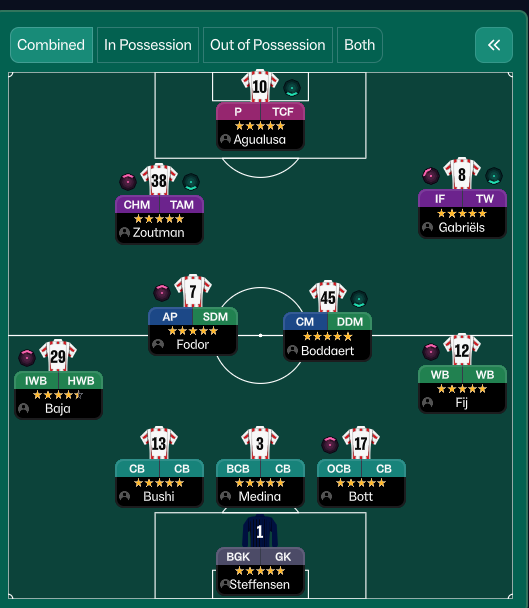
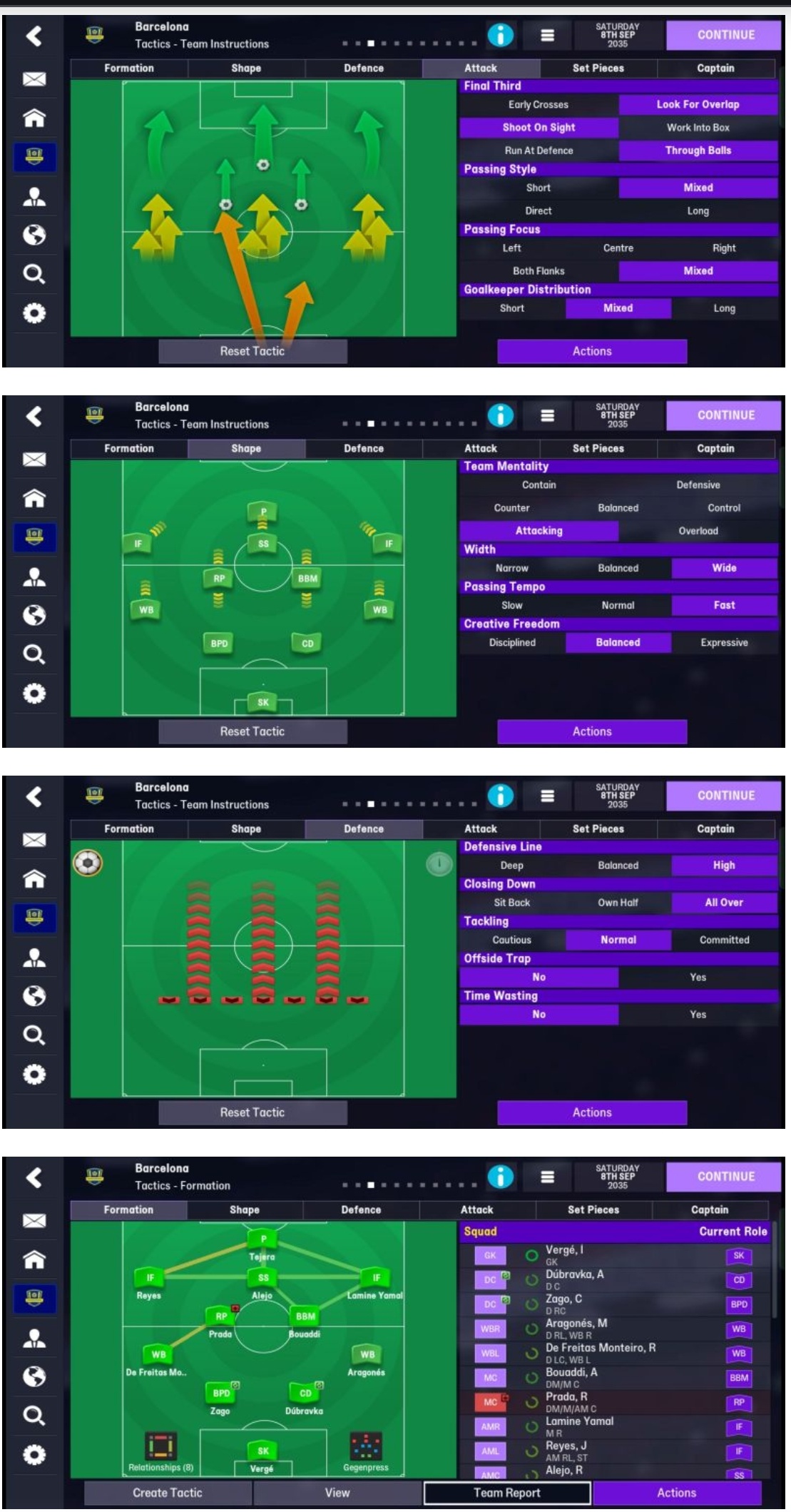
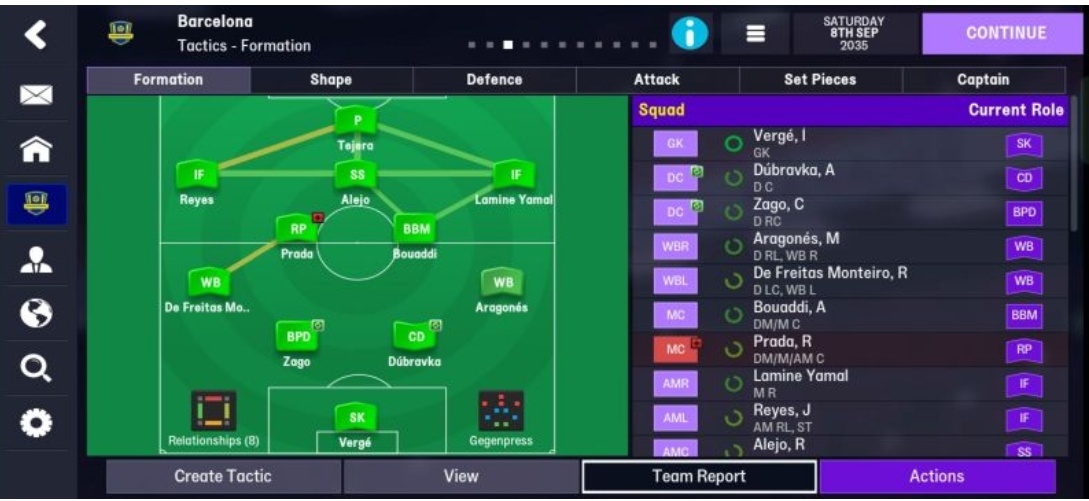
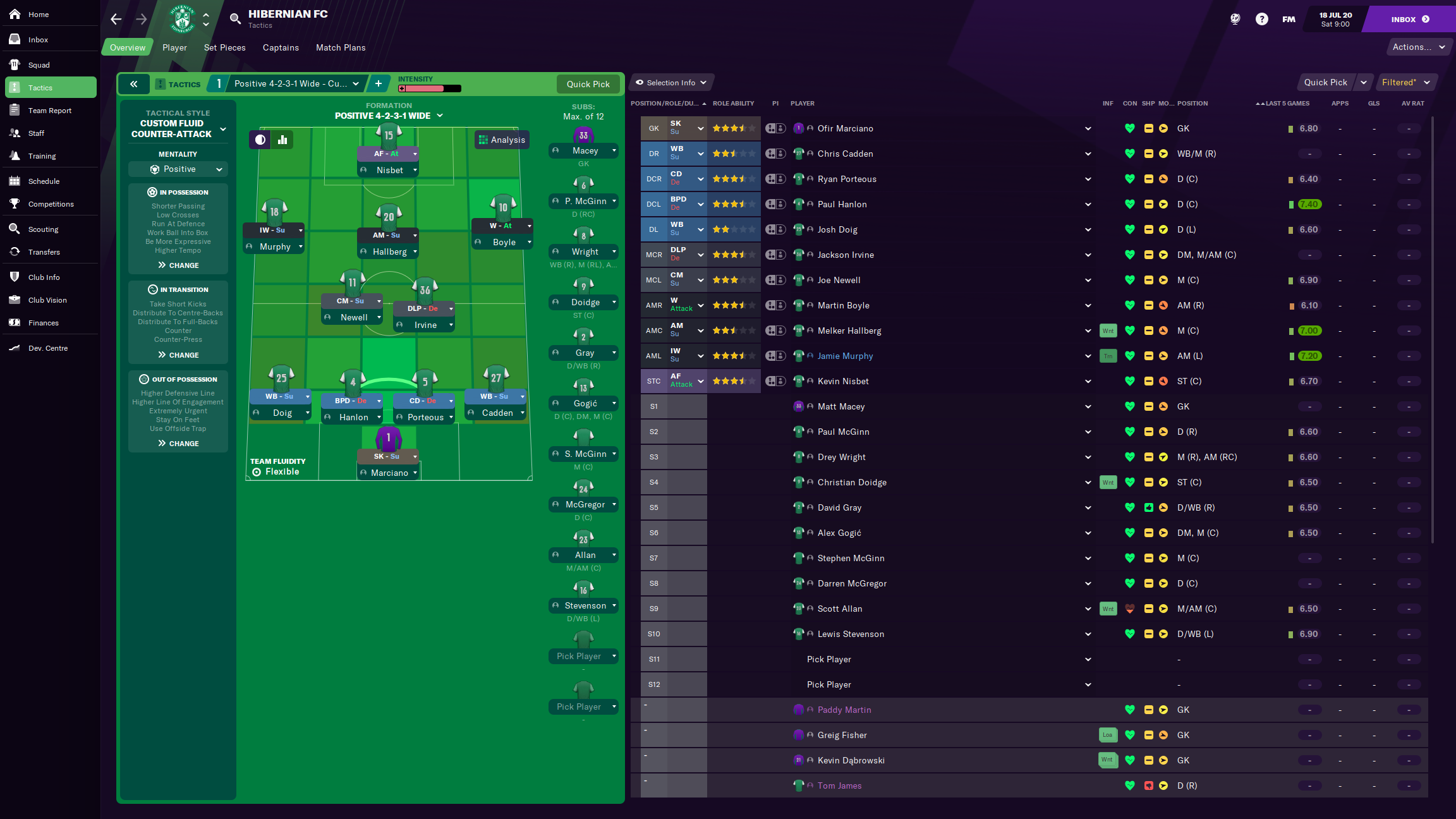
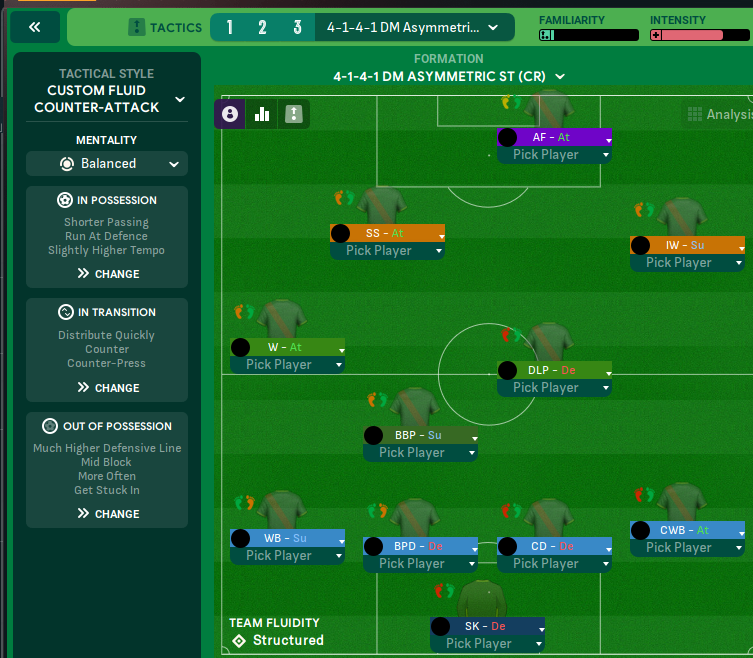
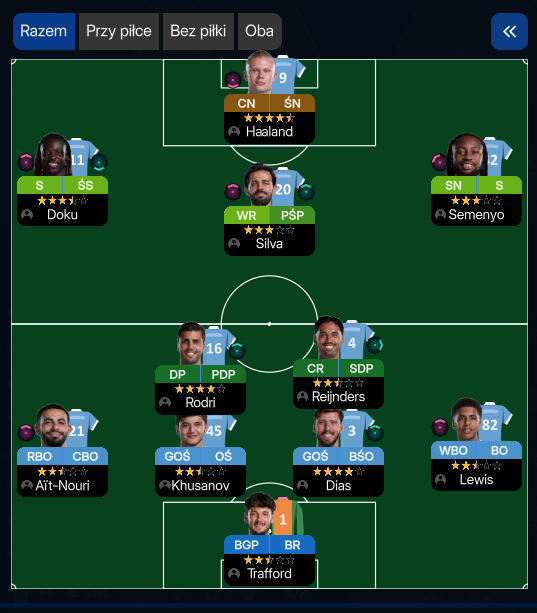
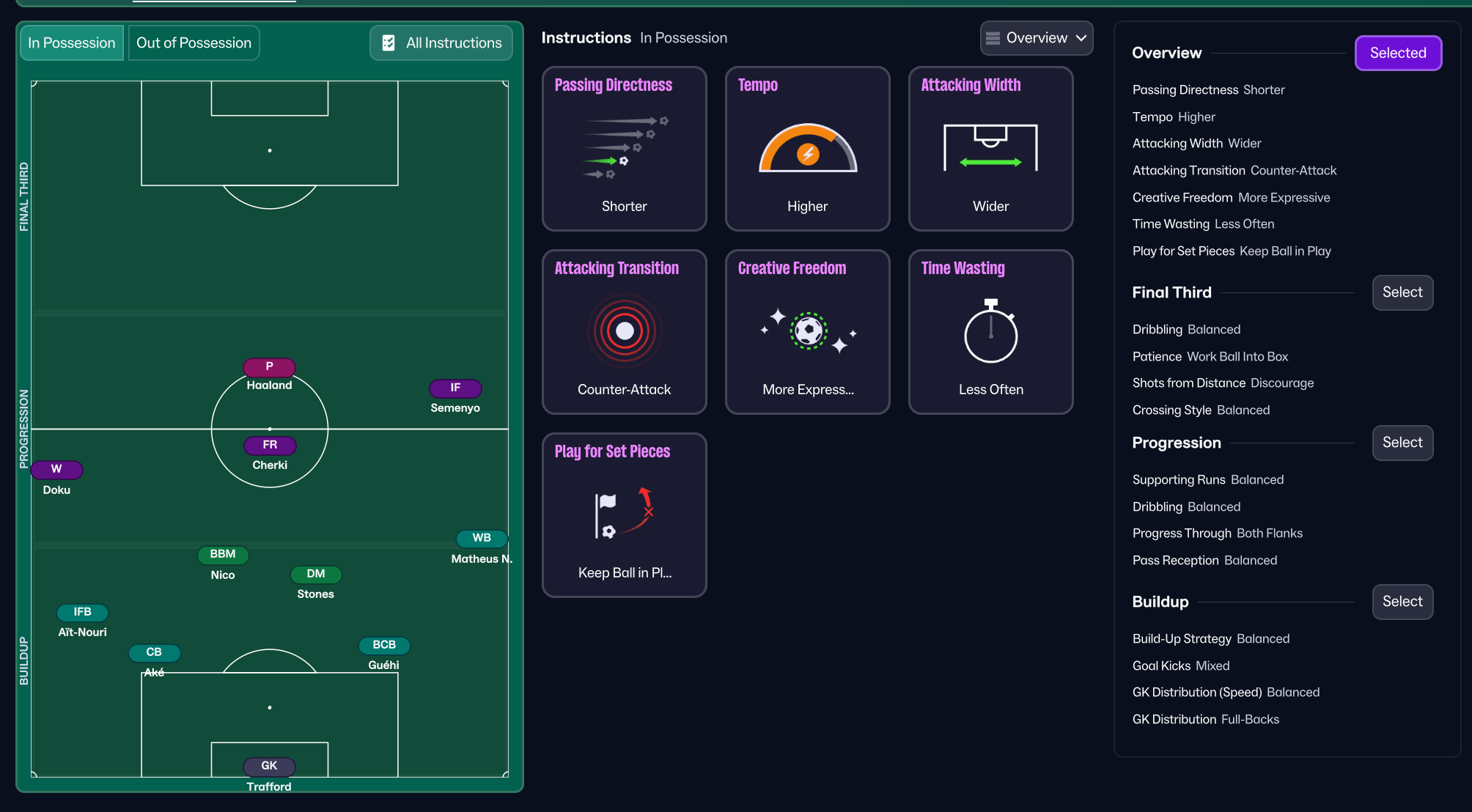
Uploaded Tactic
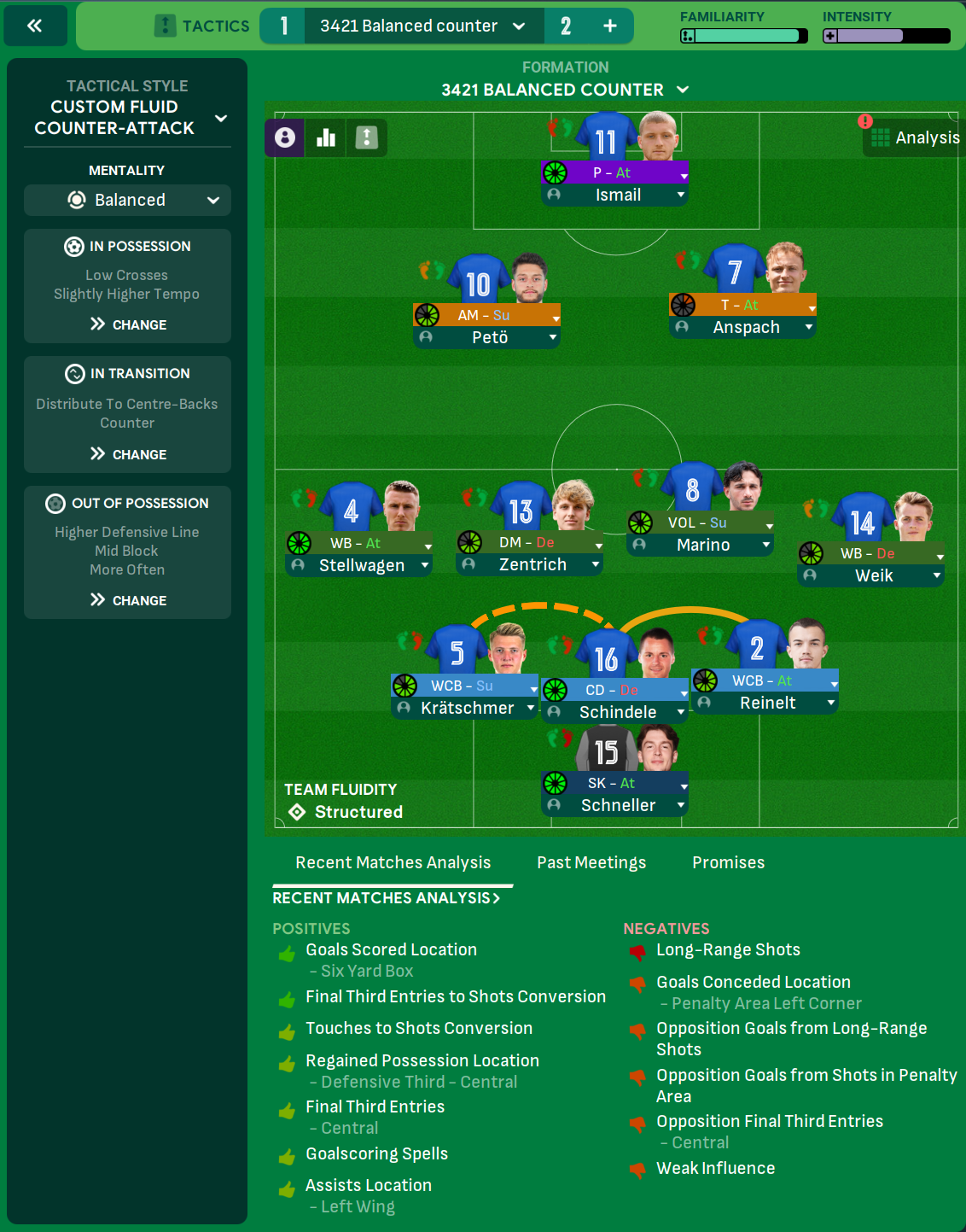
Formation & Style
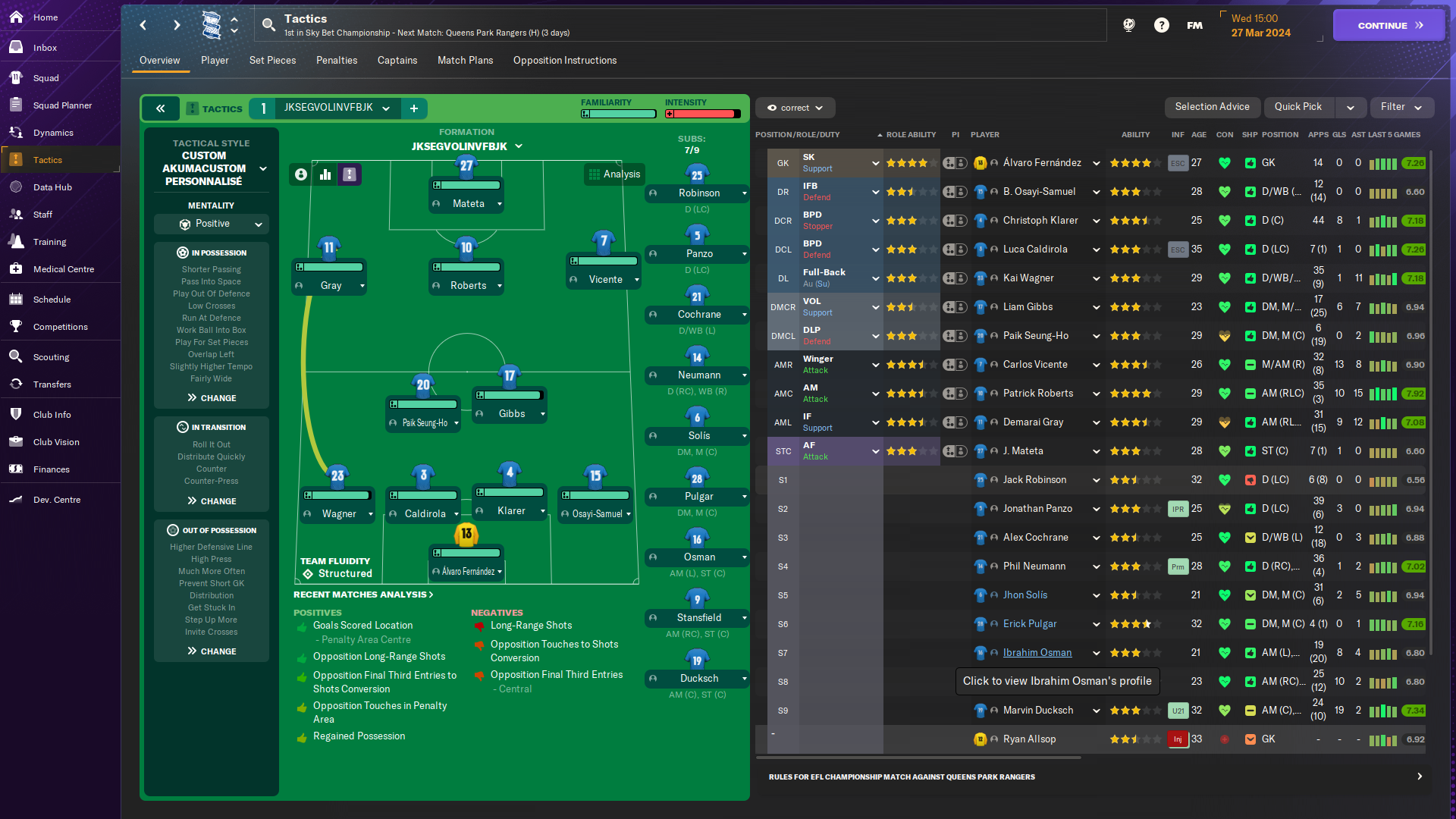
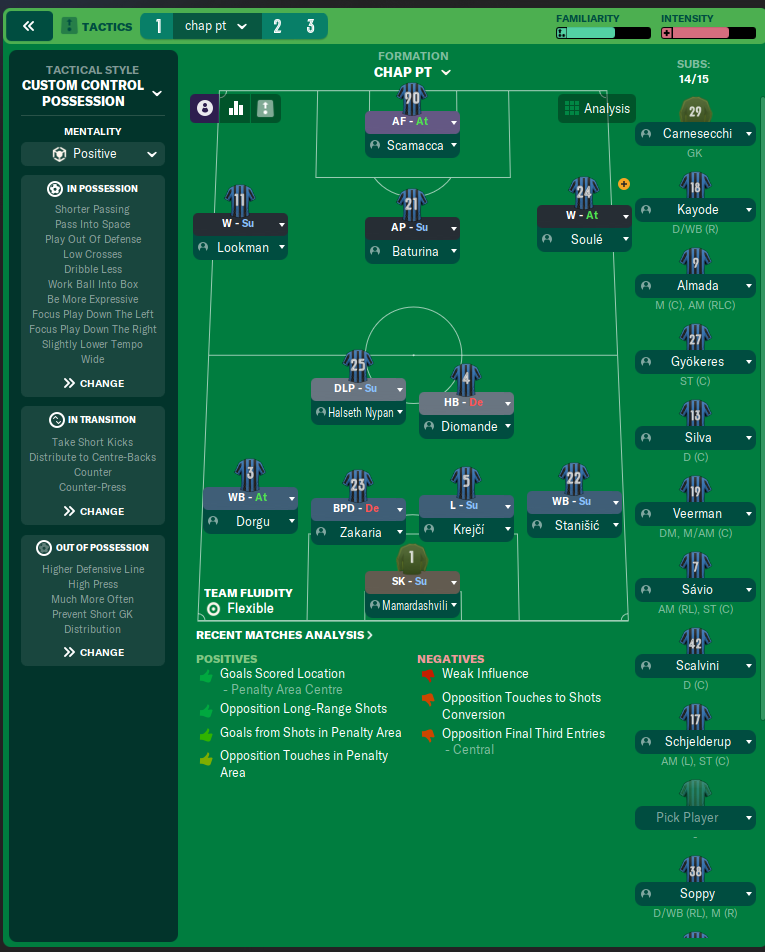
Tactical Style:Counter-Attack
Mentality:Balanced
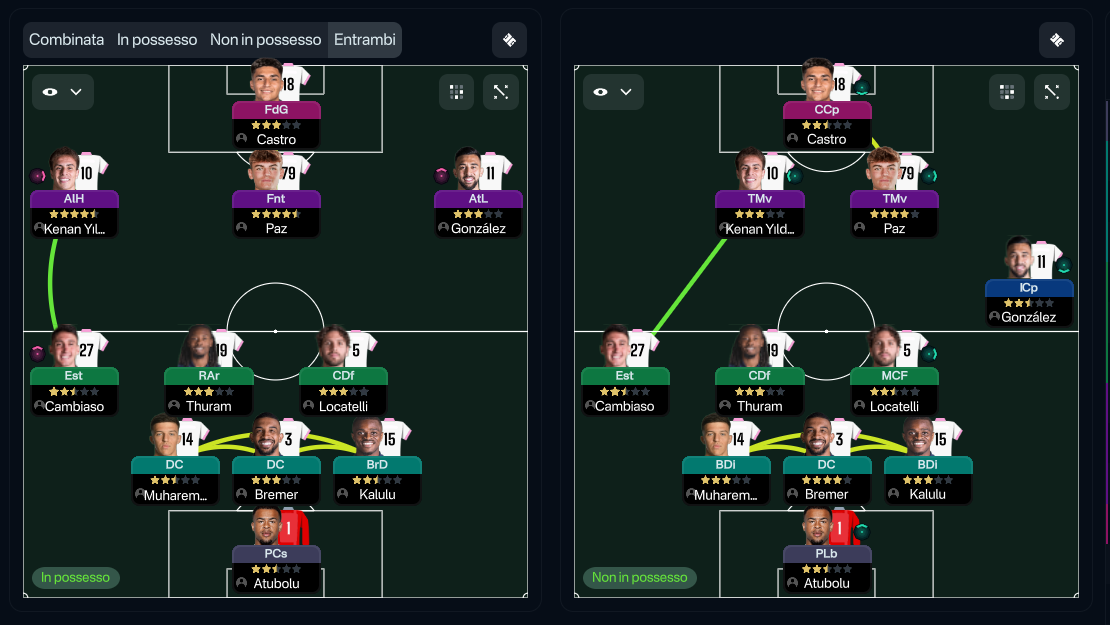
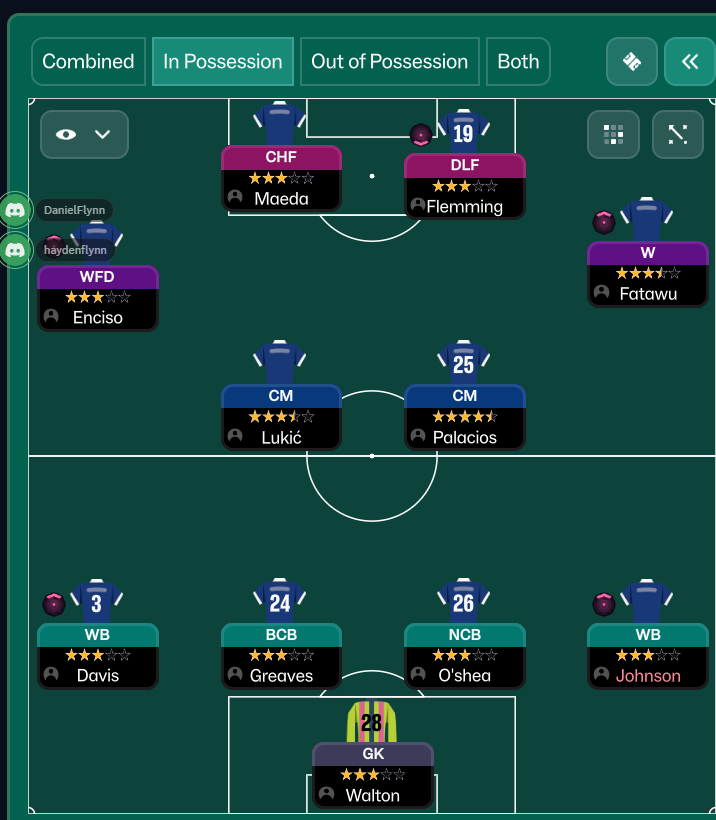
Formation:3-4-2-1
Team Fluidity:Structured
In Possession
Low Crosses
Slightly Higher Tempo
In Transition
Distribute To Centre-Backs
Counter
Out of Possession
Higher Defensive Line
Mid Block More Often
Team Shape Without Ball
No team shape without ball data available
Team Shape With Ball
No team shape with ball data available
Key Strengths
Compact Midfield
The two central midfielders and the advanced playmaker create a dense area for ball retrieval, aiding in effective transition play.
Effective Counter-Attacks
The configuration supports rapid transitions from defense to attack, especially through quick passes from the DM and advanced playmaker.
Width Provided by Wing-Backs
Wing-backs allow the wingers and strikers to exploit spaces on the flanks, creating imbalance in the opponent's defense.
Strong Pressing
The pressing forward sets the tone for high pressing, leading to potential turnovers in advanced positions.
Conflicting Directions
Higher Defensive Line vs. Counter Style
A higher defensive line may be at odds with counter-attacking play, exposing the backline to quick opposition attacks.
Wing-Back Roles and Defensive Cohesion
With attacking wing-backs, defensive stability may be compromised, leading to vulnerabilities on the flanks.
Pressing Forward in Low Block Situations
In scenarios where defensive phases are dominant, a pressing forward may not be utilized effectively, limiting offensive threat.
Tactical Suggestions
Adjust Defensive Line
Consider lowering the defensive line to adapt better to counter-attacking scenarios, reducing vulnerability to quick breaks.
Utilize Sweeper Keeper
Integrate a sweeper keeper role to augment high defensive lines and facilitate quick transitions.
Testing Fluidity
Experiment with a more fluid team structure to enhance player movements and increase offensive dynamics.
Consider Role Retraining
Retrain some midfielders to take on more defensive roles, creating a balanced approach in the midfield.