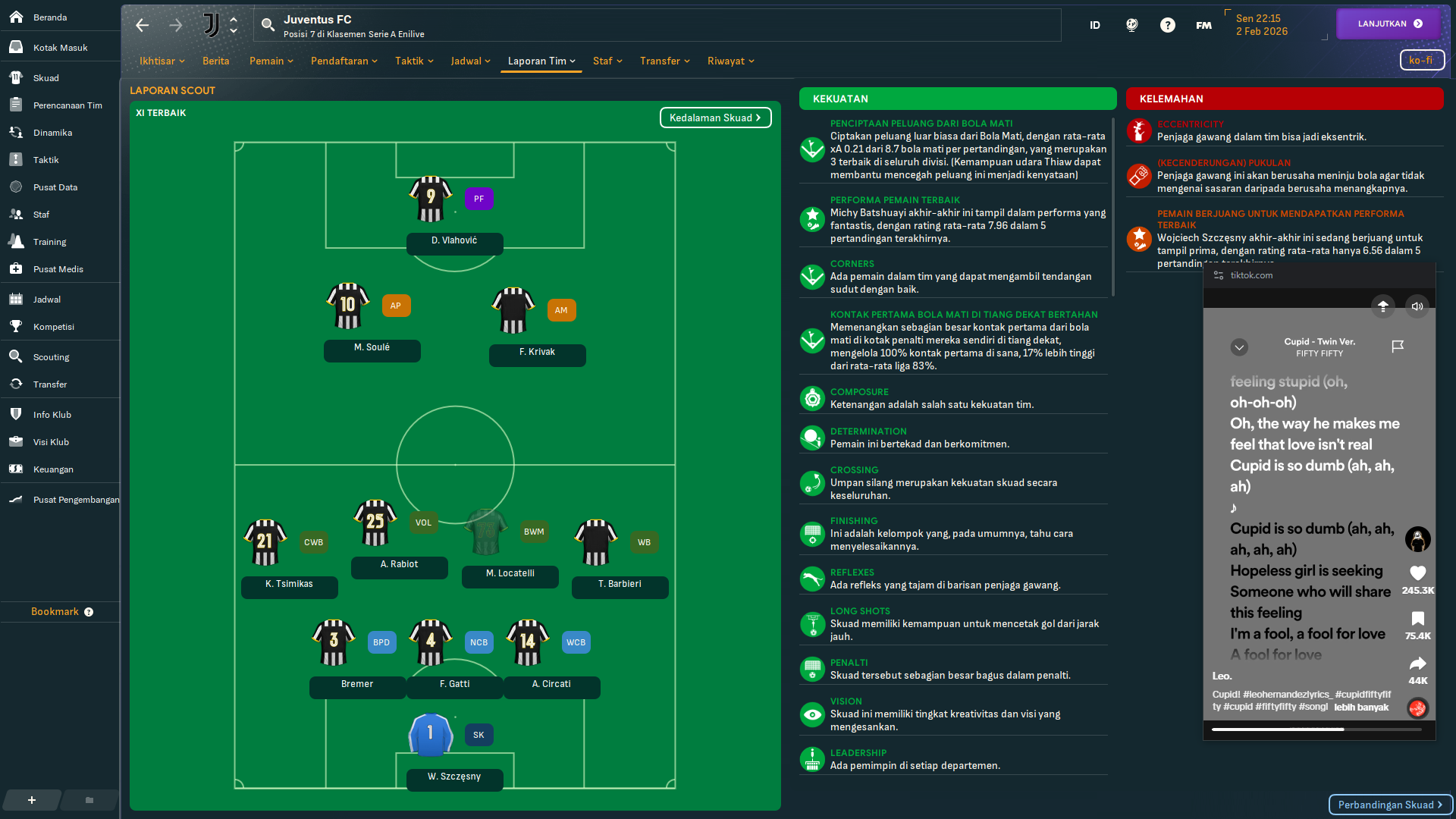
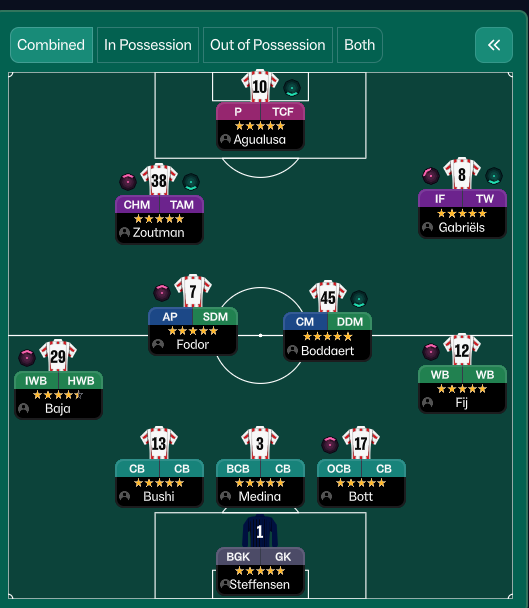
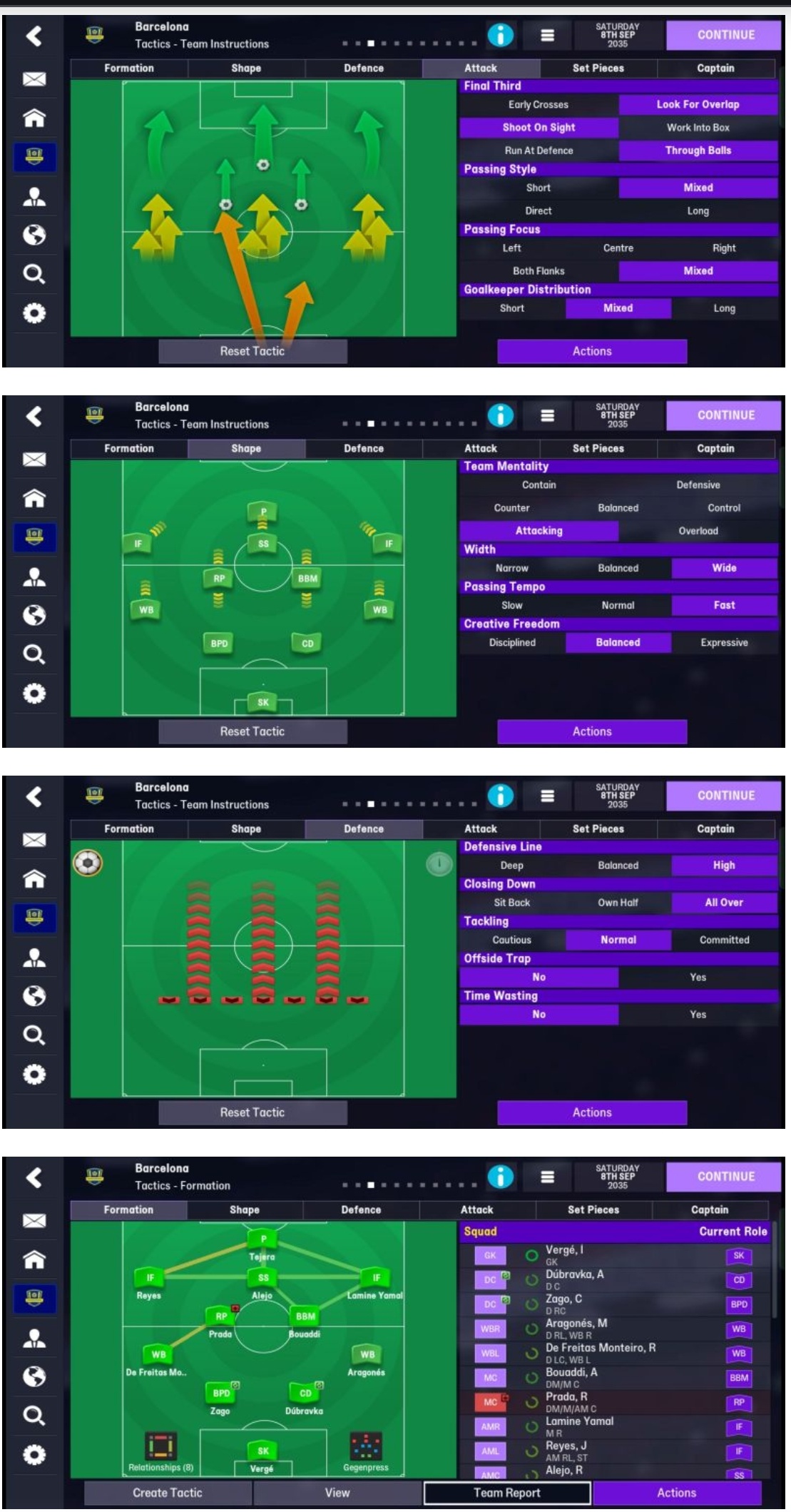
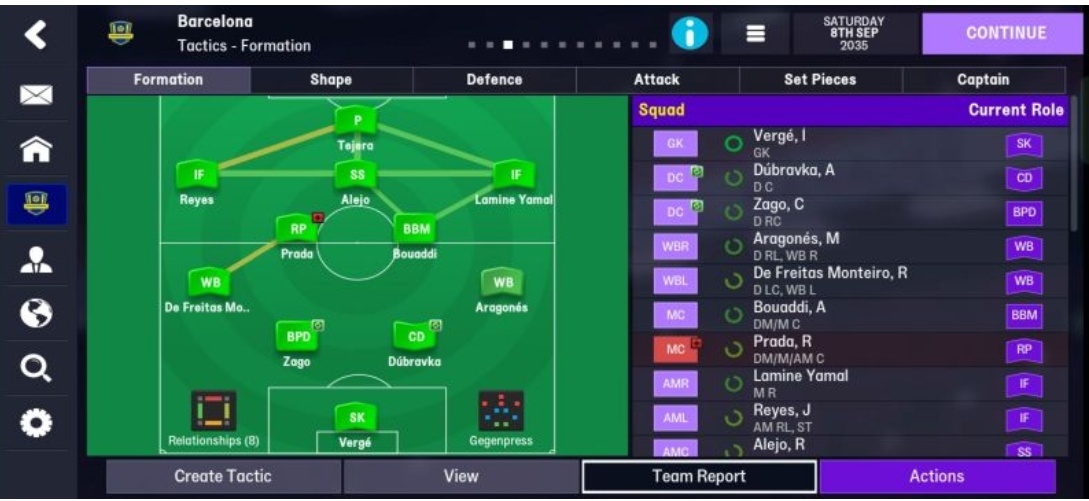
Uploaded Tactic
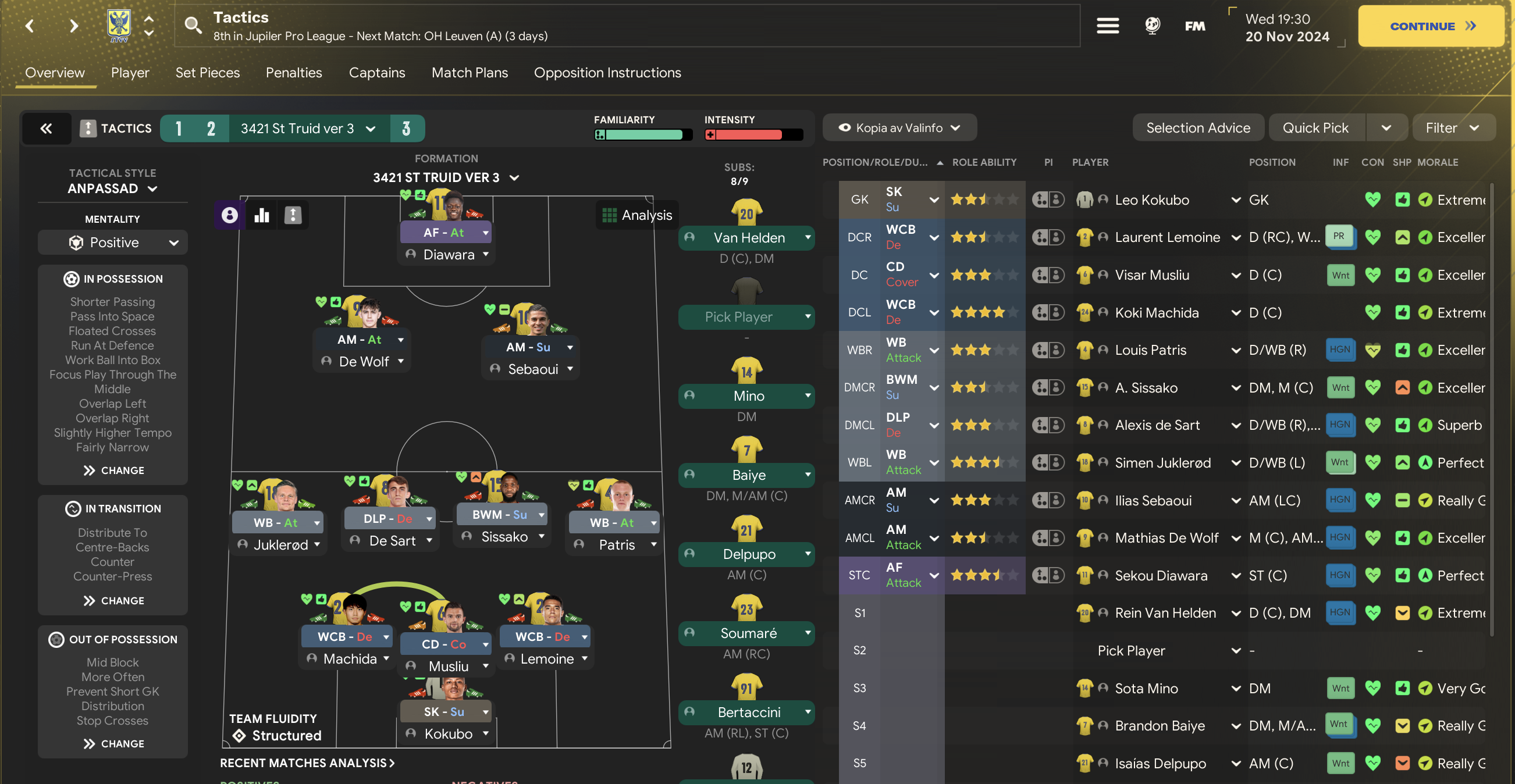
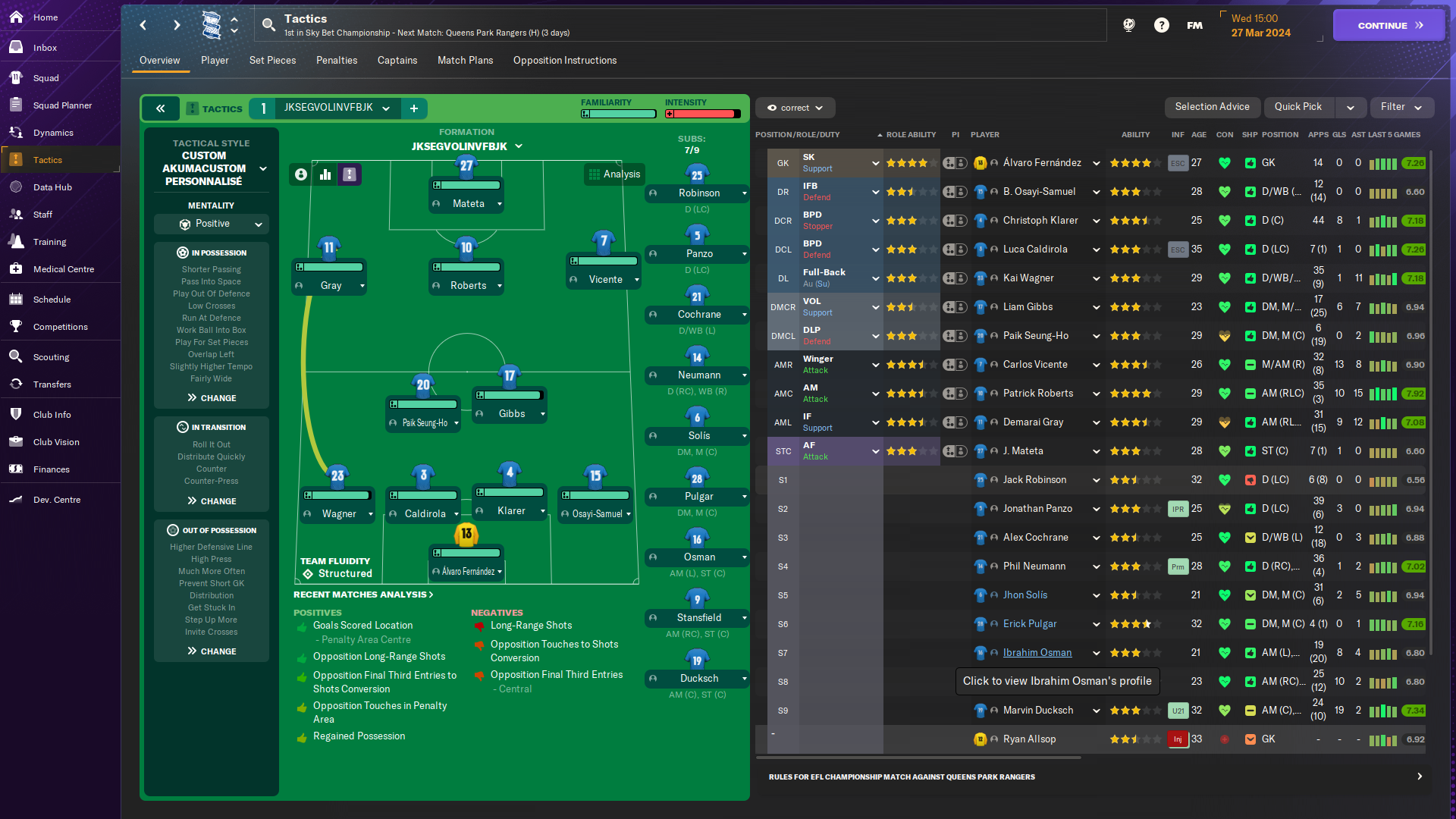
Formation & Style
Tactical Style:Anpassad
Mentality:Positive
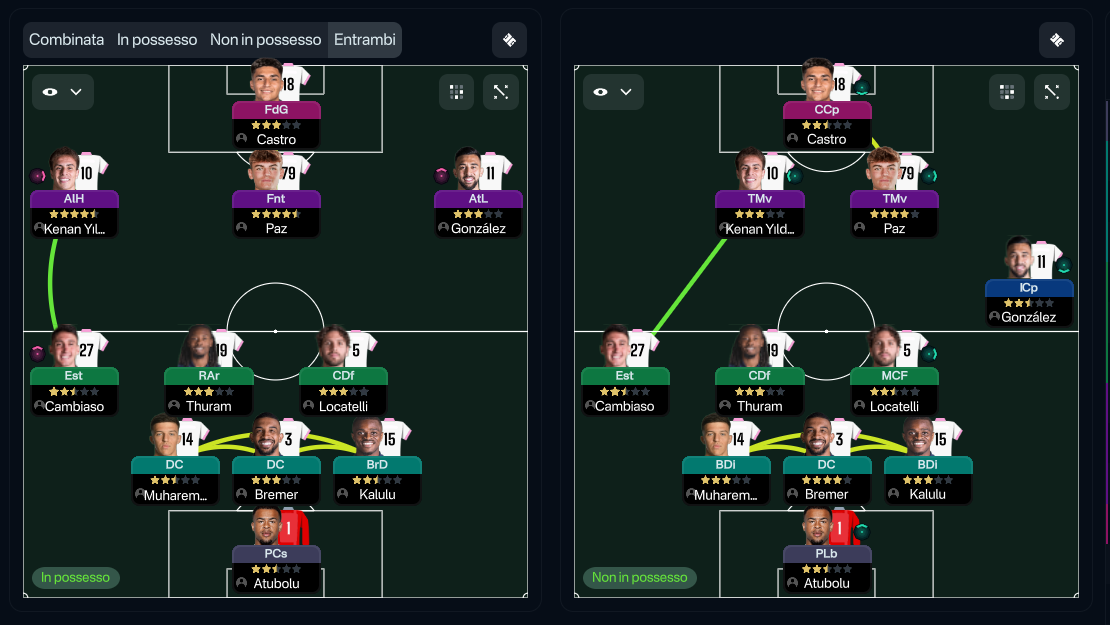
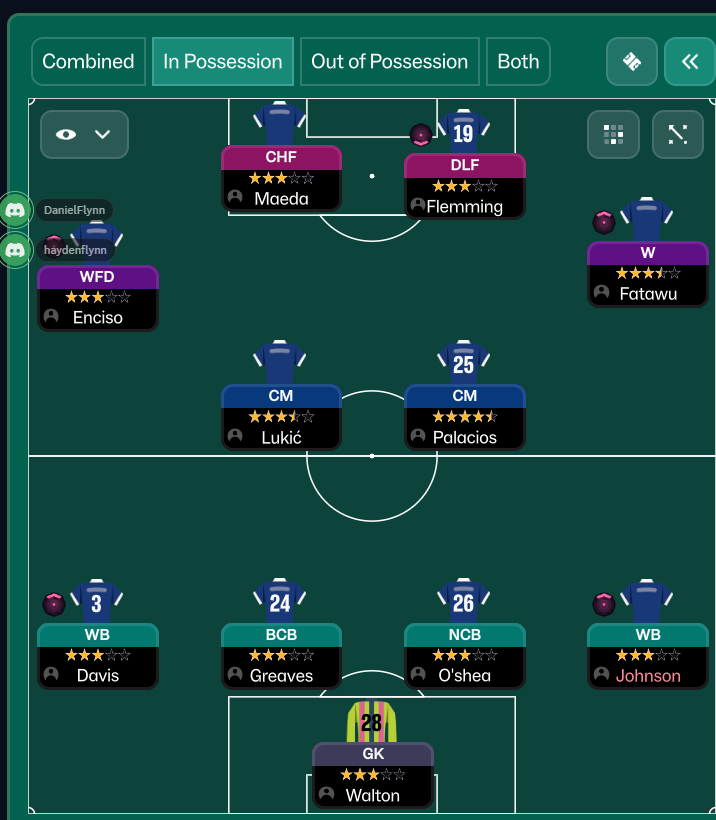
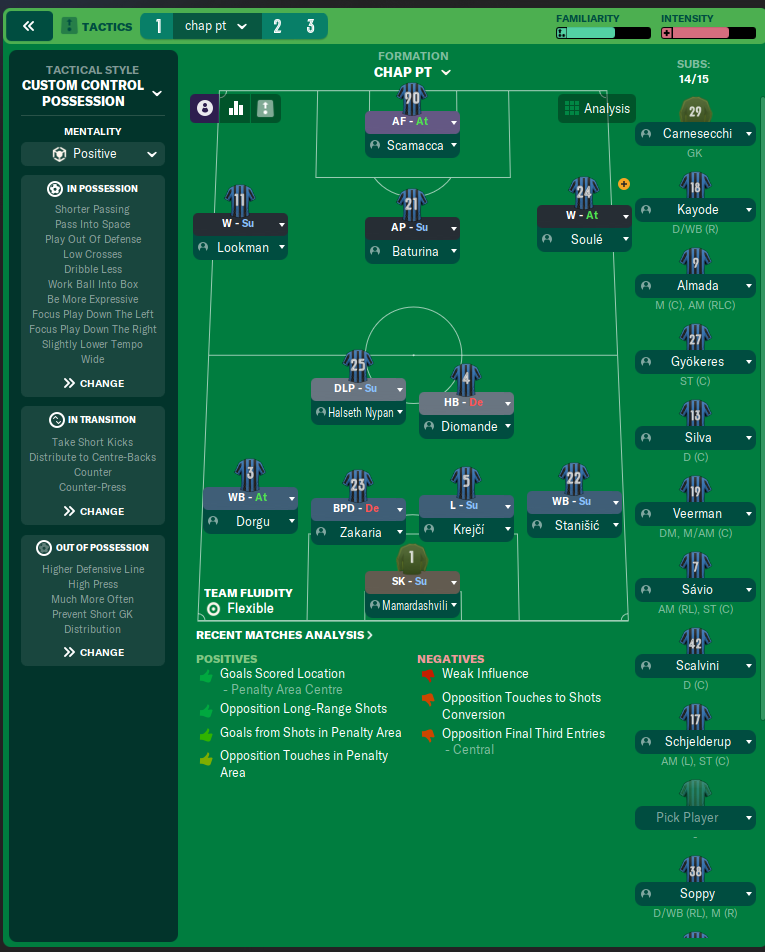
Formation:3-4-2-1
Team Fluidity:Structured
In Possession
Shorter Passing
Pass Into Space
Floated Crosses
Run At Defence
Focus Play Through The Middle
Overlapping Left
Overlapping Right
Slightly Higher Tempo
Fairly Narrow
In Transition
Distribute To Centre-Backs
Counter
Counter-Press
Out of Possession
Mid Block More Often
Prevent Short GK Distribution
Stop Crosses
Team Shape Without Ball
No team shape without ball data available
Team Shape With Ball
No team shape with ball data available
Key Strengths
Dynamic Attacking Play
Utilizing attacking midfielders and wing-backs allows for fluid movement and creating multiple attacking options.
Control in Midfield
The presence of a Deep-Lying Playmaker and a Ball-Winning Midfielder provides balance and control over the midfield area.
Teaming Structure
The 3-4-2-1 formation offers solidity defensively while allowing overlapping runs from wing-backs for width.
High Pressing Ability
The counter-pressing strategy allows for quick recovery of possession when losing the ball.
Conflicting Directions
Overlapping Runs vs. Narrow Play
While overlapping play is encouraged, the fairly narrow attacking shape may limit the effectiveness of wide play.
Counter-Pressing and Defensive Stability
A high pressing game can leave gaps in the defensive line, especially when moving quickly from attack to defense.
Short Passing vs. Counter Attacking
Focusing on shorter passing may clash with the counter-attacking strategy that typically relies on quick transitions.
Central Focus vs. Wing Play
Emphasis on playing through the middle can negate the wing-backs' effectiveness and limit space for effective crosses.
Tactical Suggestions
Adjust Width
Consider widening the attacking width to better utilize the wing-backs and create more crossing opportunities.
Role Adjustment for Midfielders
Changing the Deep-Lying Playmaker to a Support role might enhance attacking transitions.
Ball-Winning Midfielder Positioning
Ensure the Ball-Winning Midfielder is positioned to cover counter-attacks effectively.
Flexible Mentality
Switching to a more flexible mentality during matches could better adapt to different opponents.