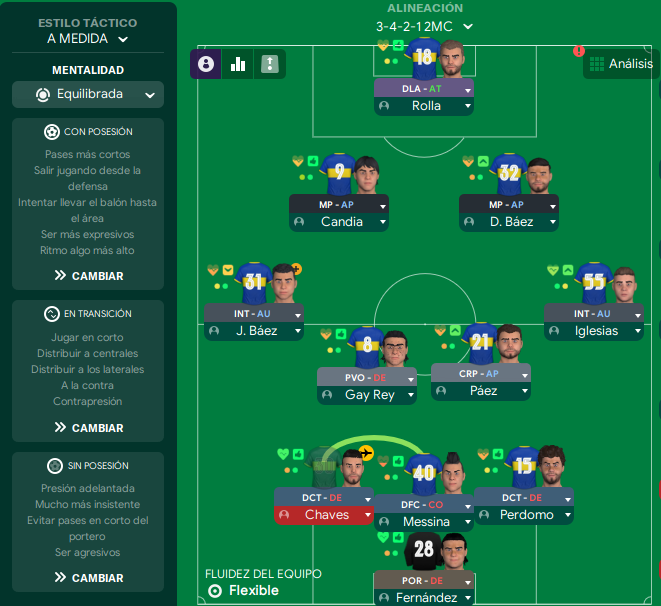
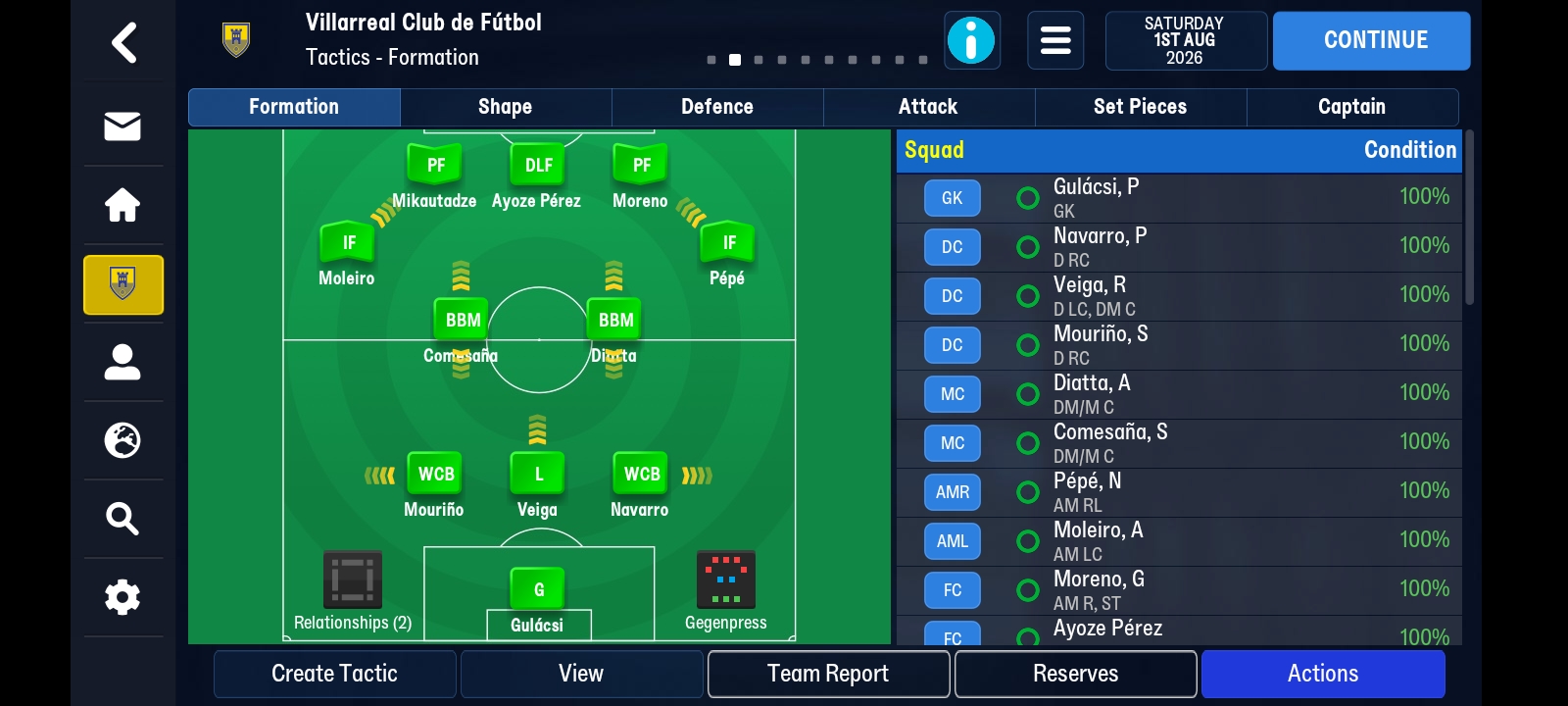
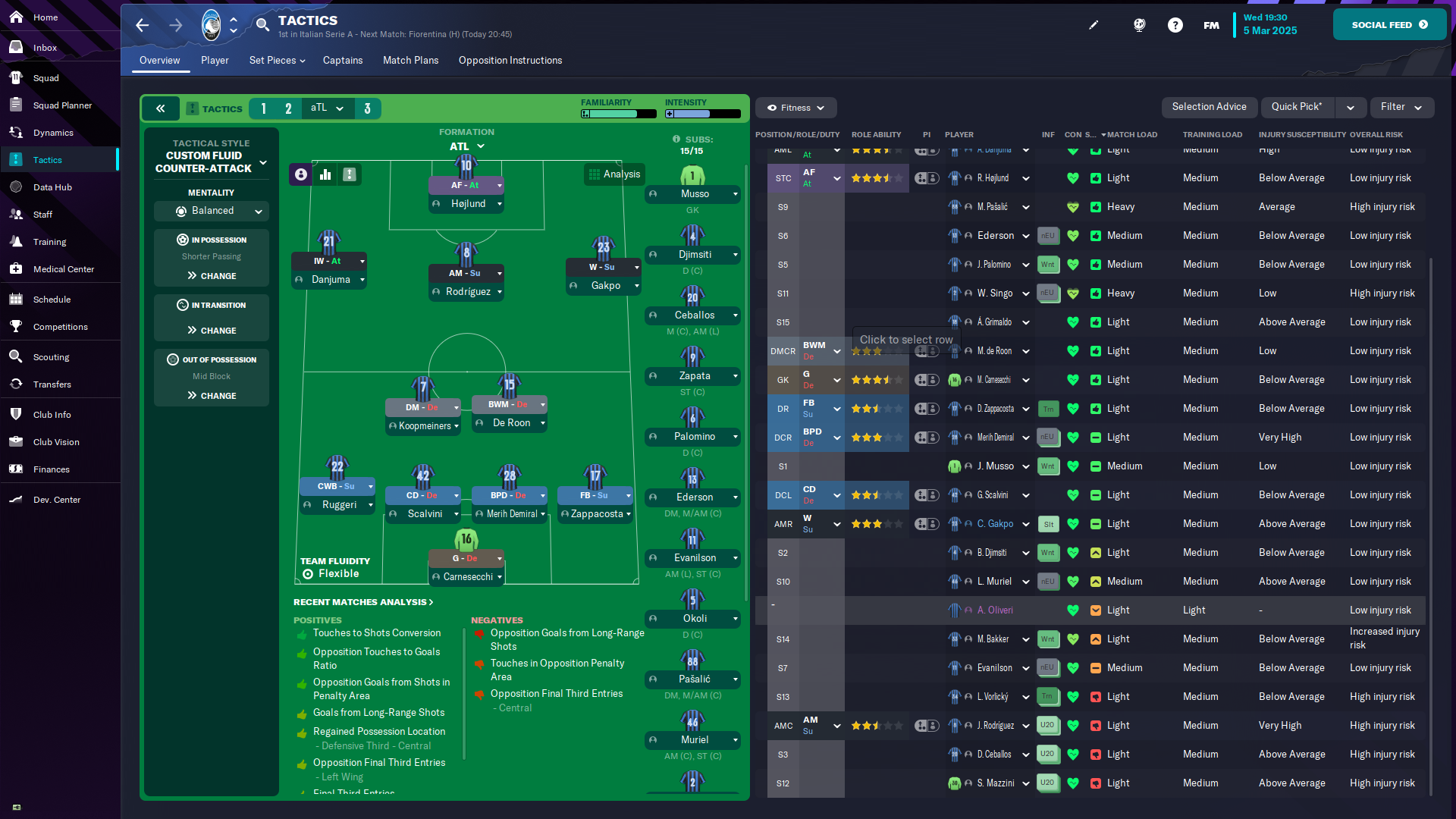
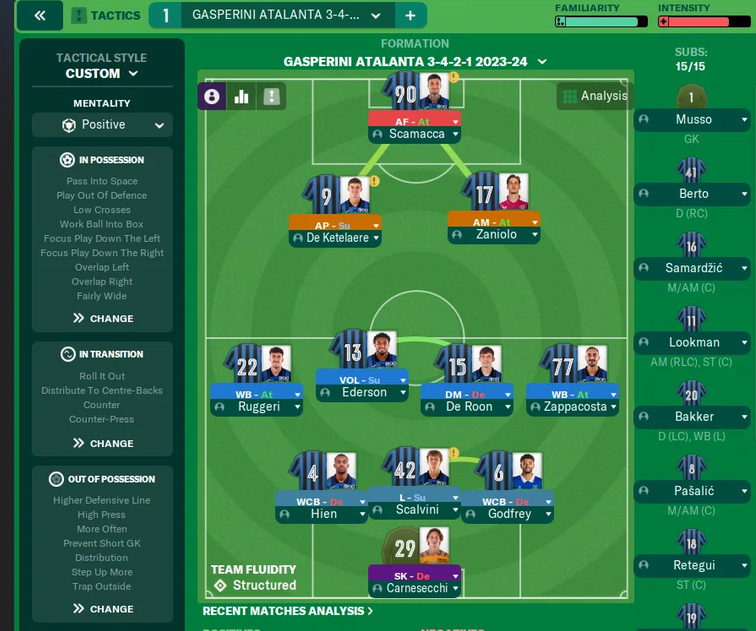
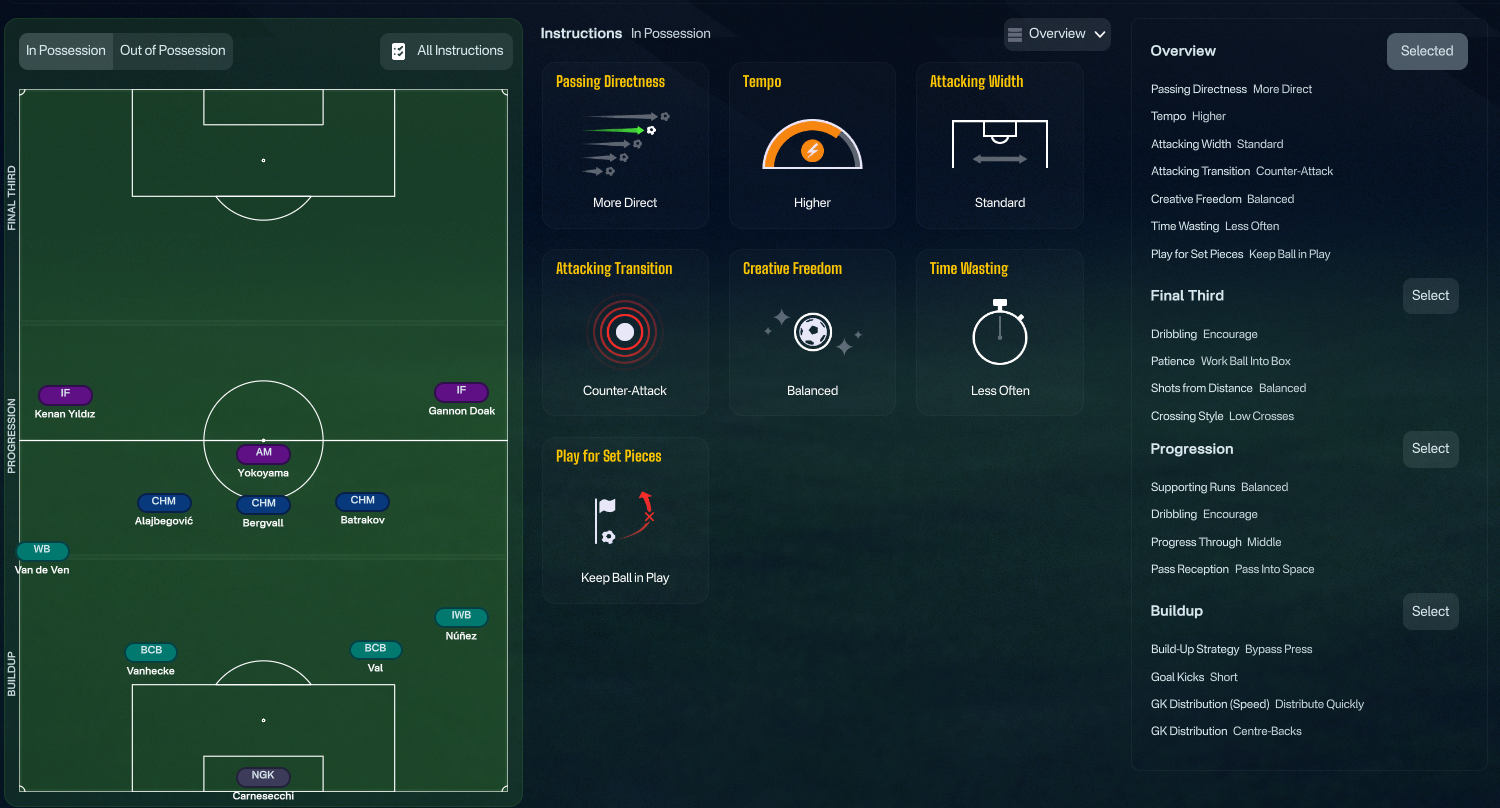
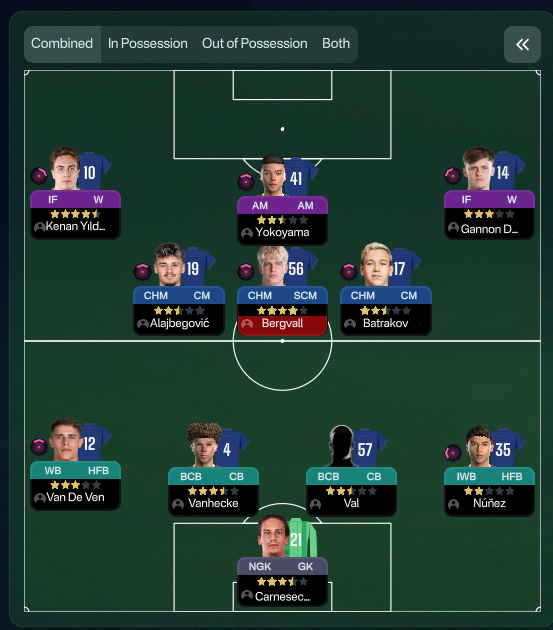
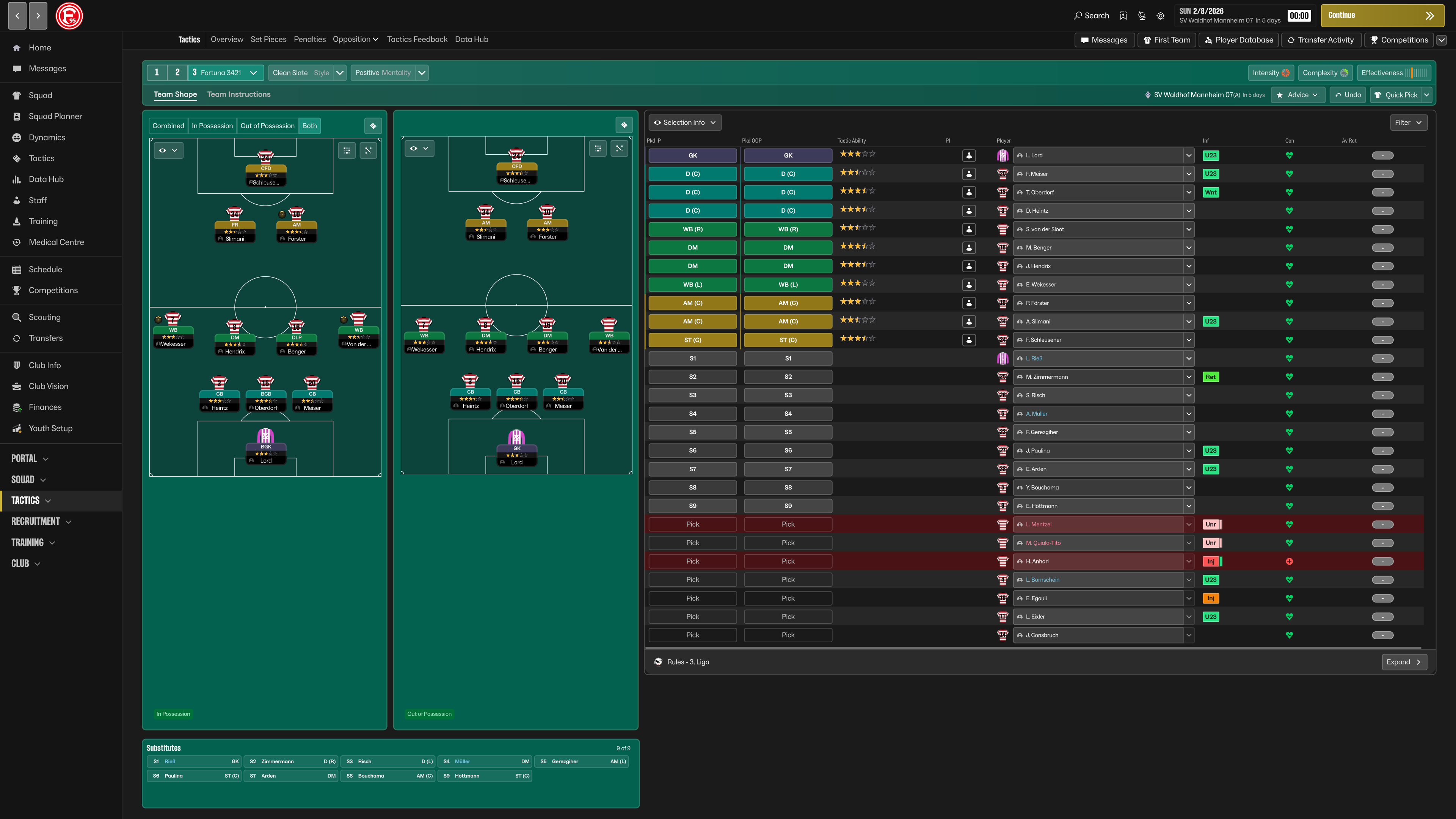
3-4-2-1
Three central defenders provide stability.
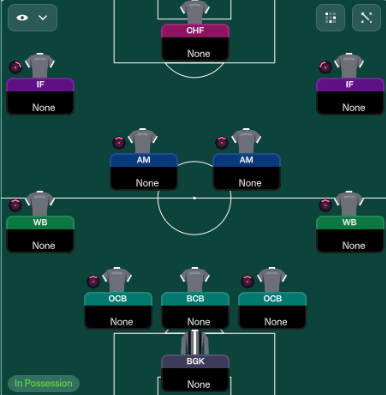
Loading tactical analysis...
3-4-2-1
GK
GK
CB
OCB
CB
BCB
CB
OCB
WB
WB
WB
WB
AM
AM
IF
IF
IF
IF
ST
CHF
Compact and Solid
Three central defenders with wing-backs covering flanks.
Three OCB and BCB roles at [2,2],[2,3],[2,4] ensure defensive solidity.
Fluid with Width
Attacking midfielders and inside forwards stretching the defense.
Inside Forwards ([6,2] and [6,4]) create width; one CHF as the main target.
Three central defenders provide stability.
OCB roles at [2,1],[2,2],[2,3] enhance defensive organization.
Wing-backs can help stretch the opponent's defense.
WB roles at [3,1] and [3,5] allow for better wing play.
No central midfielders may lead to dominance by opponent's midfield.
Absence of CM or DM roles in midfield positions.
Without specific defensive duties, wing-backs may be caught out.
Potential gap between OCB/BCB and WB roles.
Midfield Dominance
Opponent may control midfield due to absence of midfield roles.
Lack of CM or DM roles creates space for exploitation.
Flank Vulnerability
Wing-backs may be exposed without protection.
WB roles might lead to counter-attacks if caught forward.
AM and IFs
Creates attacking options and penetrates defenses effectively.
AM at [5,3] combined with IFs at [6,2] and [6,4].
Wing-Backs and Centre-Backs
Provides robust defense whilst creating width.
WB at [3,1] and [3,5] linked with OCB/BCB at [2,2],[2,3],[2,4].
The tactical theory behind the 3-4-2-1: roles, instructions, and the trade-offs that decide whether the system holds up.
Routines, takers, and target picks. How to turn corners and free-kicks into a reliable third of your goal output.
Protect a 1-0, chase a 1-0, hold a draw away. How to manage game state in FM through duties and roles, not by lurching to Defensive.
Mentality, duty, role, instruction, sub. The change hierarchy from lightest to heaviest intervention, and 60th-minute patterns by game state.