Uploaded Tactic
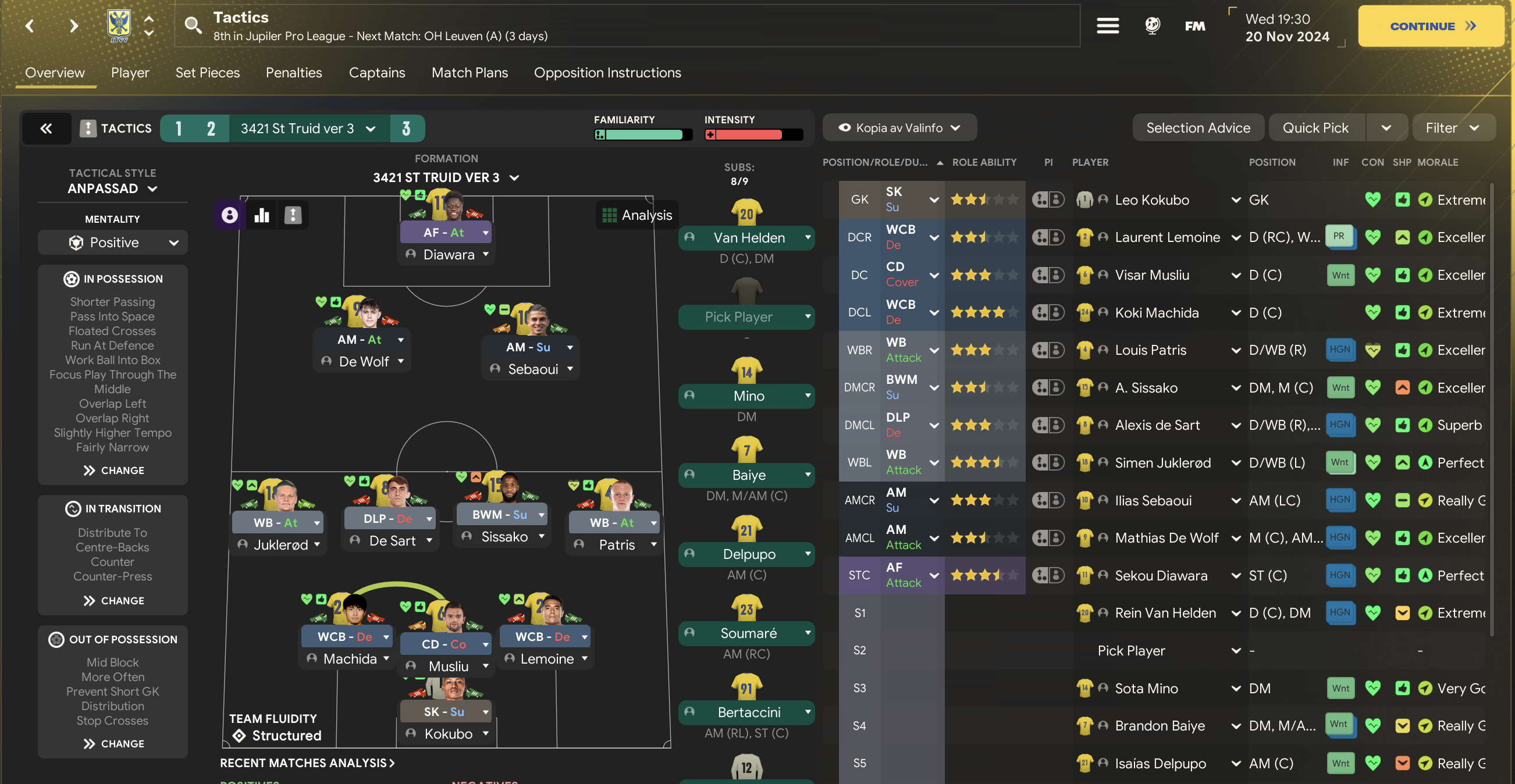
Formation & Style
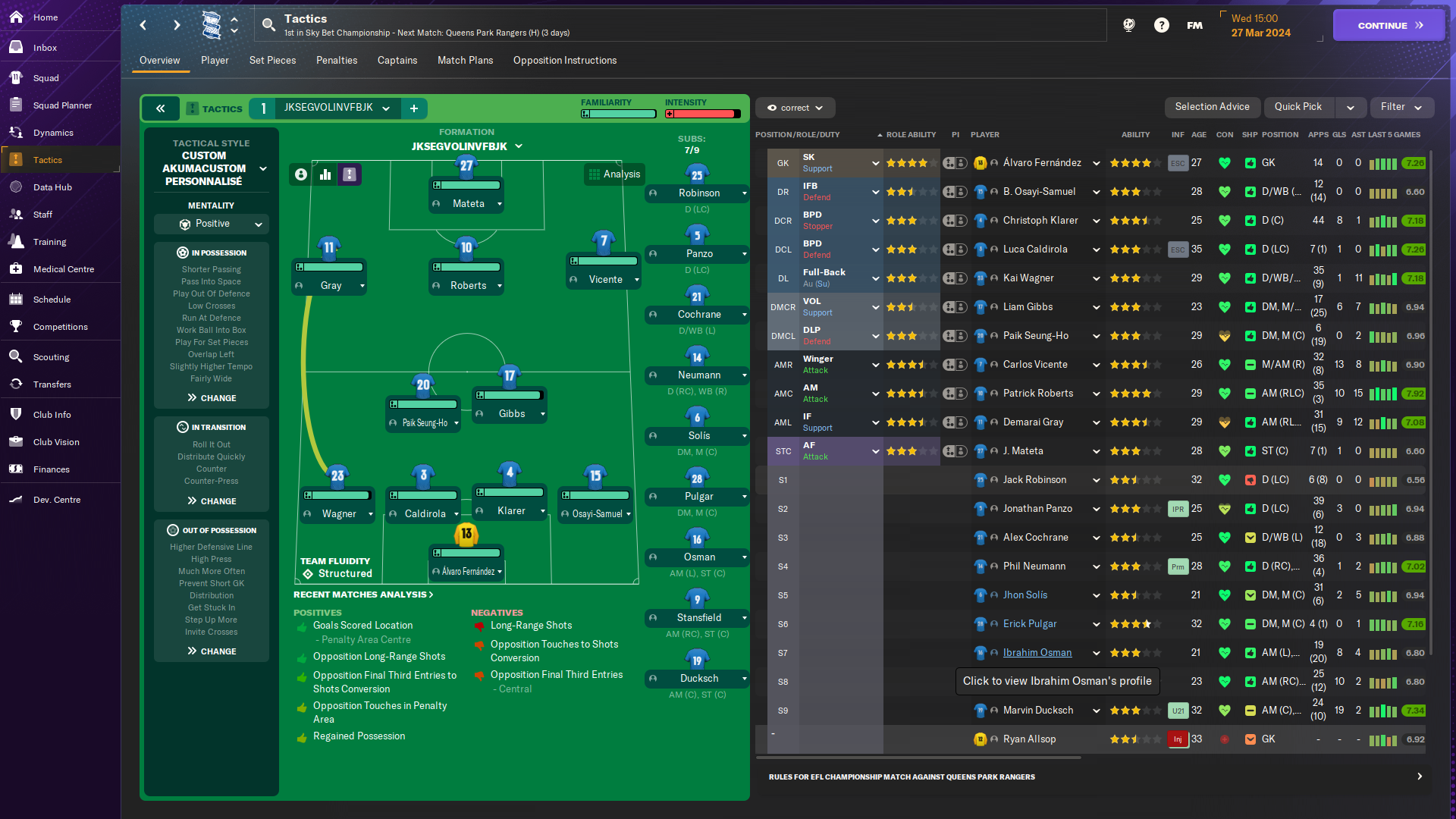
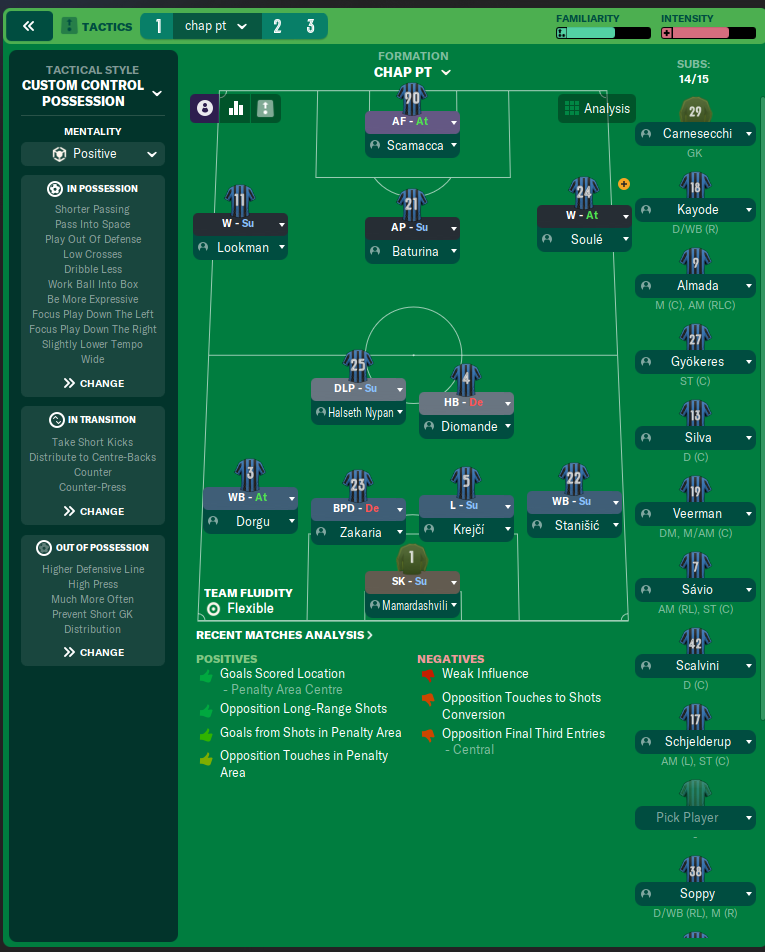
Tactical Style:Anpassad
Mentality:Positive
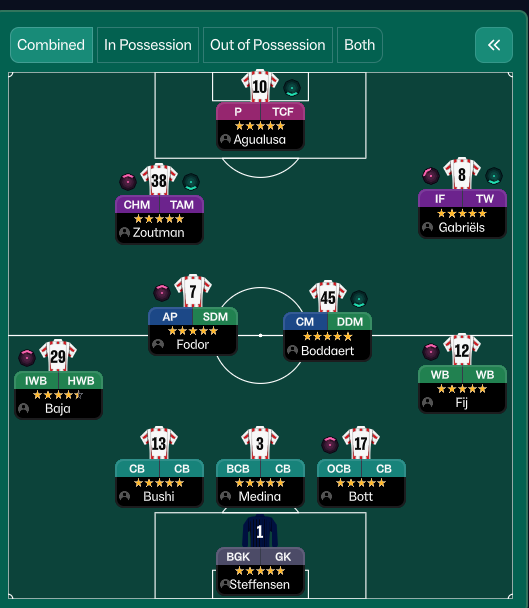
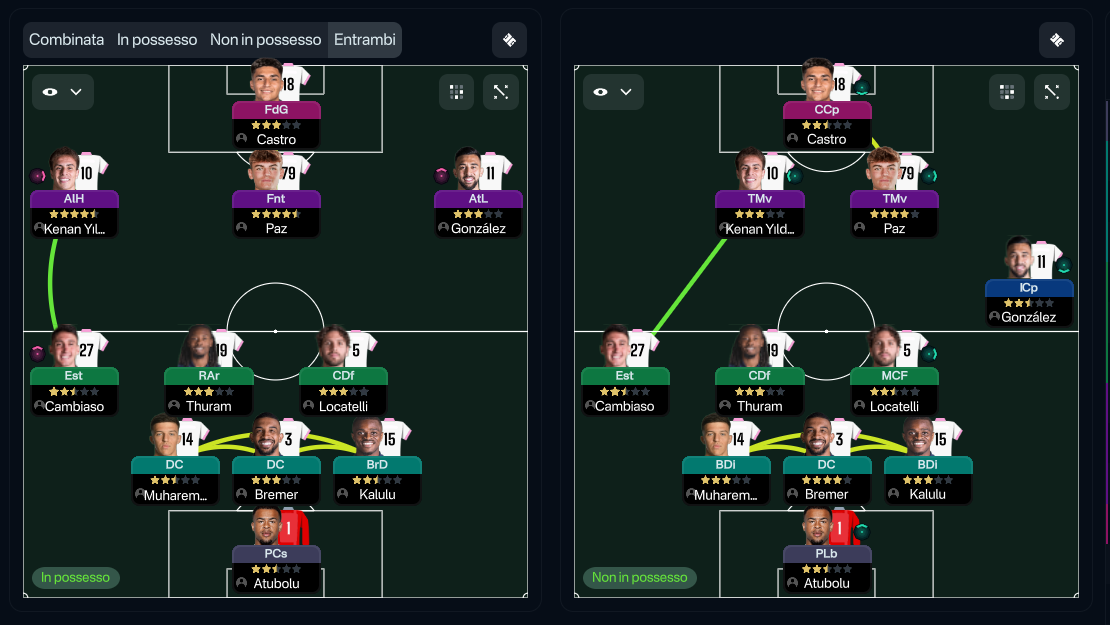
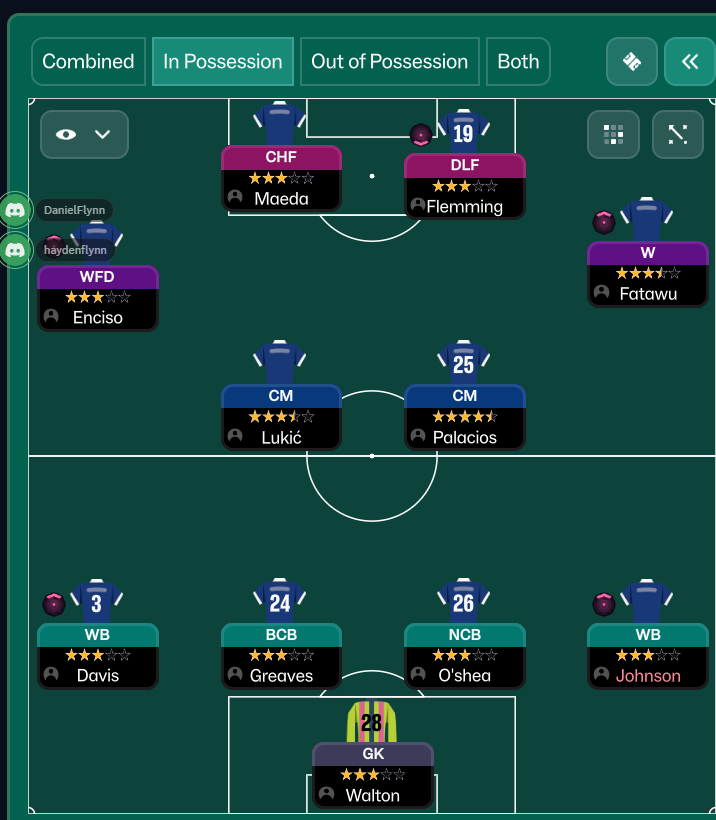
Formation:3-4-2-1
Team Fluidity:Structured
In Possession
Shorter Passing
Pass Into Space
Floated Crosses
Run At Defence
Work Ball Into Box
Focus Play Through The Middle
Overlap Left
Overlap Right
Slightly Higher Tempo
Fairly Narrow
In Transition
Distribute To Centre-Backs
Counter
Counter-Press
Out of Possession
Mid Block More Often
Prevent Short GK Distribution
Stop Crosses
Team Shape Without Ball
No team shape without ball data available
Team Shape With Ball
No team shape with ball data available
Key Strengths
Versatile Build-up Play
The tactic encourages both central and wide play, allowing for diverse attacking options.
Utilization of Wing-Backs
Wing-backs contribute significantly to the attack, widening the pitch and providing options.
Balancing Defence and Attack
Using a mid-block helps balance defensive solidity with the ability to press and counter.
Creative Midfield Presence
The advanced playmaker role is key for linking play and creating goal-scoring opportunities.
Conflicting Directions
Overlap Instruction Conflict
The overlapping left and right instructions may confuse wing-backs about their primary focus in attack.
Counter-Pressing vs. Defensive Stability
The emphasis on counter-pressing may compromise the defensive shape if players aren't positioned correctly.
Short Passing vs. Counter Counter
While focusing on shorter passing aligns with possession play, it can hinder counter-attacking options.
Narrow Width vs. Wing Play
The fairly narrow instruction conflicts with overlapping, potentially limiting wide attacking threats.
Tactical Suggestions
Clarify Wing-Back Roles
Consider simplifying overlapping instructions to enhance wing-back effectiveness without confusion.
Utilize a Higher Defensive Line
Adopting a higher defensive line may aid in committing more players forward for pressing.
Increase Tempo During Counterattacks
Setting a higher tempo specifically for counter-attacking phases could exploit opposition vulnerabilities.
Adjust DLP Role
Consider changing the DLP's duty to Attack to provide more support to advanced areas.
Introduce Additional Depth
An additional central midfielder, possibly as a Mezzala, can provide better connections in the center.
Experiment with a Fluid Shape
Testing a fluid team shape may improve adaptability and movement in tight spaces.