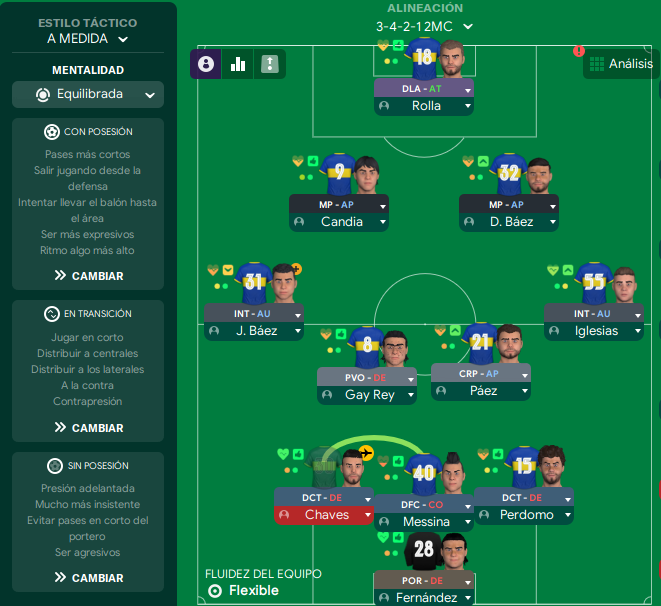
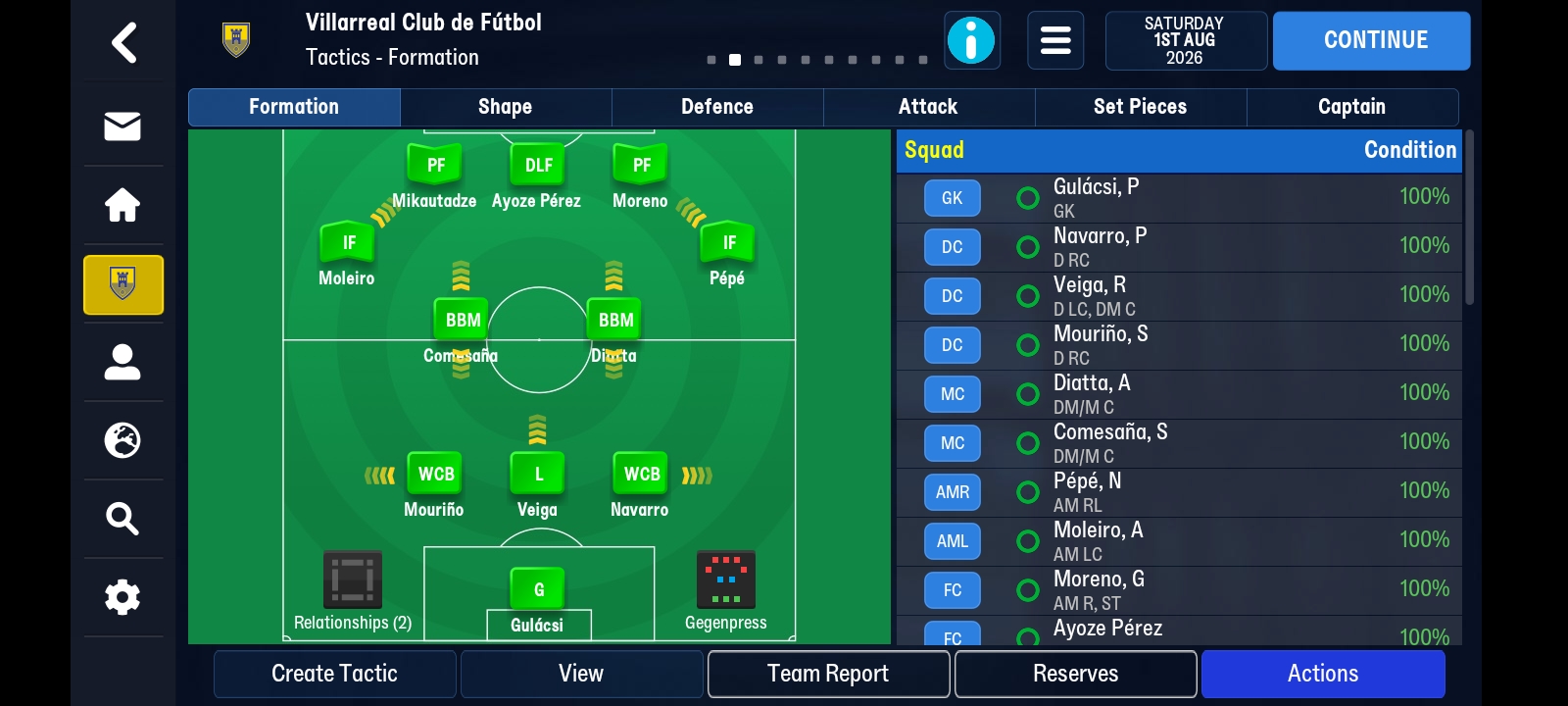
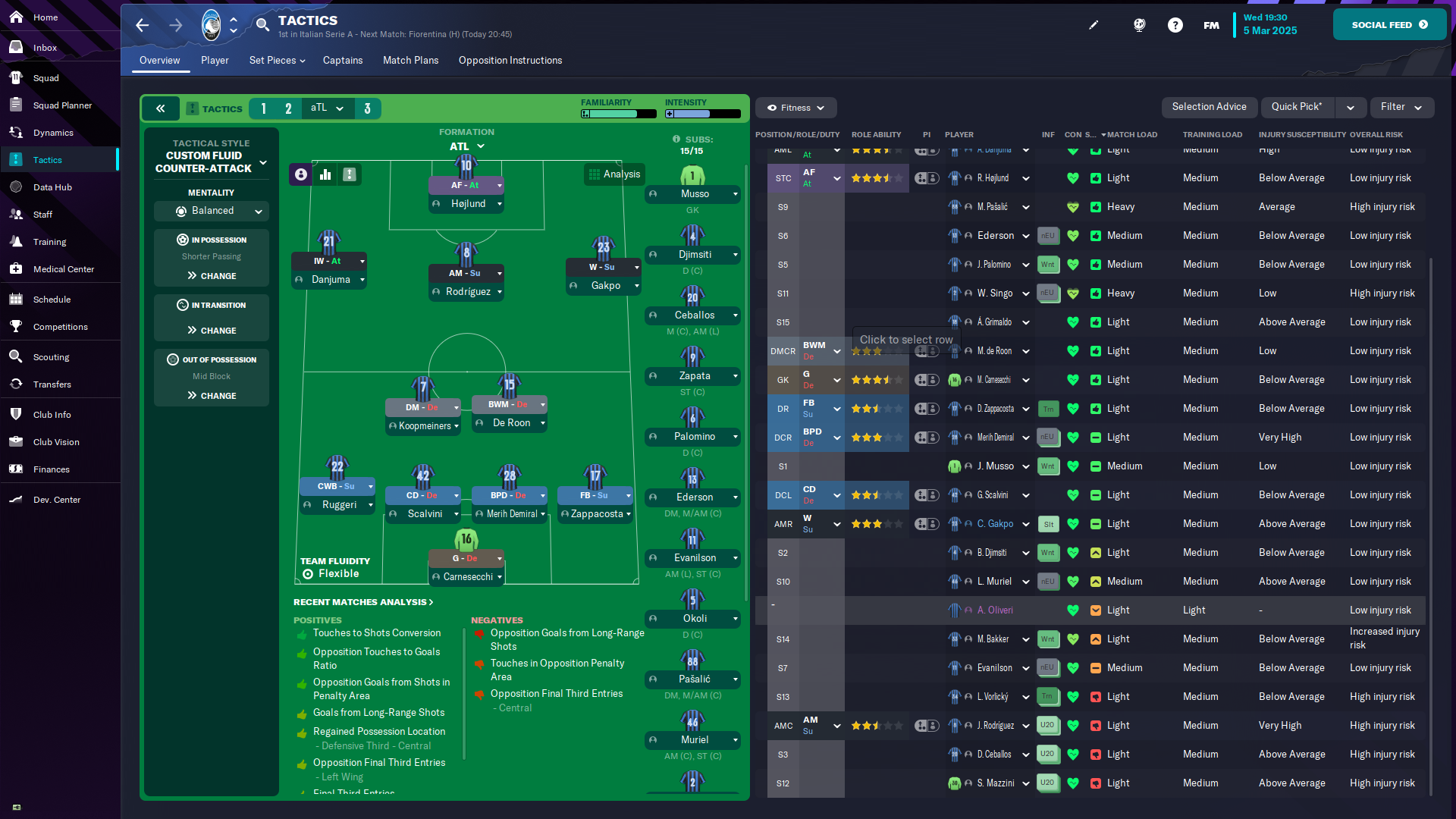
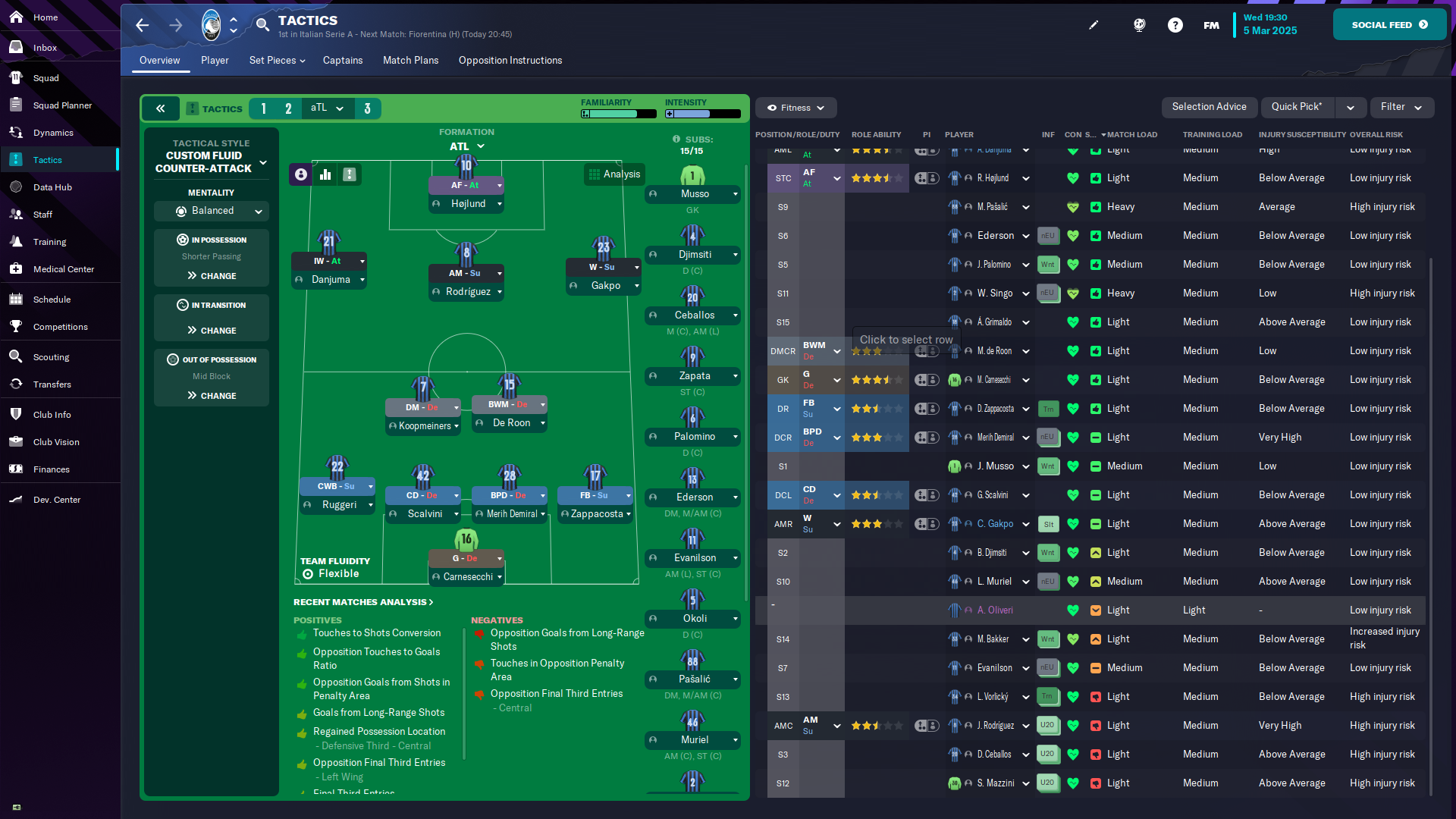
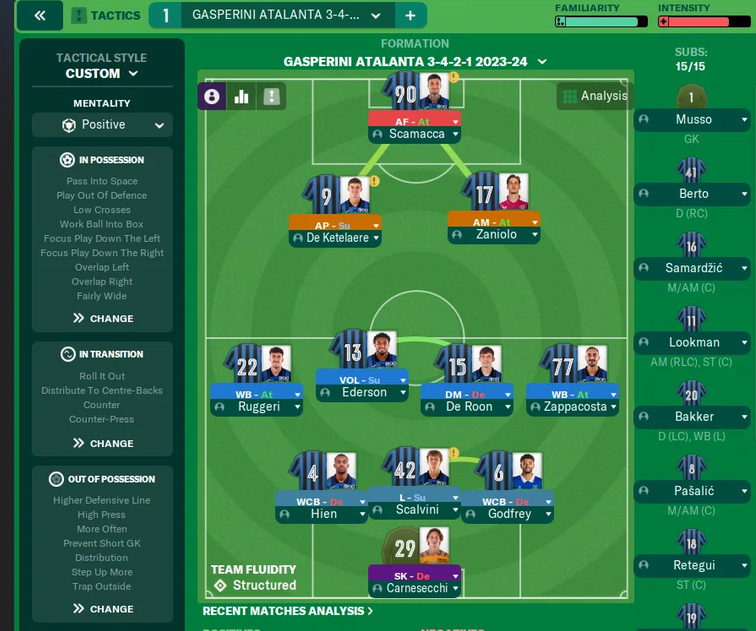
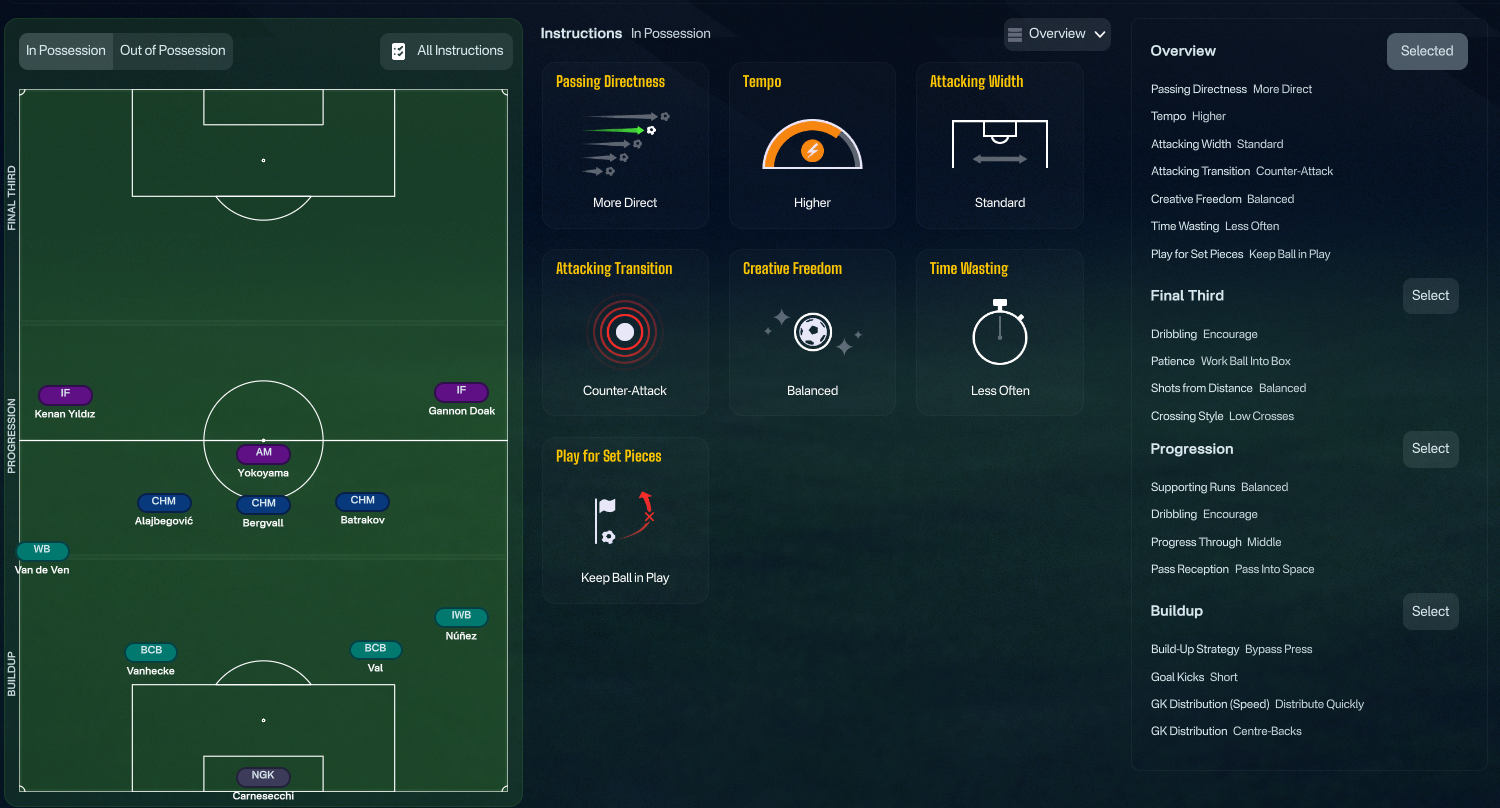
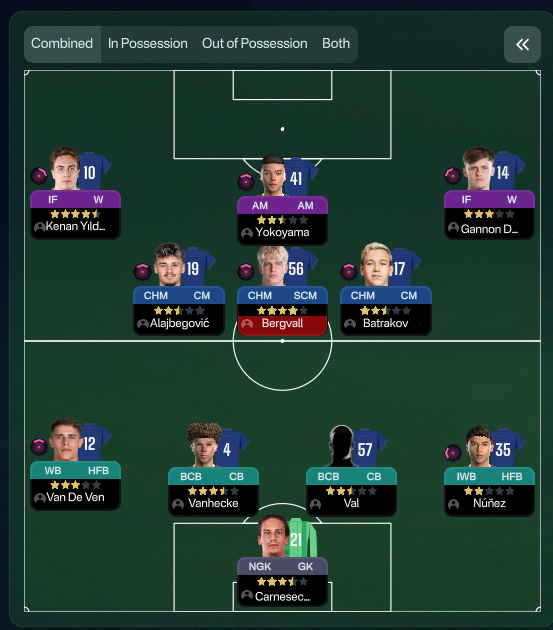
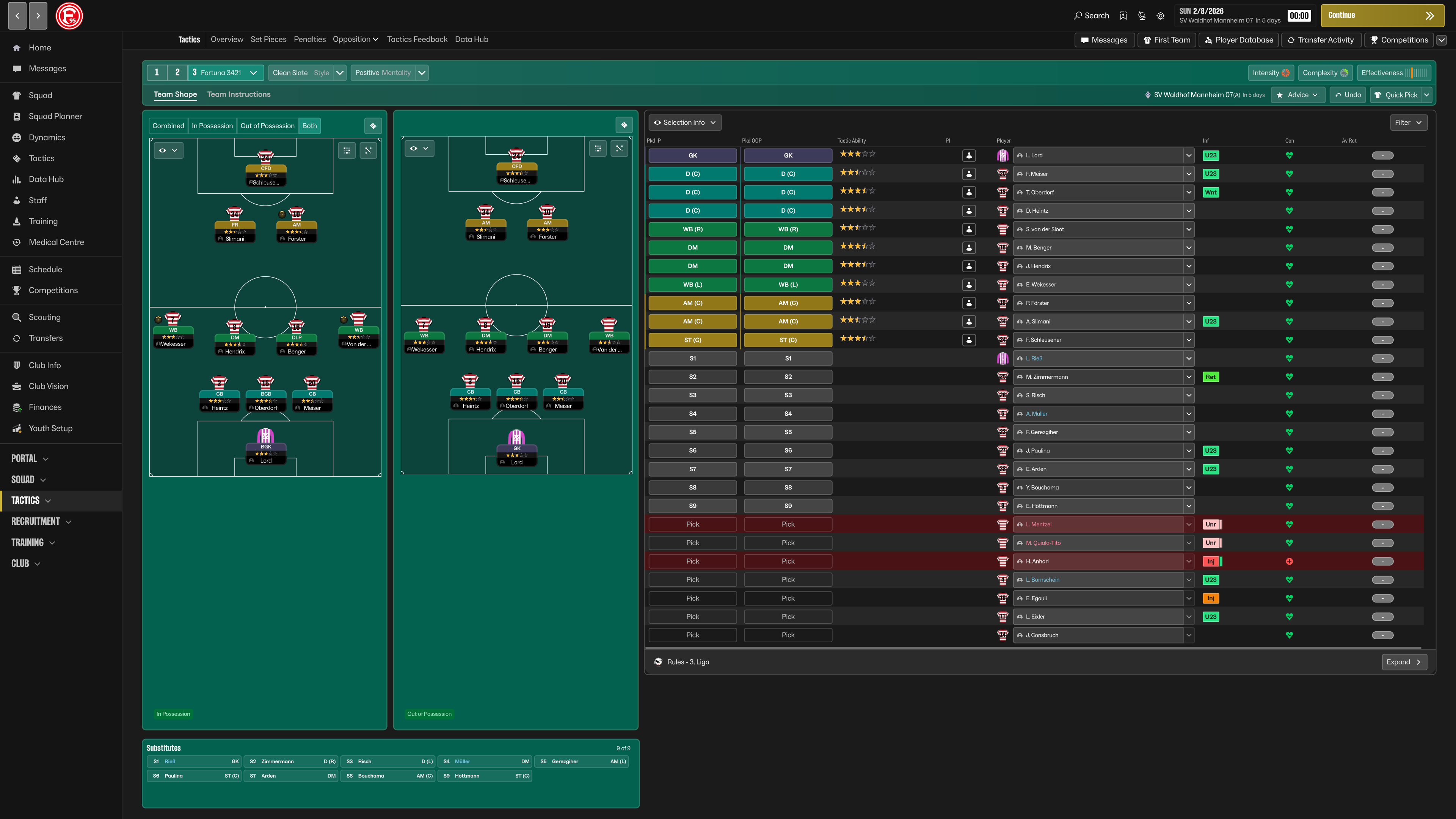
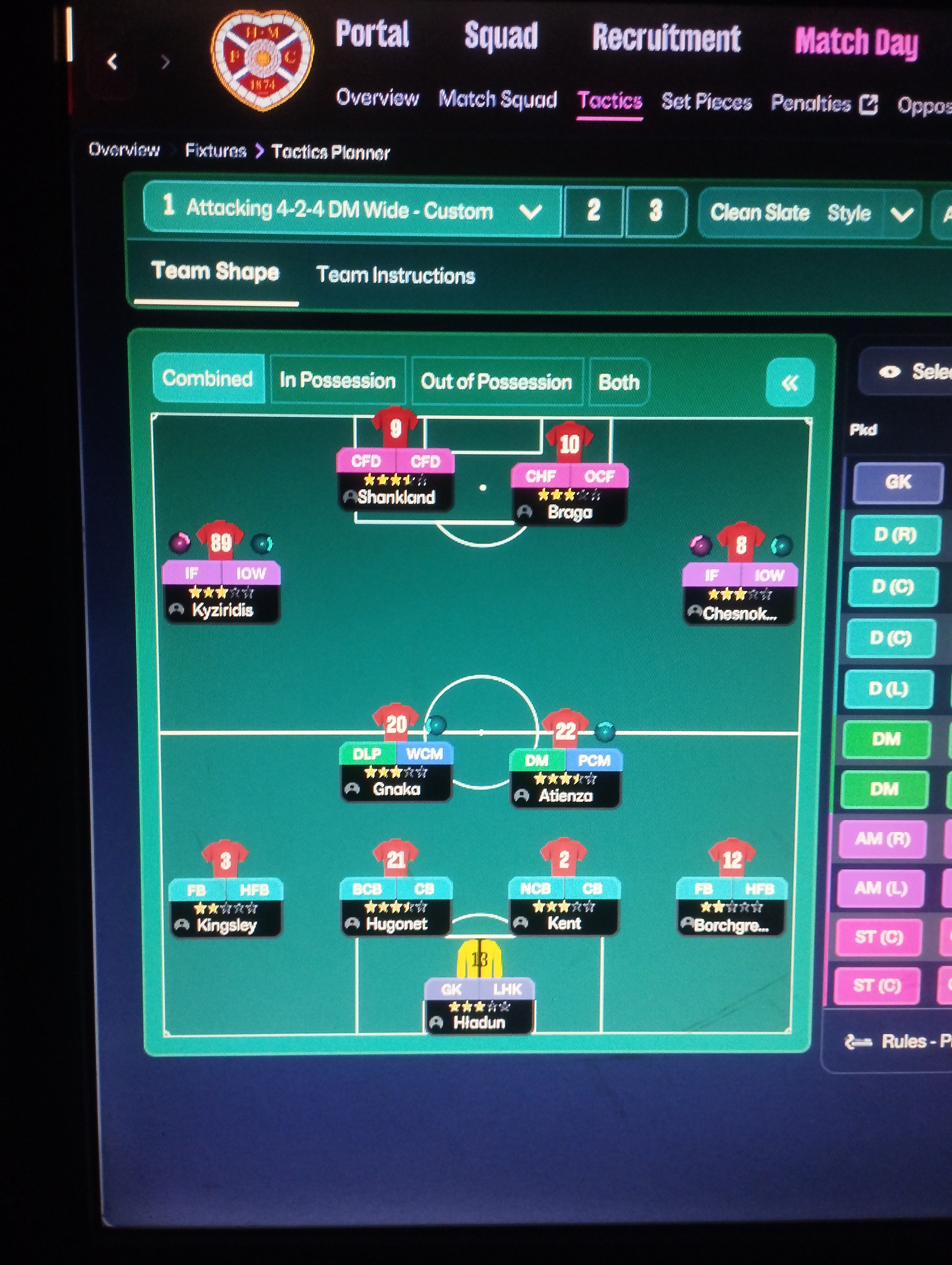
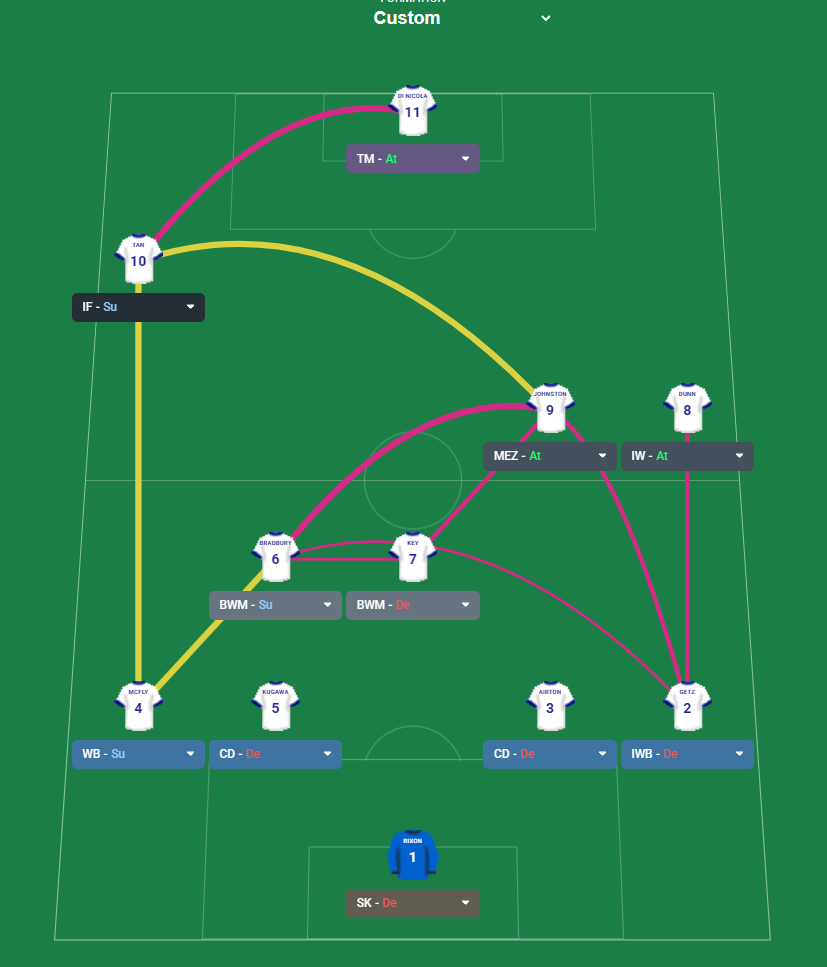
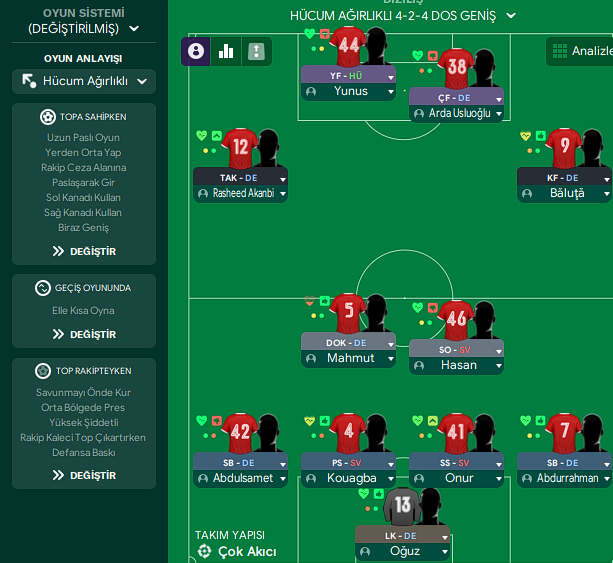
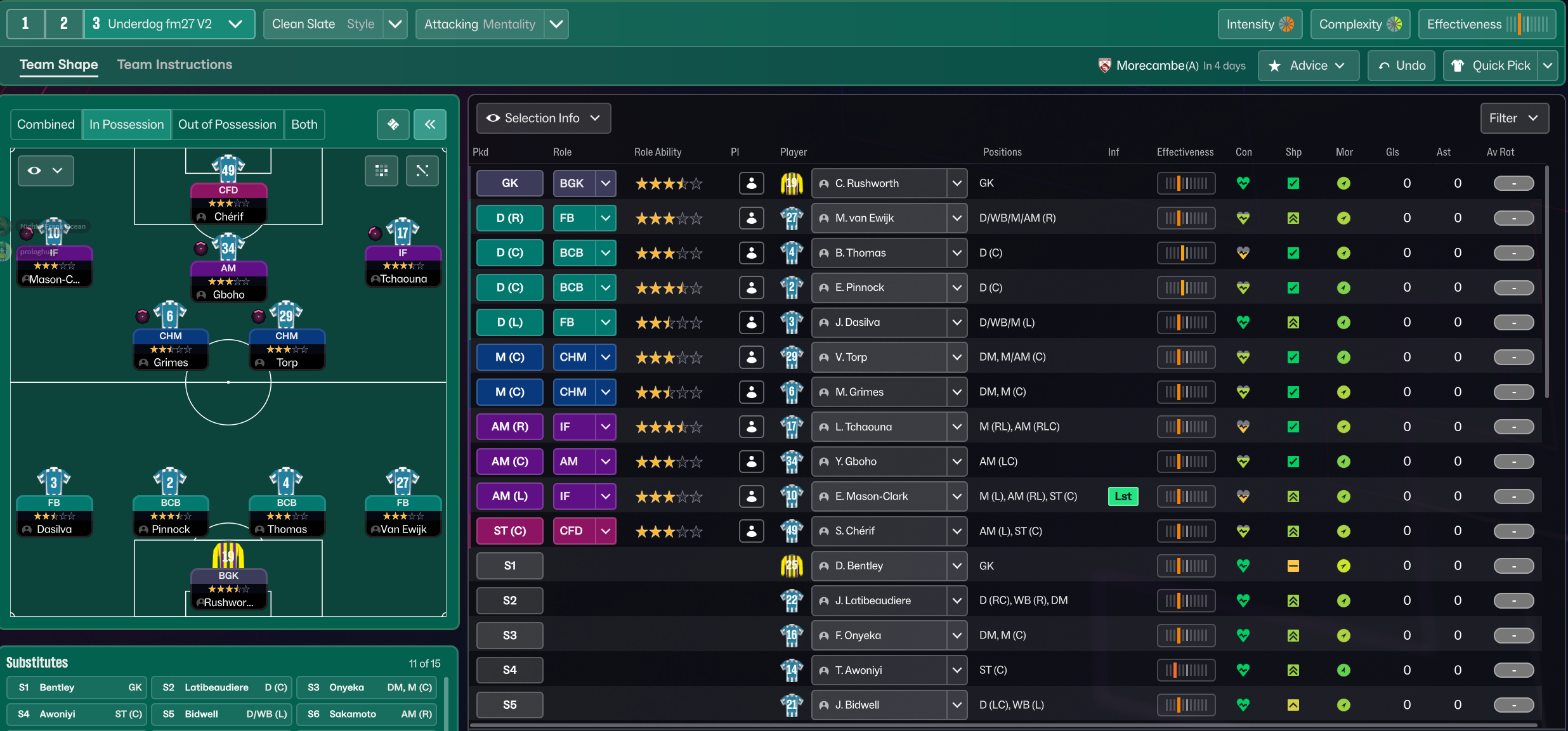
3-4-2-1
The fluid system allows players to interchange positions effectively, creating confusion for defenders and finding spaces.
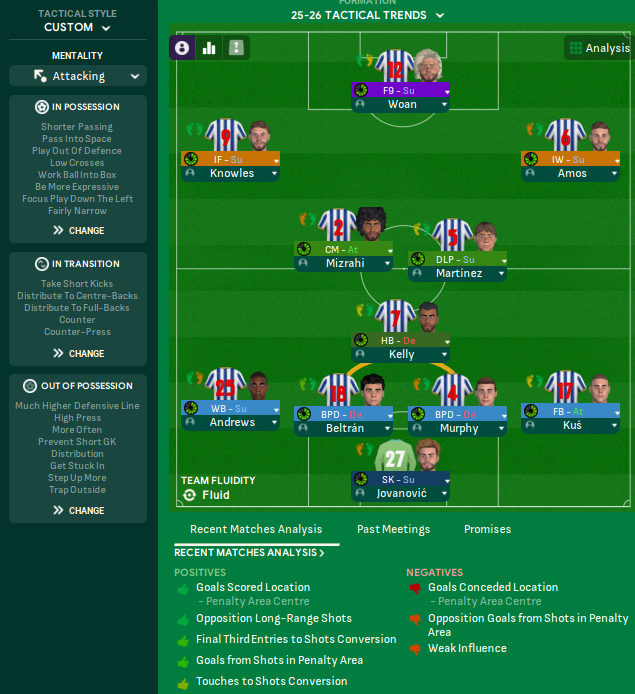
Loading tactical analysis...
Attacking
Attacking
3-4-2-1
Fluid
Shorter Passing
Pass Into Space
Work Ball Into Box
Fairly Narrow
Take Short Kicks
Counter
Distribute To Full-Backs
Much Higher Defensive Line
Higher Press
Step Up More
Trap Outside
F9
False Nine
Support
IF
Inside Forward
Support
CM
Central Midfielder
Attack
DLP
Deep-Lying Playmaker
Support
HB
Half Back
Defend
WB
Wing Back
Support
BPD
Ball Playing Defender
Defend
FB
Full Back
Attack
The fluid system allows players to interchange positions effectively, creating confusion for defenders and finding spaces.
With multiple attacking players and support roles in the midfield, a strong presence in the final third can lead to high-quality chances.
The higher defensive line may be susceptible to fast breakaways from opposing teams, creating vulnerabilities.
The narrow shape may limit the effectiveness of wing-backs, reducing width and predictable attacks.
How effective are your wing-backs in contributing to the attack?
Are your defensive players quick enough to keep up with opposing counters?
Is there a need for a more physical presence in midfield?
How well do your players understand their interchanging roles?
Are you comfortable with your goalkeeper's distribution under pressure?
What adjustments can be made against teams that consistently exploit high defensive lines?
The tactical theory behind the 3-4-2-1: roles, instructions, and the trade-offs that decide whether the system holds up.
Routines, takers, and target picks. How to turn corners and free-kicks into a reliable third of your goal output.
Protect a 1-0, chase a 1-0, hold a draw away. How to manage game state in FM through duties and roles, not by lurching to Defensive.
Mentality, duty, role, instruction, sub. The change hierarchy from lightest to heaviest intervention, and 60th-minute patterns by game state.