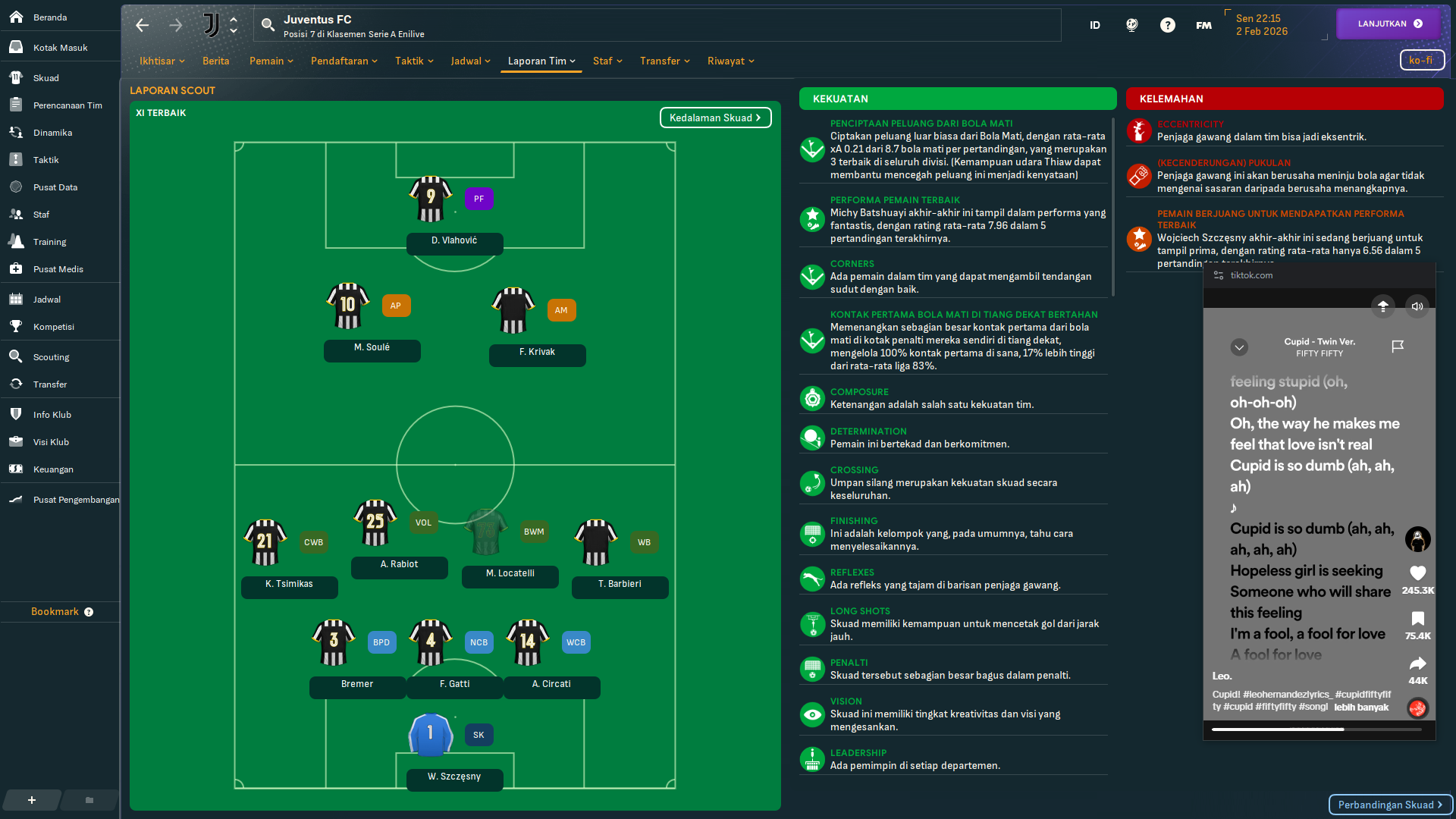
Uploaded Tactic
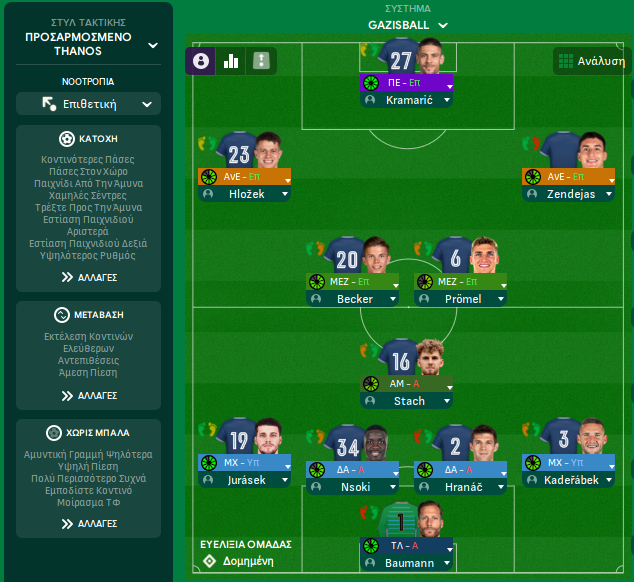
Formation & Style
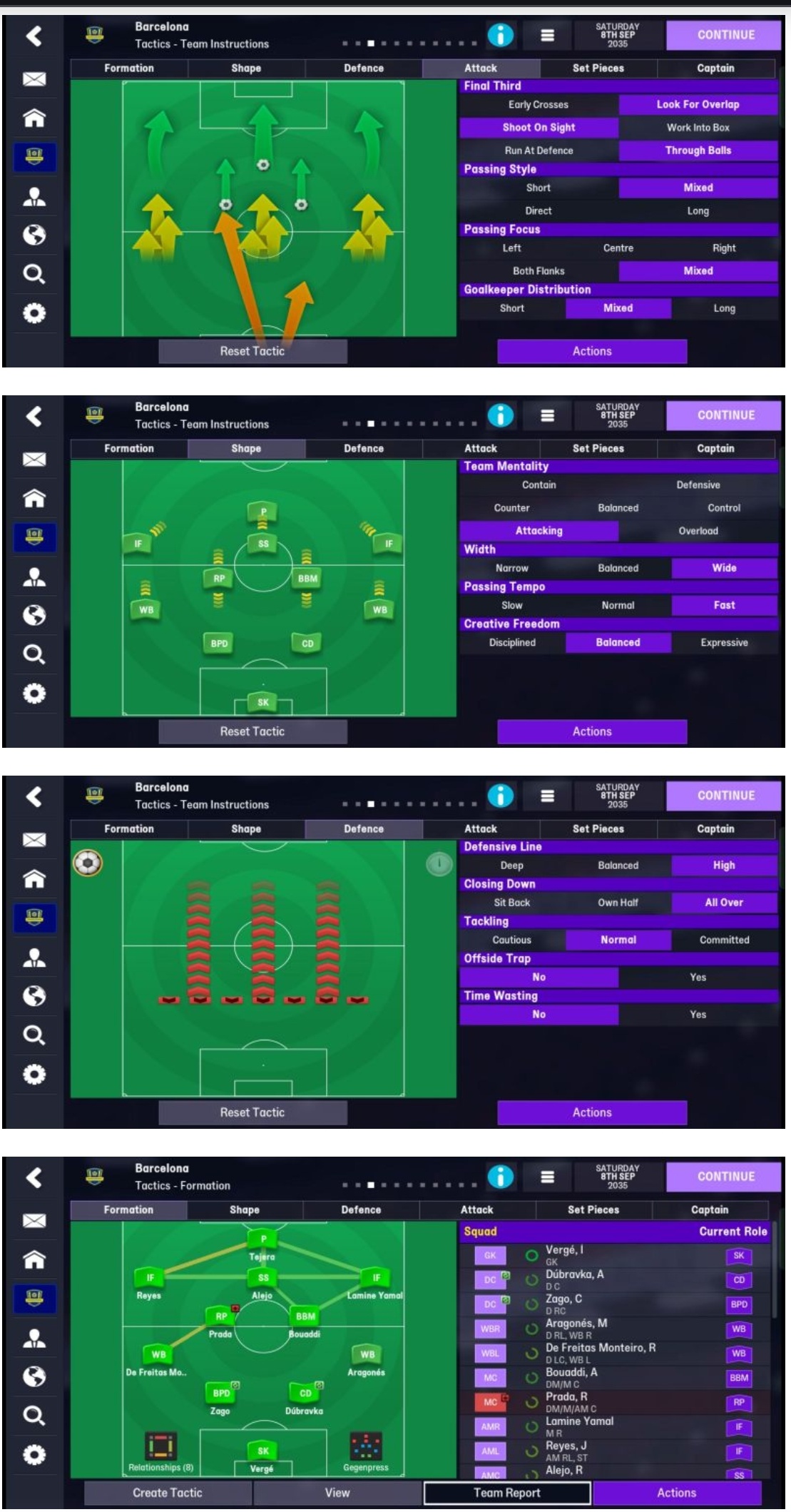
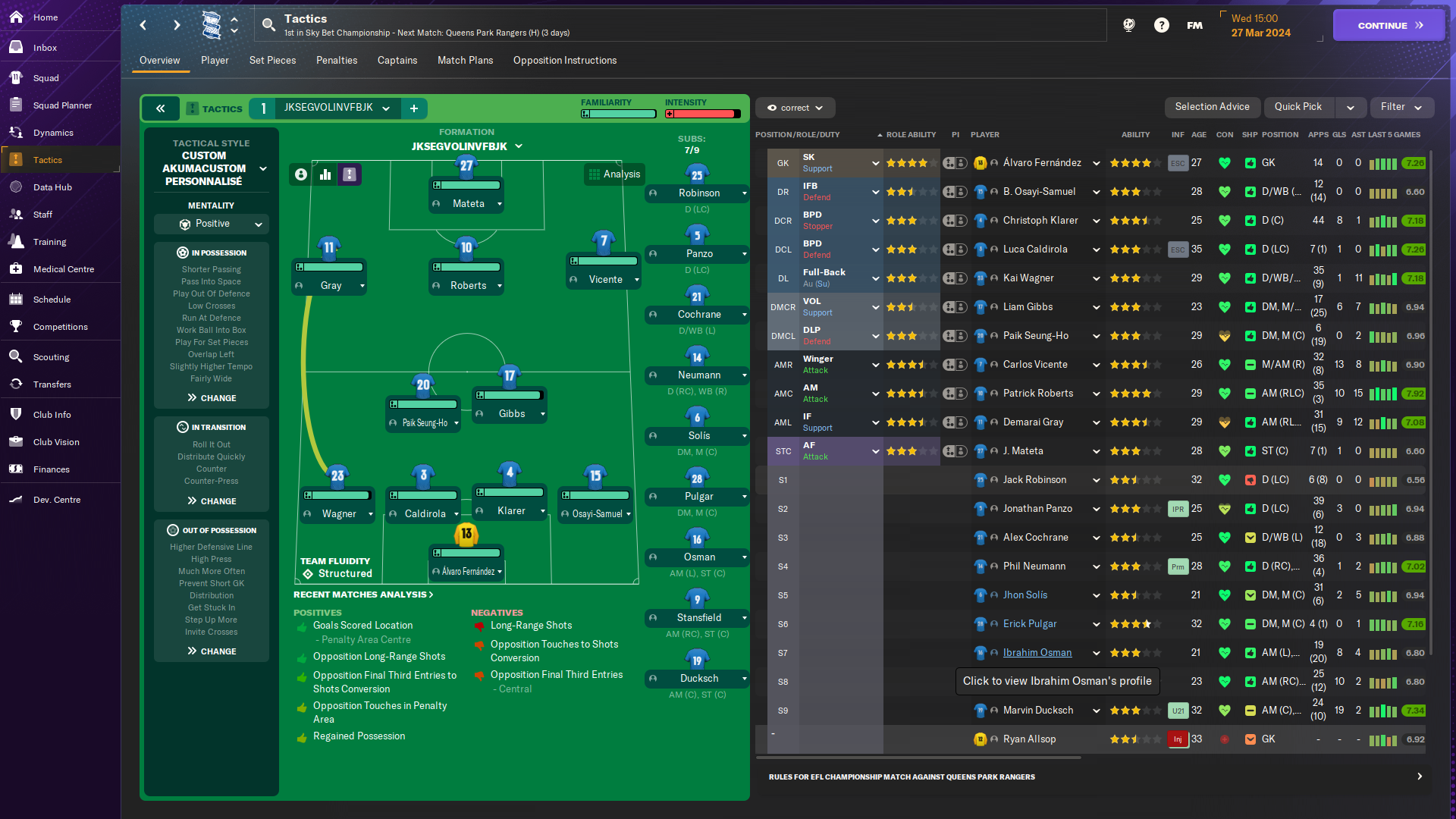
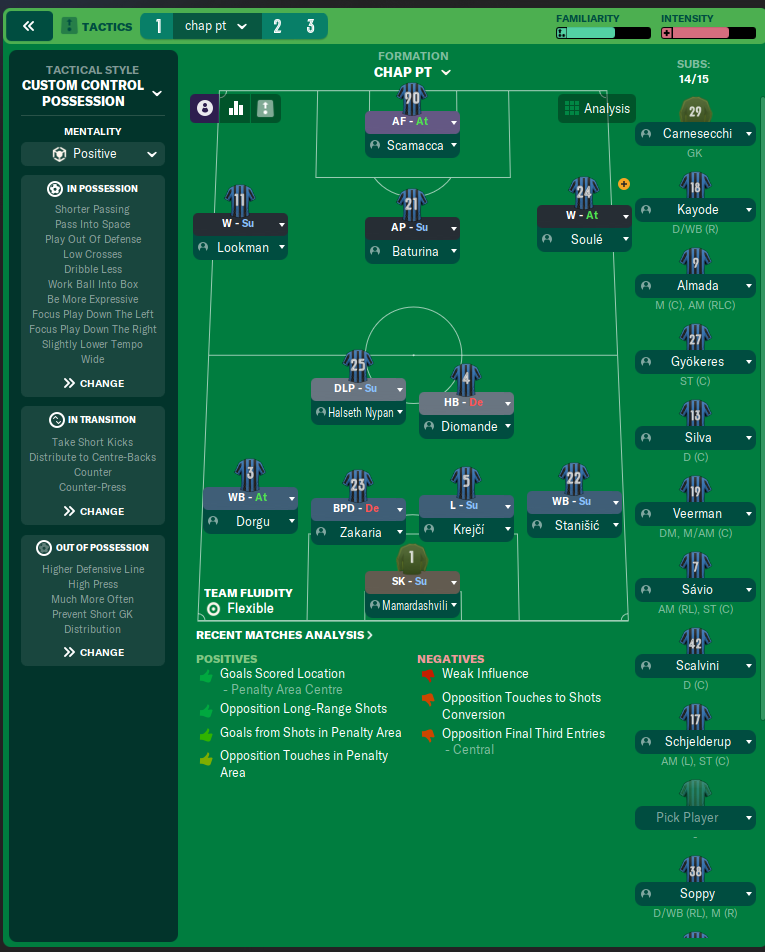
Tactical Style:Gazisball
Mentality:Positive
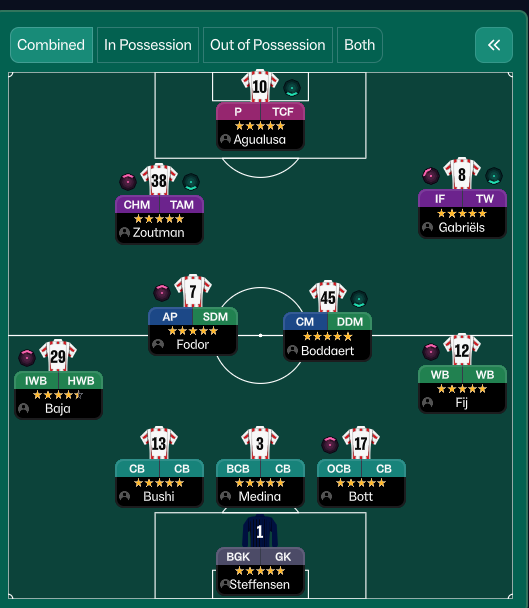
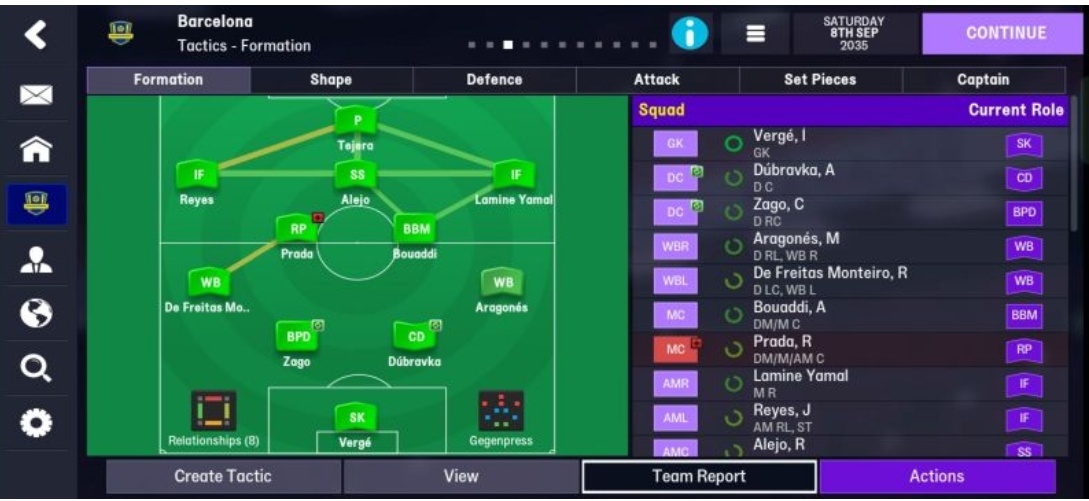
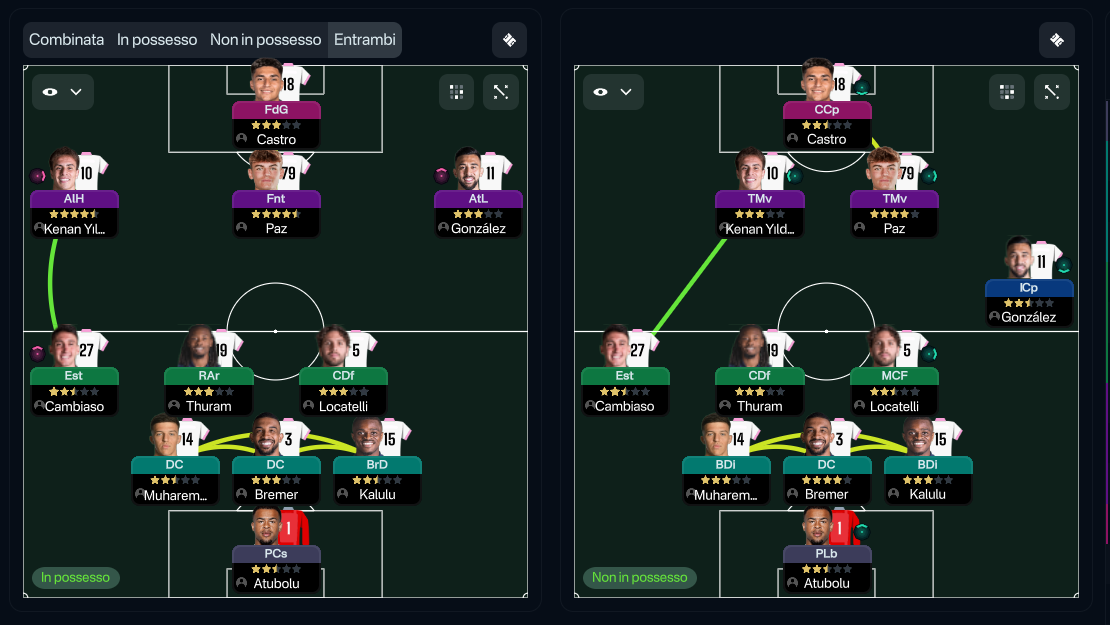
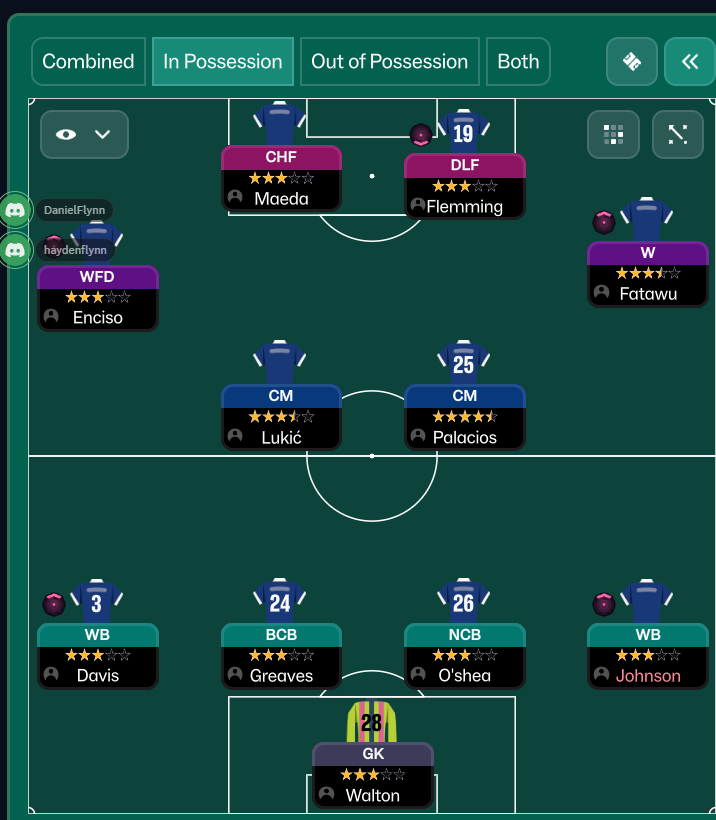
Formation:3-4-2-1
Team Fluidity:Flexible
In Possession
Play out of defence
Higher tempo
Work ball into box
In Transition
Counter-press
Counter
Out of Possession
Higher defensive line
Use offside trap
More urgent pressing
Team Shape Without Ball
No team shape without ball data available
Team Shape With Ball
No team shape with ball data available
Key Strengths
Attacking Width
The use of wing-backs allows the team to create width, stretching the opposition and creating space for the forwards.
Pressing Intensity
The emphasis on counter-pressing disrupts opposing plays and increases recovery of possession high up the pitch.
Dynamic Midfield
Having a mix of advanced playmakers and ball-winners allows for a fluid transition and good ball distribution.
Versatile Attackers
The presence of attacking midfielders behind a pressing forward provides numerous options for through balls and creativity in the final third.
Conflicting Directions
Defensive Stability
With a very attacking mentality and higher defensive line, the team may become vulnerable to quick counter-attacks.
Player Roles Overlap
Multiple attacking players may crowd the area and limit passing options, reducing overall fluidity.
Wing Back Commitments
High attacking duties for wing-backs could leave spaces defensively if the team is caught on the break.
Pressing Risks
An aggressive pressing system may lead to players being out of position and cause issues during transitions.
Tactical Suggestions
Adjust Defensive Line
Consider dropping the defensive line slightly to avoid vulnerabilities against faster forwards.
Vary Player Roles
Evaluate whether a more conservative role for one of the wing-backs could provide better balance.
Add Depth in Midfield
Introducing a second defensive midfielder can enhance stability during transitions and provide better cover.
Tweak Mentality
Consider a slightly more cautious mentality during tougher matchups to ensure stability without losing attacking intent.