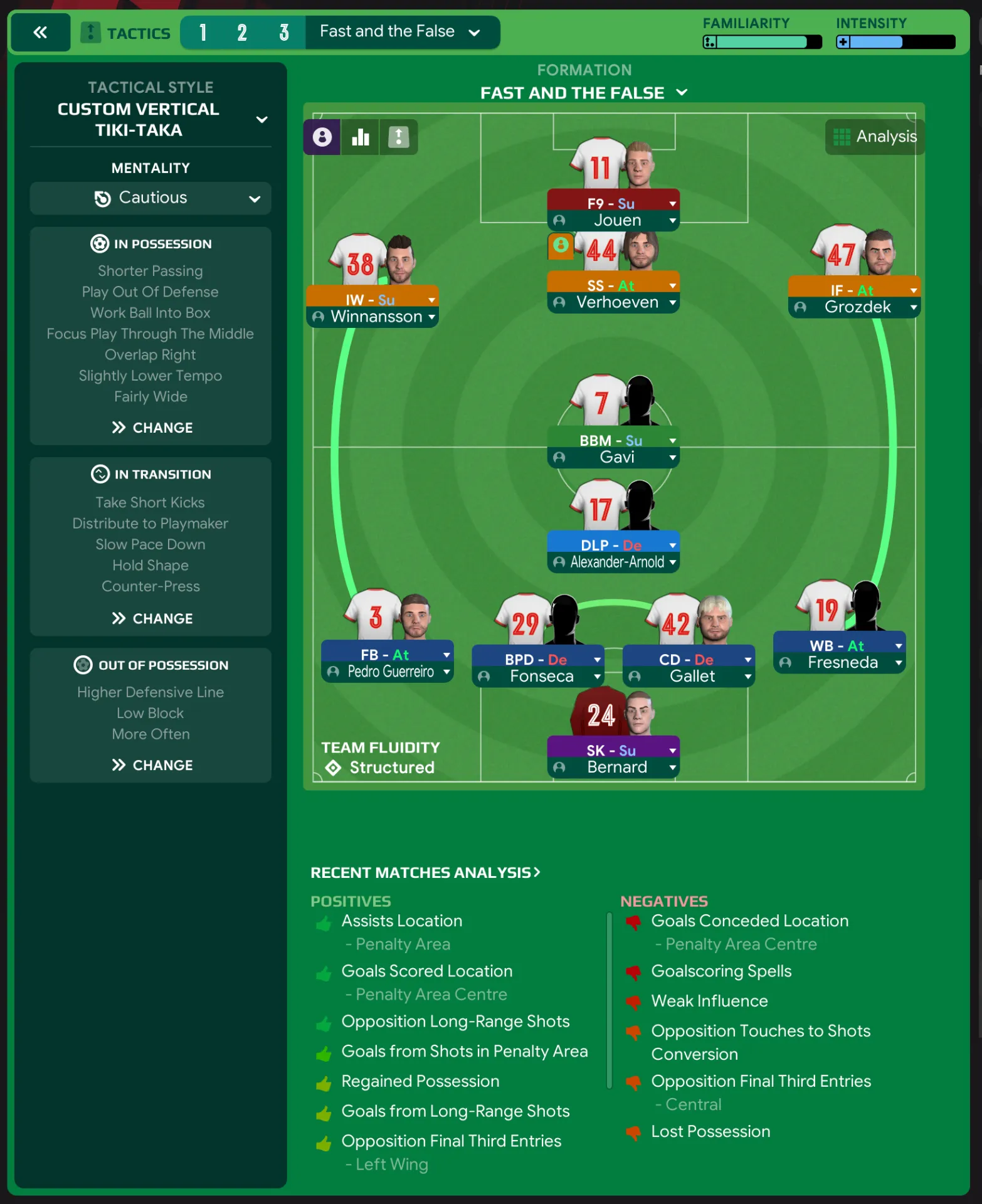
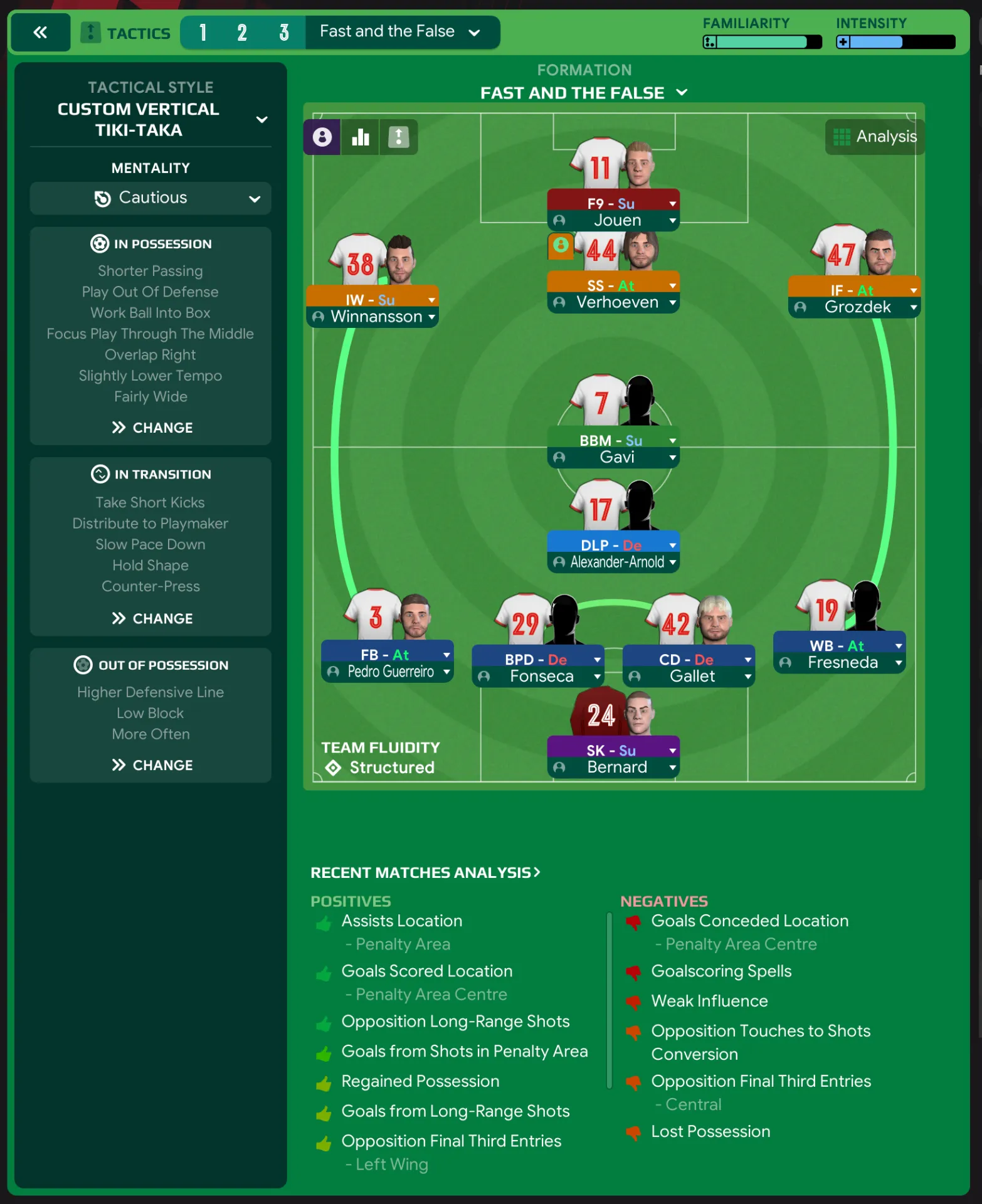
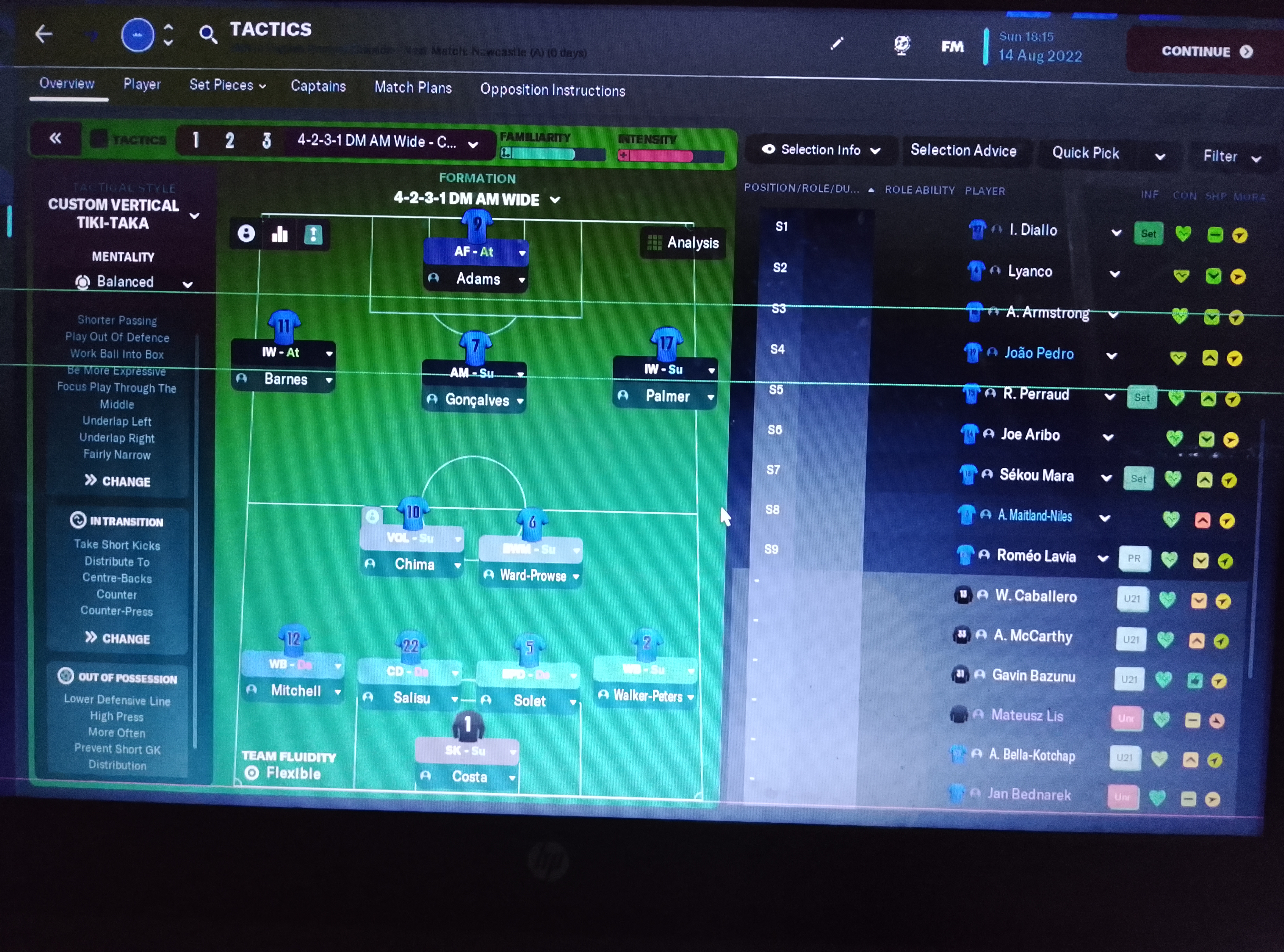
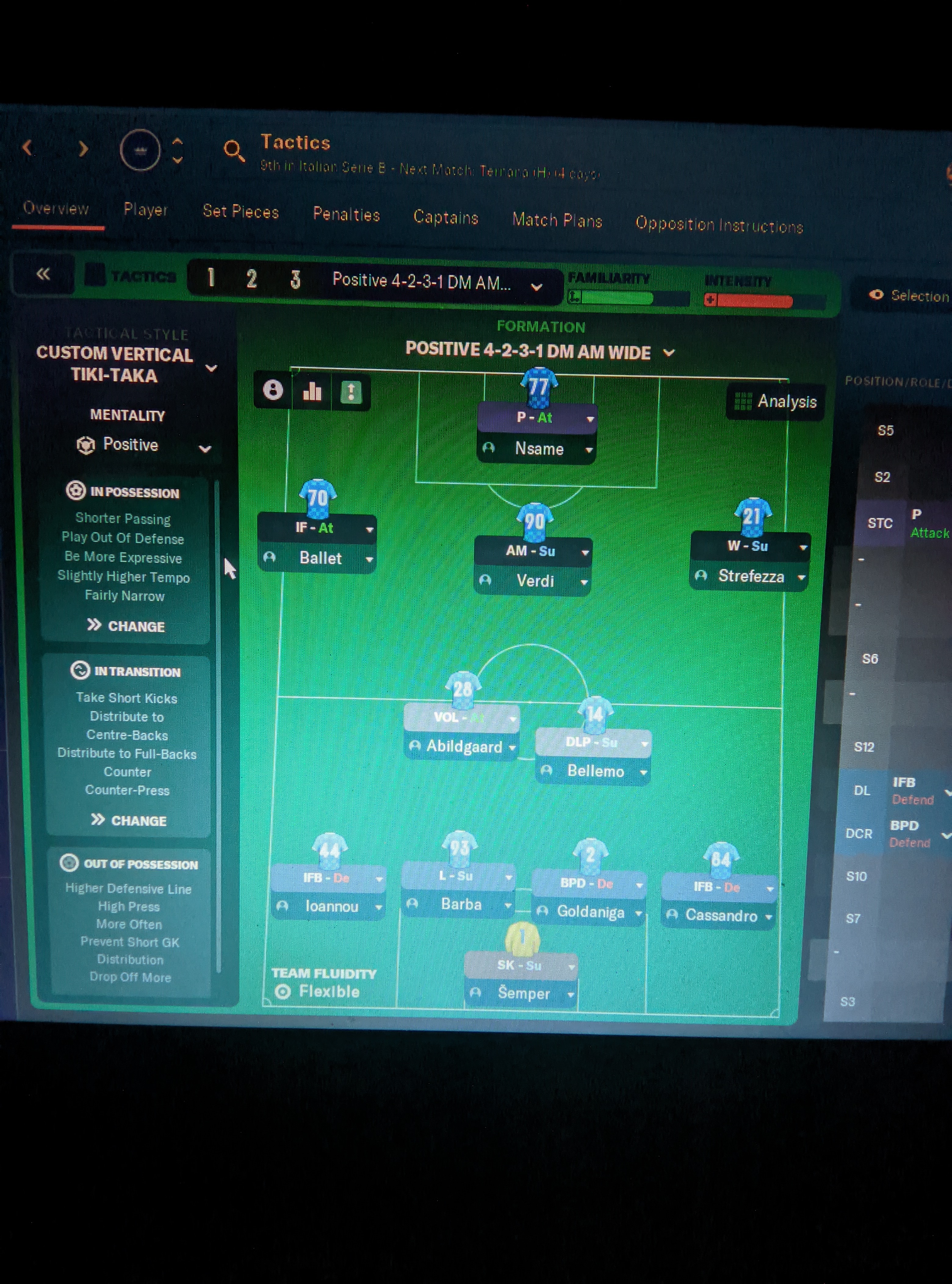
Uploaded Tactic
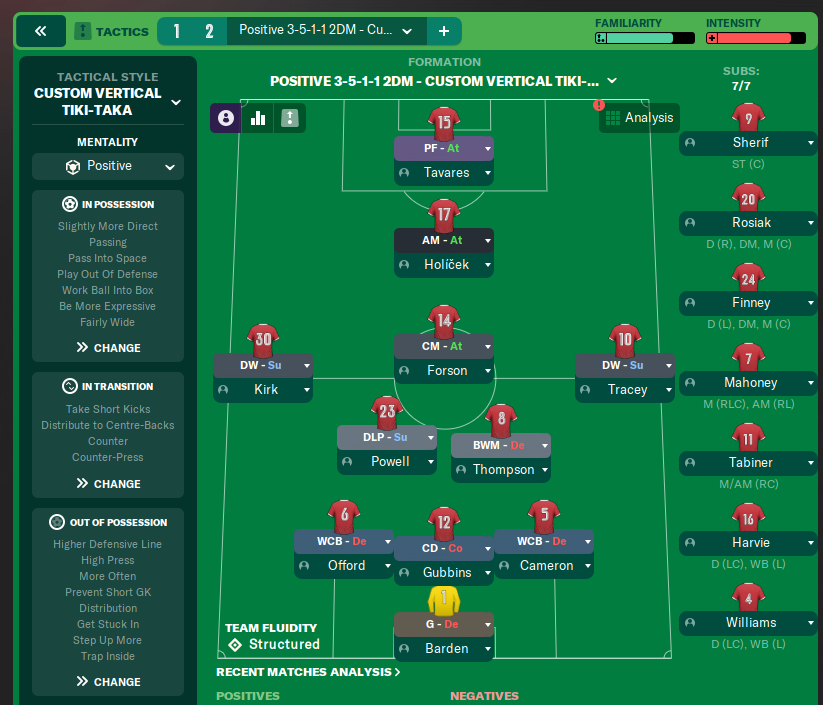
Formation & Style
Tactical Style:Custom Vertical Tiki-Taka
Mentality:Positive
Formation:3-5-1-1 DM
Team Fluidity:Structured
In Possession
Slightly More Direct Passing
Pass Into Space
Work Ball Into Box
Be More Expressive
Fairly Wide
In Transition
Take Short Kicks
Distribute to Centre-Backs
Counter-Press
Out of Possession
Higher Defensive Line
High Press
Prevent Short GK Distribution
Get Stuck In
Trap Inside
Team Shape Without Ball
No team shape without ball data available
Team Shape With Ball
No team shape with ball data available
Key Strengths
Dynamic Midfield
The presence of both a Deep-Lying Playmaker and a Ball-Winning Midfielder allows for a balanced midfield capable of transitioning effectively between defense and attack.
Width in Attack
Utilizing wide players (Wingers) helps stretch the opposing defense, creating space for the attacking midfielders and forwards.
Effective Pressing
The High Press combined with Counter-Press tactics can disrupt the opponent's buildup, leading to turnovers in advanced positions.
Involved Full-Backs
Full-Backs in a Wing-Back role provide width and depth, contributing to both defensive stability and offensive support.
Conflicting Directions
High Defensive Line and Counter-Press
While a higher defensive line is beneficial, it can leave the team vulnerable to quick counter-attacks if the pressing fails.
Be More Expressive vs. Structure
The directive to be expressive can conflict with the structured team fluidity, leading to inconsistent performances.
Slightly More Direct vs. Tiki-Taka Philosophy
Slightly more direct passing can clash with the tiki-taka approach, which generally favors shorter passes and retention.
Overlap vs. Fairly Wide
A fairly wide approach can limit the ability of full-backs to overlap effectively, potentially reducing offensive effectiveness.
Tactical Suggestions
Adjust Defensive Line
Consider lowering the defensive line to reduce vulnerability to fast counters, especially if your defenders lack pace.
Fluidity Adjustment
Explore a more fluid team shape to balance expressiveness with structure, allowing for better improvisation in attacks.
Experiment with Roles
Testing different player roles, such as a more attacking duty for the DLP, can create additional offensive options.
Utilize Central Midfielders
Encourage the central midfielders to make forward runs into the box to create additional goal-scoring threats.