Uploaded Tactic
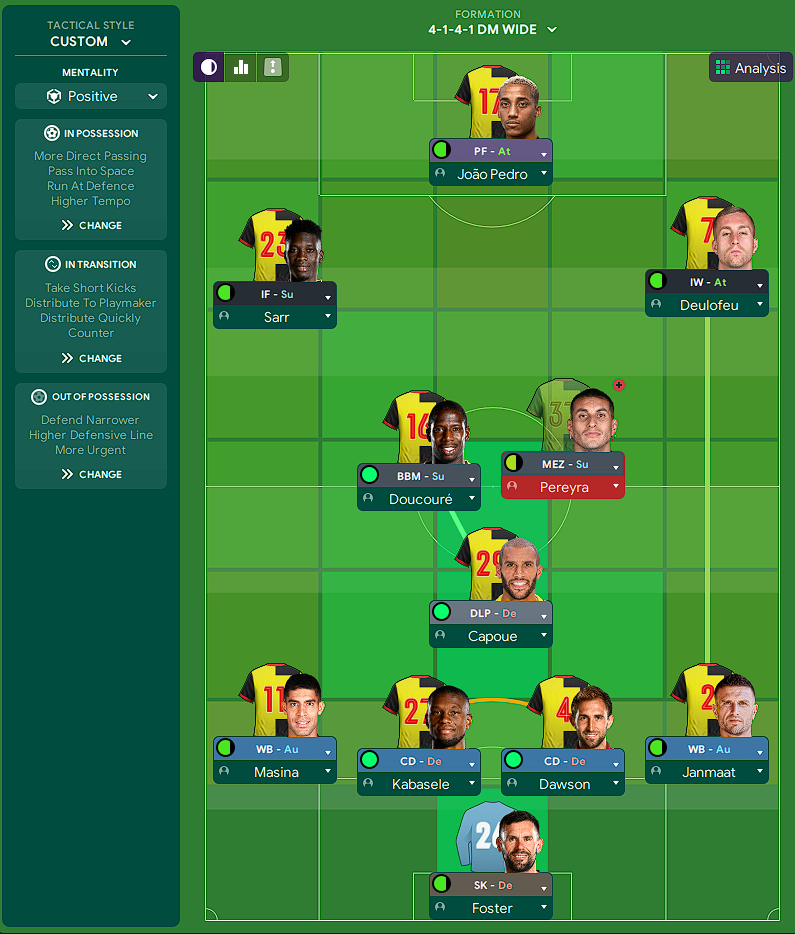
Formation & Style
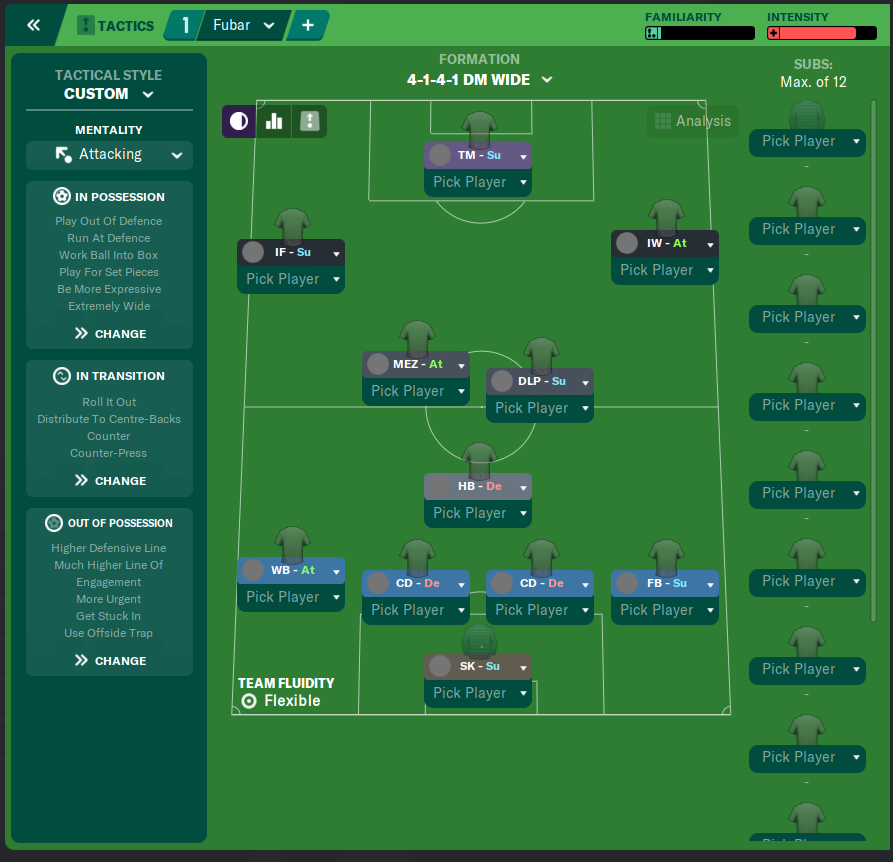
Tactical Style:Custom
Mentality:Positive
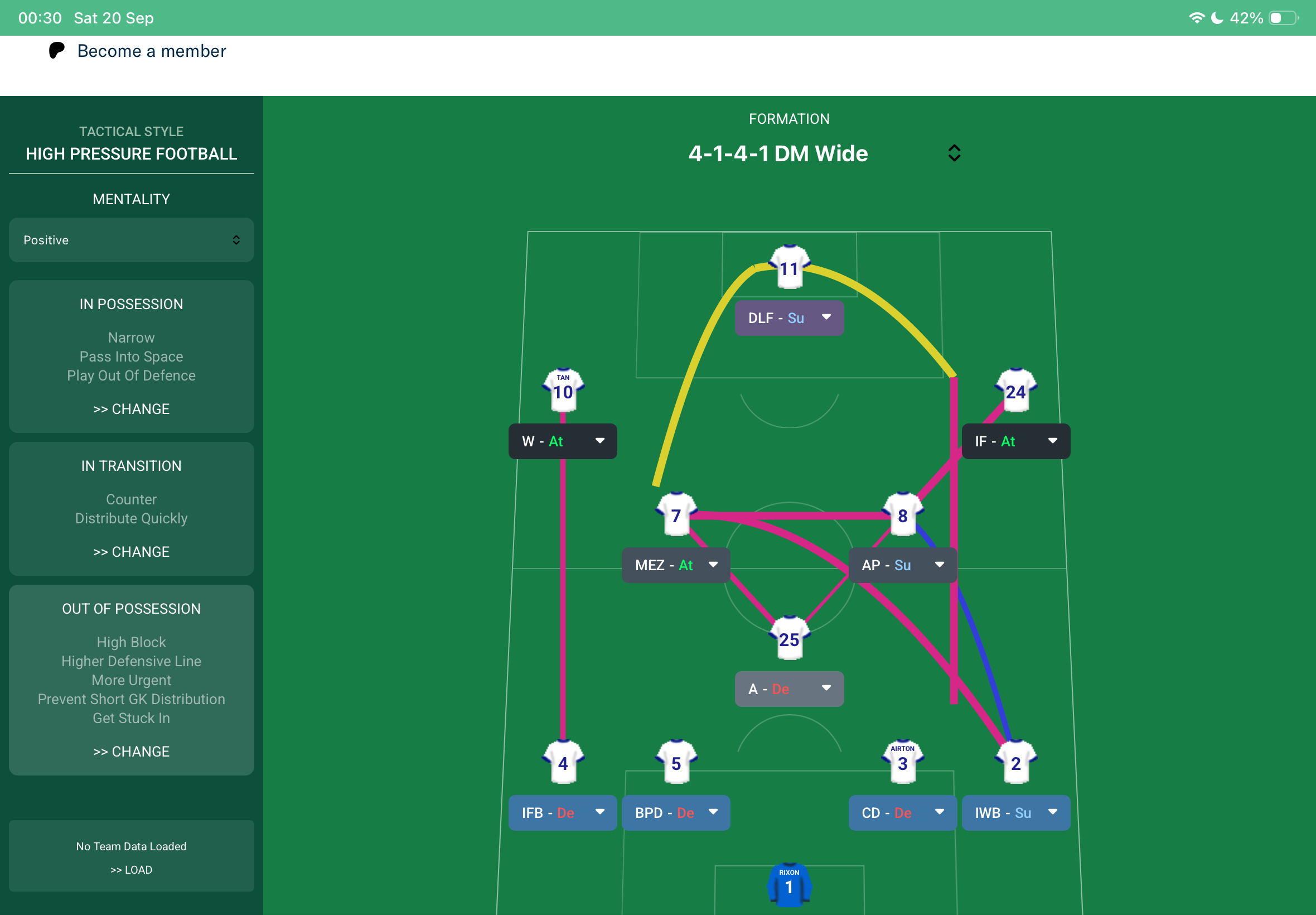
Formation:4-1-4-1 DM Wide
Team Fluidity:Flexible
In Possession
More Direct Passing
Pass Into Space
Run At Defence
Higher Tempo
In Transition
Take Short Kicks
Distribute To Playmaker
Distribute Quickly
Counter
Out of Possession
Defend Narrower
Higher Defensive Line
More Urgent
Team Shape Without Ball
No team shape without ball data available
Team Shape With Ball
No team shape with ball data available
Key Strengths
Dynamic Attacking Play
The combination of Inside Forwards, an Advanced Forward, and a Mezzala allows for fluid movement and dynamic attacks through the middle and wings.
Strong Midfield Control
The presence of a Deep Lying Playmaker and a Box to Box Midfielder helps maintain possession and control the midfield area.
Effective Use of Width
Wing Backs provide width while supporting attacks, allowing the team to stretch the opposition and create space.
Quick Transition Play
Focus on countering quickly with players capable of running into space maximizes attacking potential during transitions.
Conflicting Directions
Defensive Urgency vs. Higher Defensive Line
While a higher defensive line can compress the play, pressing more urgently may lead to gaps at the back if not managed carefully.
Direct Passing vs. Possession-Based Midfield
A direct passing style can conflict with the playmaker's role, potentially leading to missed opportunities to control possession.
Inverted Winger Roles
Inverted Winger and Inside Forward roles might overlap in responsibilities, creating confusion in attacking patterns.
Higher Tempo vs. Tactical Discipline
A higher tempo strategy can lead to loss of shape, especially if players are urged to press without suitable organization.
Tactical Suggestions
Balance Pressing and Line Height
Consider moderating the defensive line height to better manage pressing and avoid counter-attacks exploiting defensive gaps.
Utilize Playmaker Effectively
Ensure the Deep Lying Playmaker has clear passing lanes to control the tempo of the game and connect play between defense and attack.
Clarify Winger Roles
Adjust the roles of the Inverted Winger and Inside Forward for clearer attacking responsibilities to enhance overall coherence in attack.
Adjust Tempo Based on Match Context
Be adaptable with tempo; considering the opponent's strengths and weaknesses can provide tactical advantages during different phases of play.
Ask Questions About Your Lineup
Related Tactics
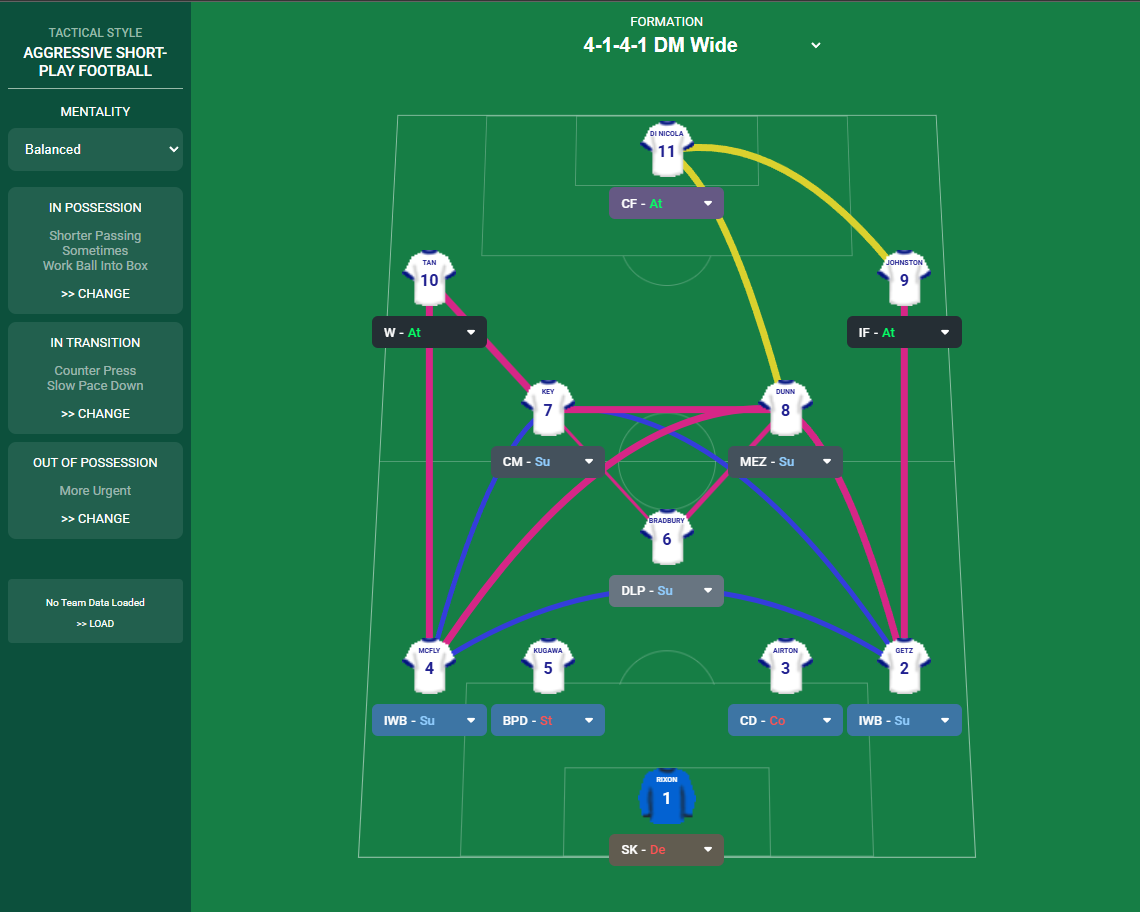
Aggressive Short-Play Football 4-1-4-1 DM Wide
Aggressive Short-Play Football
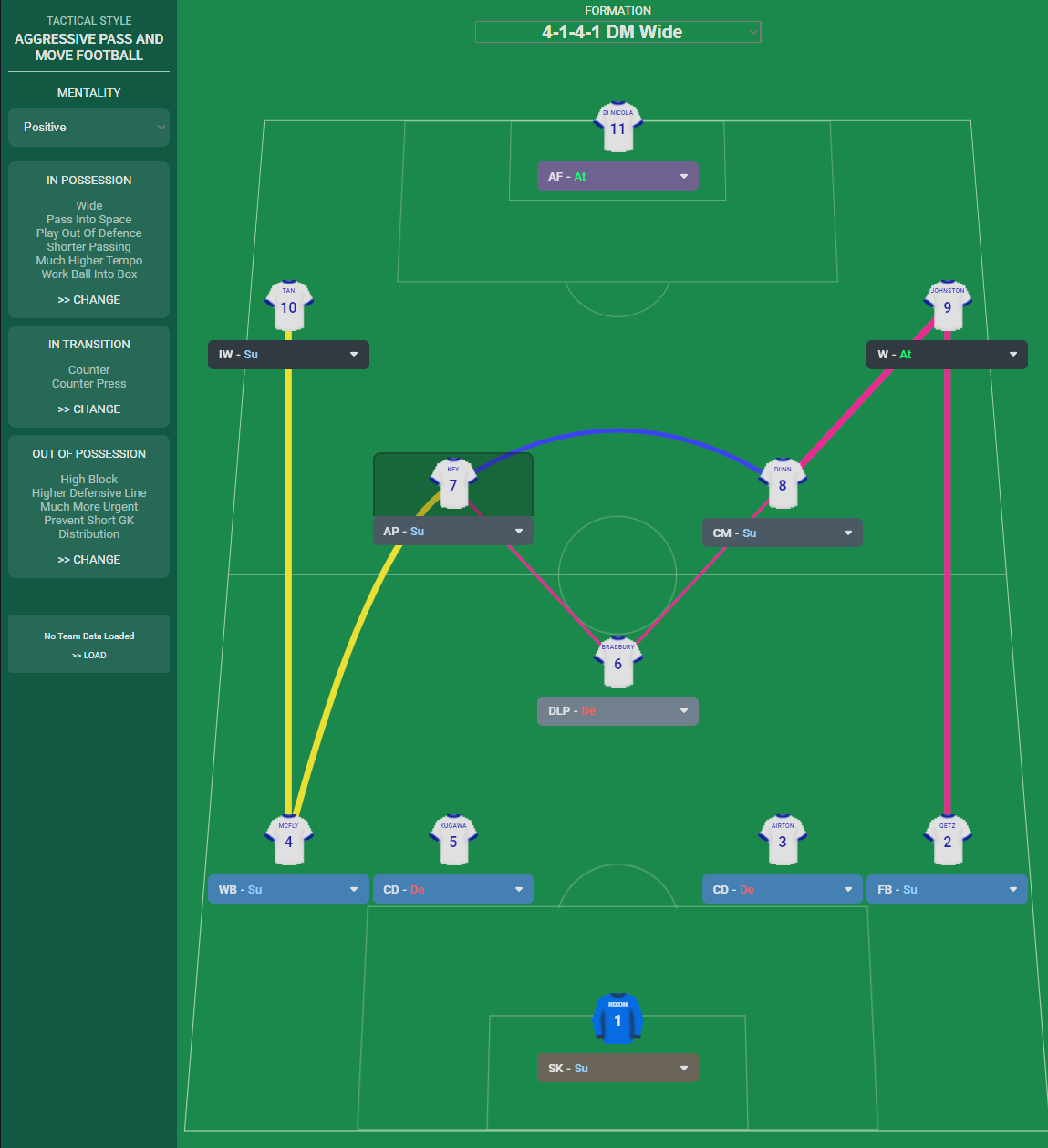
Aggressive Pass and Move Football 4-1-4-1 DM Wide
Aggressive Pass and Move Football
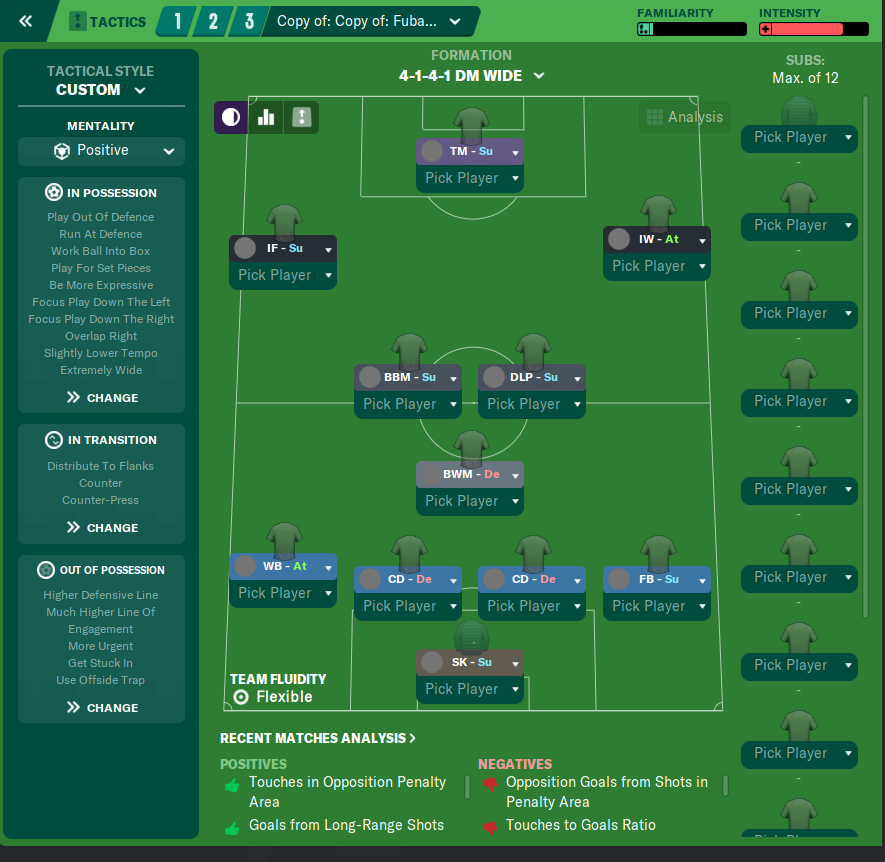
4-1-4-1 DM Wide Formation
Custom
4-1-4-1 DM Wide Formation
Custom
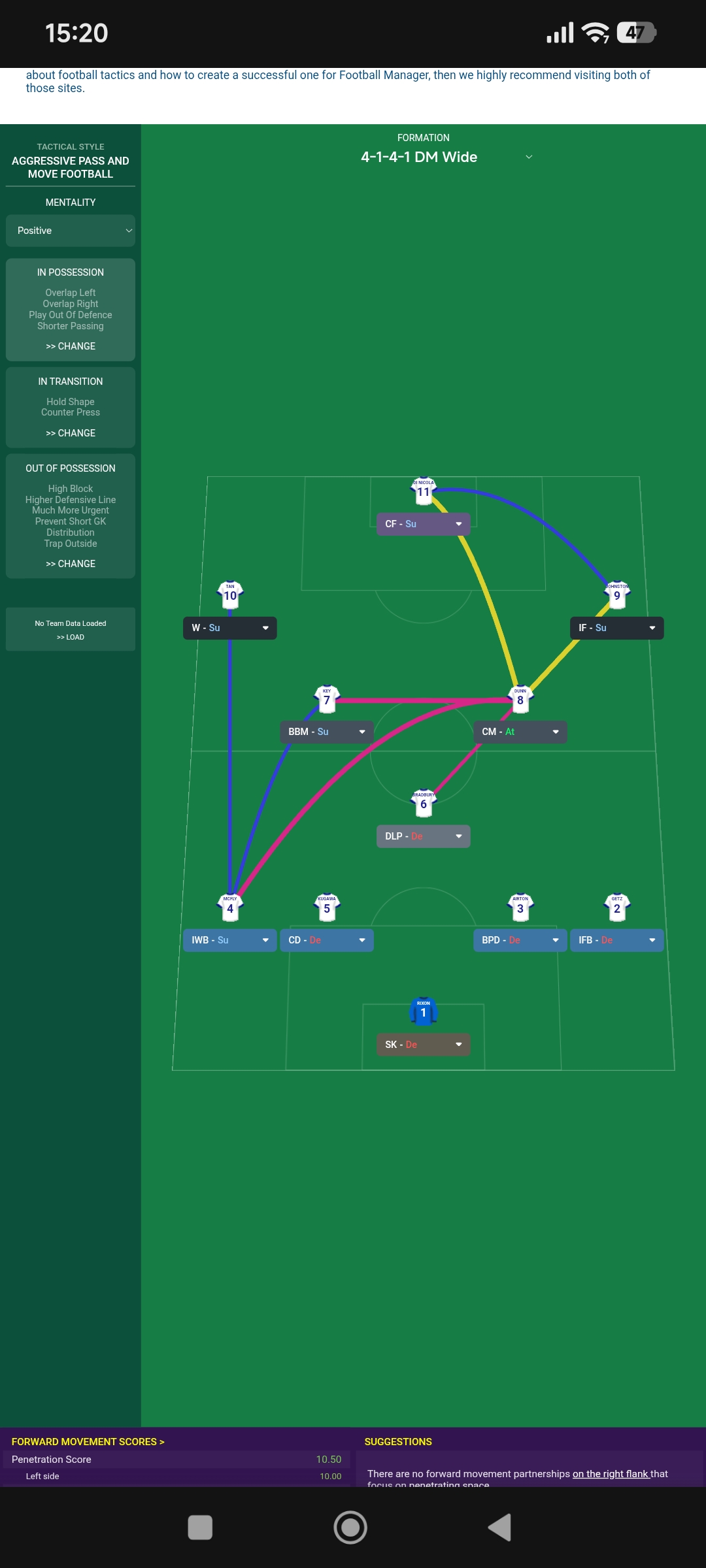
Aggressive Pass and Move Football 4-1-4-1 DM Wide
Aggressive Pass and Move Football
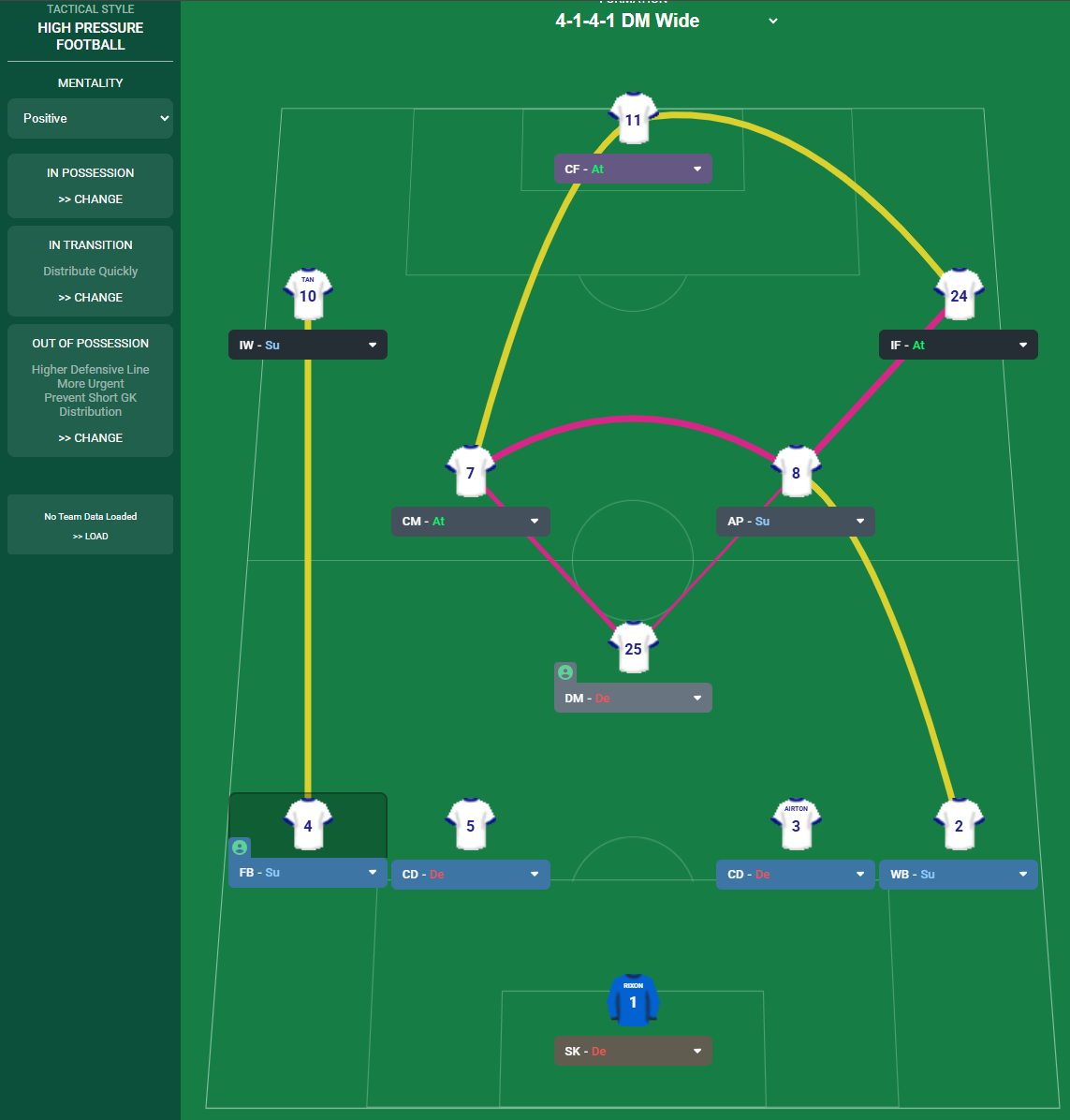
4-1-4-1 DM Wide Formation
High Pressure Football
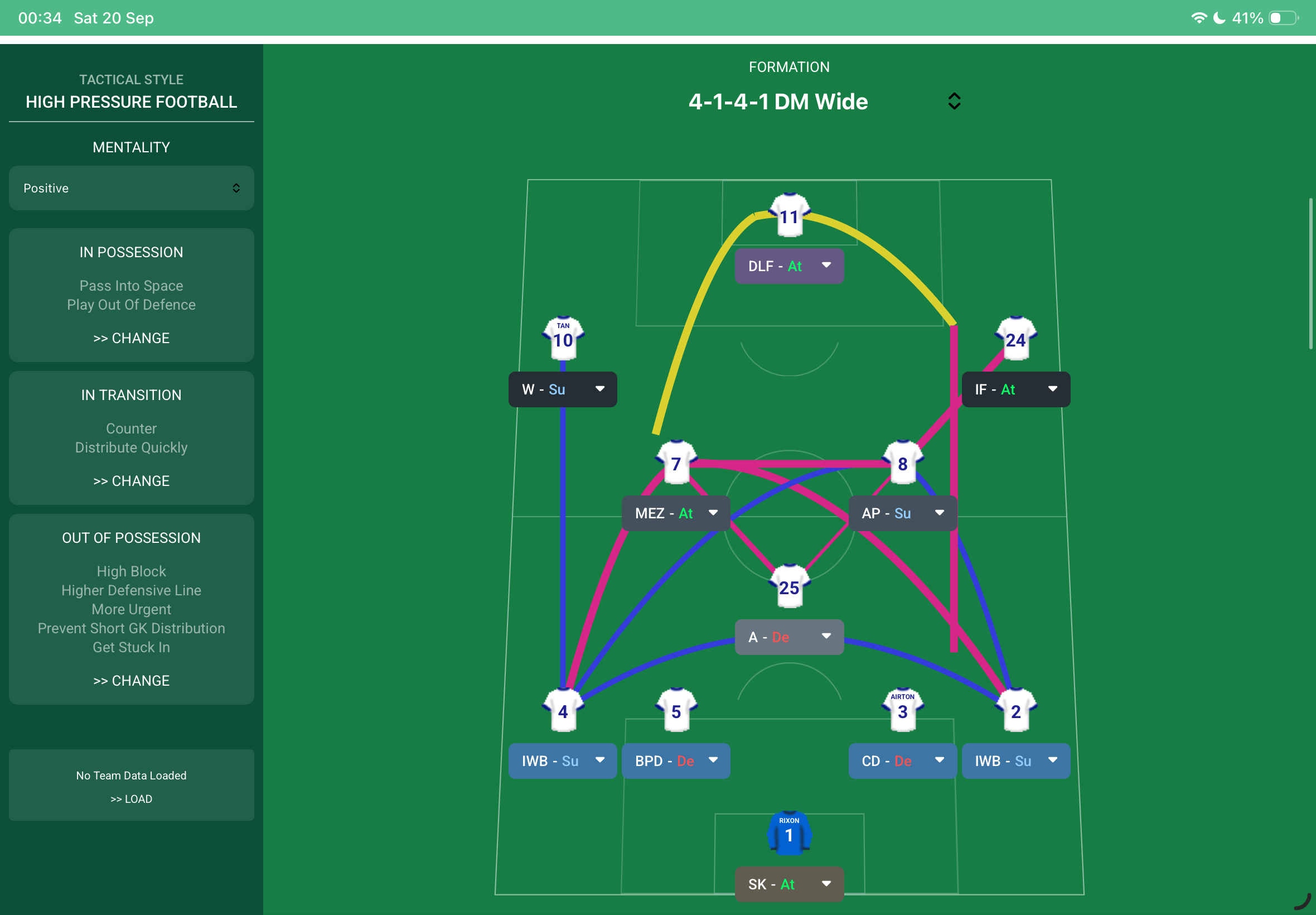
4-1-4-1 DM Wide Formation
High Pressure Football
4-1-4-1 DM Wide Formation
High Pressure Football
Guides for this formation
The tactical theory behind the 4-1-4-1 DM Wide: roles, instructions, and the trade-offs that decide whether the system holds up.