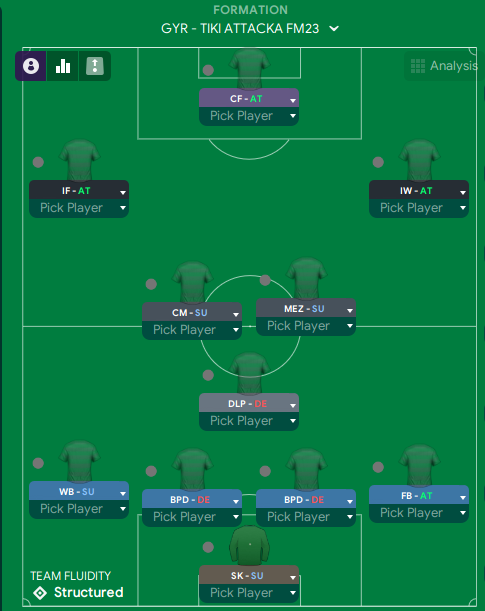
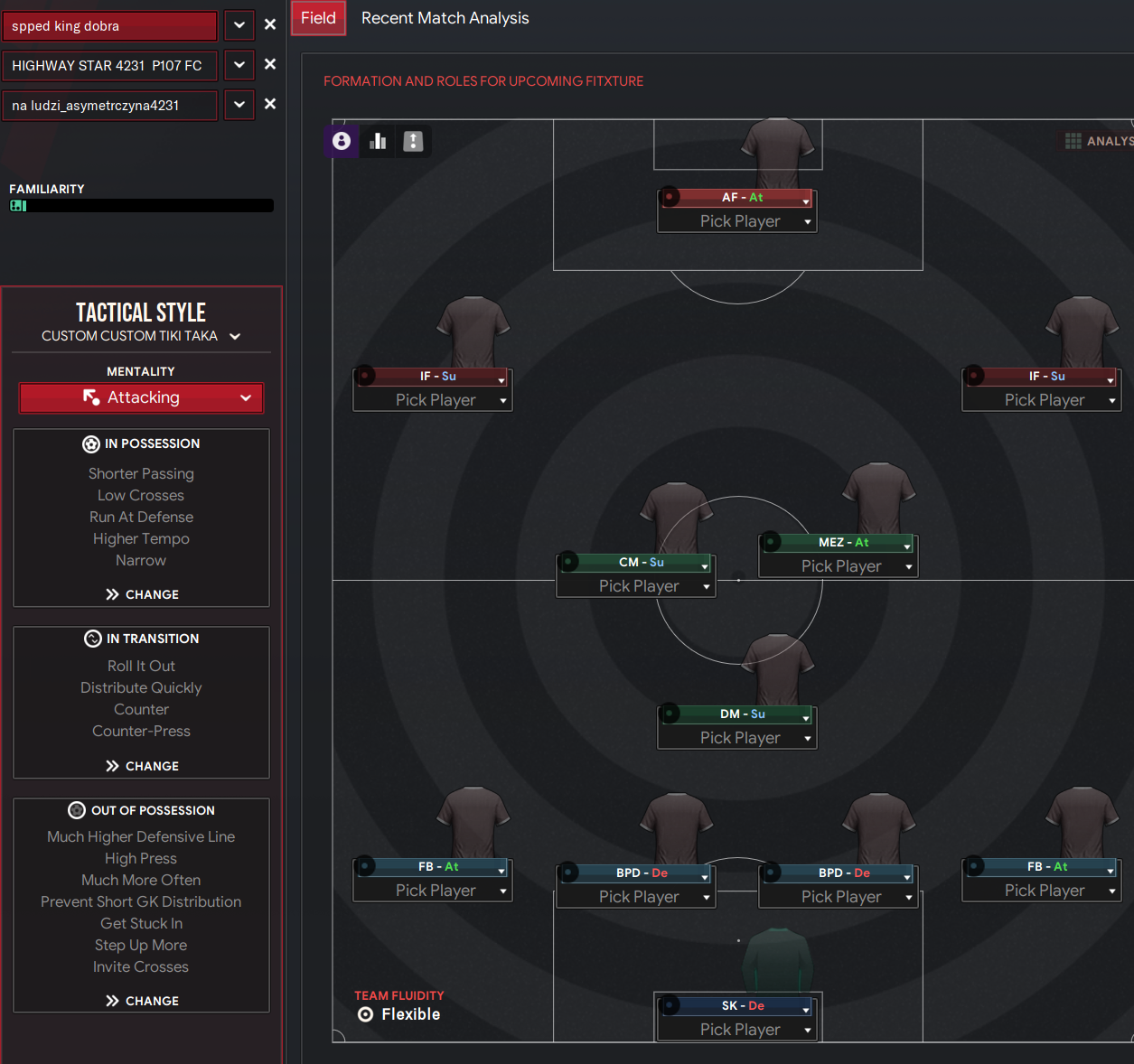
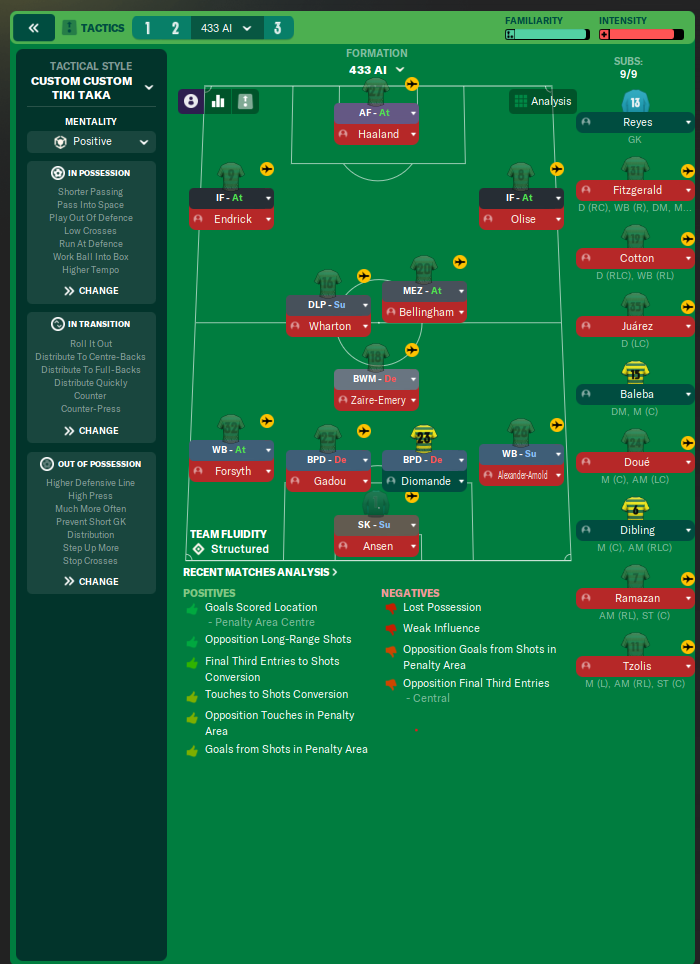
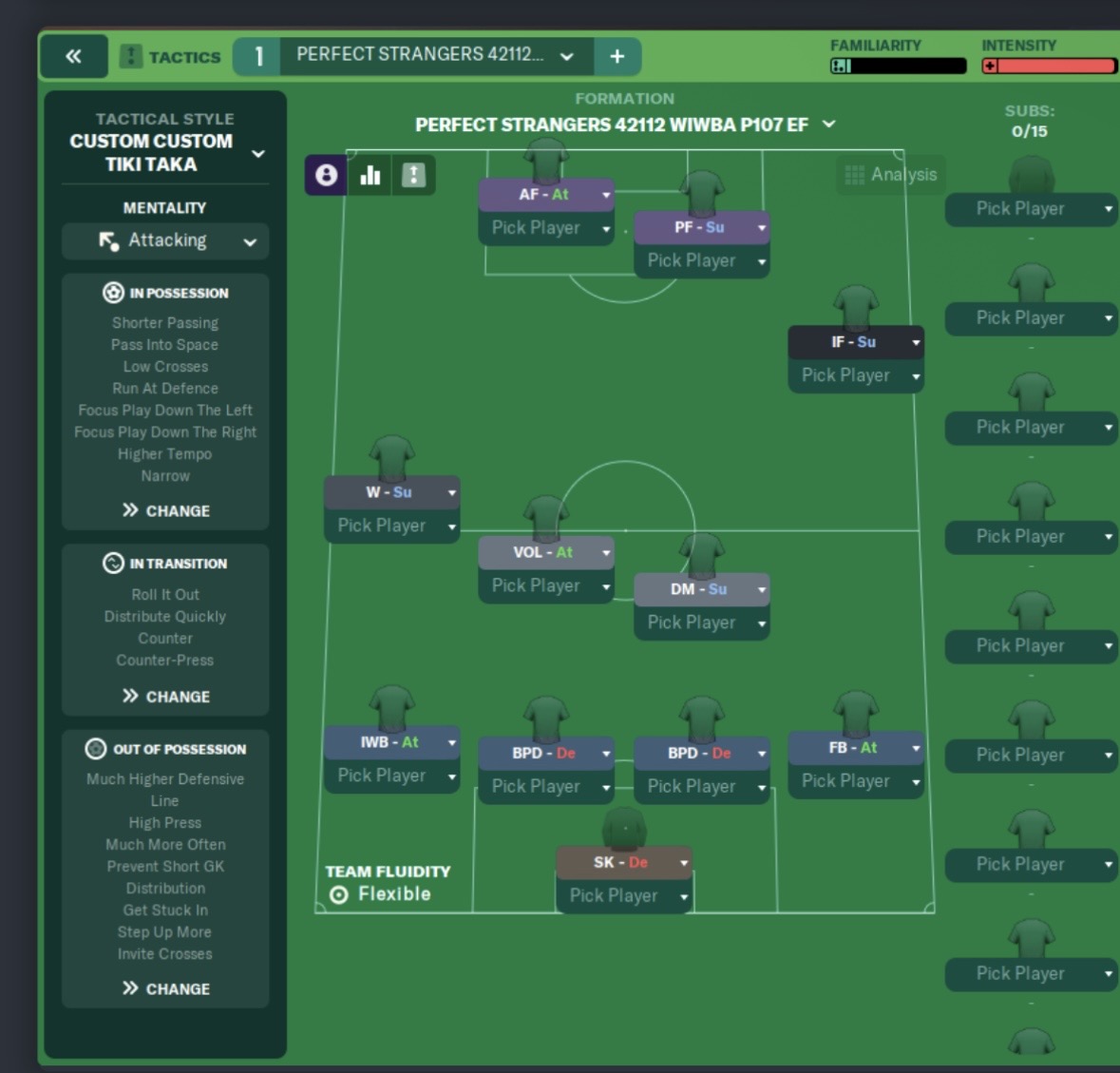
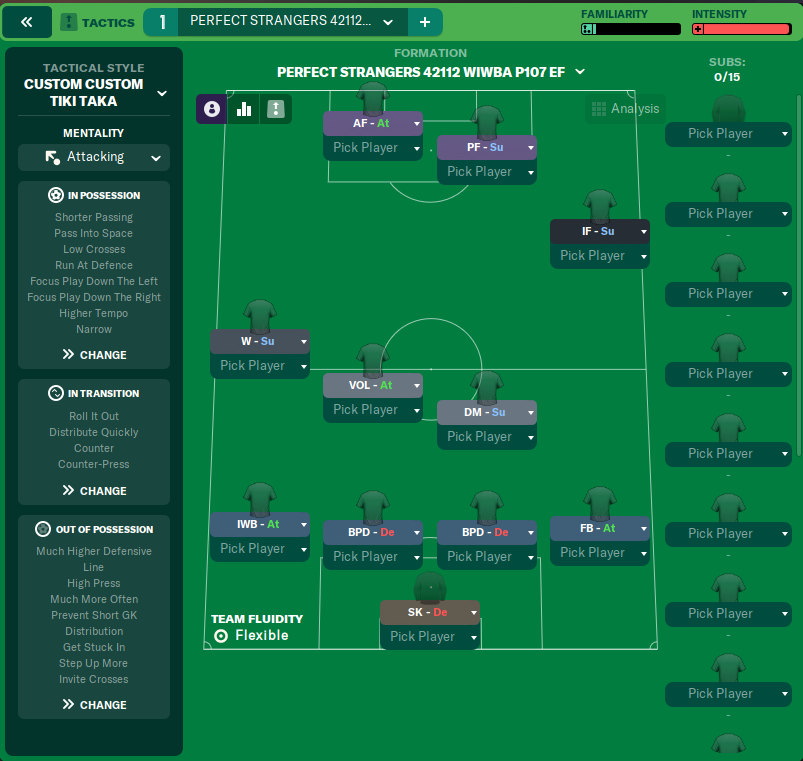
4-2-1-2-1-2 (Wide)
The Tiki Taka style promotes short, intricate passing, allowing for fluid movement and quick changes of attack.
Loading tactical analysis...
Tiki Taka
Attacking
4-2-1-2-1-2 (Wide)
Flexible
Shorter Passing
Pass Into Space
Low Crosses
Run At Defence
Focus Play Down The Left
Higher Tempo
Narrow
Roll It Out
Distribute Quickly
Counter
Counter-Press
Much Higher Defensive Line
High Press
Prevent Short GK Distribution
Get Stuck In
Step Up More
Invite Crosses
AF
Advanced Forward
Attack
PF
Pressing Forward
Support
IF
Inside Forward
Support
W
Winger
Support
VOL
Volante
Support
DM
Defensive Midfielder
Support
IWB
Inverted Wing Back
Support
BPD
Ball Playing Defender
Defend
FB
Full Back
Attack
SK
Sweeper Keeper
Defend
The Tiki Taka style promotes short, intricate passing, allowing for fluid movement and quick changes of attack.
With multiple roles supporting each other, players can interchange positions, making it hard for opponents to mark.
While pressing high can win the ball quickly, it leaves you vulnerable to fast counter-attacks if the ball is lost.
With both wingers and inside forwards occupying similar spaces, they may struggle to create optimal attacking triangles.
How do you adapt your pressing intensity based on the opponent's strengths?
Is the attacking fluidity effective in drawing out opposing defenses?
Are your players executing the high defensive line without leaving vulnerable gaps?
Does the team adapt well in stationary defensive situations when possessions are lost?
How often do you utilize overlapping runs from full-backs and wide players?
What is the efficiency rate of your chance creation in relation to opposition's central defense?
The tactical theory behind the 4-2-1-2-1-2 (Wide): roles, instructions, and the trade-offs that decide whether the system holds up.
Routines, takers, and target picks. How to turn corners and free-kicks into a reliable third of your goal output.
Protect a 1-0, chase a 1-0, hold a draw away. How to manage game state in FM through duties and roles, not by lurching to Defensive.
Mentality, duty, role, instruction, sub. The change hierarchy from lightest to heaviest intervention, and 60th-minute patterns by game state.