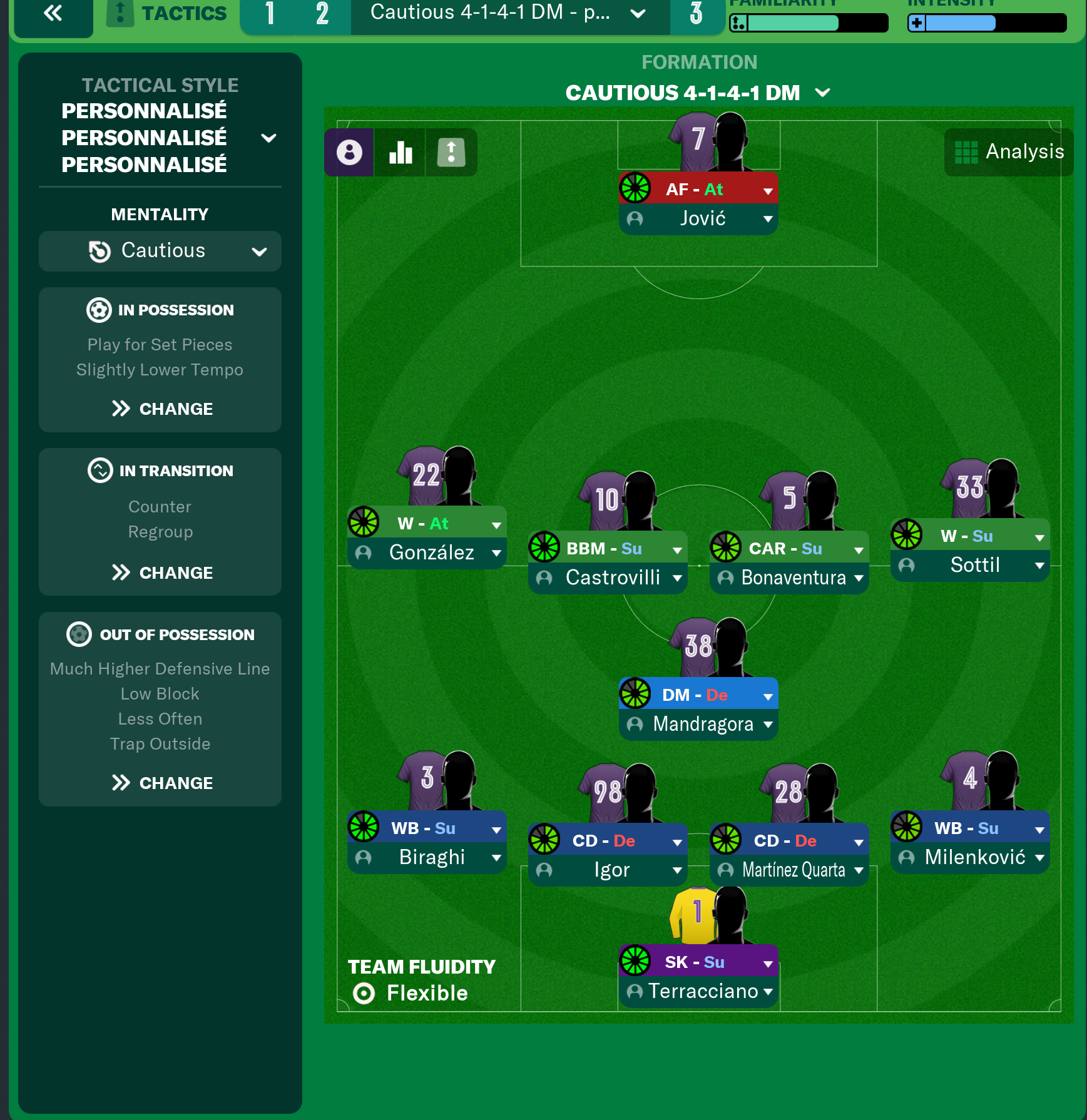
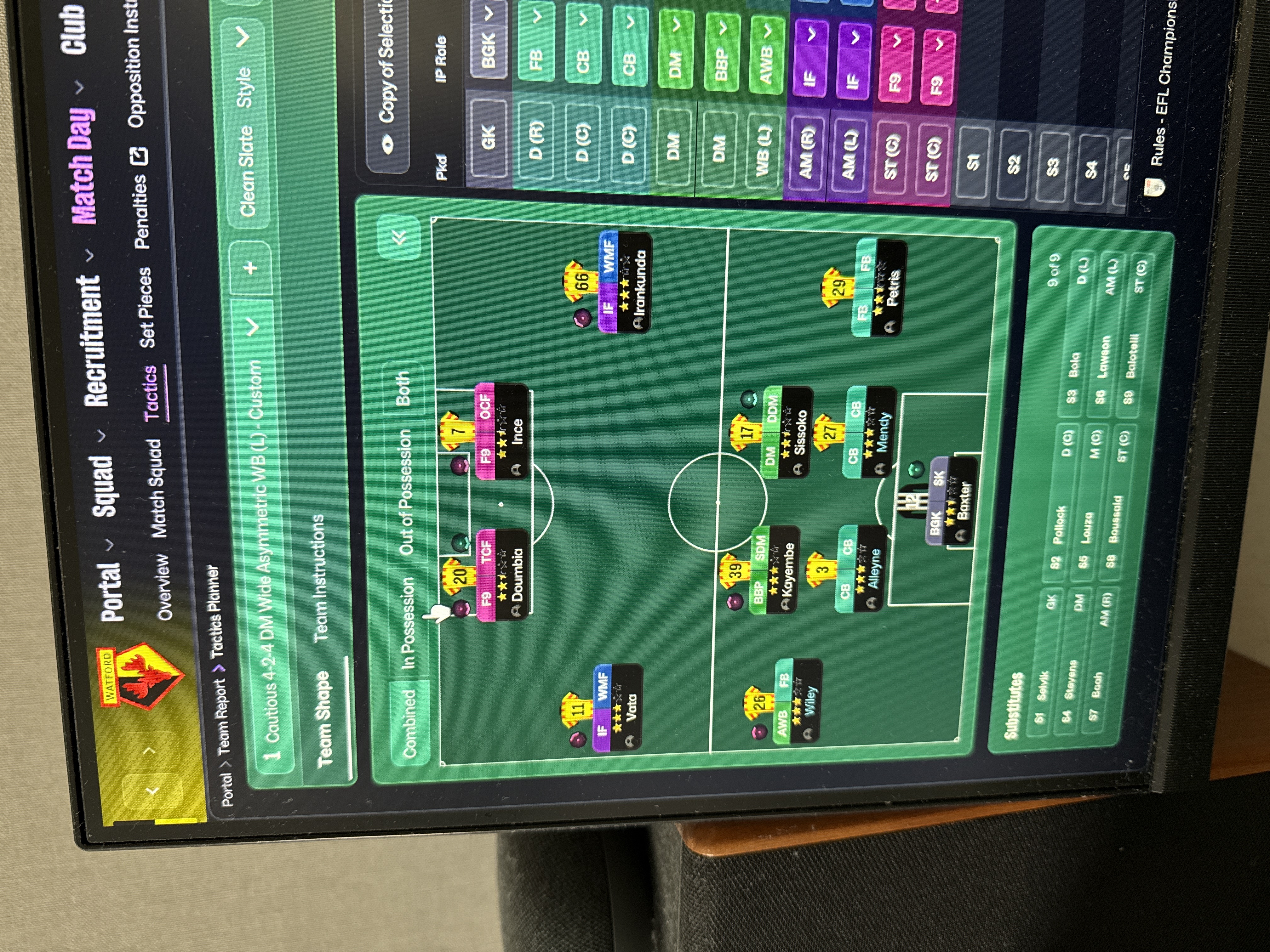
Uploaded Tactic
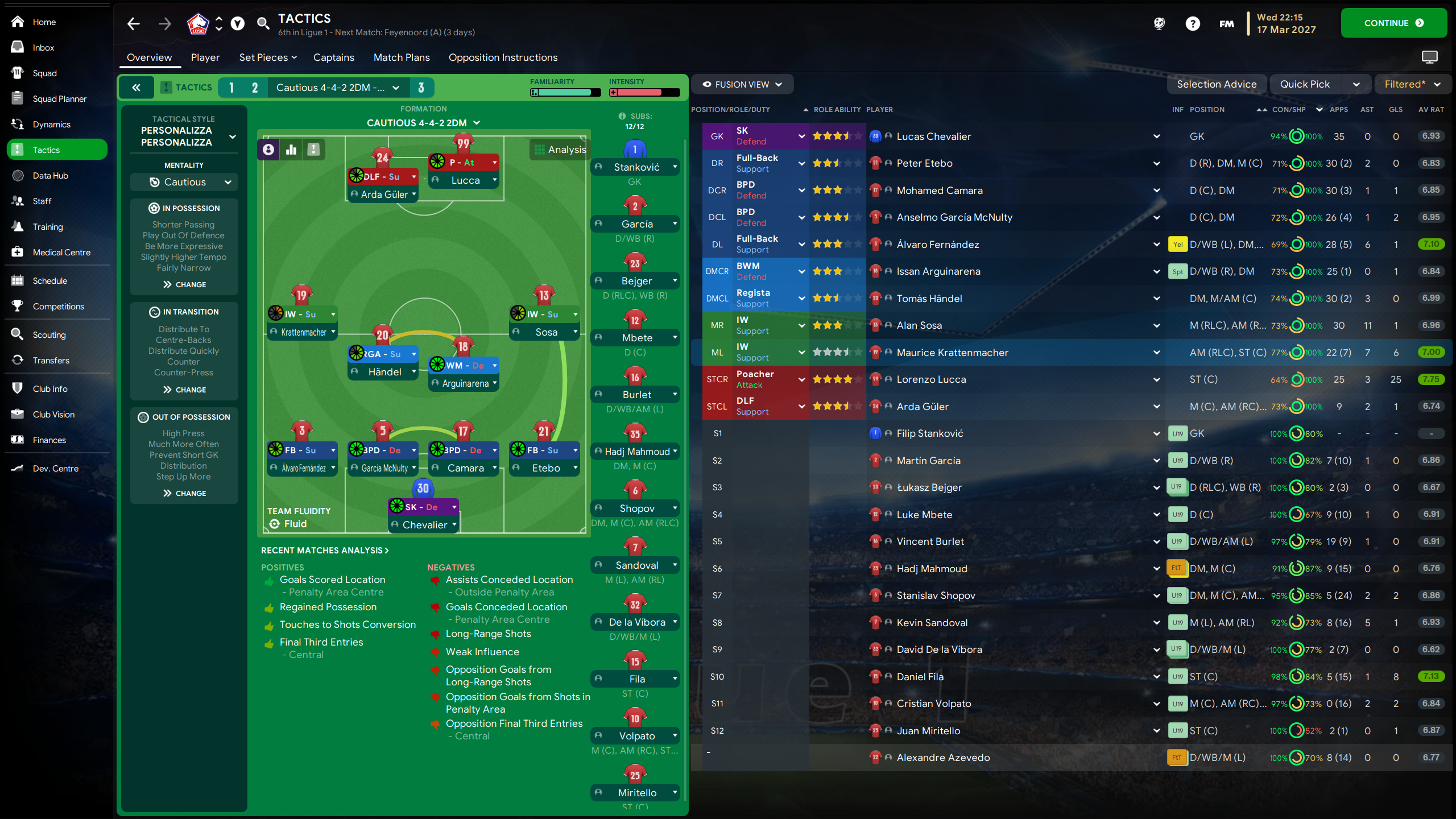
Formation & Style
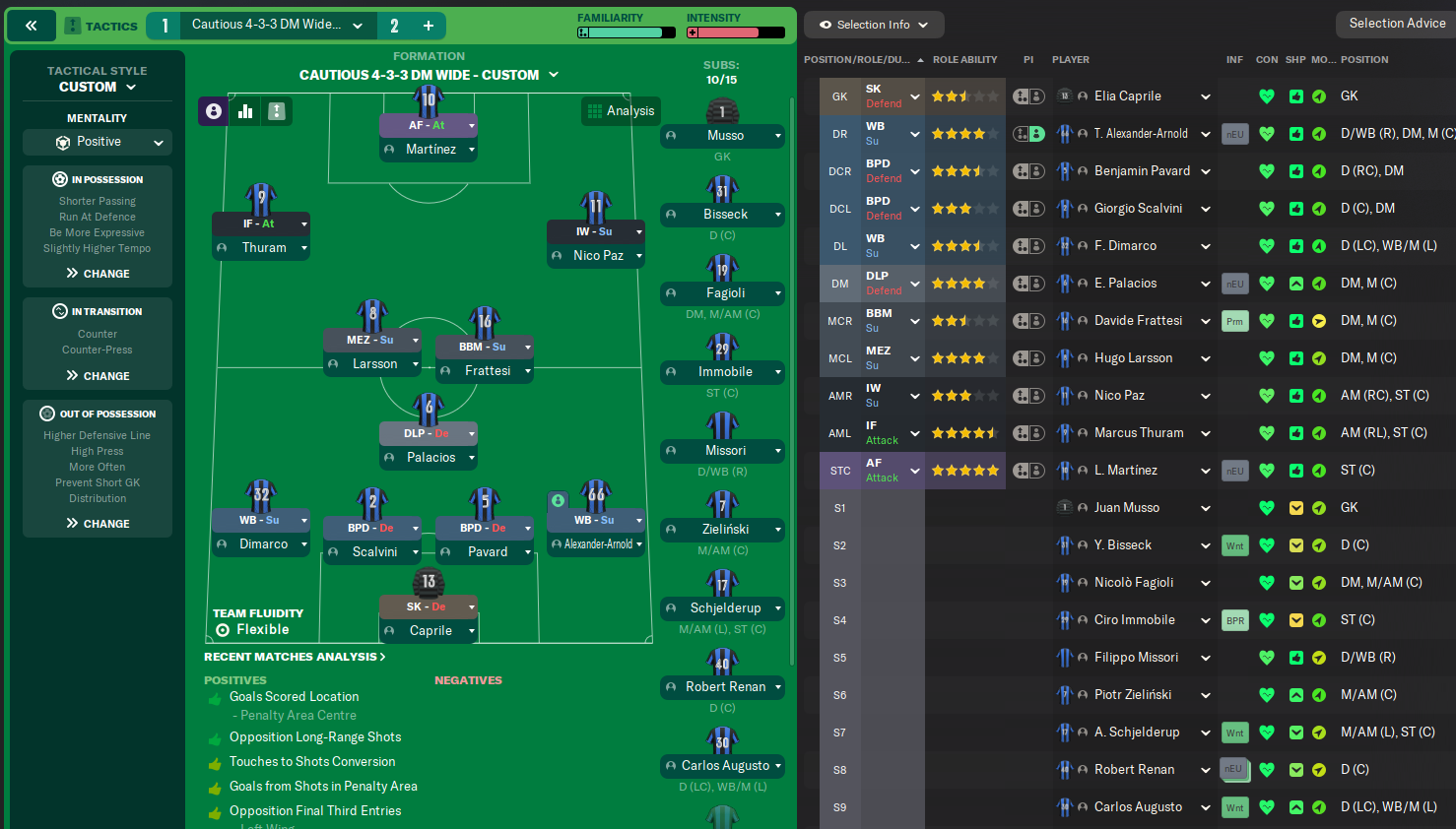
Tactical Style:Cautious
Mentality:Cautious
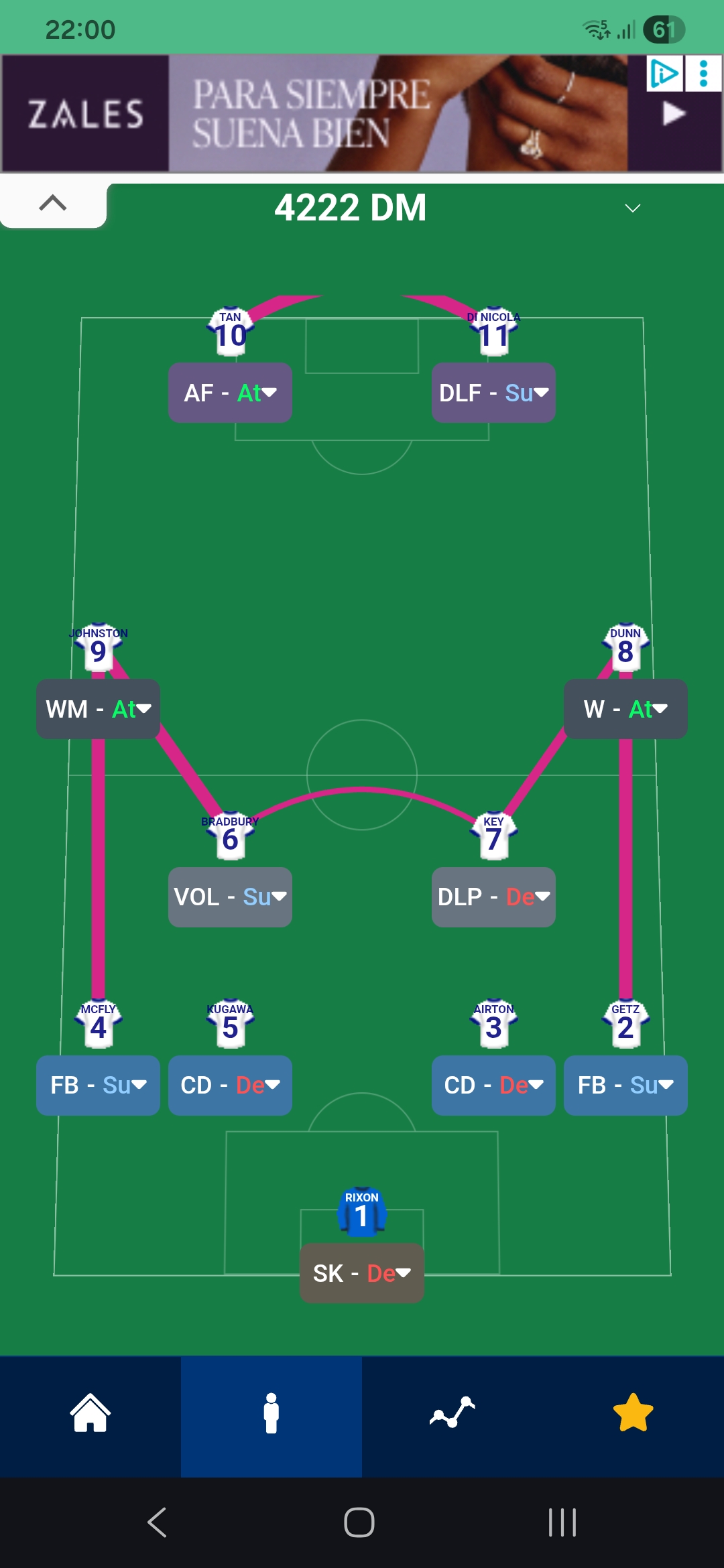
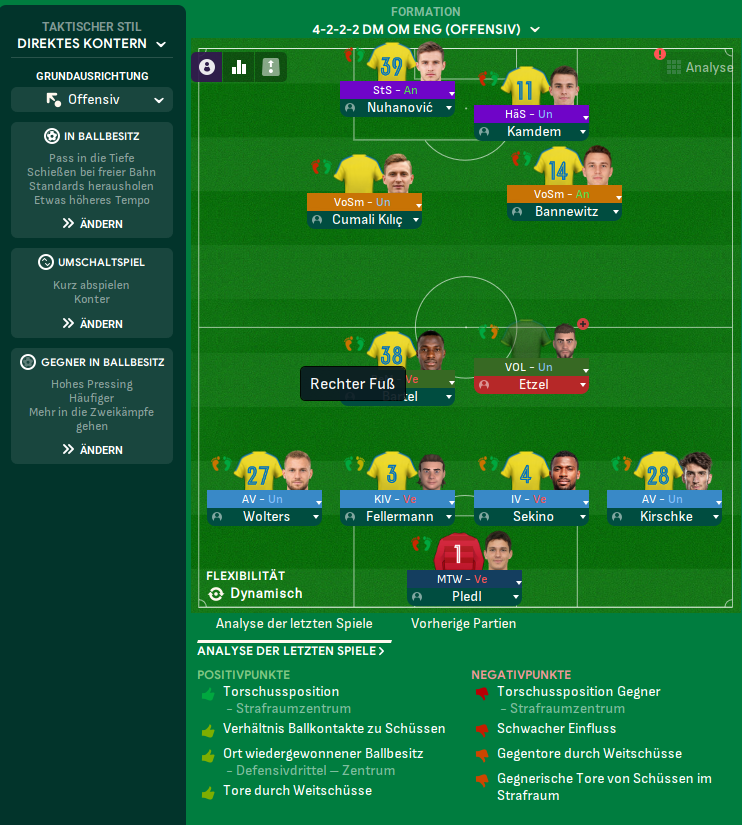
Formation:4-2-2-2 DM
Team Fluidity:Fluid
In Possession
Shorter Passing
Play Out of Defence
Be More Expressive
Slightly Higher Tempo
In Transition
Distribute to Centre-Backs
Distribute Quickly
Counter-Press
Counter
Out of Possession
High Press
Much More Often Prevent Short GK Distribution
Step Up More
Team Shape Without Ball
No team shape without ball data available
Team Shape With Ball
No team shape with ball data available
Key Strengths
Solid Defensive Structure
The 4-2 defensive setup allows for a strong backline and midfield coverage, making it difficult for opponents to penetrate.
Counter-Attacking Potential
With quick distribution and counter-pressing, the team can transition rapidly from defence to attack when winning the ball back.
Fluid Attack Options
The presence of inside forwards and advance players allows for varied attacking options, keeping the opposing defence on their toes.
Midfield Control
The Regista role in the midfield helps control the tempo and distribute the ball effectively, aiding in both defence and attack.
Conflicting Directions
High Press vs Cautious Mentality
The high press may conflict with the cautious approach, potentially leaving the team vulnerable if pressing fails.
Fluidity with Specific Roles
While fluidity suggests flexible play, specific player roles may restrict movement, impacting overall cohesion.
Shorter Passing vs Counter-Pressing
Shorter passing may slow down counter-attacks, conflicting with the intent to distribute quickly after regaining possession.
Wide Play vs Central Cohesion
The use of inside forwards might reduce width, which can lead to congestion in the central areas and limit scoring opportunities.
Tactical Suggestions
Consider Adjusting Mentality
Switching to a more balanced or positive mentality could enhance attacking intensity without sacrificing defensive structure.
Utilize a More Compact Formation
Switching to a narrower formation can provide better control in central areas, improving midfield dominance.
Modify High Press Strategy
Consider a more selective pressing approach to mitigate risks when pressing against strong opposition.
Explore Player Role Adaptations
Experiment with player roles such as converting one inside forward to an advanced playmaker to increase central creativity.