Uploaded Tactic
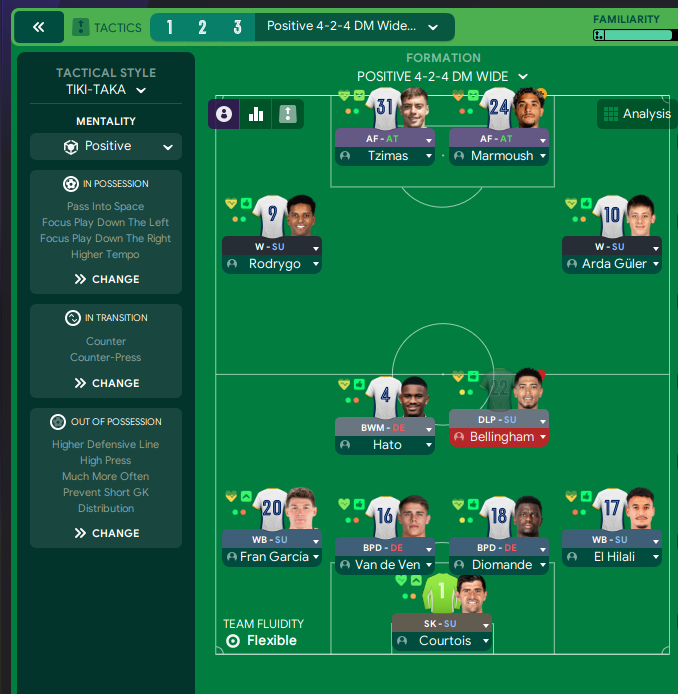
Formation & Style
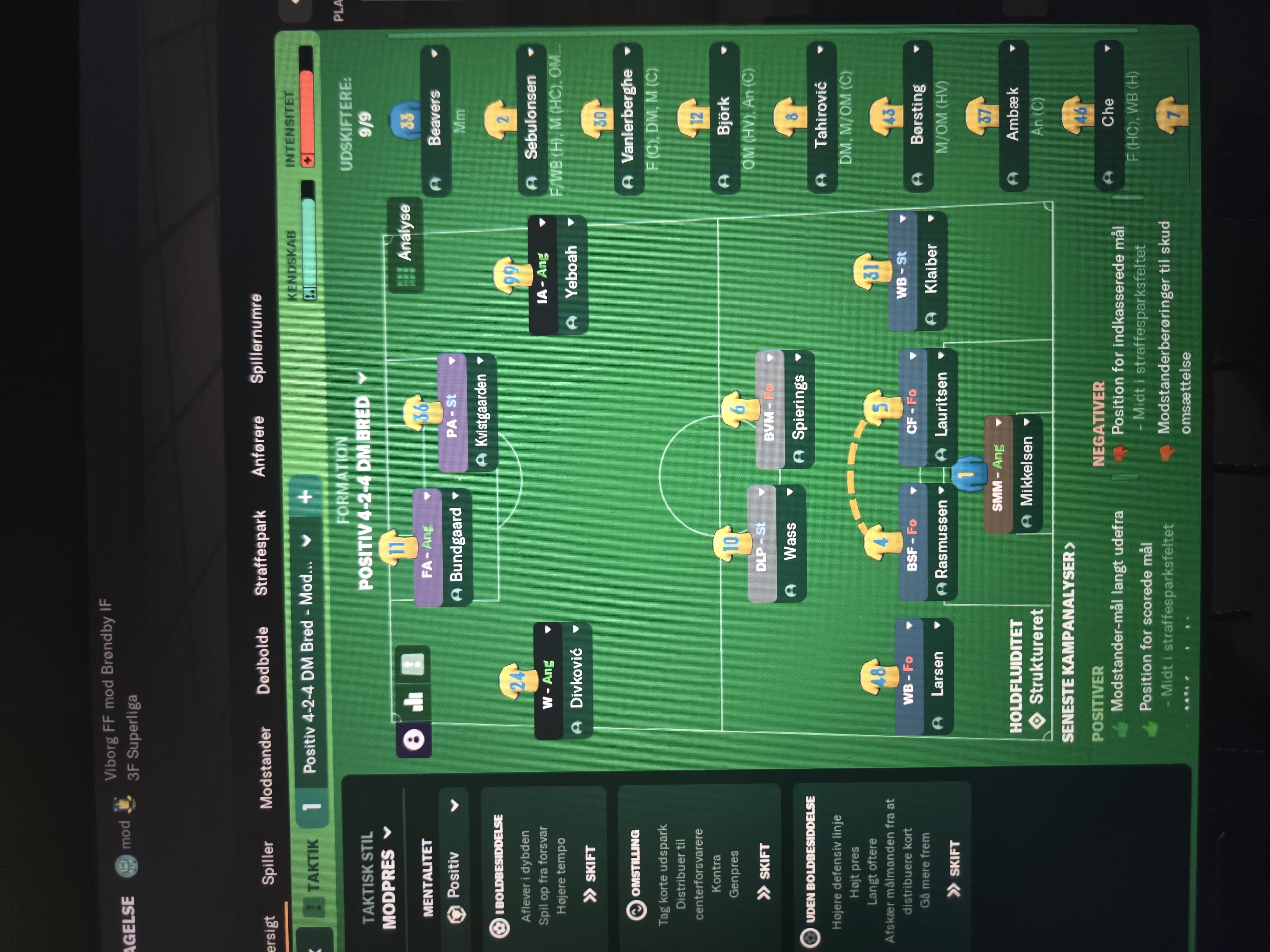
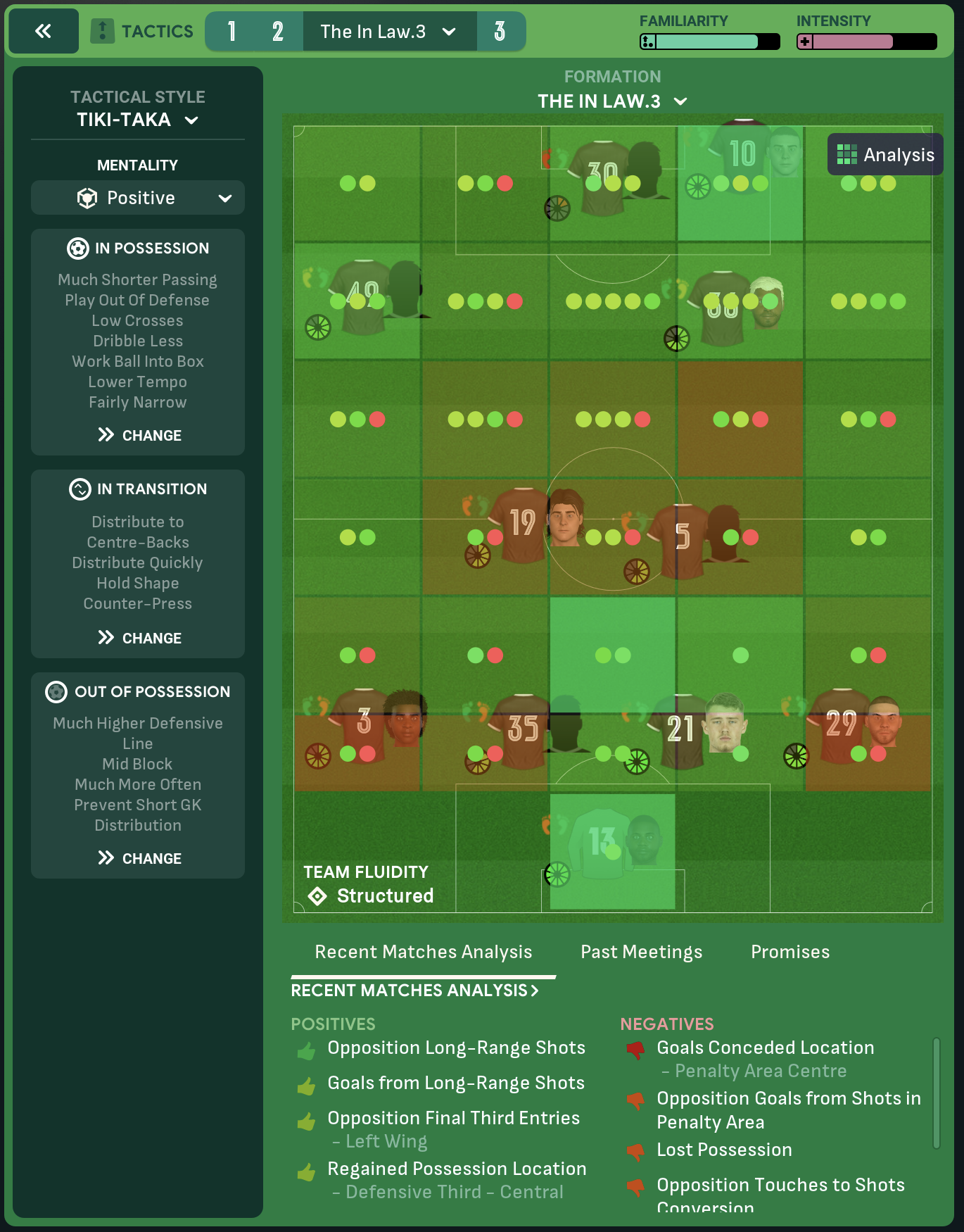
Tactical Style:Tiki-Taka
Mentality:Positive
Formation:4-2-4 DM Wide
Team Fluidity:Flexible
In Possession
Pass Into Space
Focus Play Down The Left
Focus Play Down The Right
Higher Tempo
In Transition
Counter
Counter-Press
Out of Possession
Higher Defensive Line
High Press
Much More Often Prevent Short GK Distribution
Team Shape Without Ball
Shape:4-2-4 DM Wide
Description:The back four holds a flat line higher up the pitch, with a double pivot aimed at quickly breaking down opposition plays.
Evidence:BWM-D at [3,3] and DLP-S at [3,4].
Team Shape With Ball
Shape:4-2-4 DM Wide
Description:The two wingers stretch the play while the advanced forwards operate centrally, providing both width and depth.
Evidence:W-SU at [5,1] and [5,5] support the AF-A at [6,2] and [6,4].
Phase Description
Attacking Play
The team seeks to maintain possession through quick, short passes while rapidly transitioning to forward play, exploiting the wings to create space.
Defensive Transition
Upon losing possession, the team immediately expresses a counter-pressing philosophy to regain the ball quickly.
Main Focus
Utilizing the attacking width provided by wingers while keeping the tempo high.
Key Strengths
Wide Play Attack
Utilizing wingers adds width that stretches the defense, providing room for advanced forwards to exploit.
Defensive Resilience
Having two ball-playing defenders helps in both defending against attacks and initiating play from the back.
Quick Transitions
Counter-Pressing allows for regaining possession quickly and exploiting spaces left by the opponent.
Conflicting Directions
High Defensive Line with Counter-Press
While the high line invites pressure, it could risk vulnerability against fast counter-attacks if the pressing fails.
Wide Play vs. Central Approach
Prioritizing play down the wings may limit central opportunities, potentially isolating advanced forwards.
Balance with Two Advanced Forwards
Having two AFs may create an unbalanced attack if wingers are not effectively delivering crosses.
Tactical Suggestions
Utilize Central Attacks
Incorporating more central passing options could alleviate the predictability of wing play.
Adjust Defensive Midfield Roles
Consider shifting one CM to a more offensive role to break through crowded midfield areas.
Monitor Defensive Line Height
Adjusting the defensive line lower could mitigate vulnerabilities when pressing fails.
Ask Questions About Your Lineup
Related Tactics
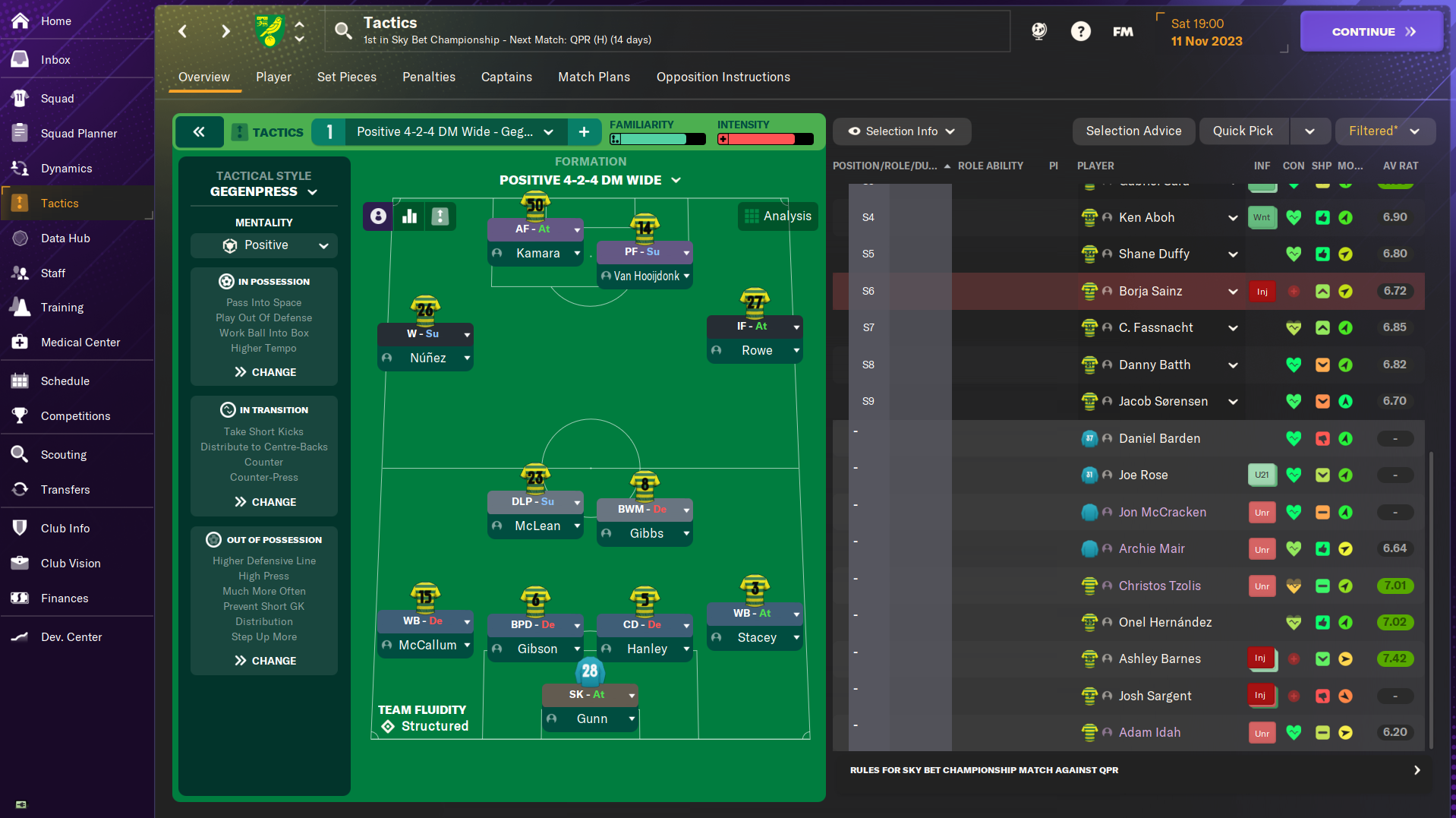
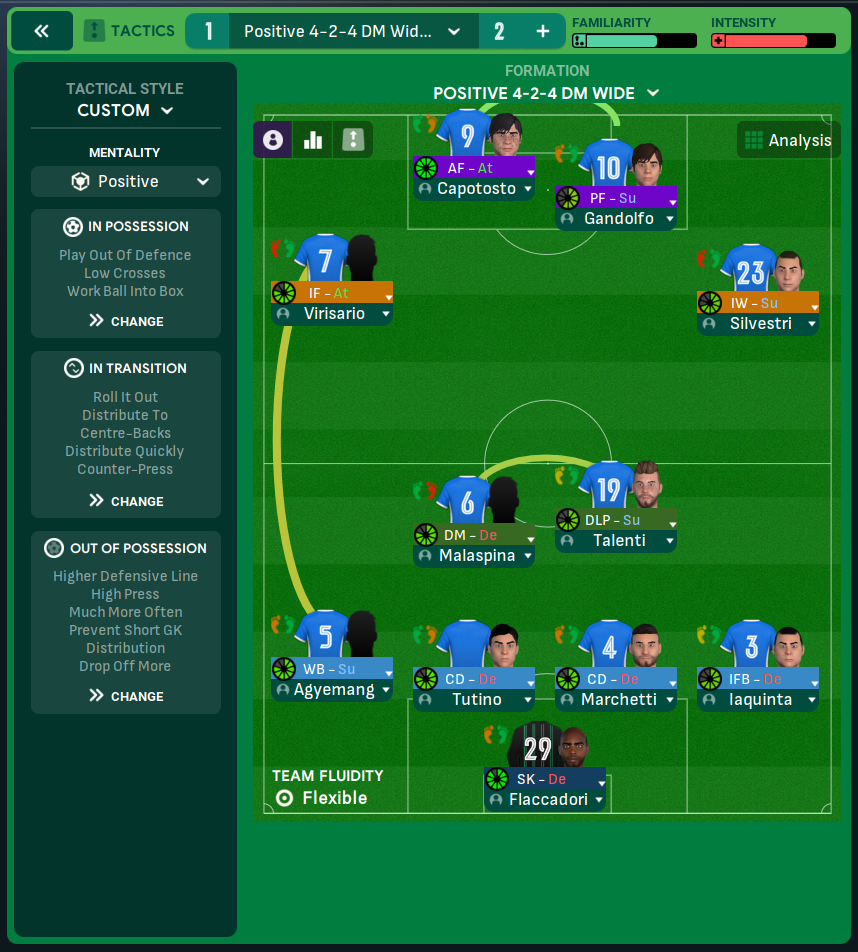
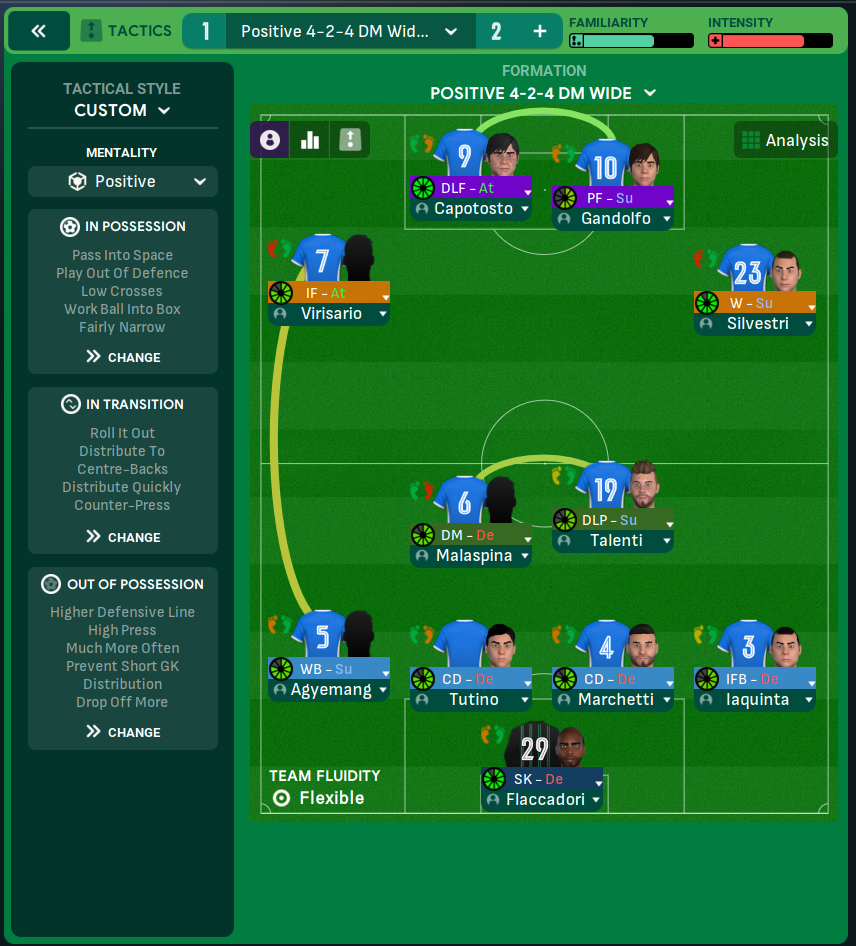
More Tiki-Taka tactics
Guides for this formation
The tactical theory behind the 4-2-4 DM Wide: roles, instructions, and the trade-offs that decide whether the system holds up.