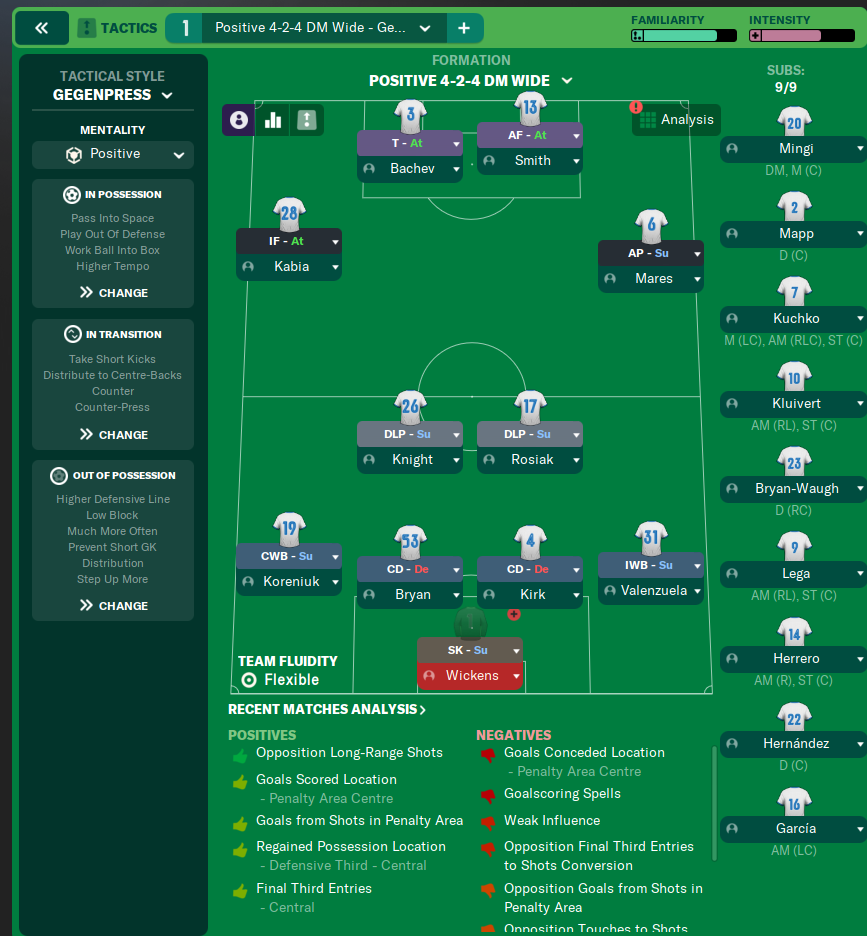
Uploaded Tactic
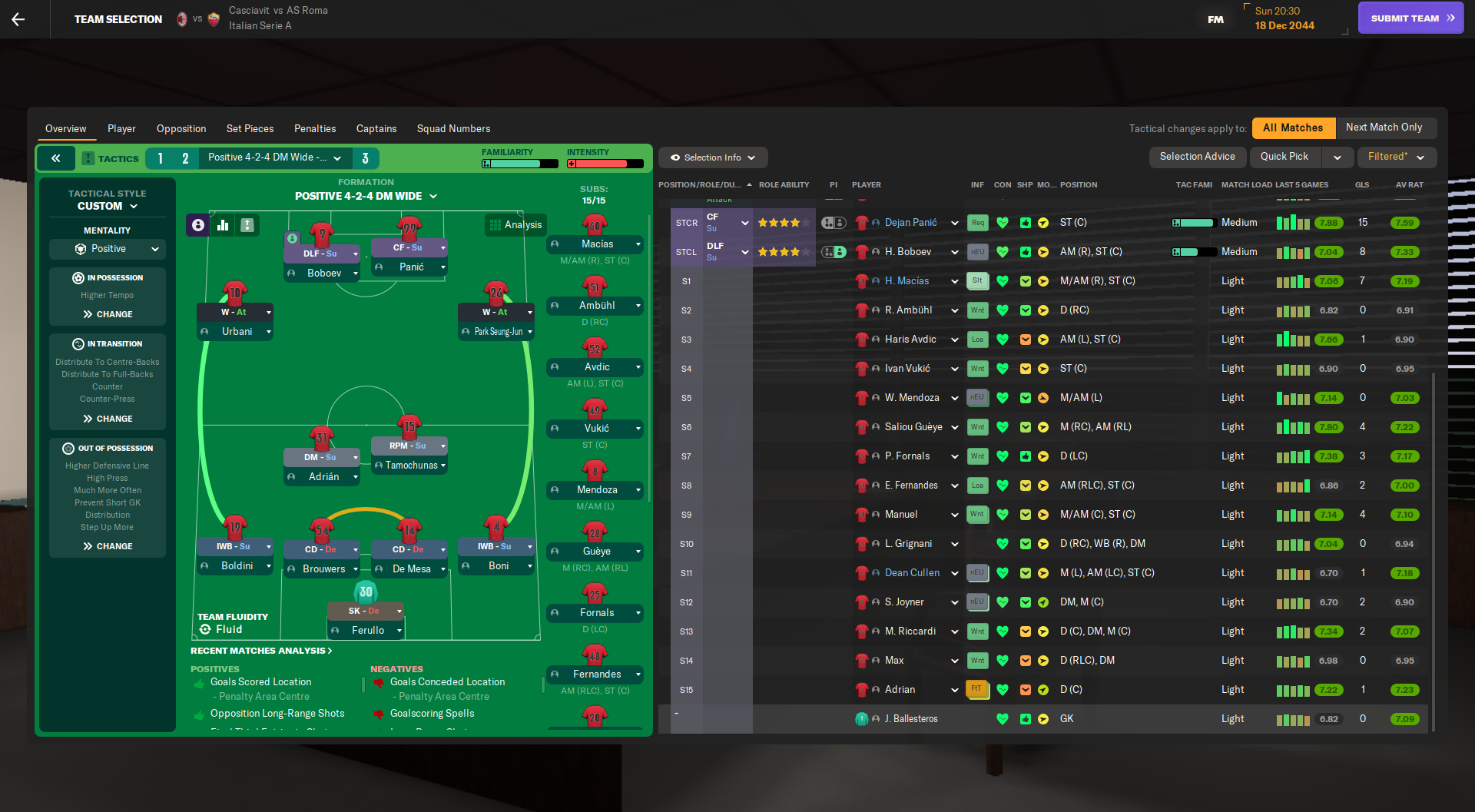
Formation & Style
Tactical Style:Custom
Mentality:Positive
Formation:4-2-4 DM Wide
Team Fluidity:Fluid
In Possession
Higher Tempo
Distribute to Centre-Backs
Distribute to Full-Backs
Counter
In Transition
Counter-Press
Step Up Tempo
Out of Possession
Higher Defensive Line
Much More Often Prevent Short GK Distribution
Higher Line of Engagement
Team Shape Without Ball
No team shape without ball data available
Team Shape With Ball
No team shape with ball data available
Key Strengths
Attacking Width
Utilizing wingers and inverted wing-backs creates space on the flanks, stretching the opposition defense.
Flexibility in Midfield
The Roaming Playmaker can create opportunities and link play effectively, providing creativity.
Pressing Ability
High press strategy can disrupt opposition build-up, often leading to quick turnovers.
Counter-Attacking Threat
The combination of pacey wingers and a deep-lying forward allows effective counter-attacking opportunities.
Conflicting Directions
Defensive Cohesion
The aggressive pressing style may leave gaps in defense if not executed properly, potentially exposing the central defenders.
Wing-Back Responsibilities
Inverted Wing-Backs might struggle with defensive duties when offering width, leading to a lack of cover.
Attacking Balance
Two center-forwards and wingers could become too narrow, leading to congestion in the final third.
Transition Vulnerability
Overcommitting players in attacking phases could leave the team susceptible to counter-attacks.
Tactical Suggestions
Adjust Defensive Line
Consider lowering the defensive line if you are conceding too many long balls or counter-attacks.
Role Variation
Experiment with changing the role of one winger to a wide playmaker to maintain width while providing support.
Midfield Solidity
Consider a more defensive role for one of the midfielders to provide additional cover for the backline.
Set Piece Organization
Focus on set-piece strategies, especially for corners, to utilize height in the squad for added goal-scoring opportunities.
Ask Questions About Your Lineup
Related Tactics
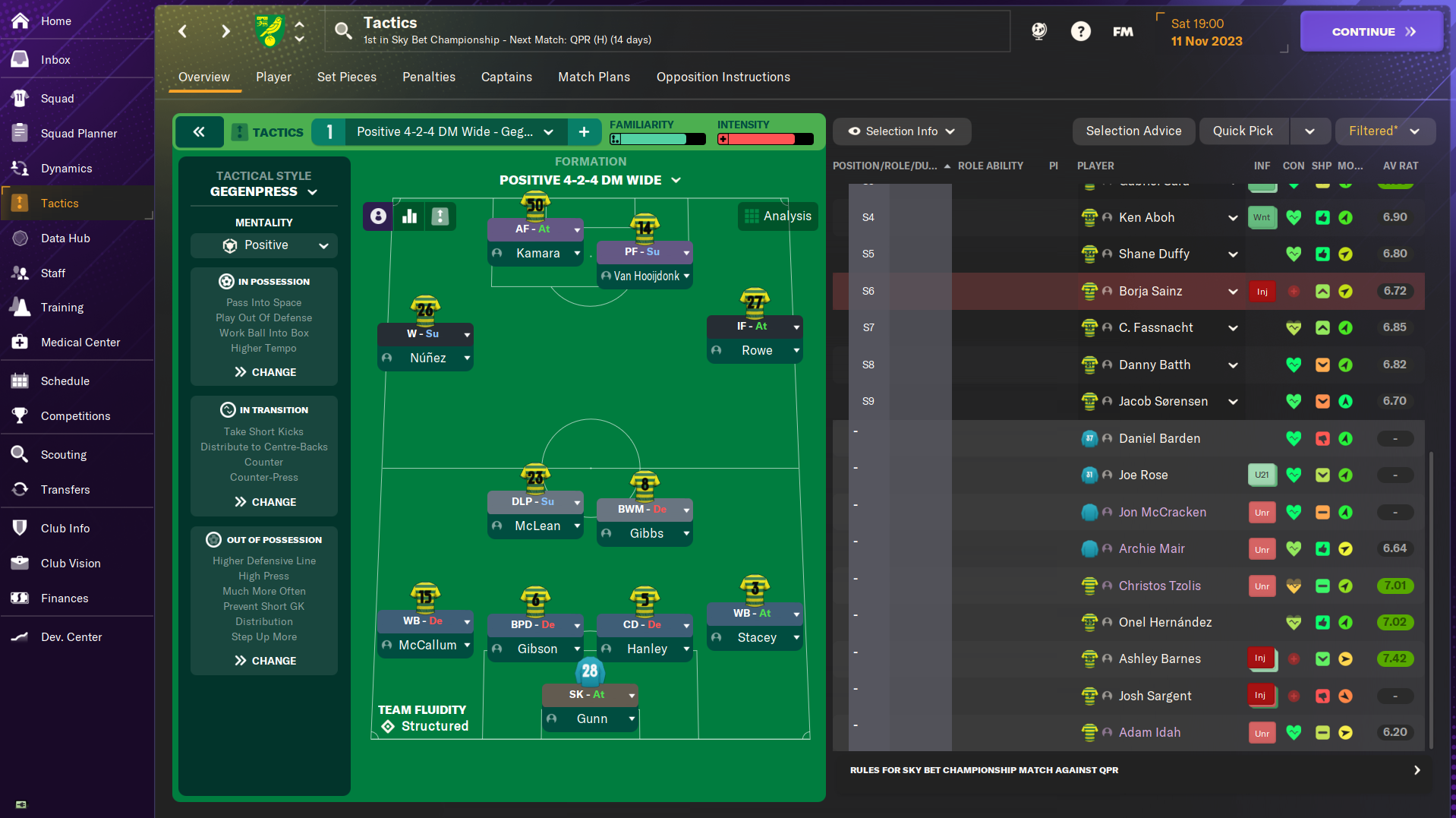
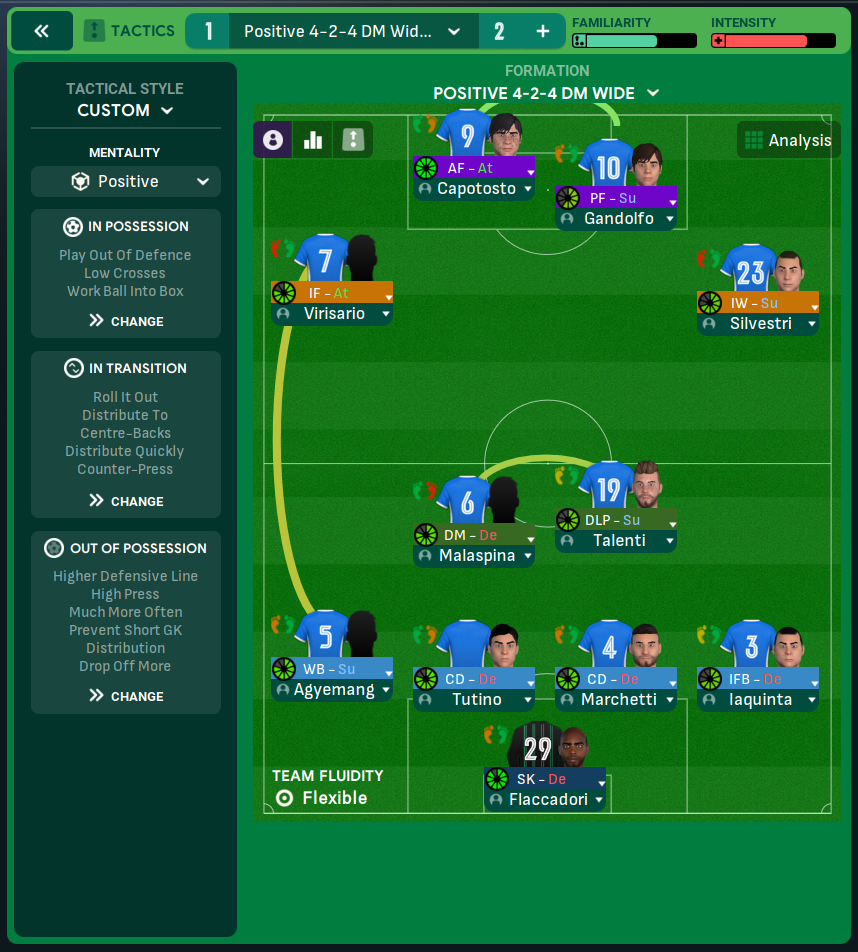
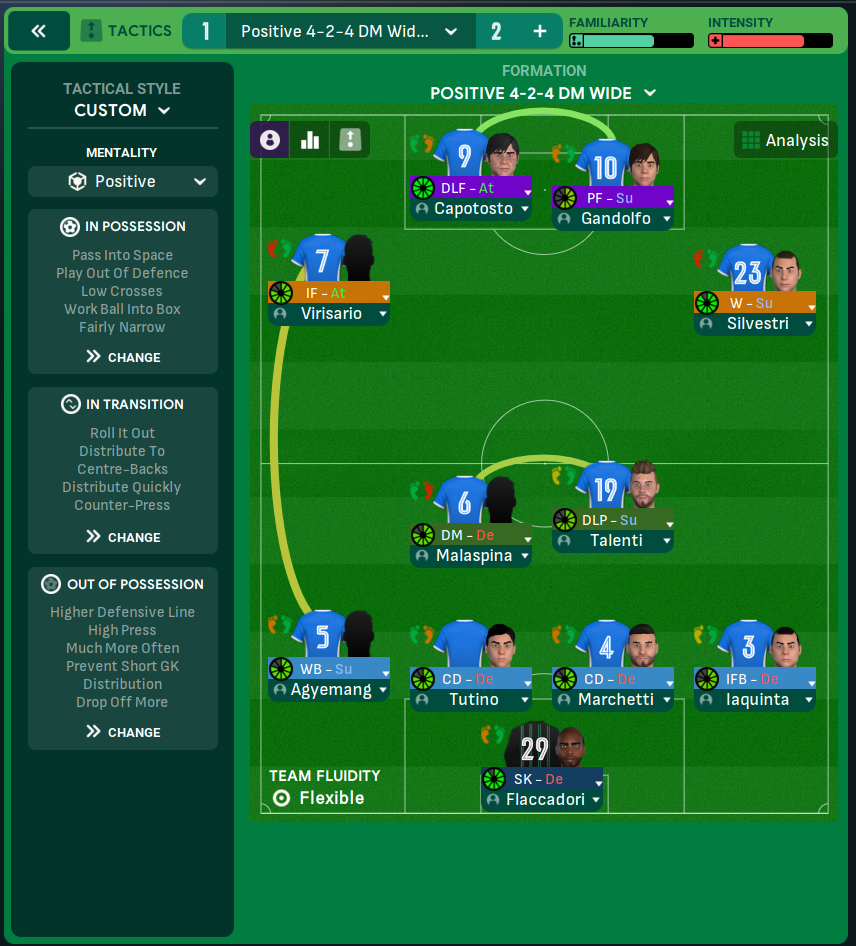
Guides for this formation
The tactical theory behind the 4-2-4 DM Wide: roles, instructions, and the trade-offs that decide whether the system holds up.