Uploaded Tactic
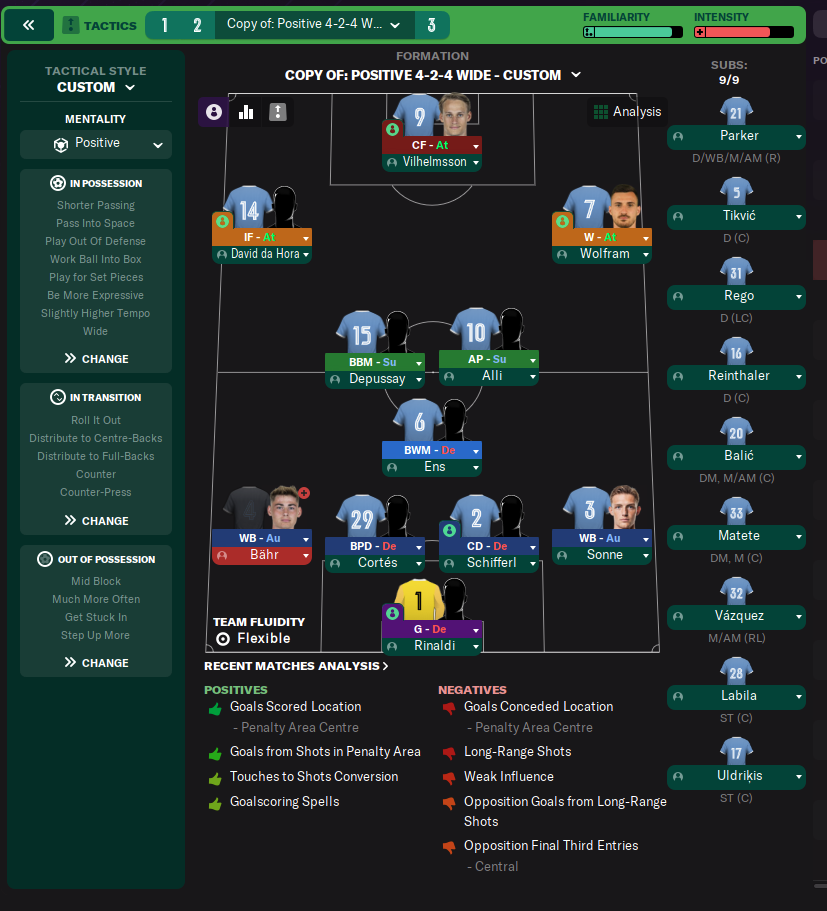
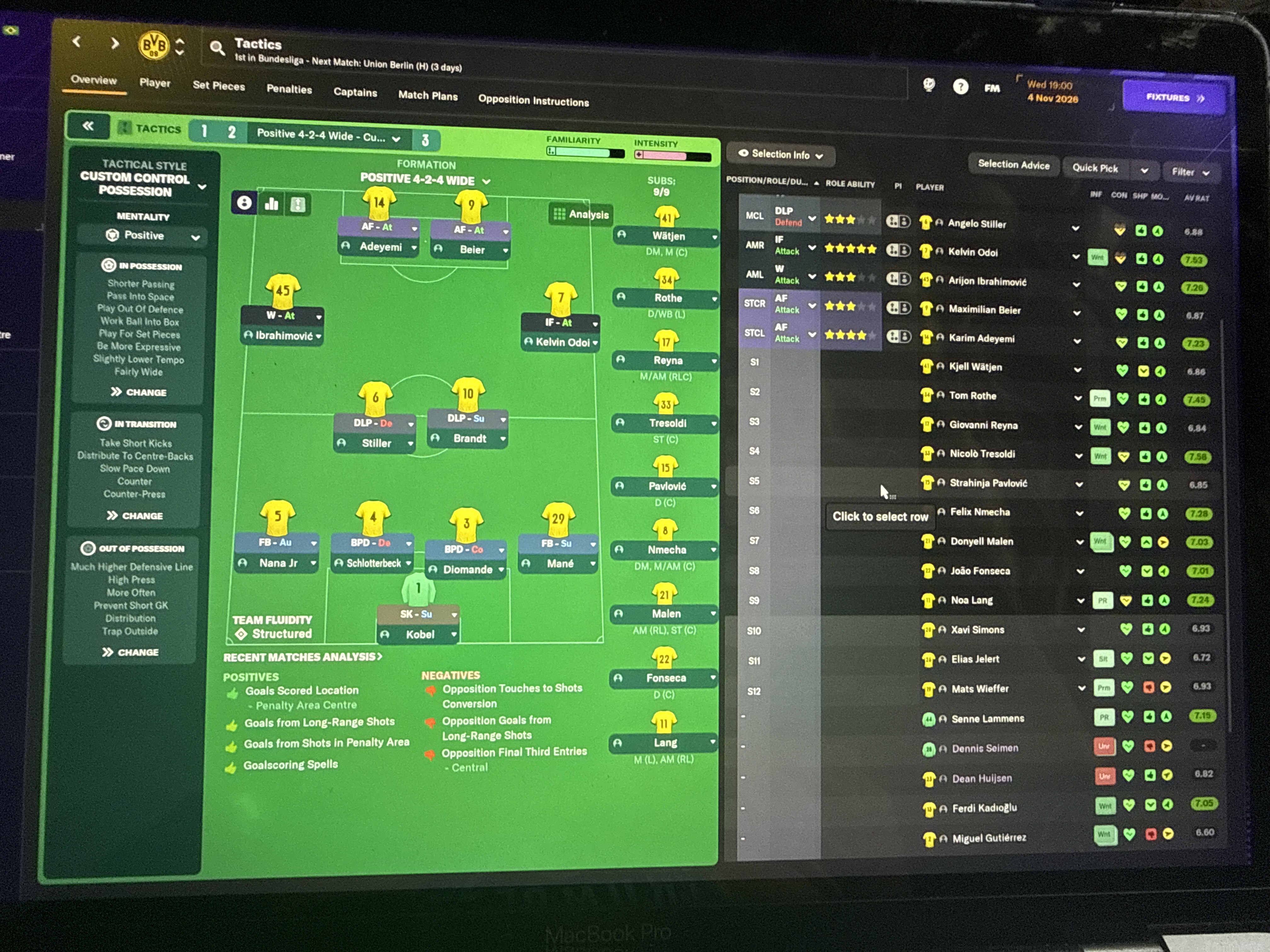
Formation & Style
Tactical Style:Custom
Mentality:Positive
Formation:4-2-4 Wide
Team Fluidity:Flexible
In Possession
Shorter Passing
Pass Into Space
Work Ball Into Box
Be More Expressive
Slightly Higher Tempo
In Transition
Roll It Out
Distribute to Centre-Backs
Distribute to Full-Backs
Counter
Counter-Press
Out of Possession
Mid Block
Much More Often
Get Stuck In
Step Up More
Team Shape Without Ball
No team shape without ball data available
Team Shape With Ball
No team shape with ball data available
Key Strengths
High Offensive Threat
The 4-2-4 formation provides a significant number of players committed to attacking, ensuring pressure on opposing defenses.
Fluid Midfield Movement
With a Box-to-Box Midfielder and an Advanced Playmaker, the midfield can adapt fluidly, creating multiple offensive patterns.
Wide Width
Utilizing wide players as Wingers allows for stretching the field, creating space for central attackers.
Counter-Pressing Ability
The tactic incorporates counter-pressing, aiming to win back possession quickly when the ball is lost.
Conflicting Directions
Defensive Exposure
With offensive roles heavily weighted, there may be gaps in defense when possession is lost, particularly against counters.
Inconsistent Midfield Coverage
The use of a BWM alongside attacking roles might leave spaces that can be exploited by well-organized teams.
Wing-Backs Overlapping
If the Wingers are too wide, the overlapping Wing-Backs might get caught out of position, leading to vulnerability on the counter.
High Defensive Line Risks
An aggressive high defensive line may leave gaps behind, exposing the defense to pacey attackers.
Tactical Suggestions
Consider Defensive Midfielder
Incorporating a dedicated defensive midfielder could provide additional protection for the backline.
Vary Striker Role
Experimenting with a Deep-lying Forward instead of an Advanced Forward could enhance link-up play with the midfield.
Adjust Width Settings
Tweaking the width of the attacking players might help in achieving better balance in both attack and defense.
Reassess Backline Duties
Consider adjusting duties of the defenders to avoid being caught in advanced positions during transitions.
Ask Questions About Your Lineup
Related Tactics
Guides for this formation
The tactical theory behind the 4-2-4 Wide: roles, instructions, and the trade-offs that decide whether the system holds up.