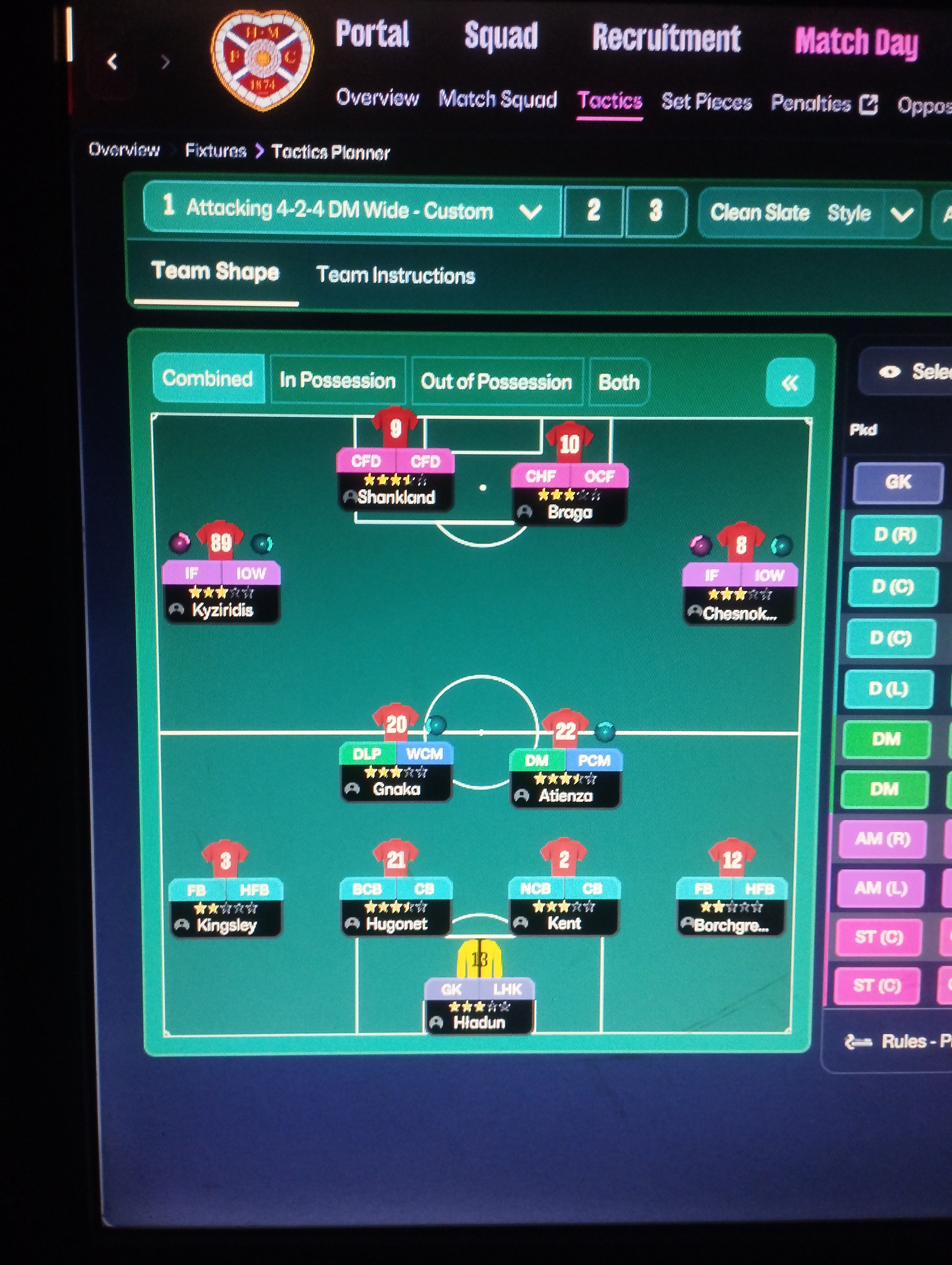
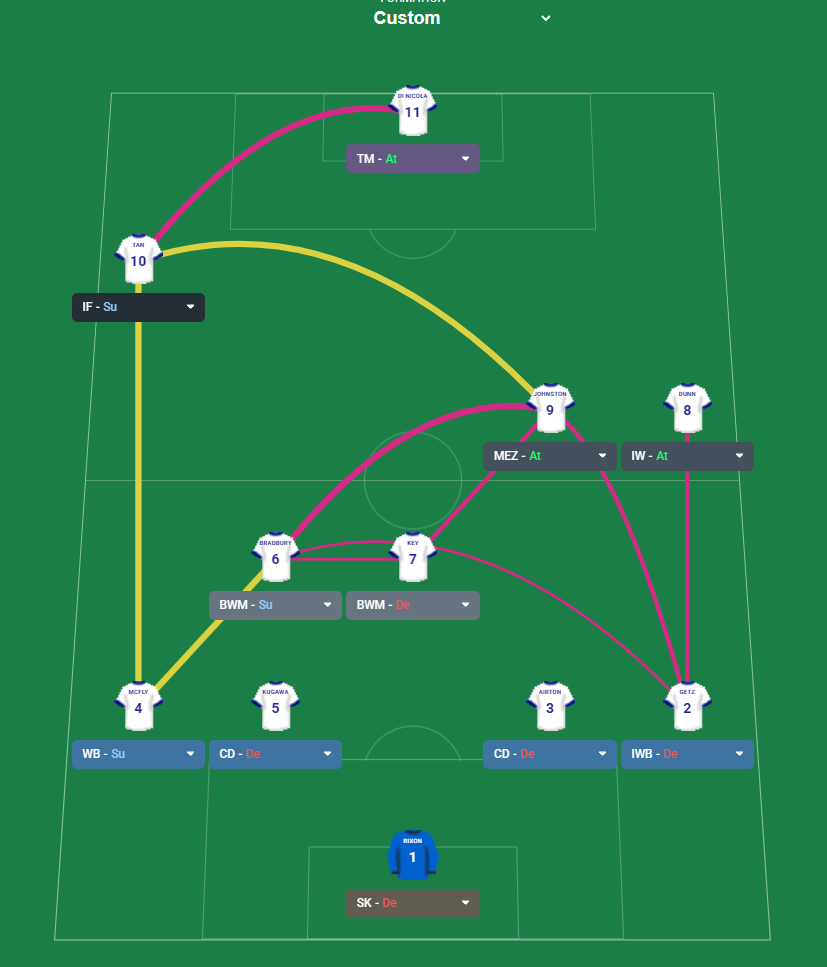
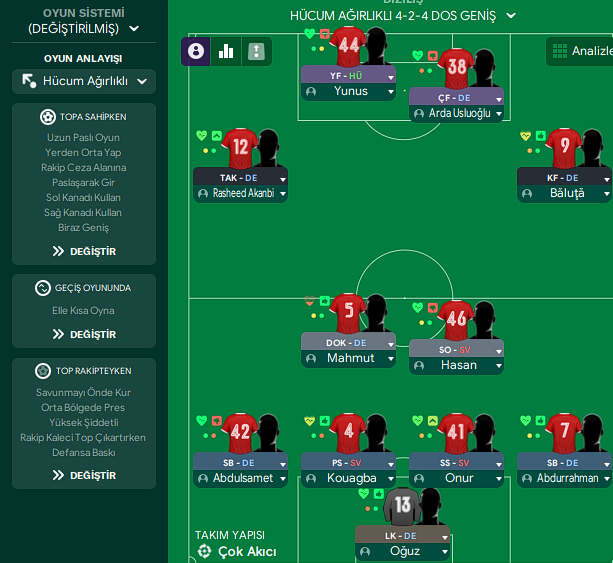
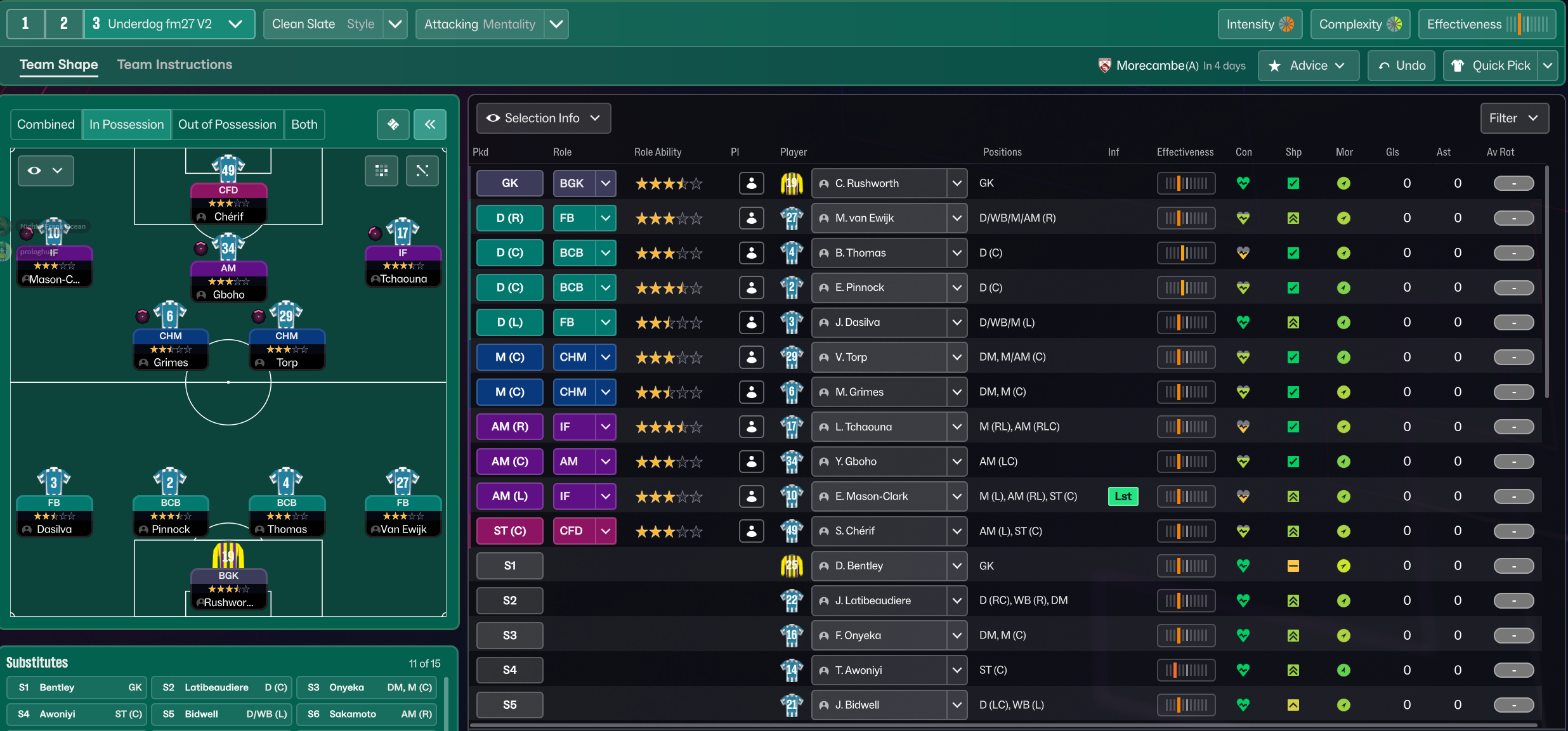
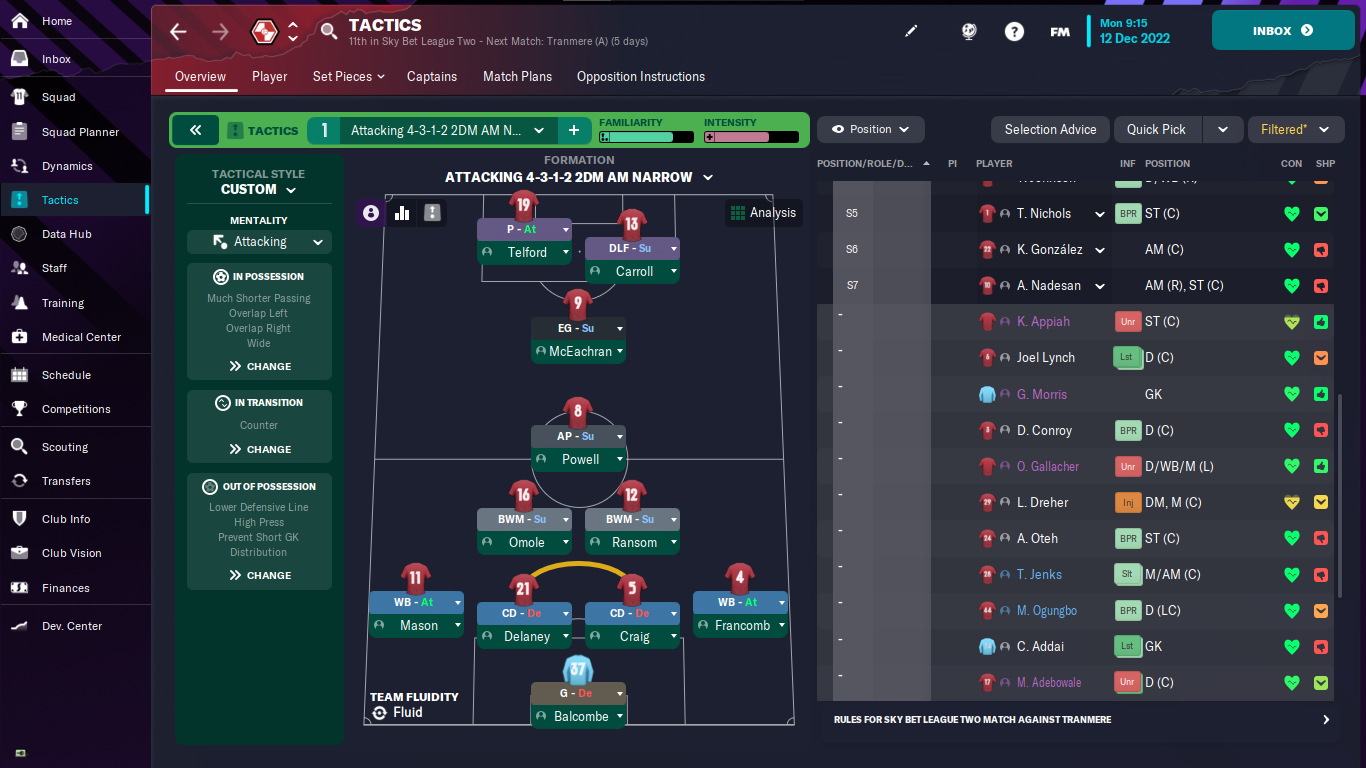
4-3-1-2 DM NARROW
The formation allows for quick, narrow passing sequences, best utilizing tight spaces to create scoring opportunities.
Loading tactical analysis...
Attacking
Attacking
4-3-1-2 DM NARROW
Fluid
Much Shorter Passing
Overlap Left
Overlap Right Wide
Counter
Lower Defensive Line
High Press
Prevent Short GK Distribution
ST
Advanced Forward
Attack
ST
Deep-Lying Forward
Support
AM
Attacking Midfielder
Support
EG
Enganche
Support
BWM
Ball Winning Midfielder
Support
WB
Wing Back
Attack
CD
Central Defender
Defend
The formation allows for quick, narrow passing sequences, best utilizing tight spaces to create scoring opportunities.
With an attacking mentality and counter transitions, the setup can exploit opponents' defensive gaps quickly.
Having a lower defensive line while implementing a high press can leave spaces behind, making it easier for opponents to exploit counter-attacks.
Short passes may slow counter-attacking transitions, conflicting with the intent to quickly capitalize on opposition errors.
How effective is the counter-attacking strategy against stronger opponents?
Are the full-backs providing adequate width without sacrificing defensive stability?
Is the team fluidity successfully harnessing the strengths of key players?
What adjustments can be made to enhance synergy between attacking midfielders and forwards?
Do the players understand the tactical demands of overlapping runs?
How can the team ensure balance between defensive solidity and attacking intent?
The tactical theory behind the 4-3-1-2 DM NARROW: roles, instructions, and the trade-offs that decide whether the system holds up.
FM27 keeps FM26's tactic system. Here is what stays the same, the small changes that can catch you out, and what the new Tactical Effectiveness system asks of you.
How Mentality, Duty, and Role interact in FM, why duty trumps mentality every time, and the role-on-top-of-duty composition rules.
Counter-Press, Regroup, Stand Off, Trigger Press: what each pressing instruction does in FM and how to pair them without contradicting.