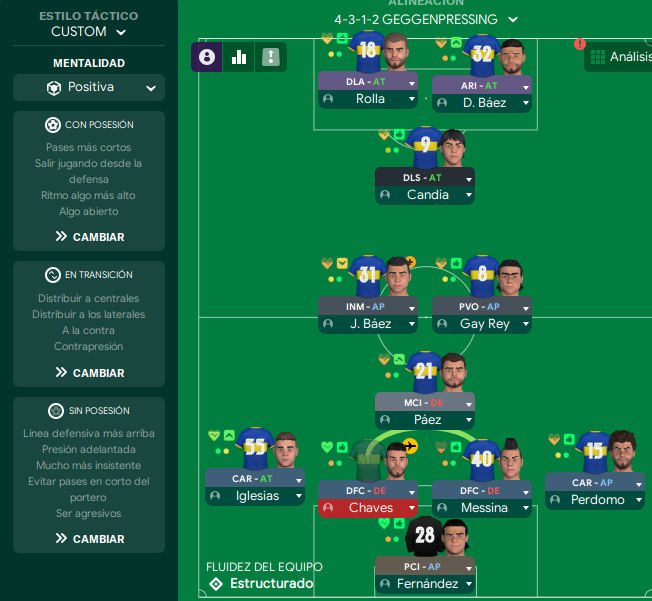
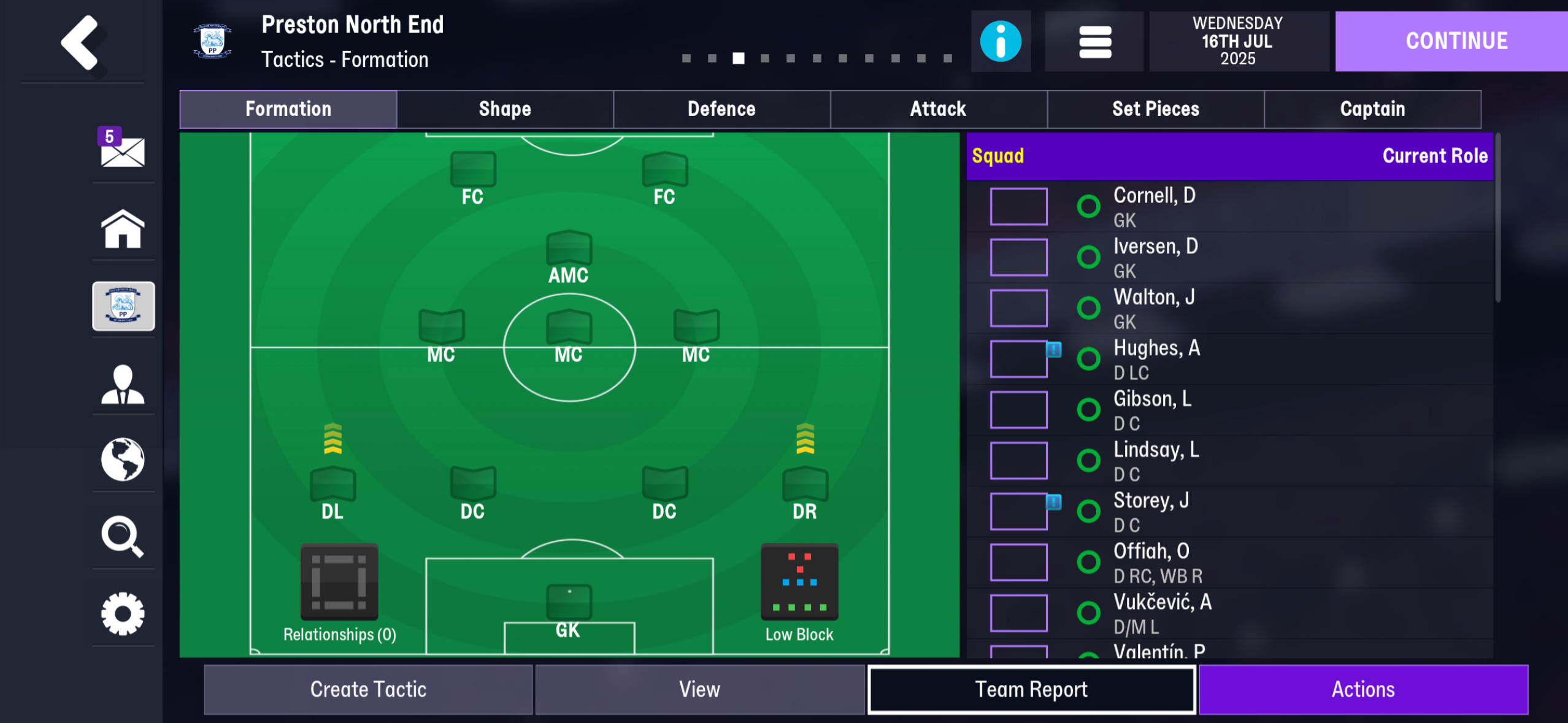
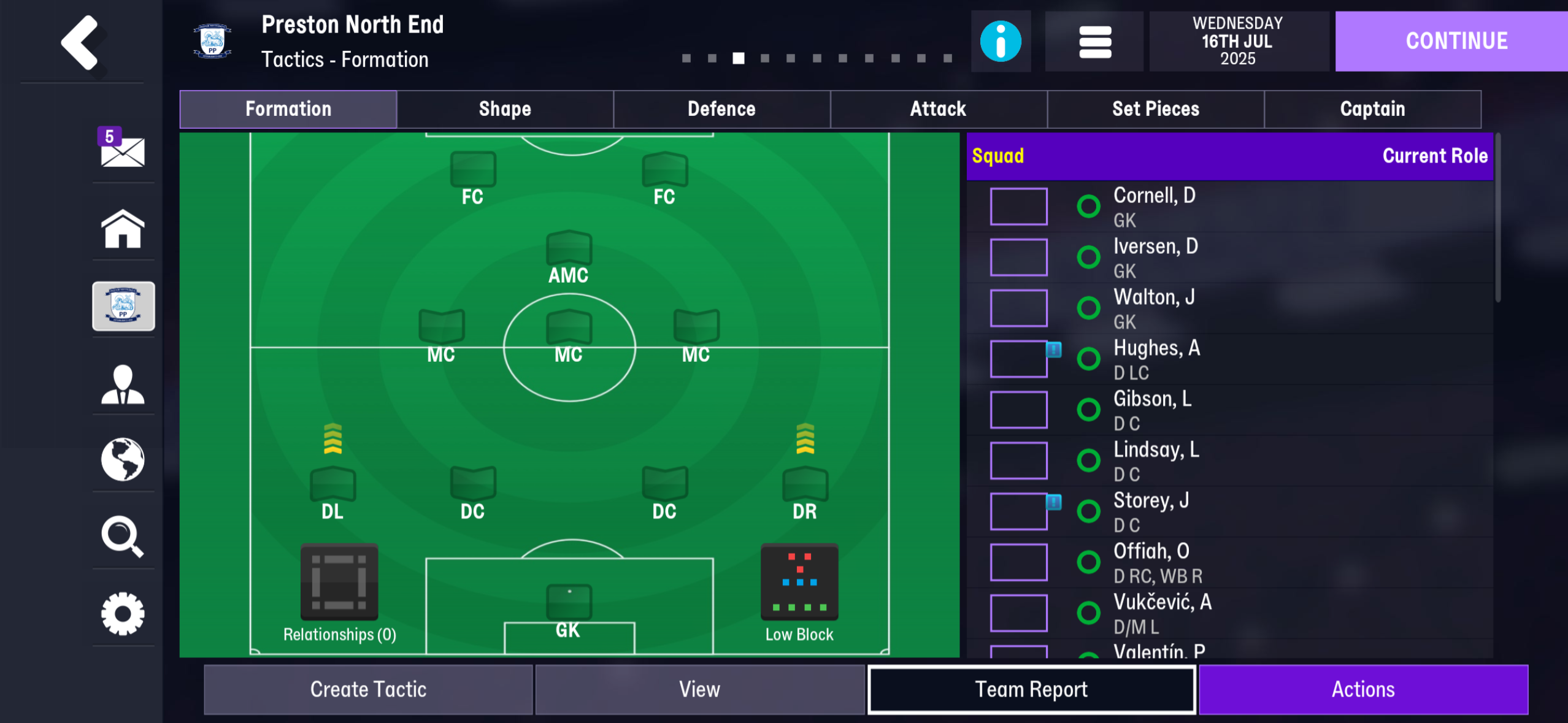
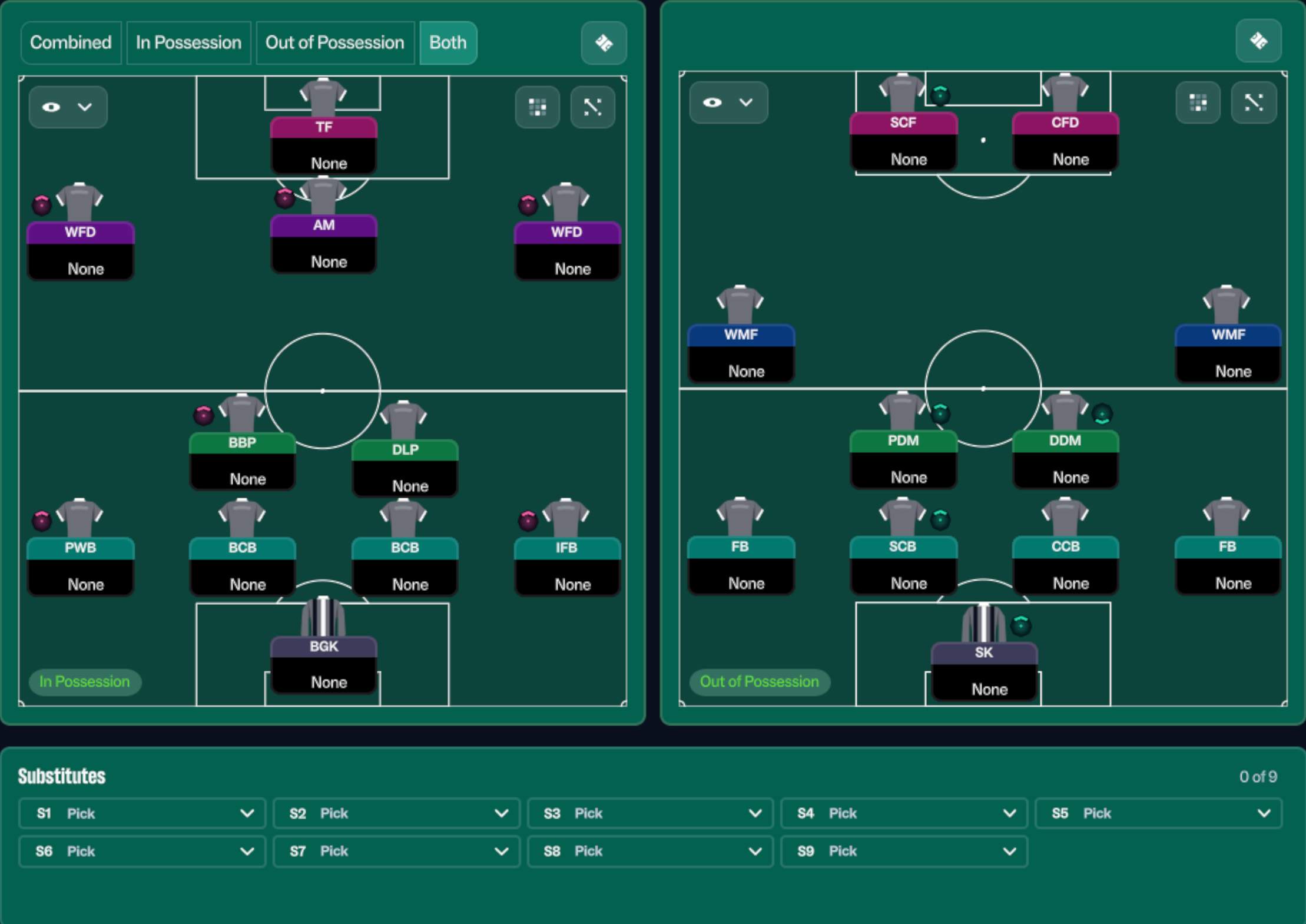
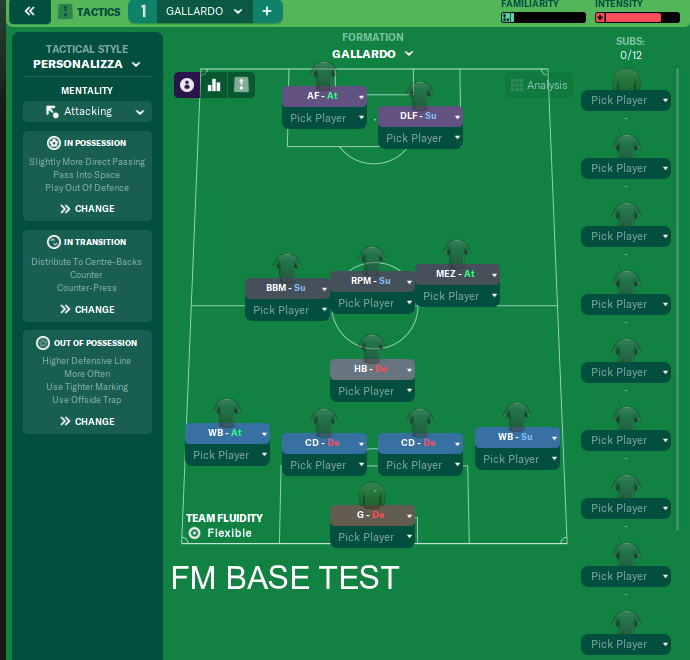
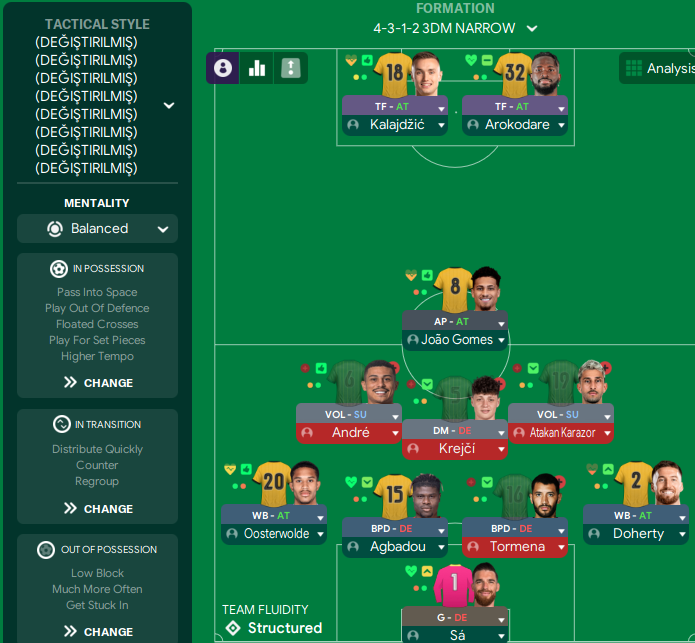
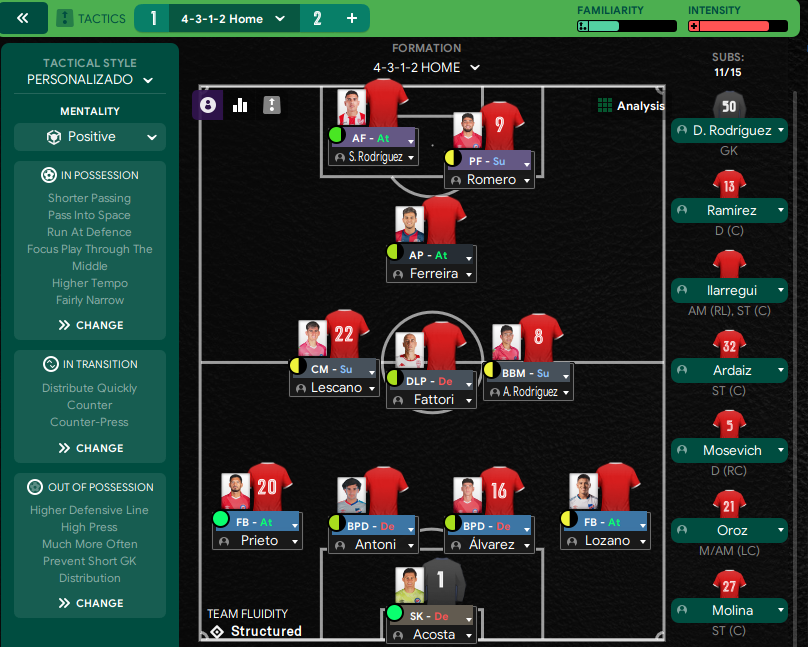
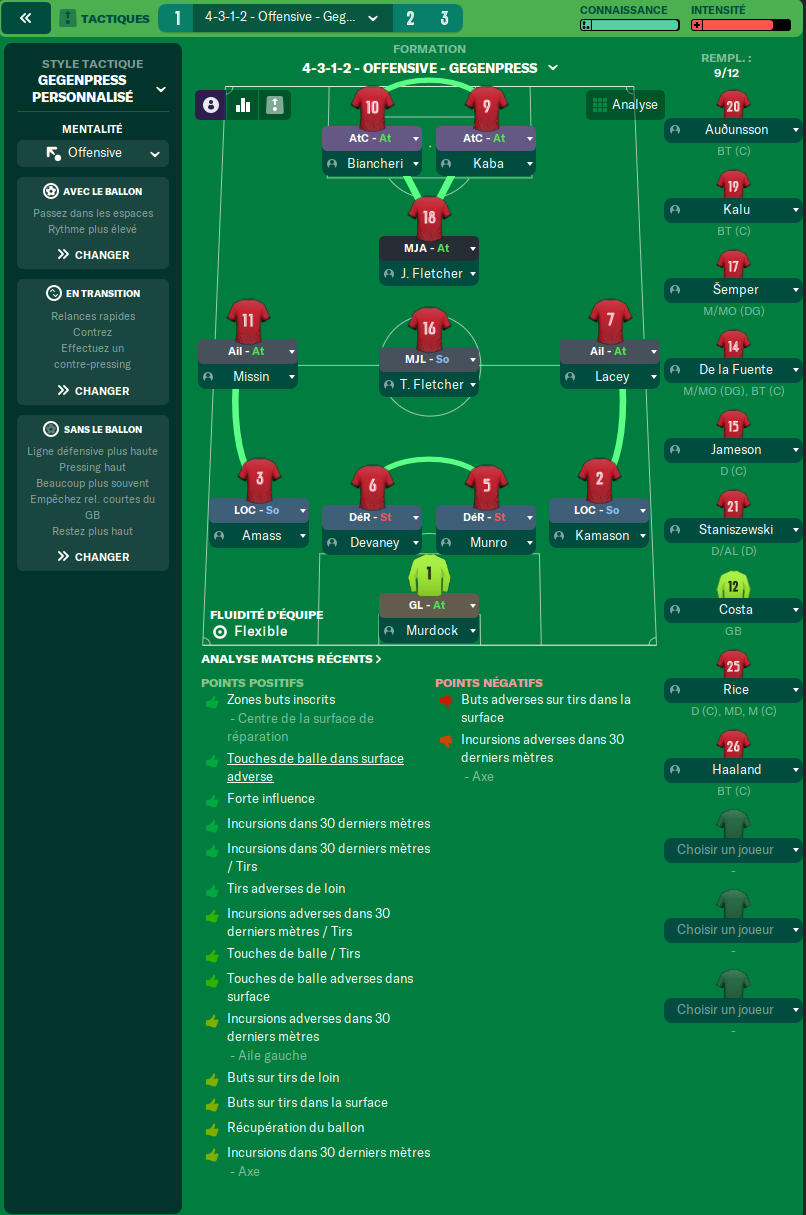
4-3-1-2
Utilizes width effectively, providing options both down the left and right flanks, opening up defenses.
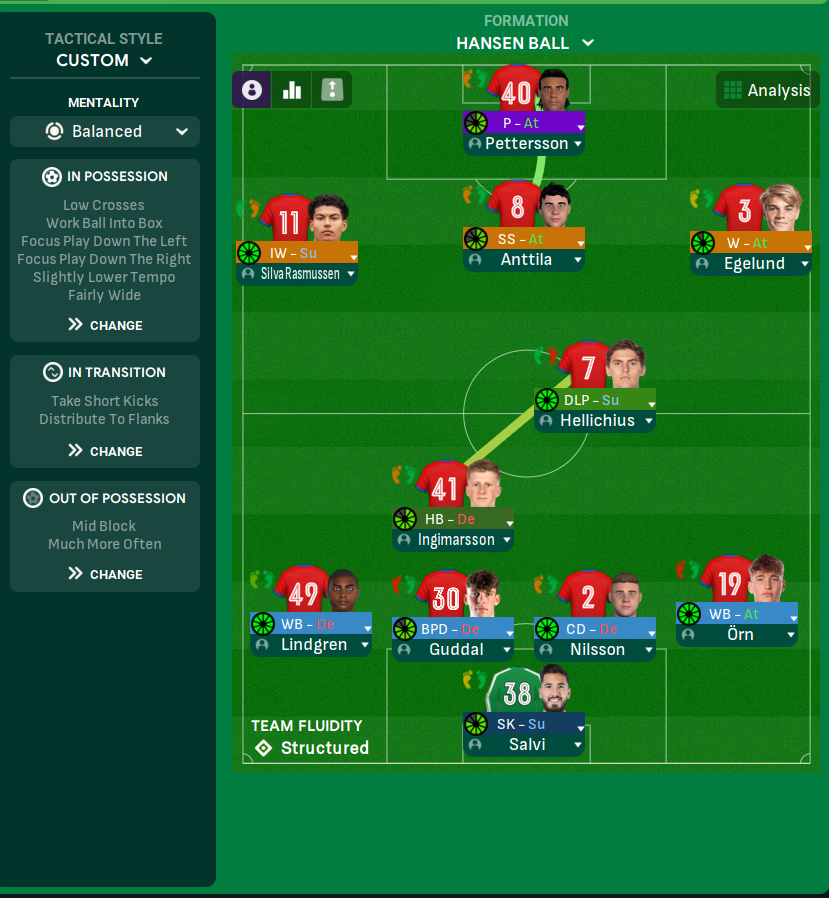
Loading tactical analysis...
Custom
Balanced
4-3-1-2
Structured
Low Crosses
Work Ball Into Box
Focus Play Down The Left
Focus Play Down The Right
Slightly Lower Tempo
Fairly Wide
Take Short Kicks
Distribute To Flanks
Mid Block
Much More Often
ST
Pressing Forward
Attack
SS
Secondary Striker
Attack
IW
Inside Winger
Support
W
Winger
Attack
DLP
Deep-Lying Playmaker
Support
BPD
Ball Playing Defender
Defend
HB
Half Back
Defend
WB
Wing Back
Defend
Utilizes width effectively, providing options both down the left and right flanks, opening up defenses.
The presence of a Deep-Lying Playmaker helps in maintaining possession and transitioning play from defense to attack.
The mid block strategy may create gaps in the defense if not coordinated well, especially against quick counter-attacks.
A lower tempo may hinder the use of width, as wider players might struggle to get in behind defenses.
How can the pressing intensity be adjusted based on the opponent's strengths?
Is the interplay between the IW and W creating overlaps or confusion in the attacking phase?
What specific transitions are most effective given the current player roles?
Would switching the DLP to an Advanced Playmaker change attacking dynamics?
How can the team adjust its shape if facing teams with strong wingers?
Are there opportunities to further exploit opponent weaknesses through tactical changes during matches?
The tactical theory behind the 4-3-1-2: roles, instructions, and the trade-offs that decide whether the system holds up.
The pairing rule for Defensive Line and Line of Engagement, all 9 combinations, and the gap that costs goals.
What Higher Tempo, Wider, and Narrower actually do in FM, plus the dial contradictions and antipatterns players run into most often.
Build through the wide areas or through the middle? A working framework for picking the right one for your squad.