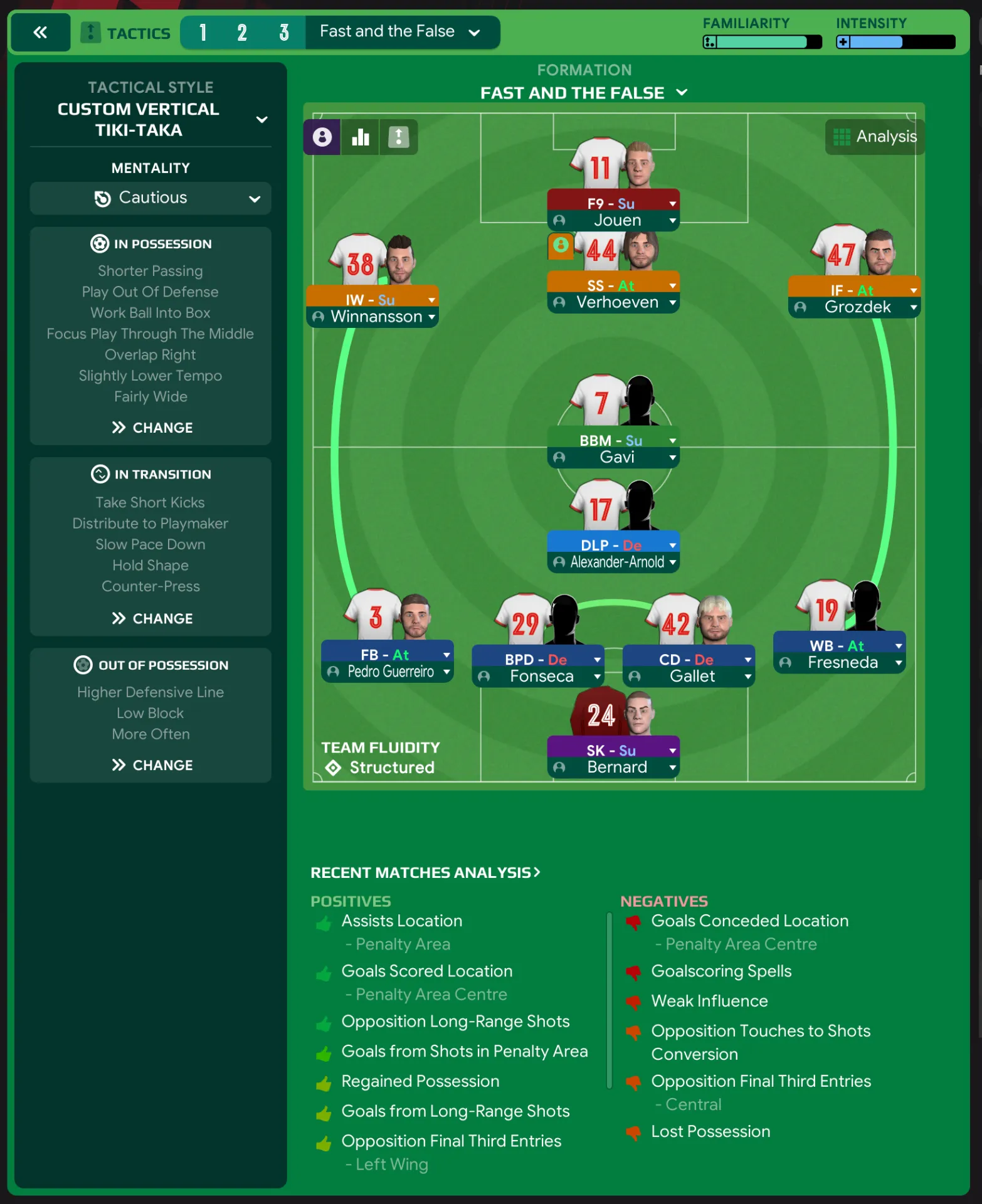
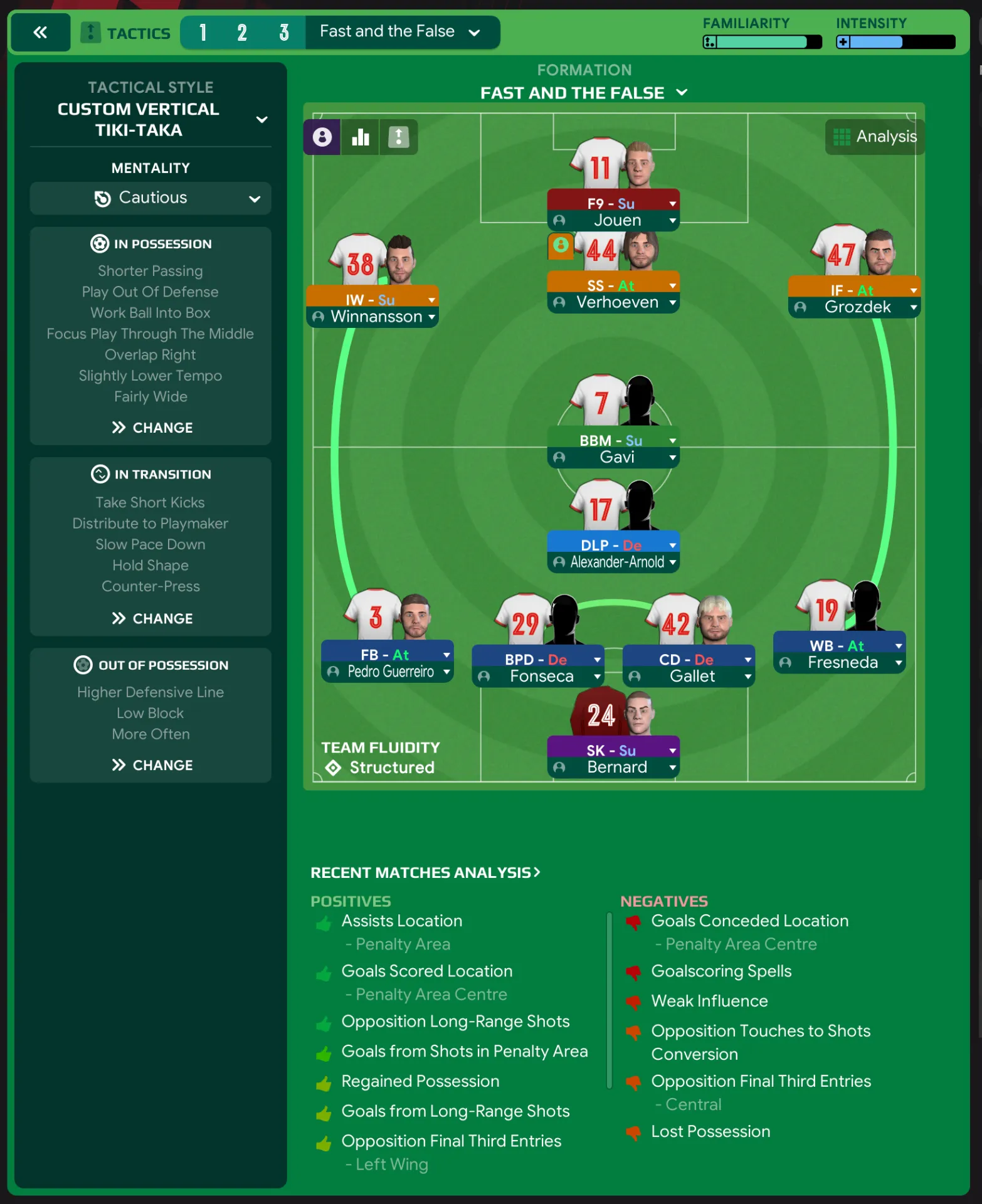
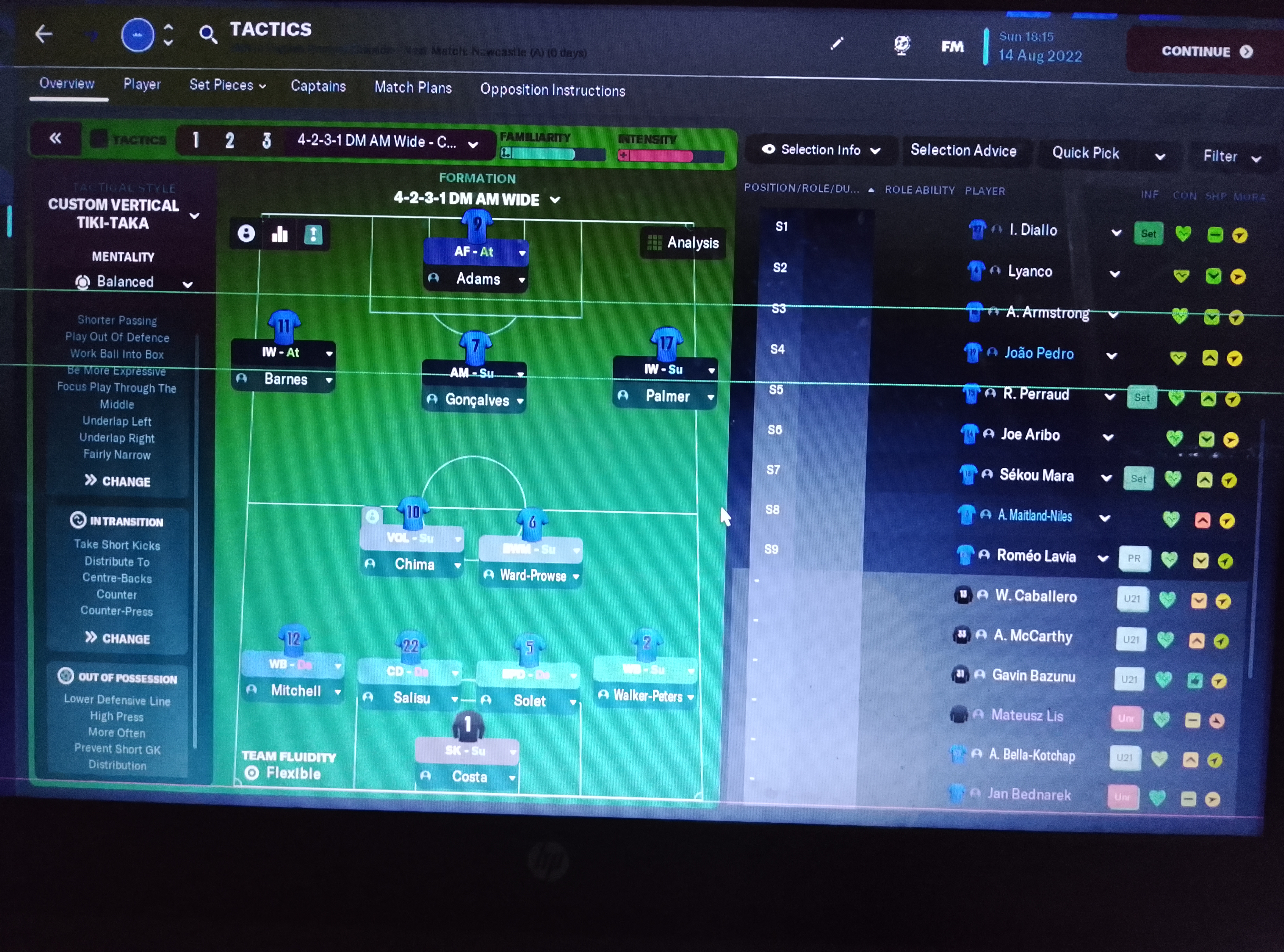
Uploaded Tactic
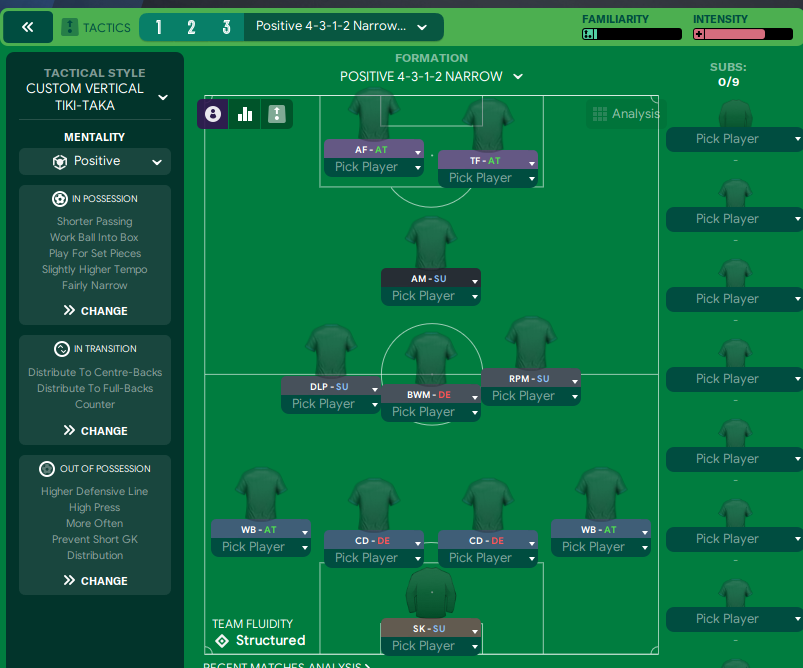
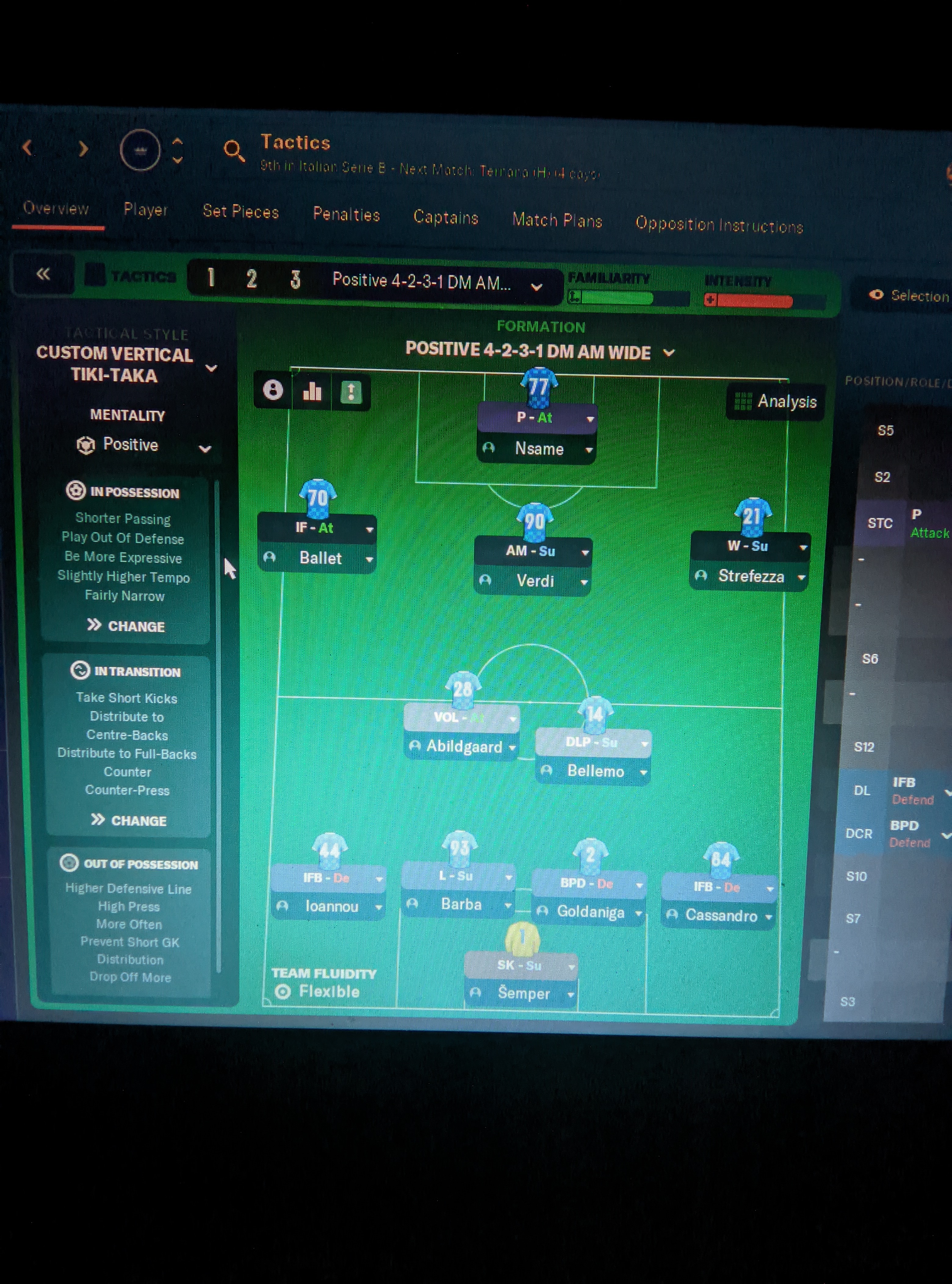
Formation & Style
Tactical Style:Custom Vertical Tiki-Taka
Mentality:Positive
Formation:4-3-1-2 Narrow
Team Fluidity:Structured
In Possession
Shorter Passing
Work Ball Into Box
Play for Set Pieces
Slightly Higher Tempo
Fairly Narrow
In Transition
Distribute To Centre-Backs
Distribute To Full-Backs
Counter
Out of Possession
Higher Defensive Line
High Press
More Often
Prevent Short GK Distribution
Team Shape Without Ball
No team shape without ball data available
Team Shape With Ball
No team shape with ball data available
Key Strengths
Possession Retention
The use of shorter passing and a deep-lying playmaker allows for better control and retention of the ball in midfield.
Offensive Versatility
The combination of roles like Advanced Forward and Trequartista provides multiple attacking options and creates space.
High Pressing
Utilizing a higher defensive line and high pressing can force opponents into making mistakes in their defensive third.
Width through Wing-Backs
The attacking wing-backs stretch the play and provide width, making it difficult for opponents to defend centrally.
Conflicting Directions
High Line vs. Counter-Attacks
While a high line is employed, it may leave the team vulnerable to counter-attacks, especially with slow defenders.
Structured Fluidity with High Tempo
Having a structured team fluidity may conflict with a slightly higher tempo, potentially reducing fluid passing sequences.
Roles Balance in Midfield
The mixture of offensive and defensive roles in midfield could lead to positional imbalances during transition.
Trequartista with an Advanced Forward
Both roles may occupy similar spaces, leading to overcrowding in the attacking areas, negating potential overlaps.
Tactical Suggestions
Adjust Defensive Line
Consider lowering the defensive line to reduce vulnerability to counters, especially if defenders lack pace.
Simplify Midfield Roles
Optimize midfield roles to ensure better balance, perhaps by switching the Box-to-Box Midfielder to a more defensive role.
Increase Fluidity
Switch to a more fluid team shape to enhance attacking movements, allowing players to interchange positions more dynamically.
Consider a False Nine
Replacing the Trequartista with a False Nine could free up space for attacking runs while maintaining shape in midfield.
Ask Questions About Your Lineup
Related Tactics
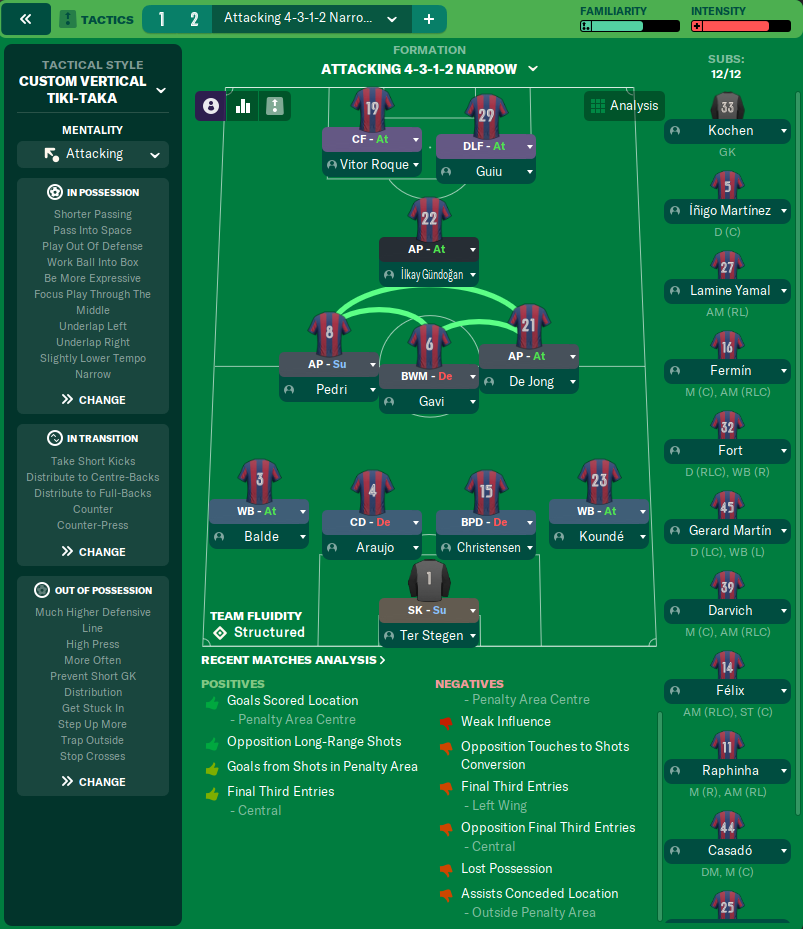
Vertical Tiki-Taka 4-3-1-2 Narrow
Custom Vertical Tiki-Taka
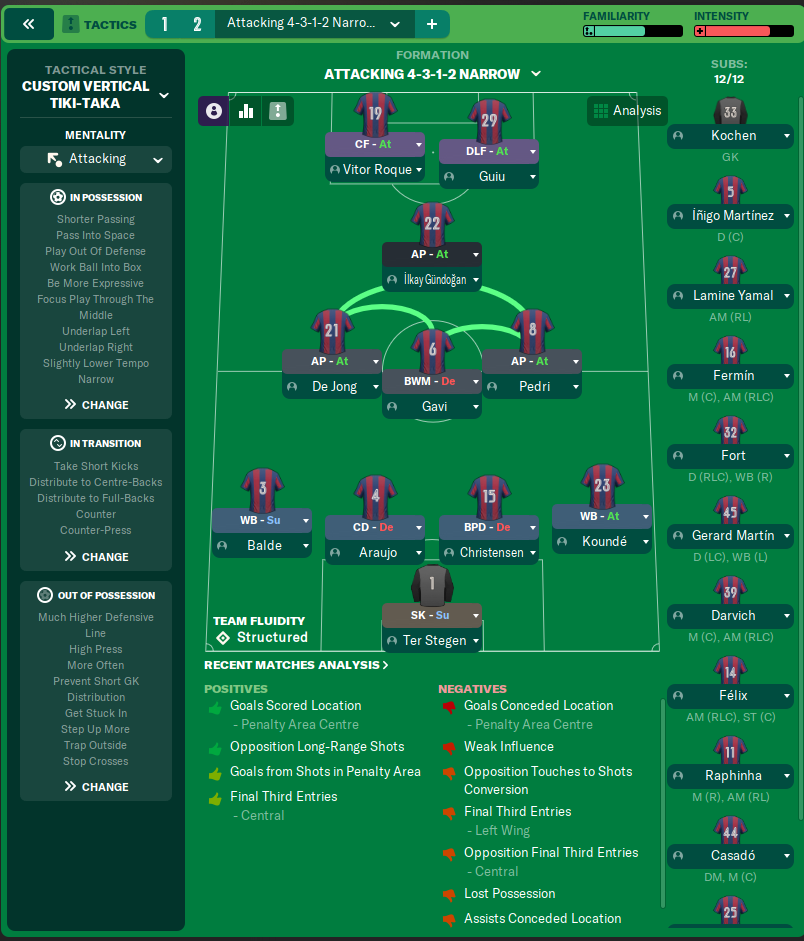
Vertical Tiki-Taka 4-3-1-2 Narrow
Custom Vertical Tiki-Taka
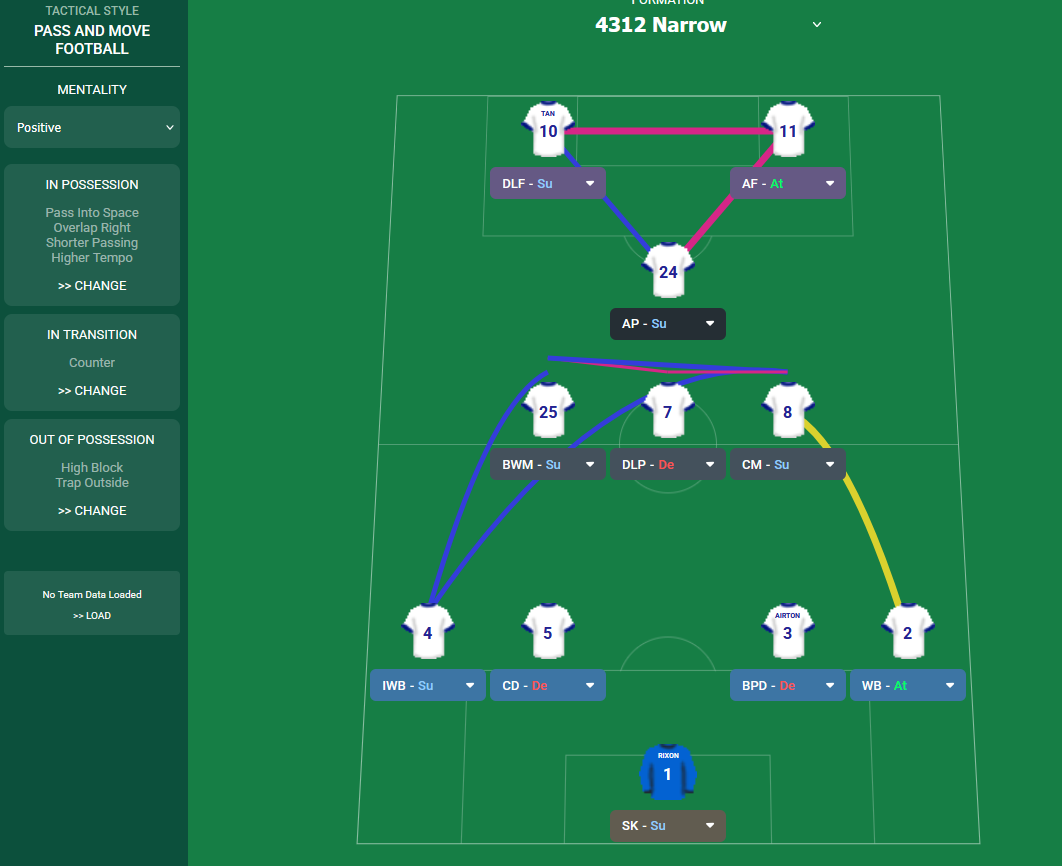
Pass and Move Football 4-3-1-2 Narrow
Pass And Move Football
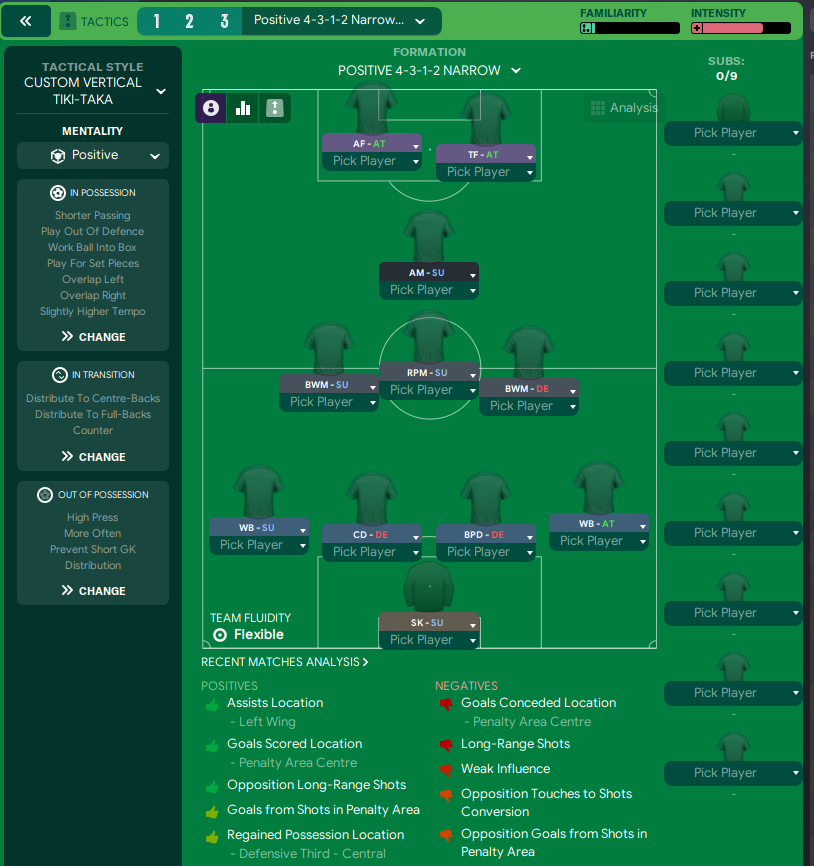
Vertical Tiki-Taka 4-3-1-2 Narrow
Custom Vertical Tiki-Taka
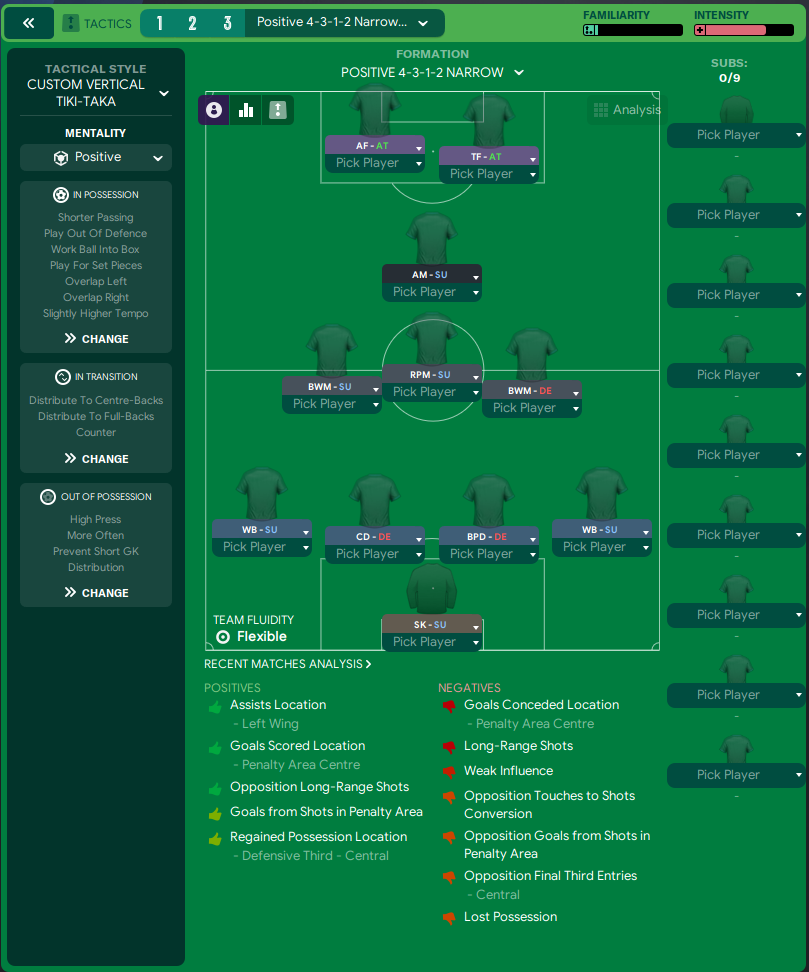
Tiki-Taka 4-3-1-2 Narrow
Tiki-Taka
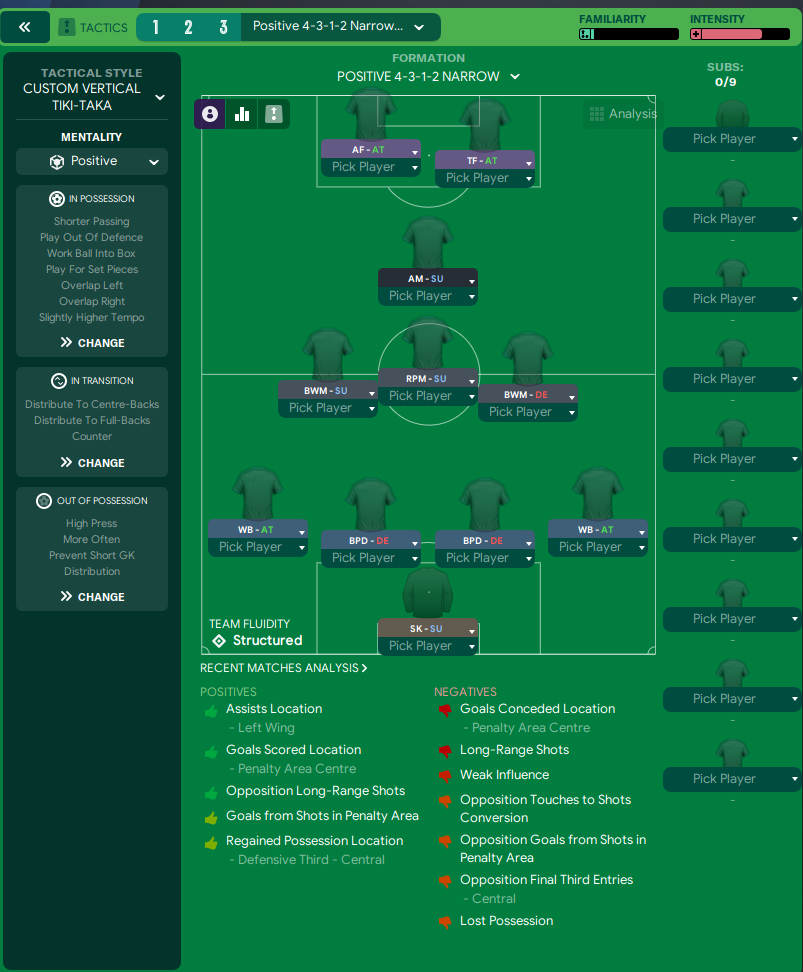
Tiki-Taka 4-3-1-2 Narrow
Tiki-Taka
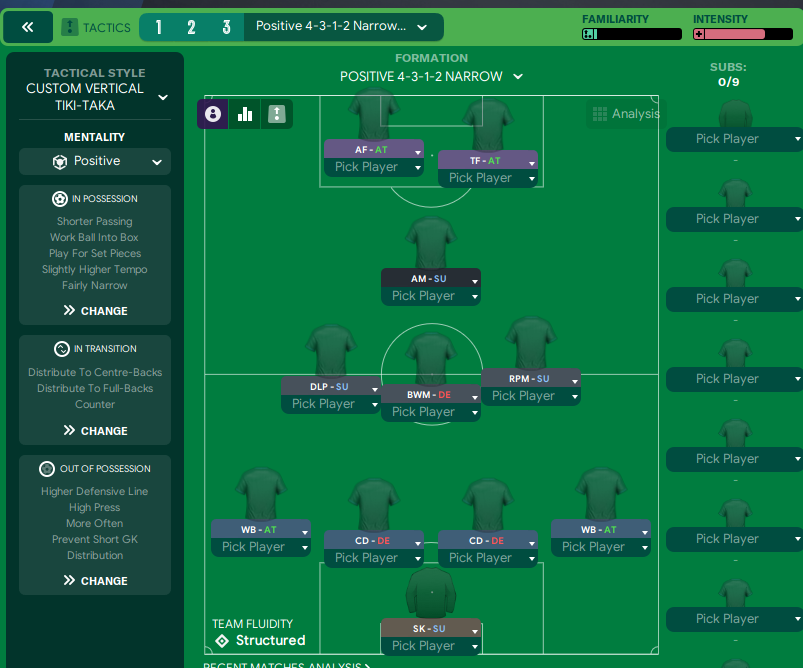
Vertical Tiki-Taka 4-3-1-2 Narrow
Custom Vertical Tiki-Taka