
4-3-2-1 DM
The DLP and dual AM roles provide strong midfield presence, facilitating both defensive cover and attacking support.
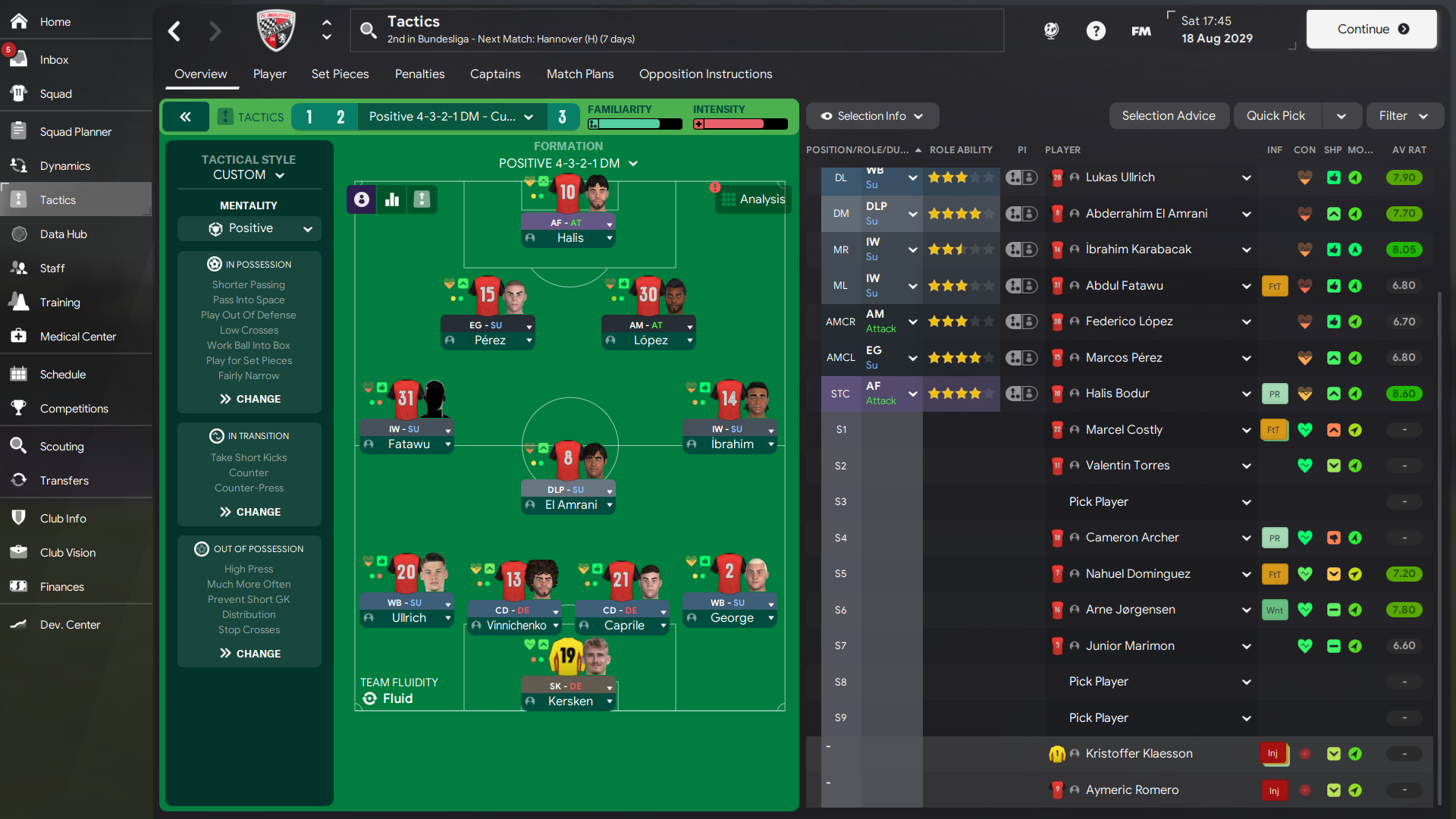
Loading tactical analysis...
Custom
Positive
4-3-2-1 DM
Fluid
Shorter Passing
Pass Into Space
Work Ball Into Box
Play For Set Pieces
Fairly Narrow
Take Short Kicks
Counter
Counter-Press
High Press More Often
Prevent Short GK Distribution
Stop Crosses
DL
DLP
Support
STC
AF
Attack
AMCL
EG
Support
AMCR
AM
Attack
IW
IW
Support
The DLP and dual AM roles provide strong midfield presence, facilitating both defensive cover and attacking support.
Using IWs allows for emphasis on wing attacks, stretching the opponent’s defense and providing width.
Shorter passing might limit the effectiveness of the wings unless explicitly focused on wing-focused buildup.
Counter-press may expose the defense if the team is pushed too high up the pitch without adequate cover.
How can we better utilize our width with existing player roles?
Is our pressing strategy causing vulnerability in transition?
Should we consider a shift to a more fluid midfield setup?
How can we incorporate more dynamic options in attack?
Will adjusting our passing style enhance our wing play?
Do our defensive roles currently complement our pressing strategy?
The tactical theory behind the 4-3-2-1 DM: roles, instructions, and the trade-offs that decide whether the system holds up.
Pass map, average position, xG, possession by zone: what each tablet panel tells you in FM and the tactical change it should trigger.
FM27 keeps FM26's tactic system. Here is what stays the same, the small changes that can catch you out, and what the new Tactical Effectiveness system asks of you.
How Mentality, Duty, and Role interact in FM, why duty trumps mentality every time, and the role-on-top-of-duty composition rules.