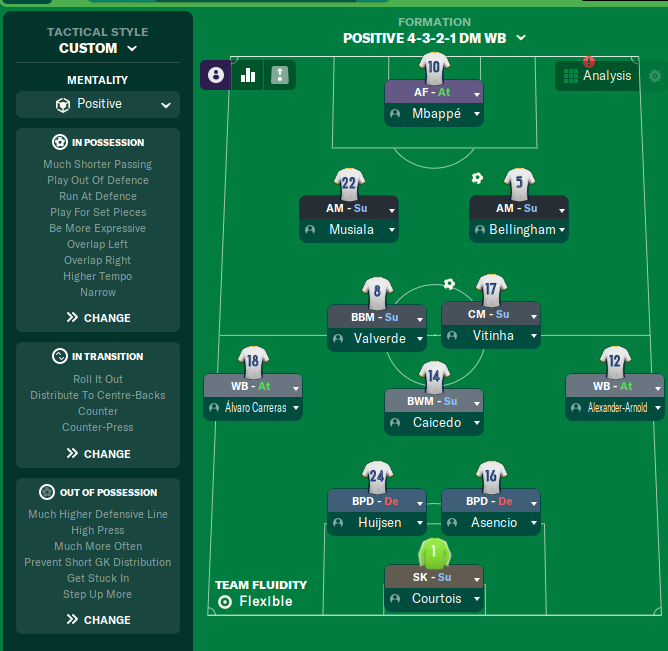
Uploaded Tactic
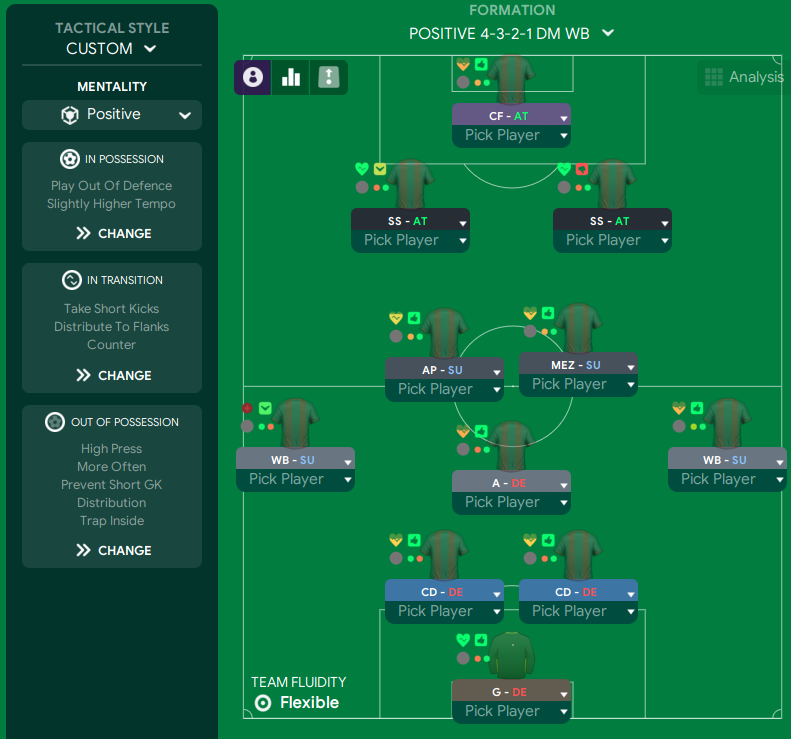
Formation & Style
Tactical Style:Custom
Mentality:Positive
Formation:4-3-2-1 DM WB
Team Fluidity:Flexible
In Possession
Play Out of Defence
Slightly Higher Tempo
In Transition
Take Short Kicks
Distribute To Flanks
Counter
Out of Possession
High Press
More Often
Prevent Short GK Distribution
Trap Inside
Team Shape Without Ball
No team shape without ball data available
Team Shape With Ball
No team shape with ball data available
Key Strengths
Fluid Attack
The combination of three attacking players (CF and two SS) provides a diverse threat, creating space and options in the final third.
Control in Midfield
The Advanced Playmaker and Mezzala roles in midfield ensure fluidity and creativity, allowing for quick transitions and linking play.
Defensive Stability
Utilizing a Ball-Winning Midfielder, combined with a solid back four, provides resilience and support against opposition counter-attacks.
Effective Pressing
The High Press and prevention of short goal-kick distribution put immediate pressure on opponents, leading to potential turnovers in advantageous areas.
Conflicting Directions
High Press vs. Fluidity
While a high press is effective, it may require more cohesive team movement. If not executed properly, it can leave spaces in the midfield.
Wing Play with High Central Density
The heavy concentration of attacking players may limit the effectiveness of the Wing Backs, as they may find themselves competing for space with forwards.
Tempo vs. Control
A higher tempo may lead to rushed decisions in the attacking third, undermining the creative potential of the Advanced Playmaker.
Overloading the Flanks
If both Wing Backs push too high, they may expose the defense, especially in transition situations where recovery is crucial.
Tactical Suggestions
Adjust Wing Back Duties
Consider changing one of the Wing Backs to a more defensive role to provide cover during counter-attacks and maintain balance.
Utilize a Supporting Midfielder
Introduce a Supporting Midfielder in the center to provide additional cover and link-up play, enhancing midfield control.
Experiment with Defensive Line
Test slightly dropping the defensive line to minimize space for opposition attackers, thus reducing vulnerability.
Increase Width in Attack
Encourage wingers and Wing Backs to maintain width to stretch the play, creating more space for central attackers.