Uploaded Tactic
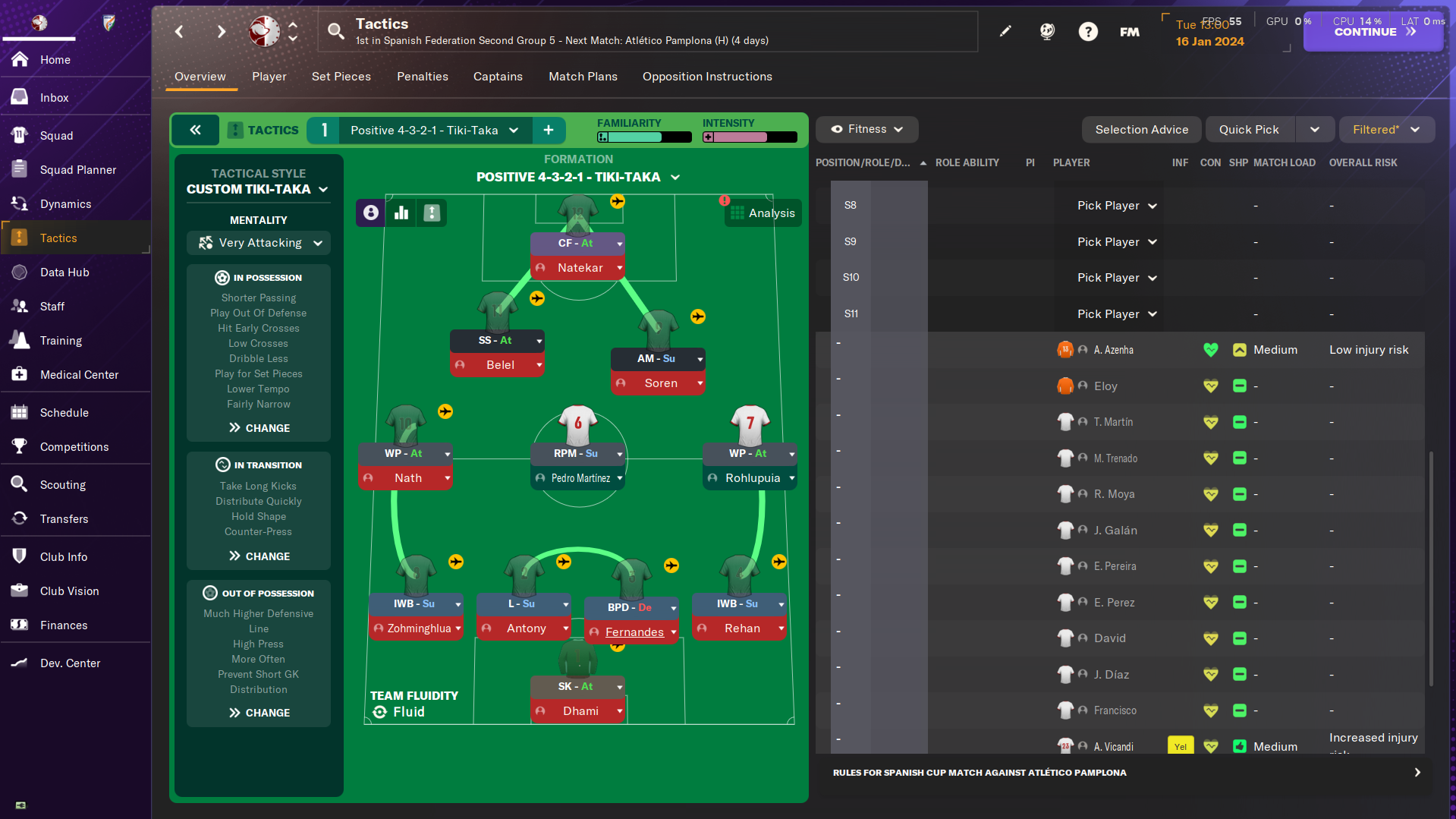
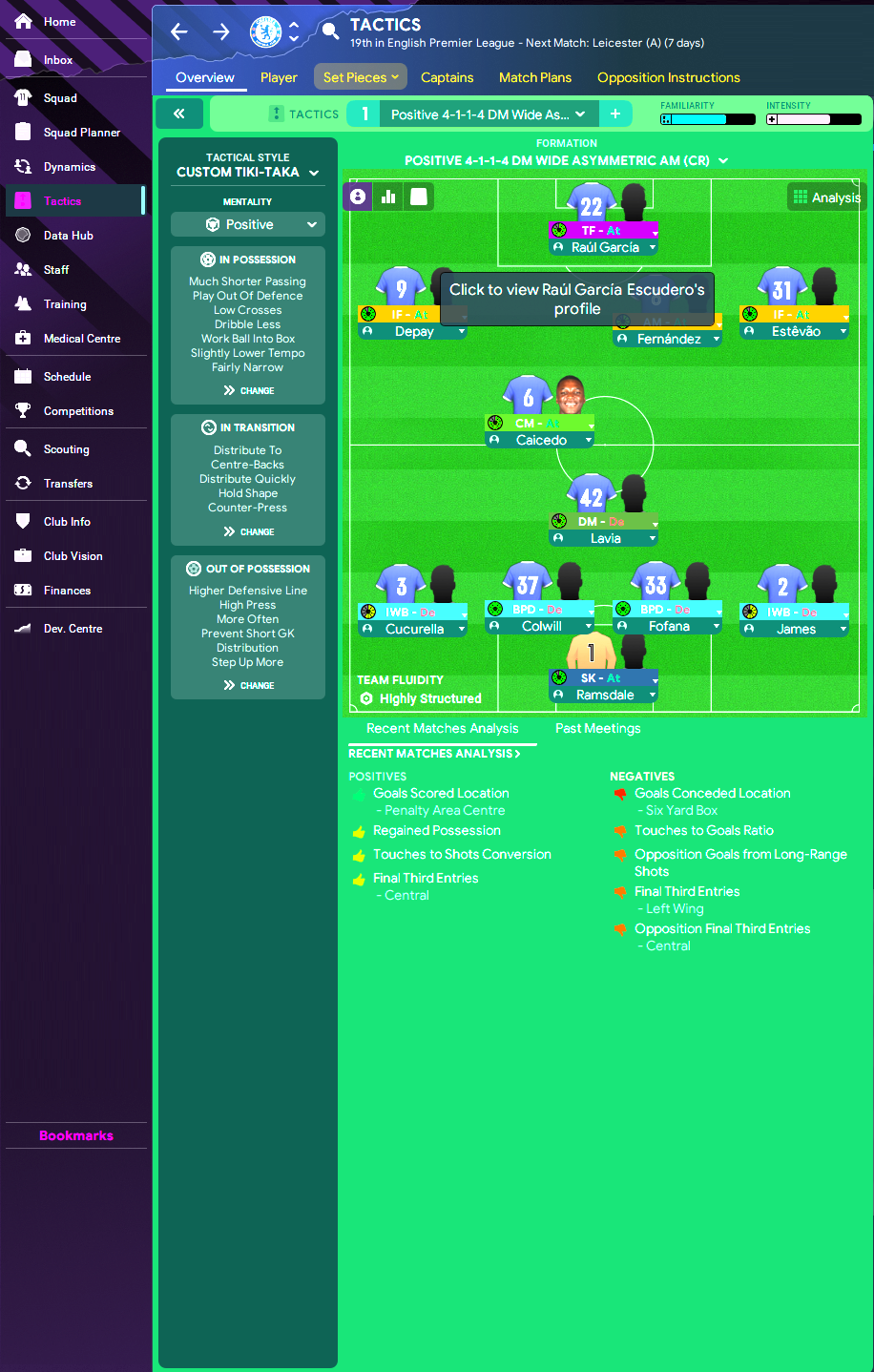
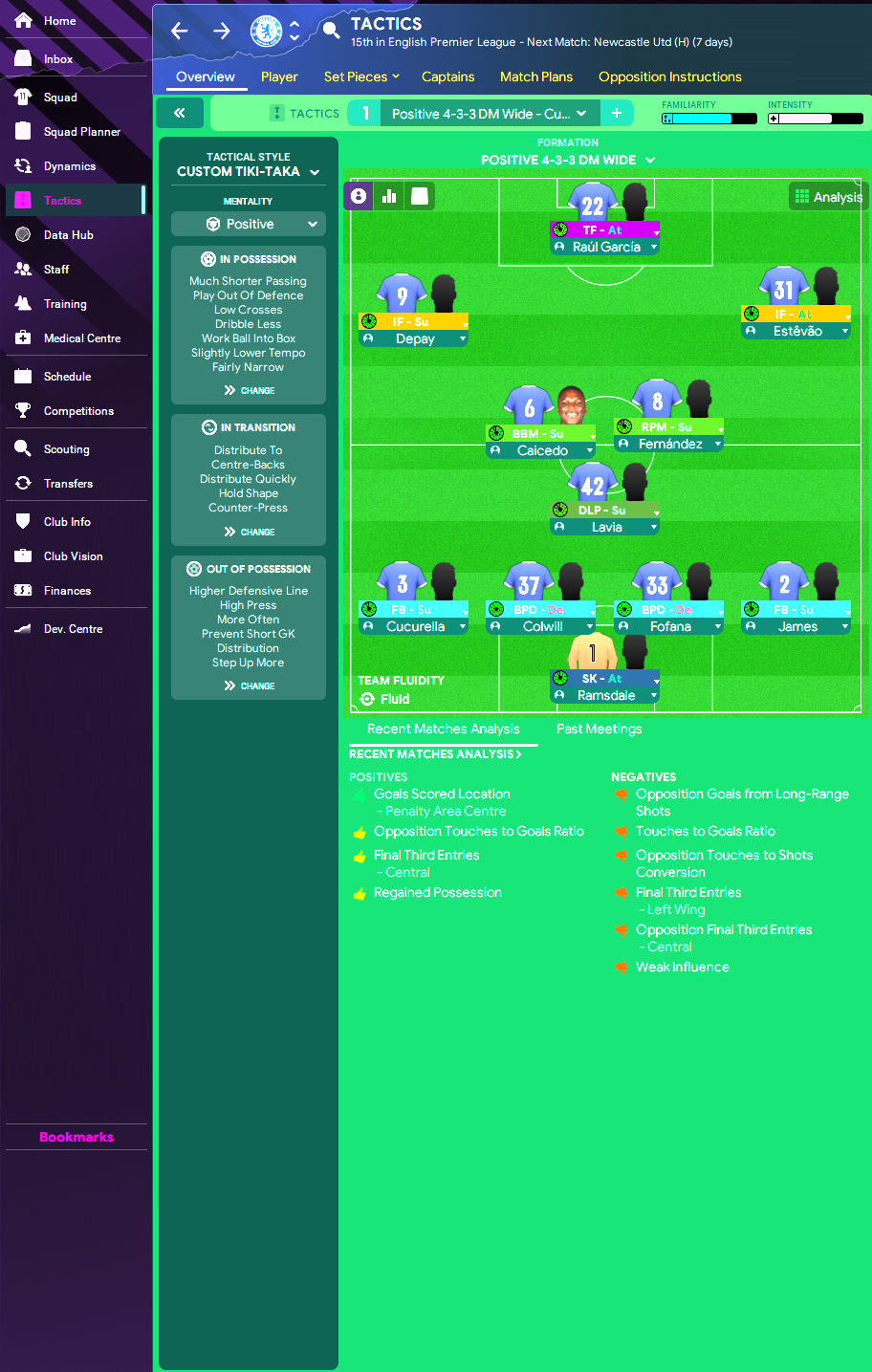
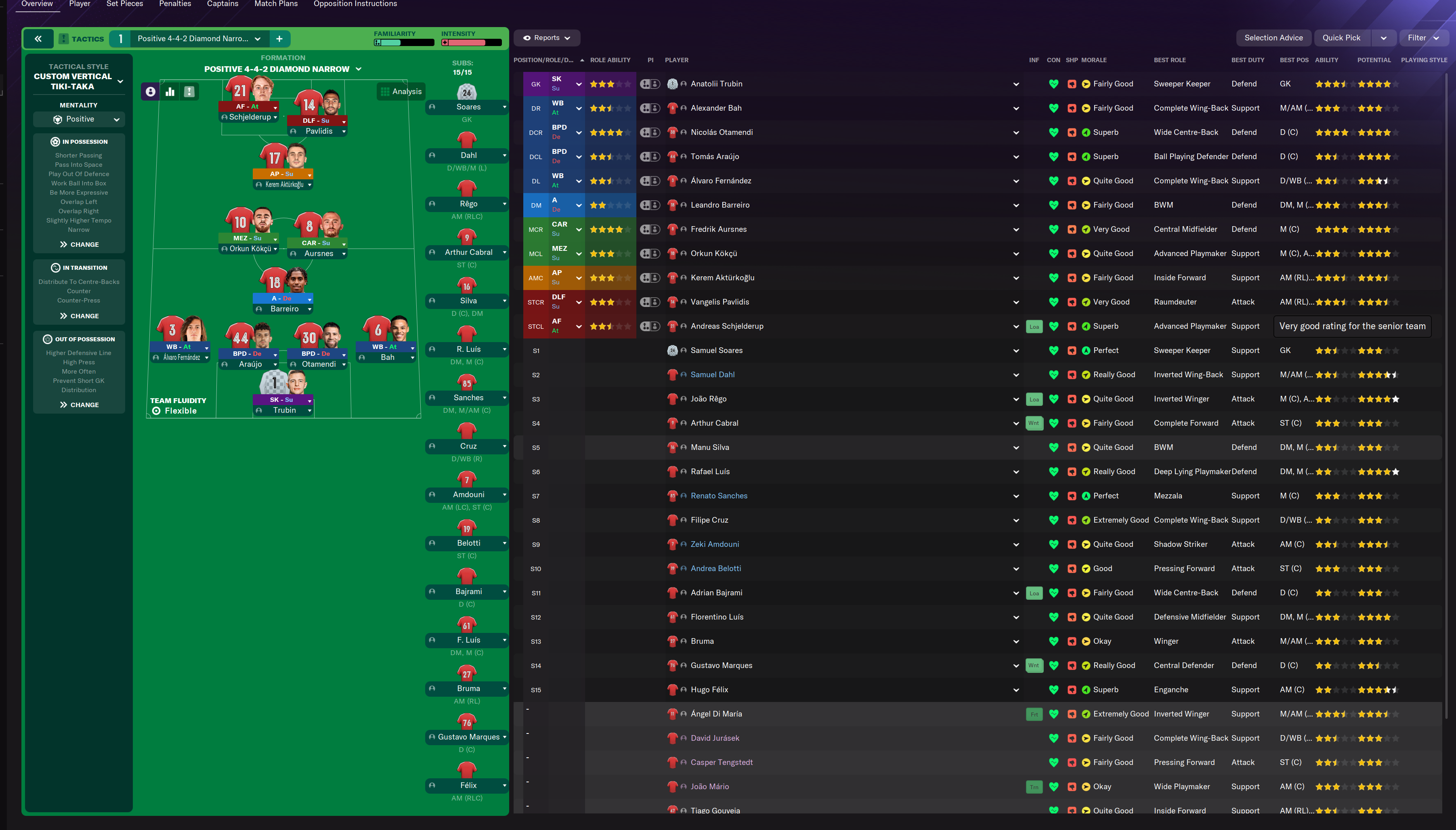
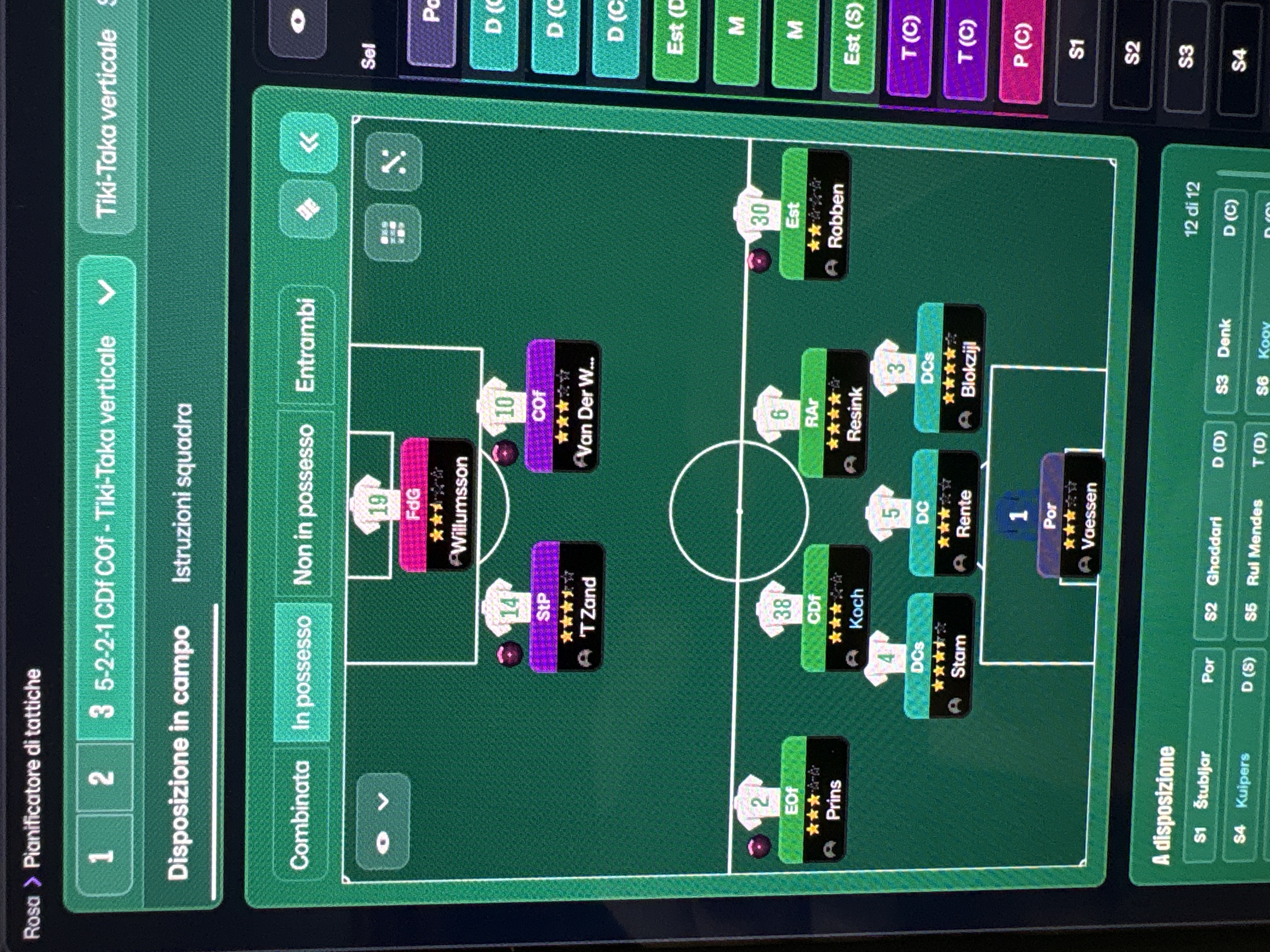
Formation & Style
Tactical Style:Tiki-Taka
Mentality:Very Attacking
Formation:4-3-2-1 Tiki-Taka
Team Fluidity:Fluid
In Possession
Shorter Passing
Play Out Of Defense
Hit Early Crosses
Dribble Less
Play for Set Pieces
Lower Tempo
Fairly Narrow
In Transition
Take Long Kicks
Distribute Quickly
Hold Shape
Counter-Press
Out of Possession
Much Higher Defensive Line
High Press
More Often
Prevent Short GK Distribution
Team Shape Without Ball
No team shape without ball data available
Team Shape With Ball
No team shape with ball data available
Key Strengths
Positional Play
The Tiki-Taka style encourages players to maintain close proximity, ensuring fluid movements and quick ball exchanges.
Attacking Transitions
Fast counter-press and quick distribution during transitions can exploit opposition vulnerabilities effectively.
Flexibility in Attack
The shadow striker and complete forward roles can interchange, increasing unpredictability in the final third.
Defensive Solidarity
The higher defensive line and organized pressing can suffocate opponent buildup, winning the ball higher up the pitch.
Conflicting Directions
High Defensive Line vs. Counter-Attacks
While effective against static teams, a very high line may leave the defense exposed to pacey counter-attacks.
Lower Tempo vs. Tiki-Taka Style
A lower tempo can conflict with the quick passes required in Tiki-Taka, possibly slowing down attacking moves.
Roles Overlapping in Attacking Phase
The roles of the shadow striker and attacking midfielder may overlap in positioning, leading to congestion in central spaces.
Defensive Duties of Wing Players
Wing players with attacking duties may neglect tracking back, increasing vulnerability on the flanks.
Tactical Suggestions
Adjust Defensive Line
Consider a standard defensive line to mitigate risks from pacey attackers, especially against teams with fast front players.
Increase Tempo
A slightly higher tempo could enhance fluidity and effectiveness of passes, aligning better with the Tiki-Taka philosophy.
Utilize a Polling System for Wing Players
Evaluate if players can switch to 'Support' duty to balance attack and defense duties, ensuring cover for the defense.
Consider Additional Midfield Support
Introducing a deep-lying playmaker could bolster midfield control, aiding in recycling possession more effectively.