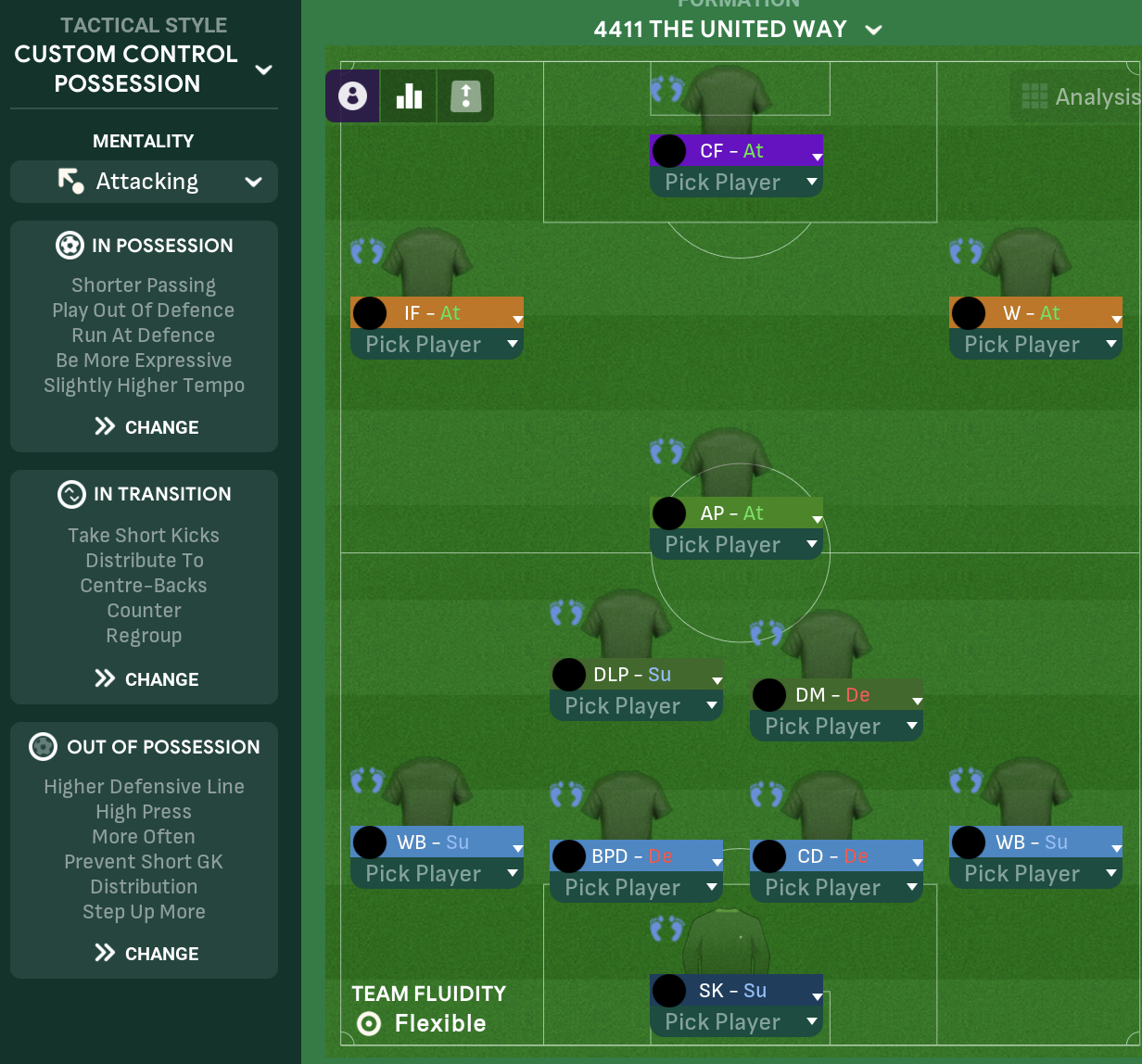
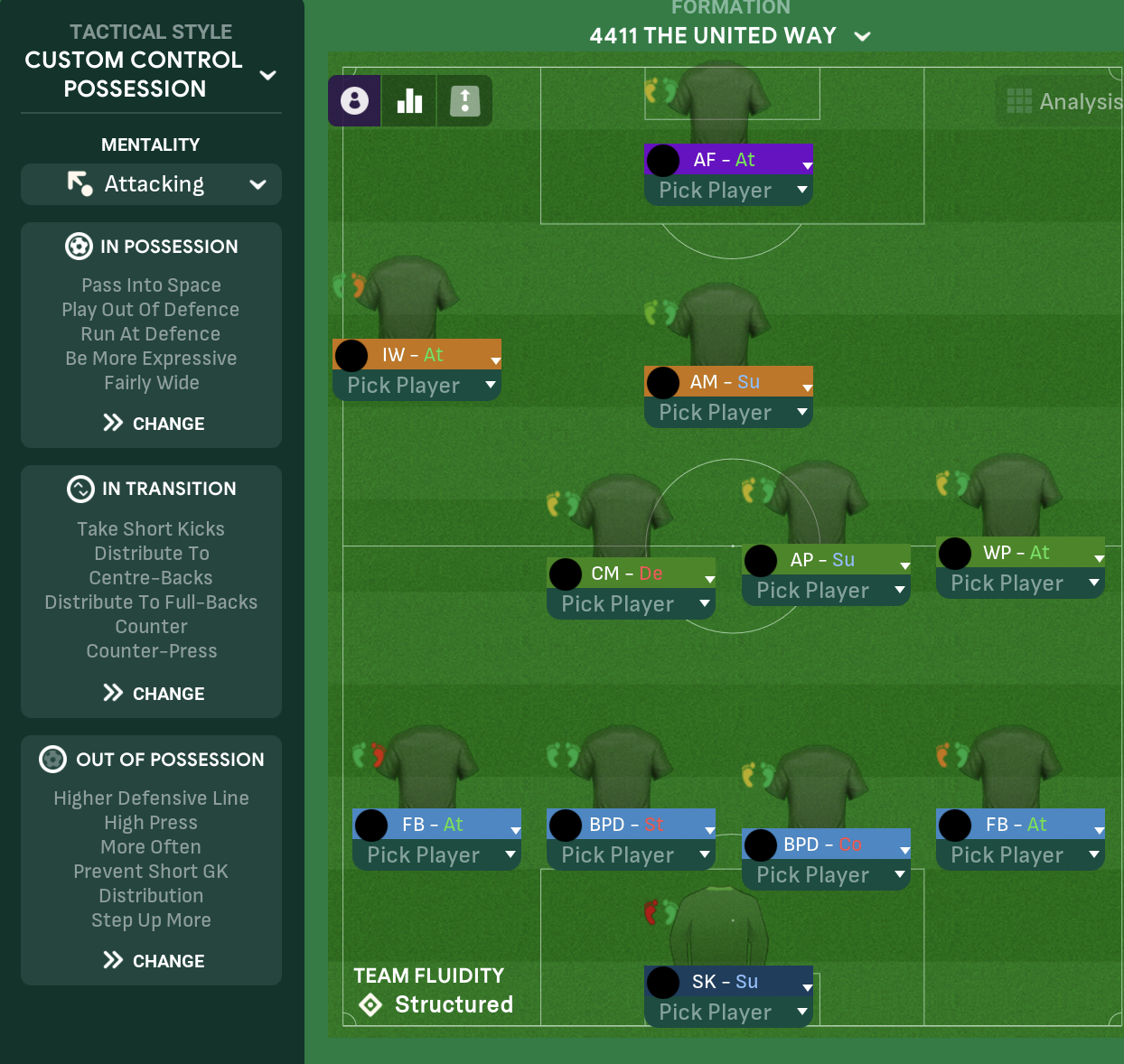
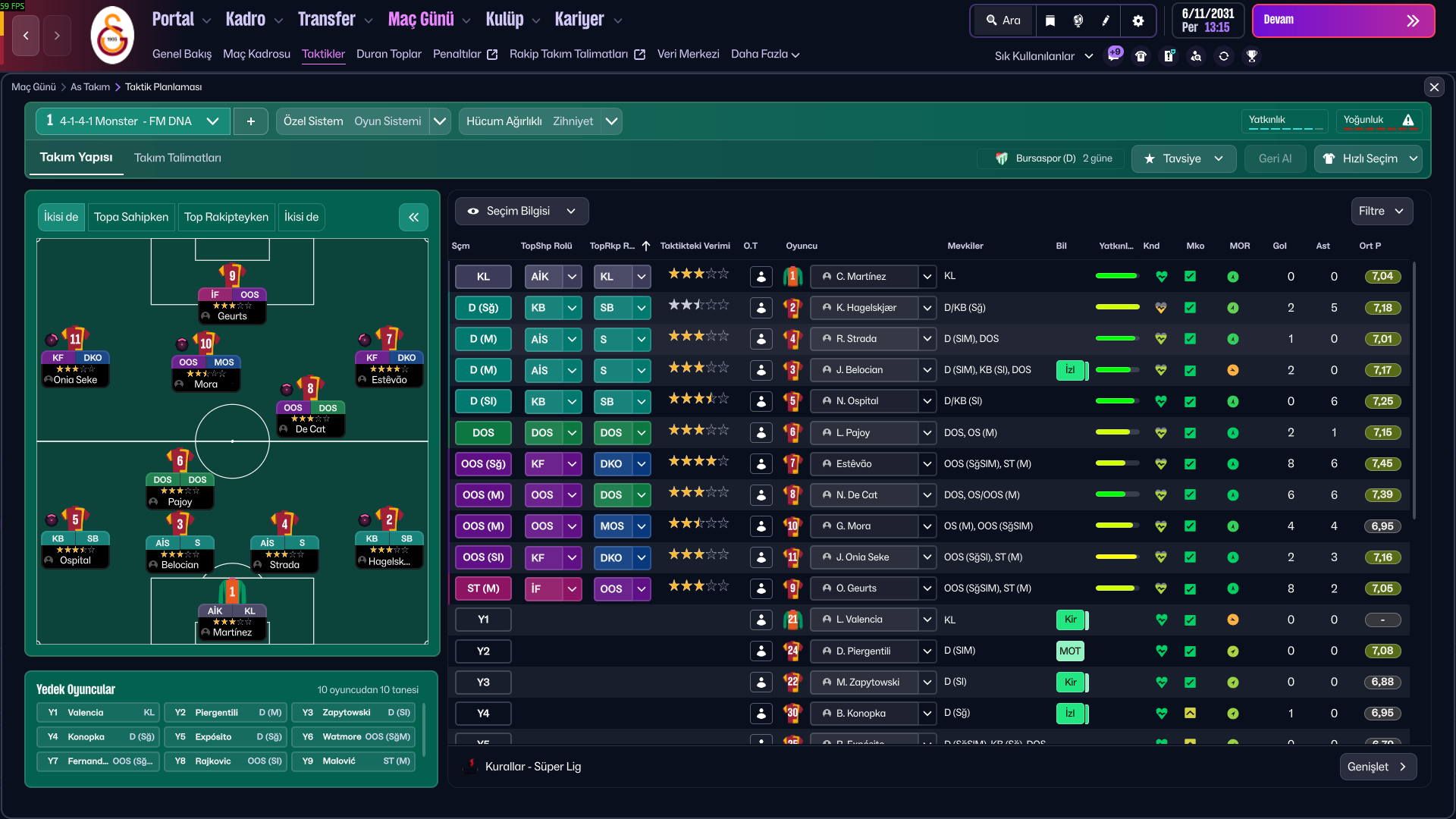
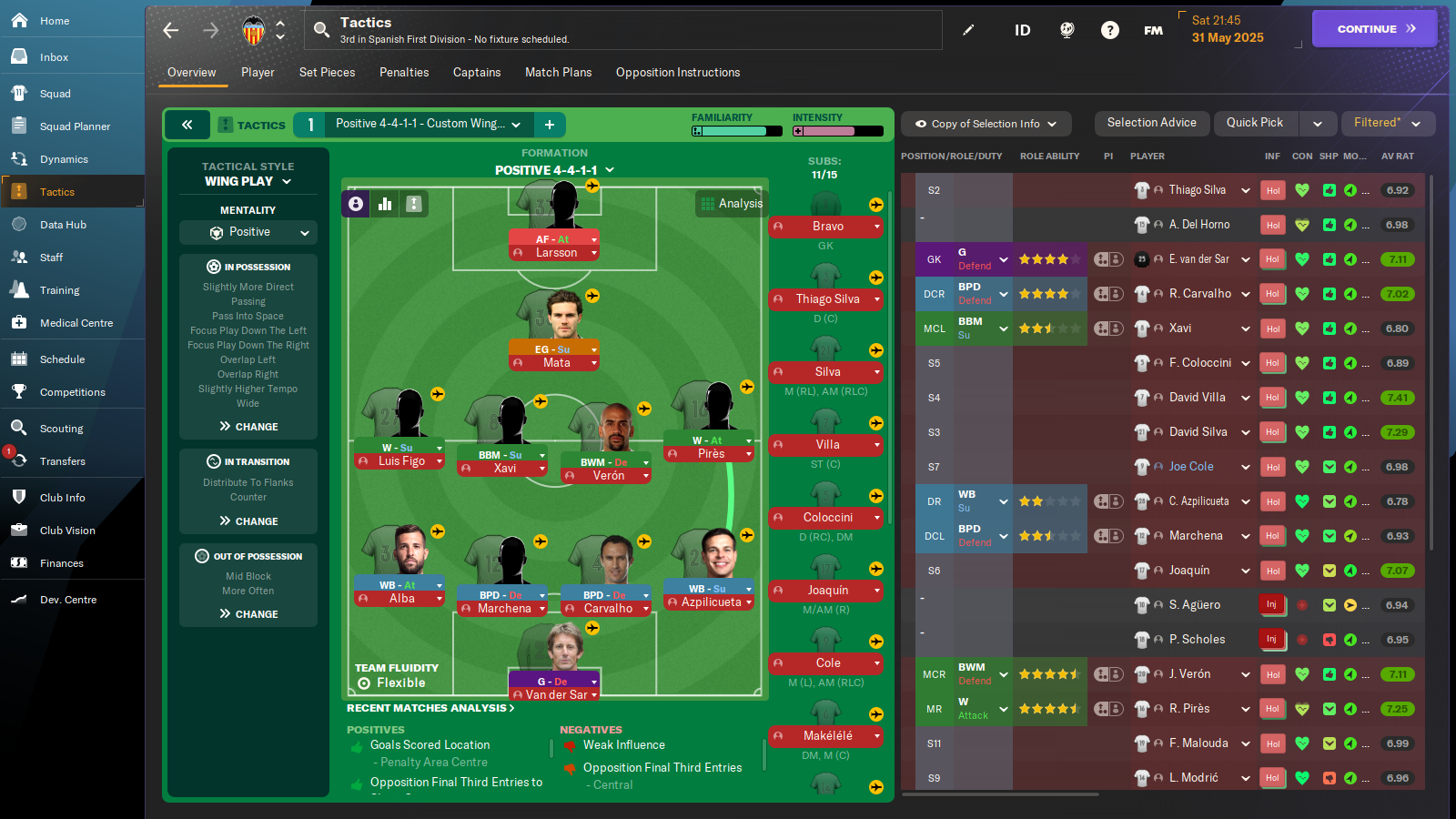
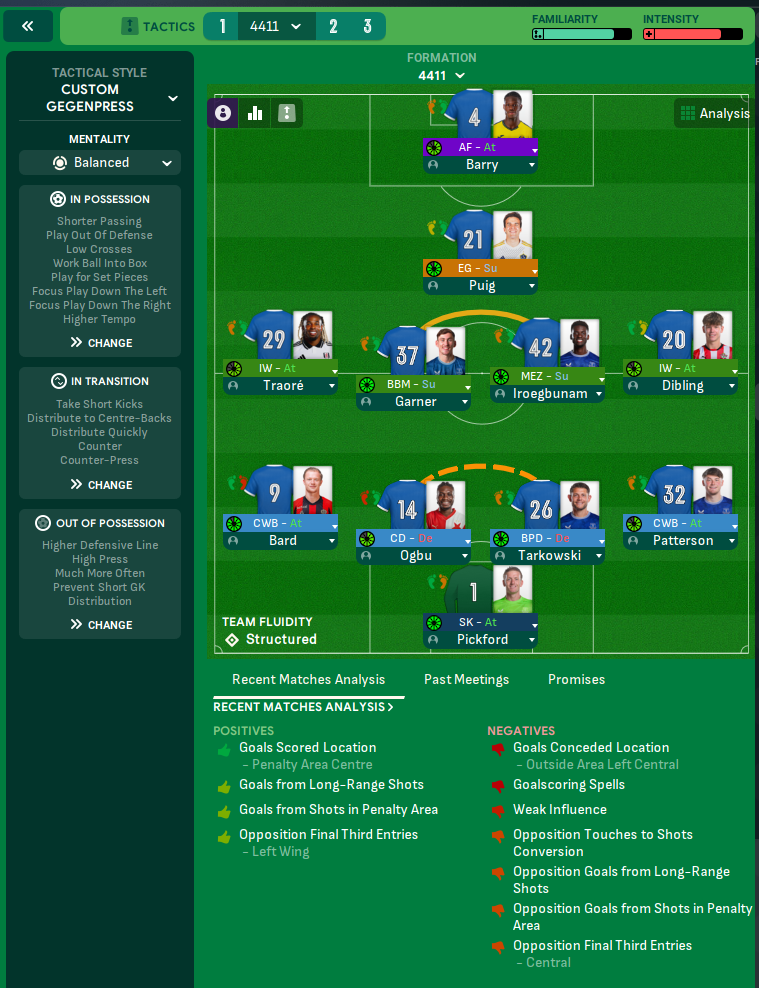
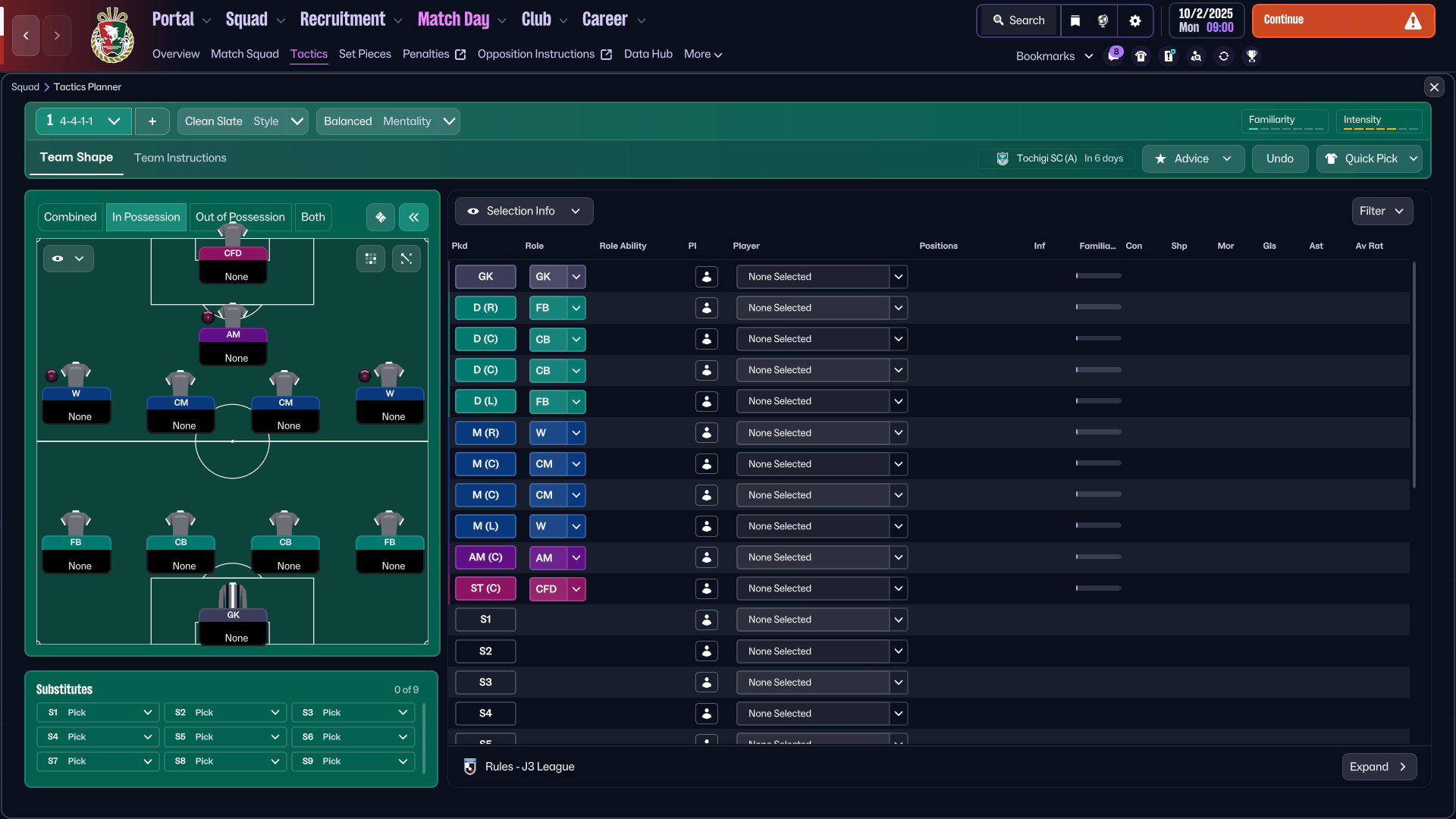
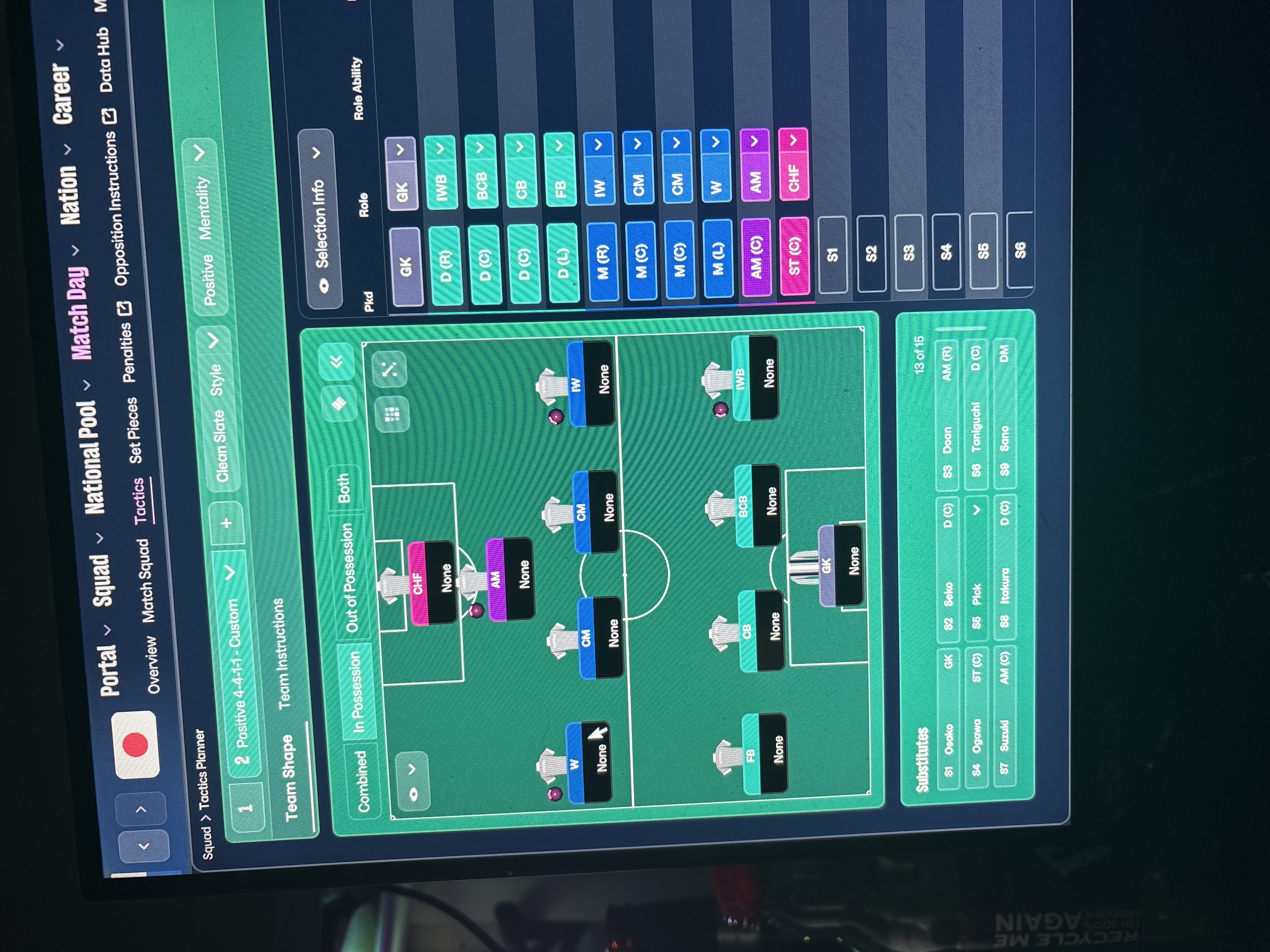
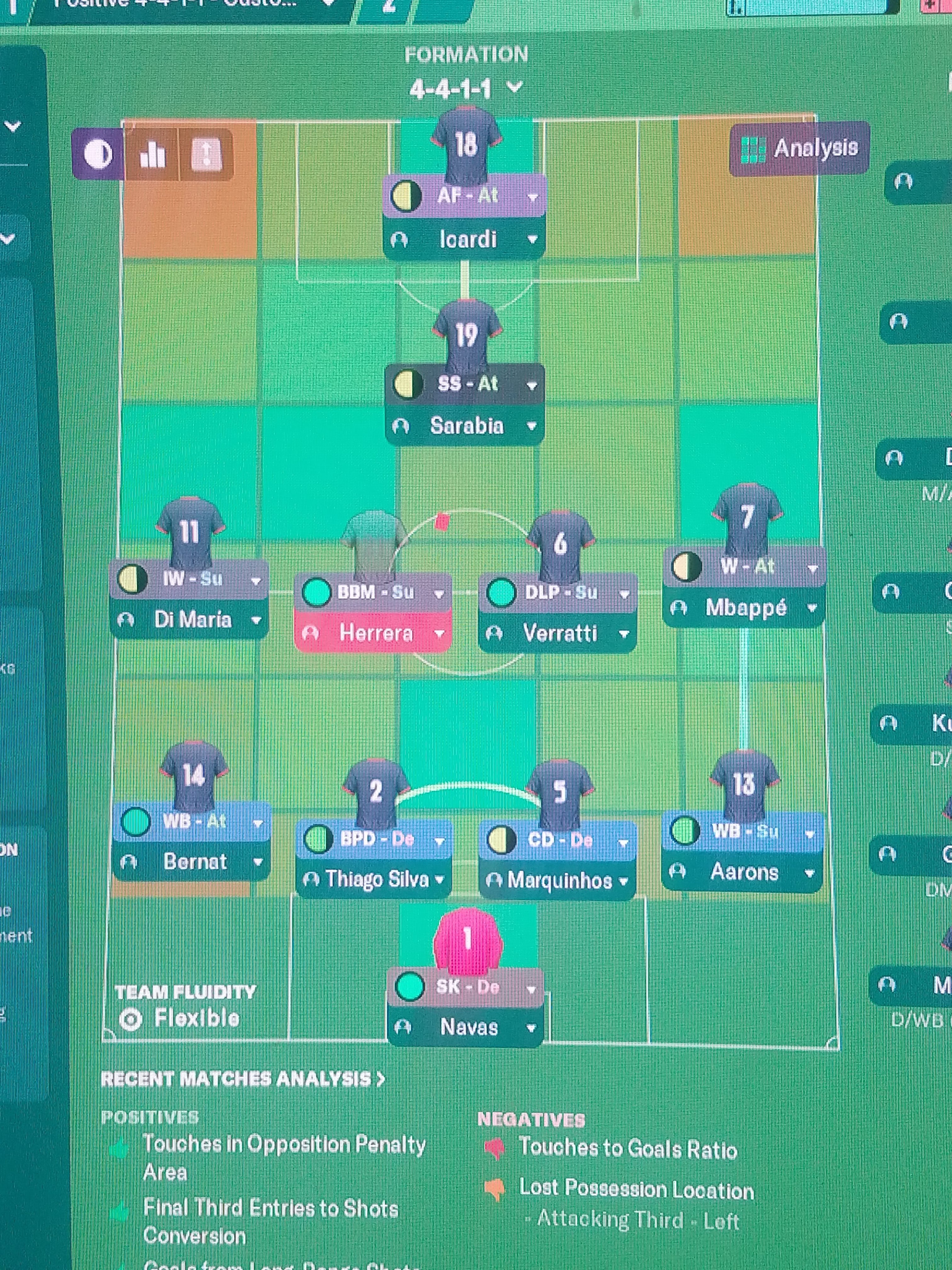
4-4-1-1
Utilize width provided by wingers while maintaining central control through the DLP. The use of attacking wingers enables effective stretching of the…
Loading tactical analysis...
4-4-1-1
Work Ball Into Box
Play Out From The Back
Counter-Press
Counter
Higher Defensive Line
Higher Line of Engagement
Prevent Short GK Distribution
GK
Goalkeeper
Defend
CB
Centre-Back
Defend
CB
Centre-Back
Defend
LB
Complete Wing-Back
Attack
RB
Complete Wing-Back
Attack
CM
Deep-Lying Playmaker
Support
CM
Box-to-Box Midfielder
Support
AM
Attacking Midfielder
Support
RW
Winger
Attack
LW
Winger
Attack
ST
Advanced Forward
Attack
The team focuses on building play from the back and uses wingers to stretch the opposition.
Upon losing the ball, players are instructed to immediately counter-press to regain possession.
Utilize width provided by wingers while maintaining central control through the DLP.
4-4-2
The defensive shape remains compact with a two-line system to reduce space.
4 defenders plus 4 midfielders forming a solid base at all times.
4-3-3
The use of wingers and an advanced forward creates width and penetrating runs.
Two wingers (RW, LW) provide width and support the AF.
The use of attacking wingers enables effective stretching of the pitch, creating space in central areas.
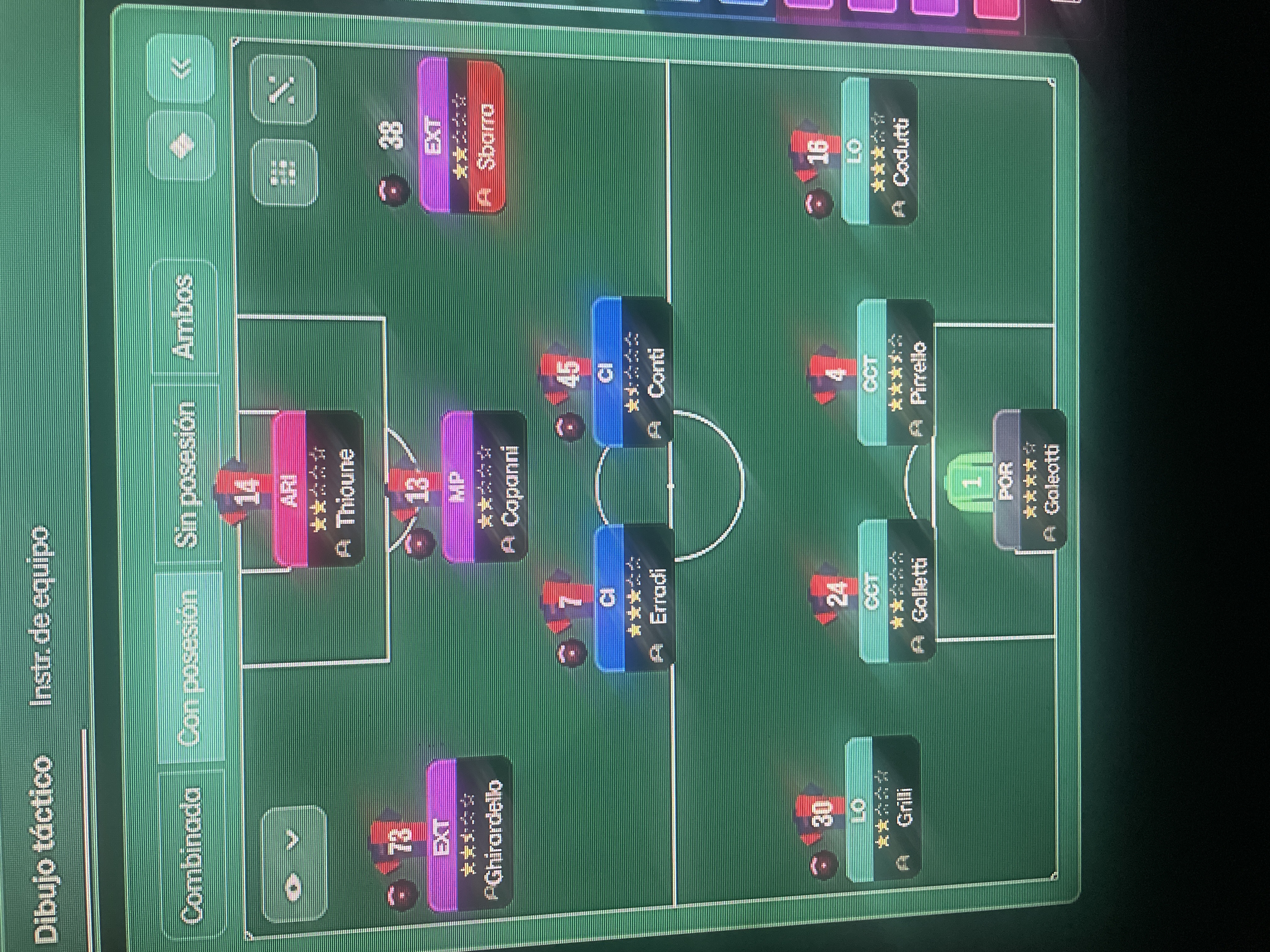
Wingers on the flanks (Ghirardello, Sbarra) at [6,1] and [6,5] keep the opposition spread.
With a DLP-S in midfield, there is creative distribution that links play between defense and attack.
DLP-S at [3,3] facilitates quick transitions from defense to attack.
With a wide setup, the team may struggle if marked out or if wingers underperform.
Heavy dependency on RW (Ghirardello) and LW (Sbarra) at [6,1] and [6,5] may compromise central options.
A higher defensive line can expose the center-backs to fast counter-attacks.
Defenders (Golletti, Pinello) positioned at [2,3] and [2,4] are at risk against speed.
Winger Dependence
Dependence on wingers for width leaves the team vulnerable if marked tightly.
Reliance on Ghirardello and Sbarra at [6,1] and [6,5] for width.
Counter-Attacking Vulnerability
High press can leave gaps for opposition's counters.
Higher Defensive Line places CBs (Golletti, Pinello) at [2,3] and [2,4] at risk.
Winger + Advanced Forward
Wingers can create space and assist the AF effectively.
Winger roles (Ghirardello at [6,1] and Sbarra at [6,5]) complement AF (Thioune at [6,3]).
Complete Wing-Back + Deep-Lying Playmaker
The wide areas can be utilized to stretch opponents while DLP maintains central control.
CWB roles (Grilli, Codutti) at [2,1] and [2,5] provide support for DLP's distribution.
How can the pressing intensity be improved?
What adjustments work best against teams with a strong aerial presence?
What alternative formations could better suit the current squad?
The tactical theory behind the 4-4-1-1: roles, instructions, and the trade-offs that decide whether the system holds up.
Pass map, average position, xG, possession by zone: what each tablet panel tells you in FM and the tactical change it should trigger.
FM27 keeps FM26's tactic system. Here is what stays the same, the small changes that can catch you out, and what the new Tactical Effectiveness system asks of you.
How Mentality, Duty, and Role interact in FM, why duty trumps mentality every time, and the role-on-top-of-duty composition rules.