Uploaded Tactic
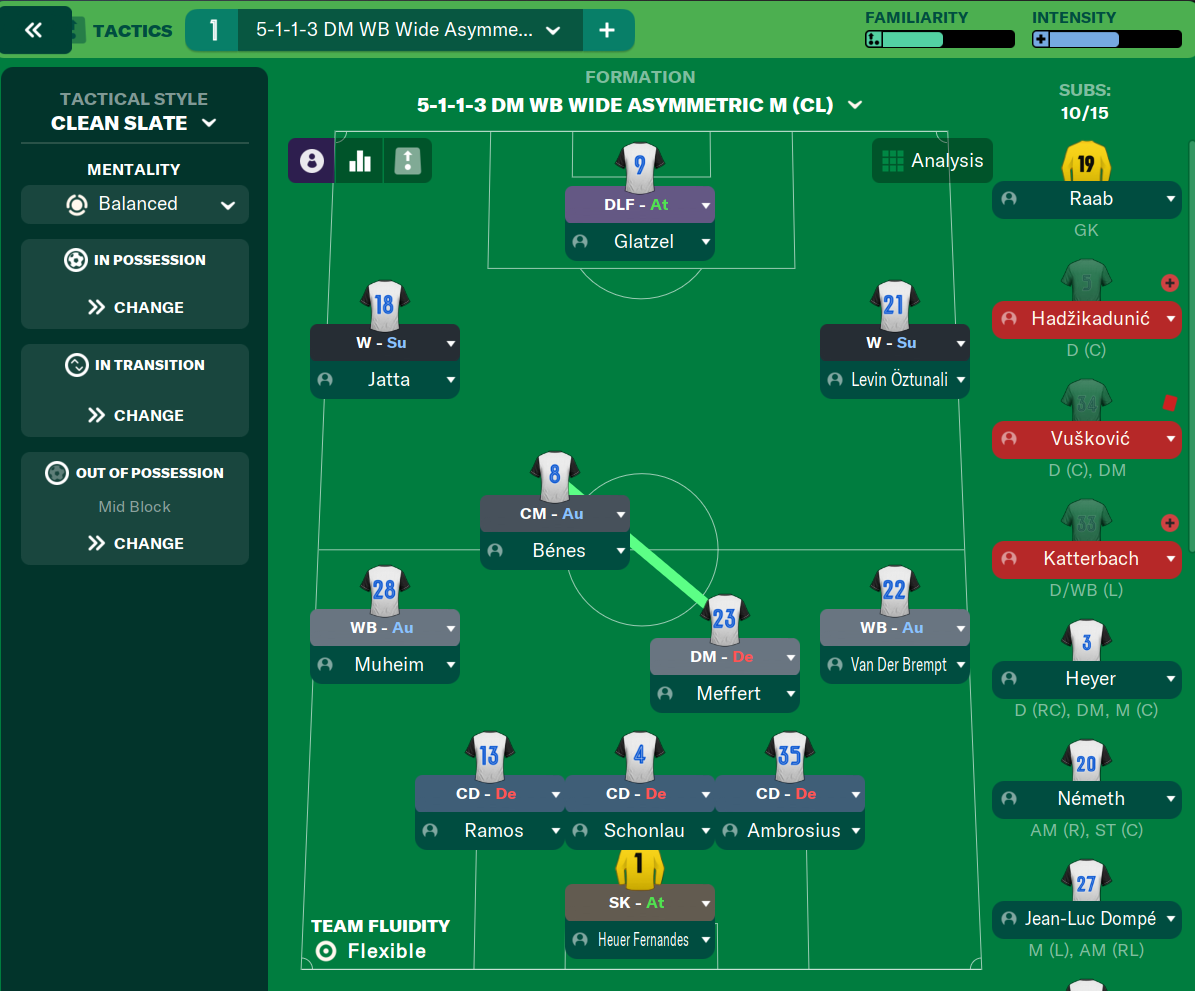
Formation & Style
Tactical Style:Clean Slate
Mentality:Balanced
Formation:5-1-3 DM WB Wide Asymmetric
Team Fluidity:Flexible
In Possession
Position the ball often through wide players
Encourage overlap from wing-backs
Utilize diagonal runs into the box from midfield
In Transition
Counter-press immediately after losing possession
Look for quick transitions to exploit defensive gaps
Out of Possession
Maintain a mid block to pressure the opponent's build-up
Force opponents to play wide and limit central options
Team Shape Without Ball
No team shape without ball data available
Team Shape With Ball
No team shape with ball data available
Key Strengths
Wide Play
The use of wing-backs and wingers provides width, stretching the opposition and creating space.
Midfield Control
A solid midfield structure ensures good ball retention and allows for quick transitions.
Counter-Attacking Options
With players ready to exploit space quickly, this formation can transition effectively during counter-attacks.
Solid Defensive Shape
The mid-block defense provides stability and covers central areas effectively.
Conflicting Directions
Asymmetrical Setup
The asymmetry may confuse players in terms of positional responsibilities, leading to gaps.
Midfield Balance
Over-committing the central midfielder to attack could leave the defensive midfielder isolated.
Wing-Back Responsibility
Wing-backs engaging too far forward might expose the back three during transitions.
Lack of Central Penetration
Focus on wide play might neglect direct penetration in central areas, making it easier for defenses.
Tactical Suggestions
Adjust Wing-Back Role
Consider changing one wing-back to a more defensive duty to maintain balance when transitioning.
Utilize One Midfielder as Anchor
Reinforce the defensive midfielder role to maintain more control during opposition attacks.
Incorporate Higher Line of Engagement
A higher line could pressure the opponent's defenders more effectively and win the ball further upfield.
Add a Fluid Role to the DLF
Giving the Deep Lying Forward a more fluid role could allow for better combinations with attacking midfielders.
Ask Questions About Your Lineup
Guides for this formation
The tactical theory behind the 5-1-3 DM WB Wide Asymmetric: roles, instructions, and the trade-offs that decide whether the system holds up.