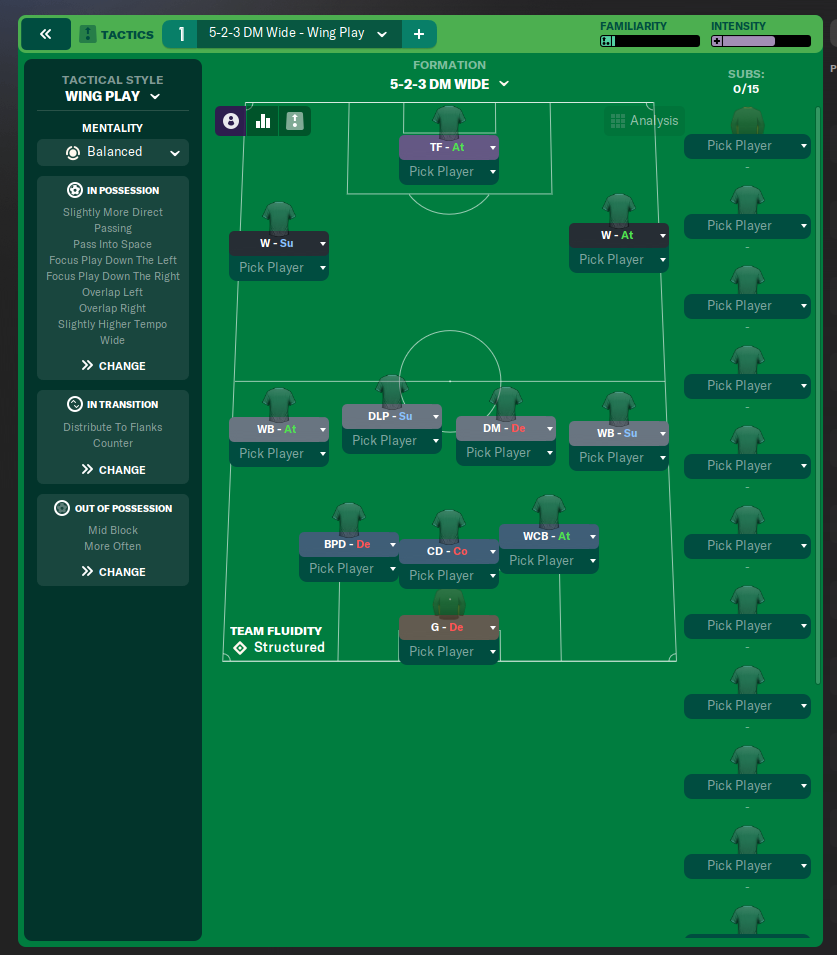
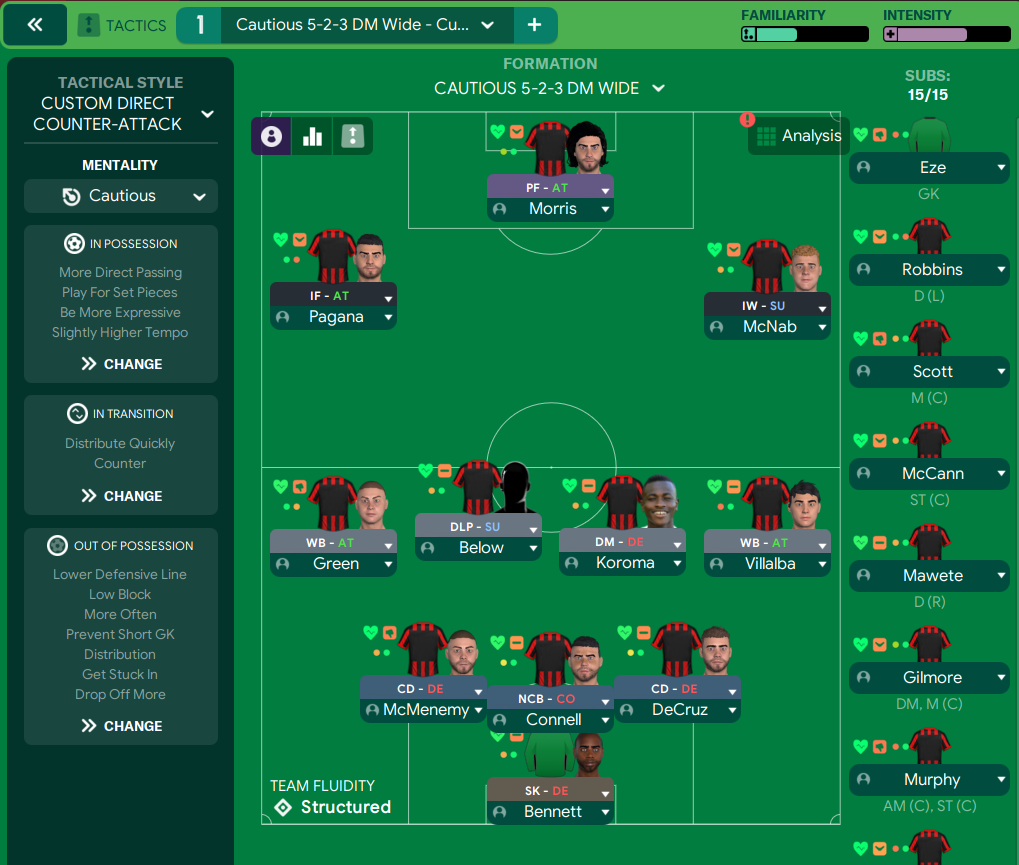
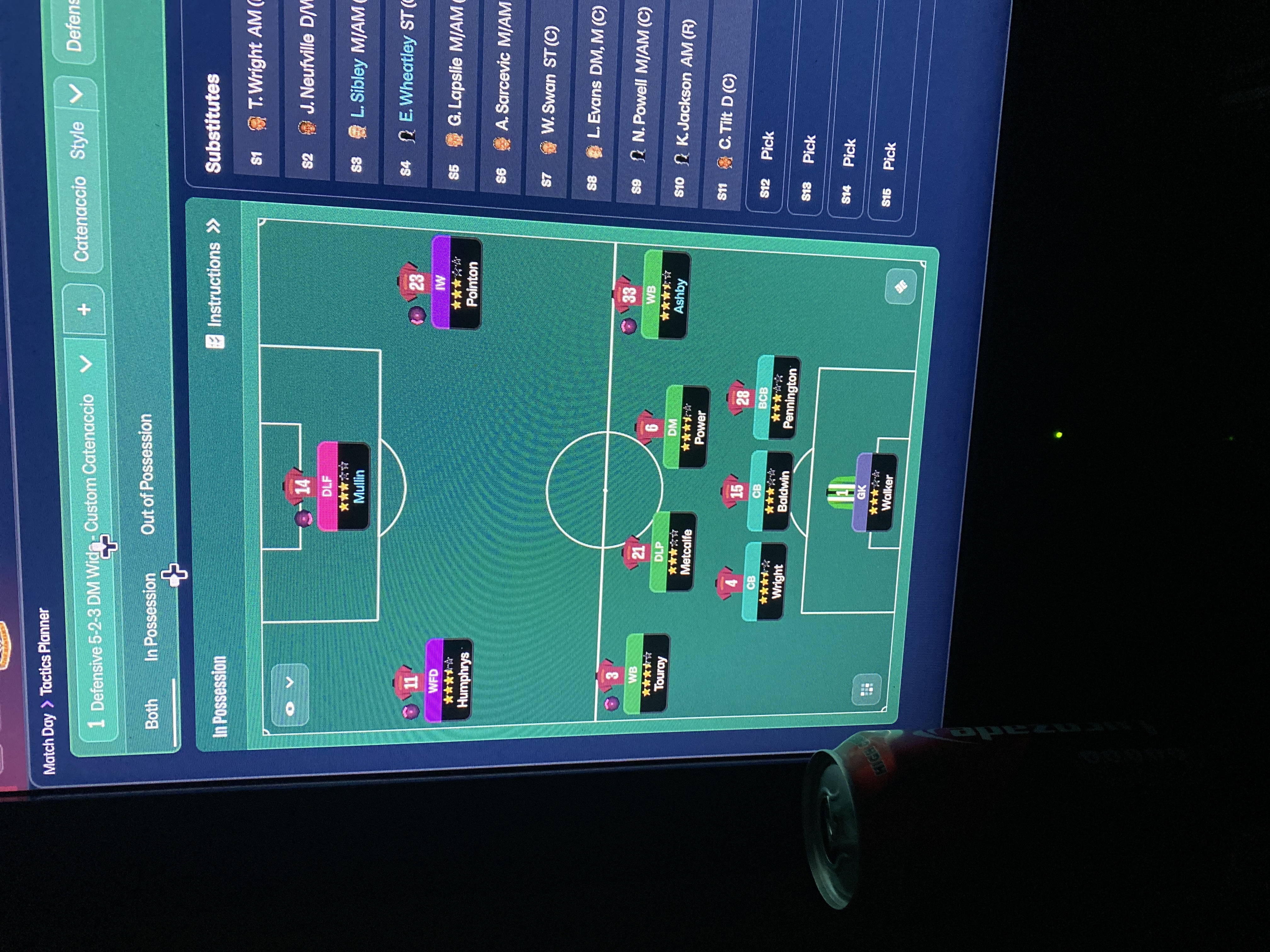
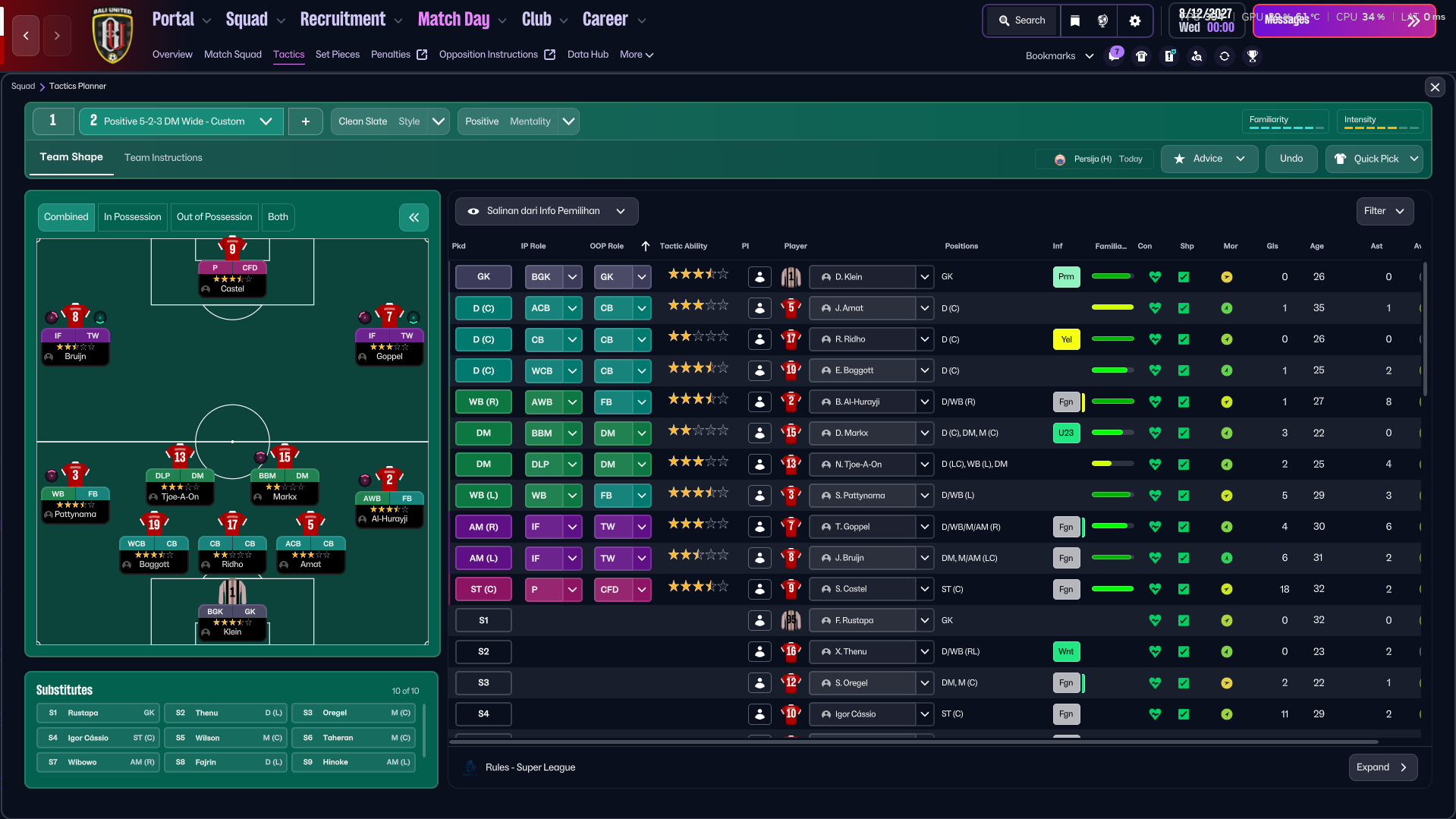
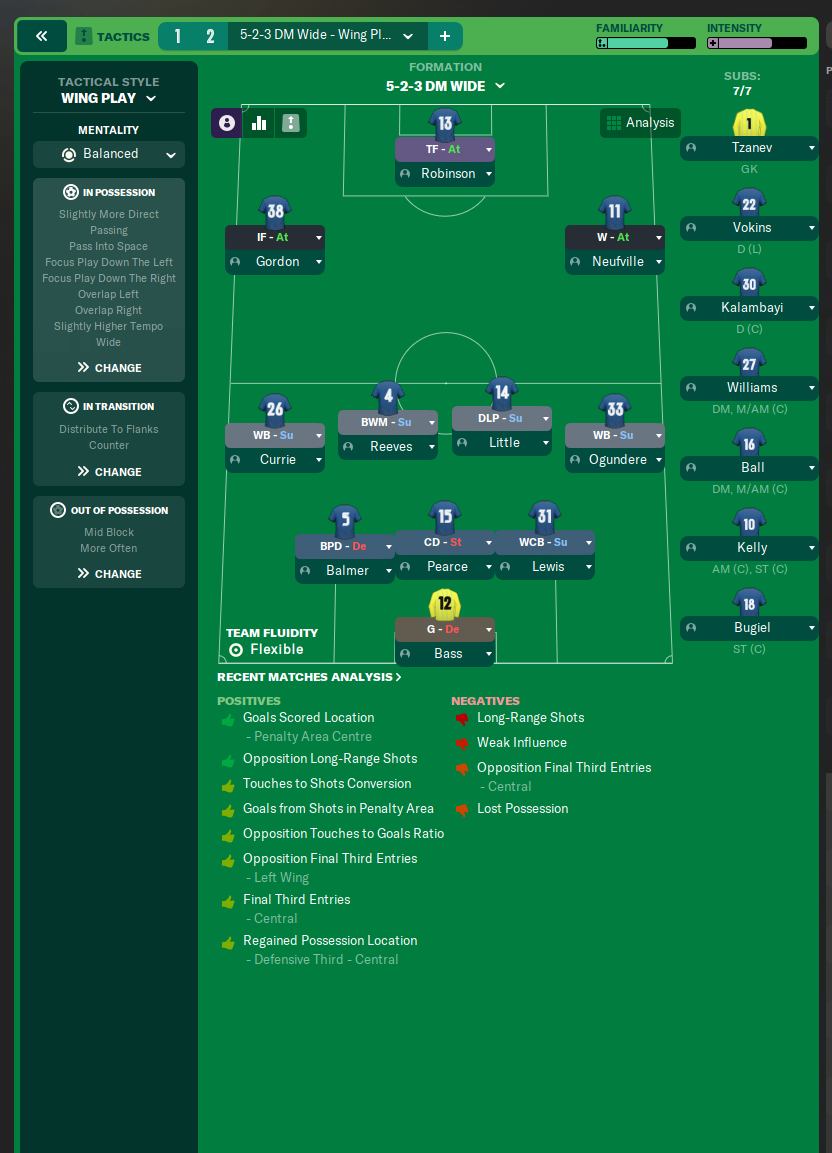
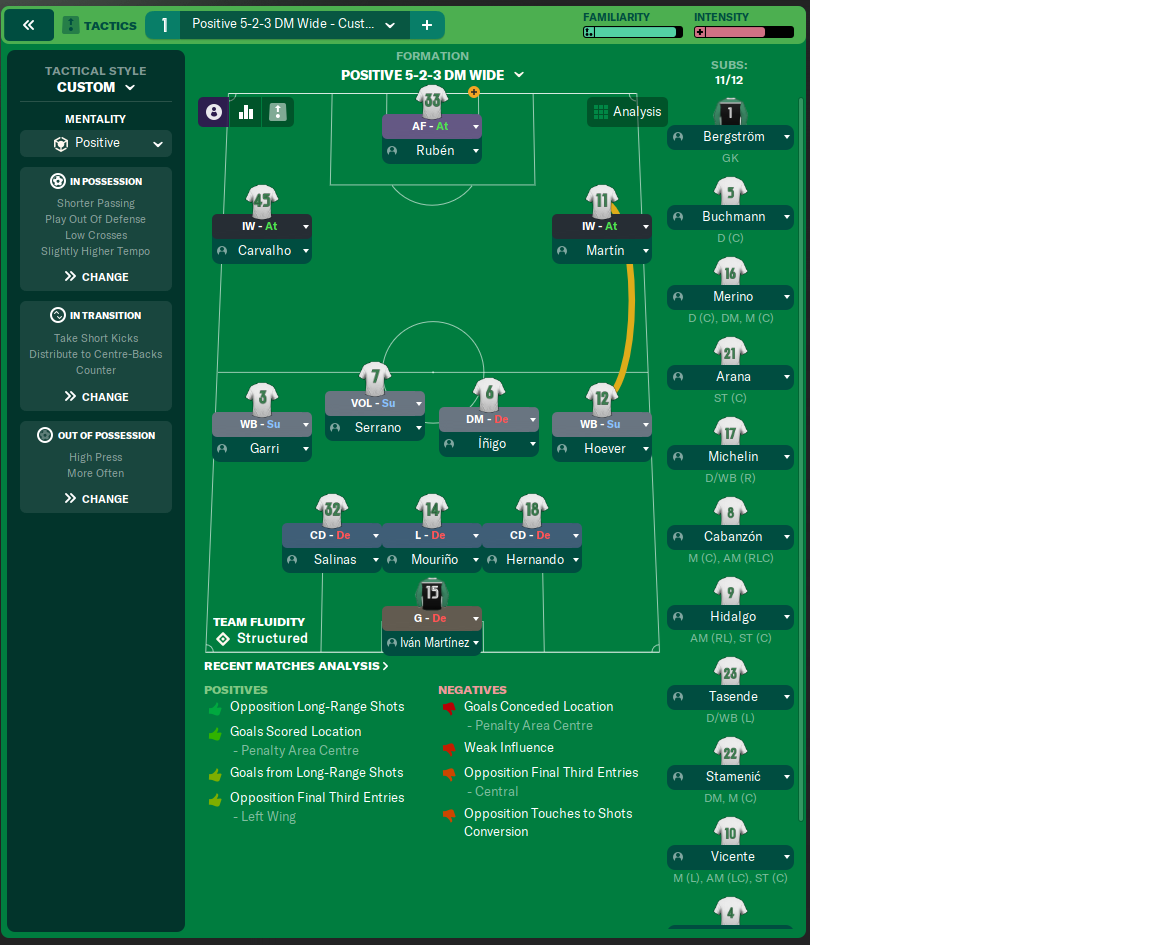
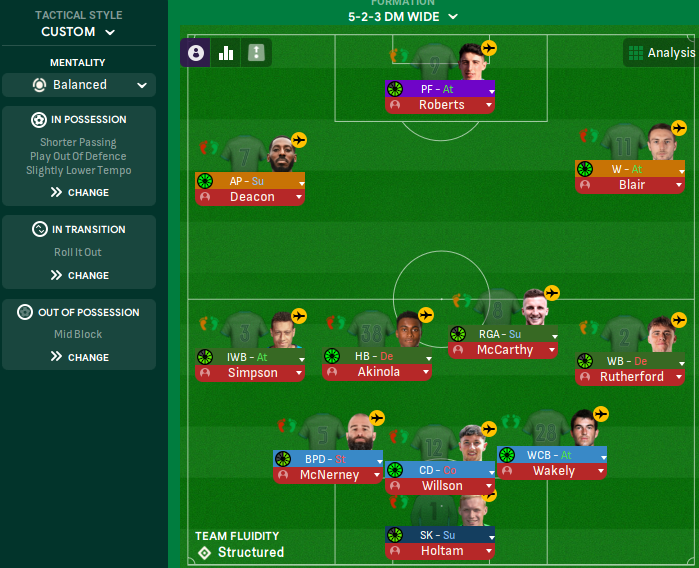
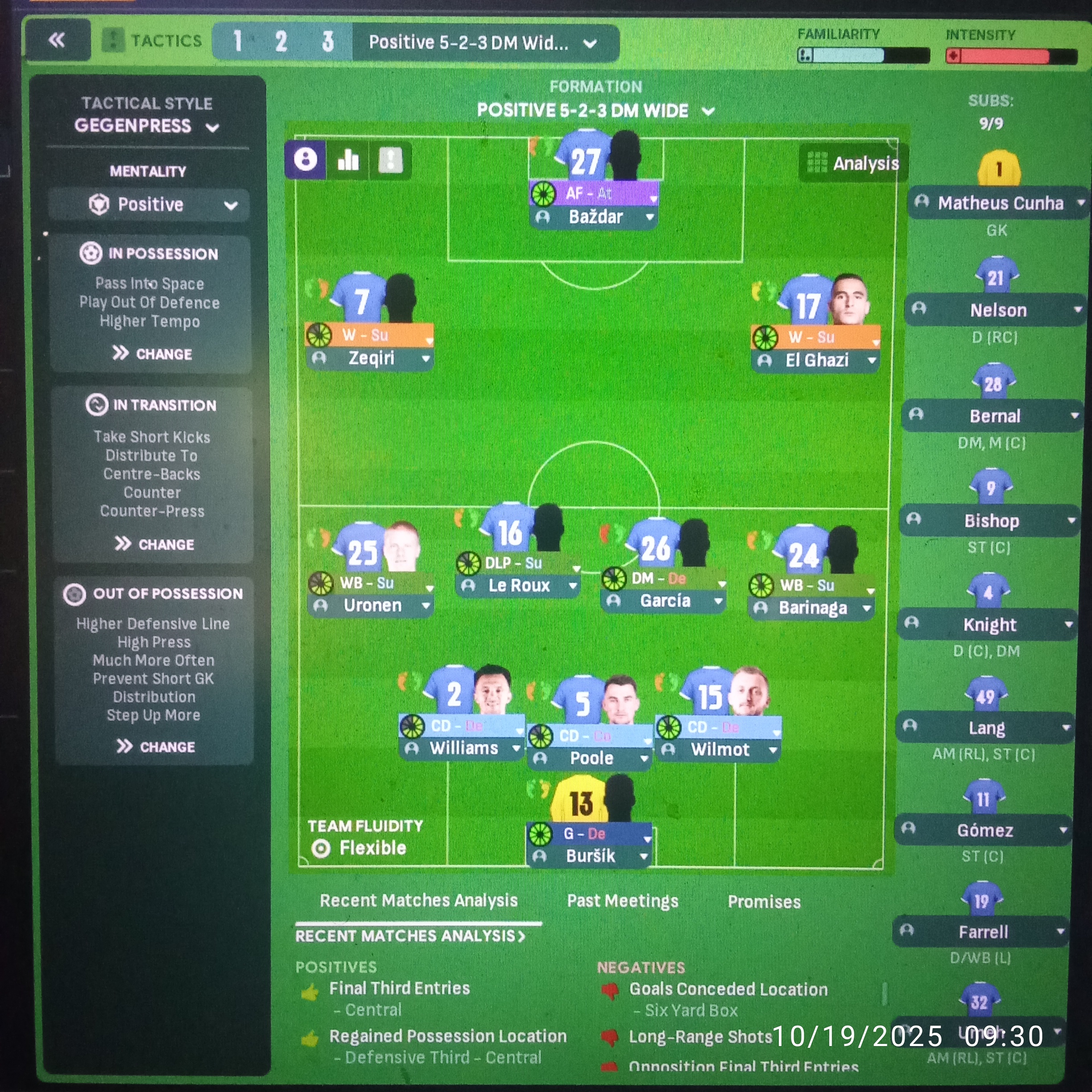
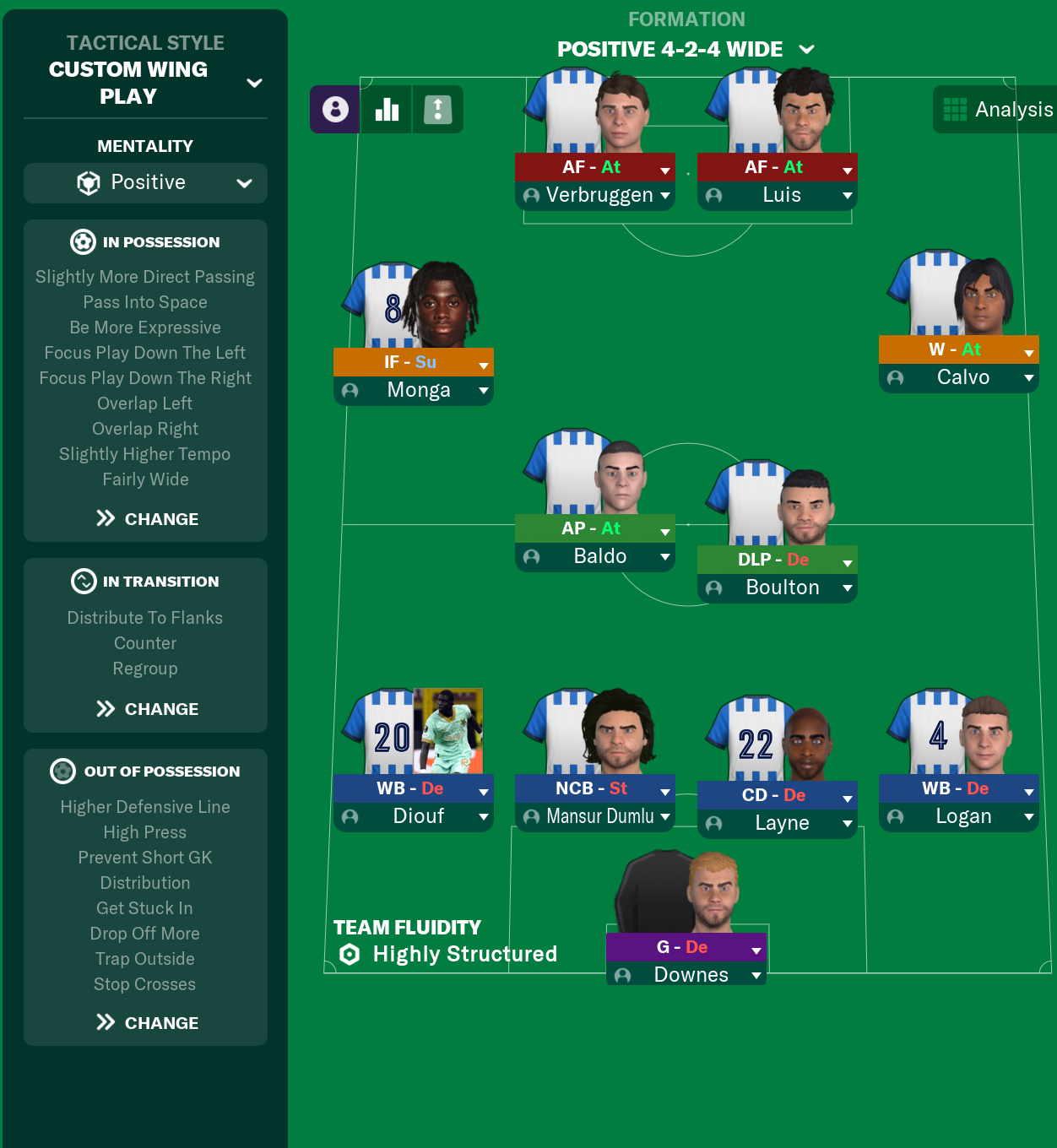
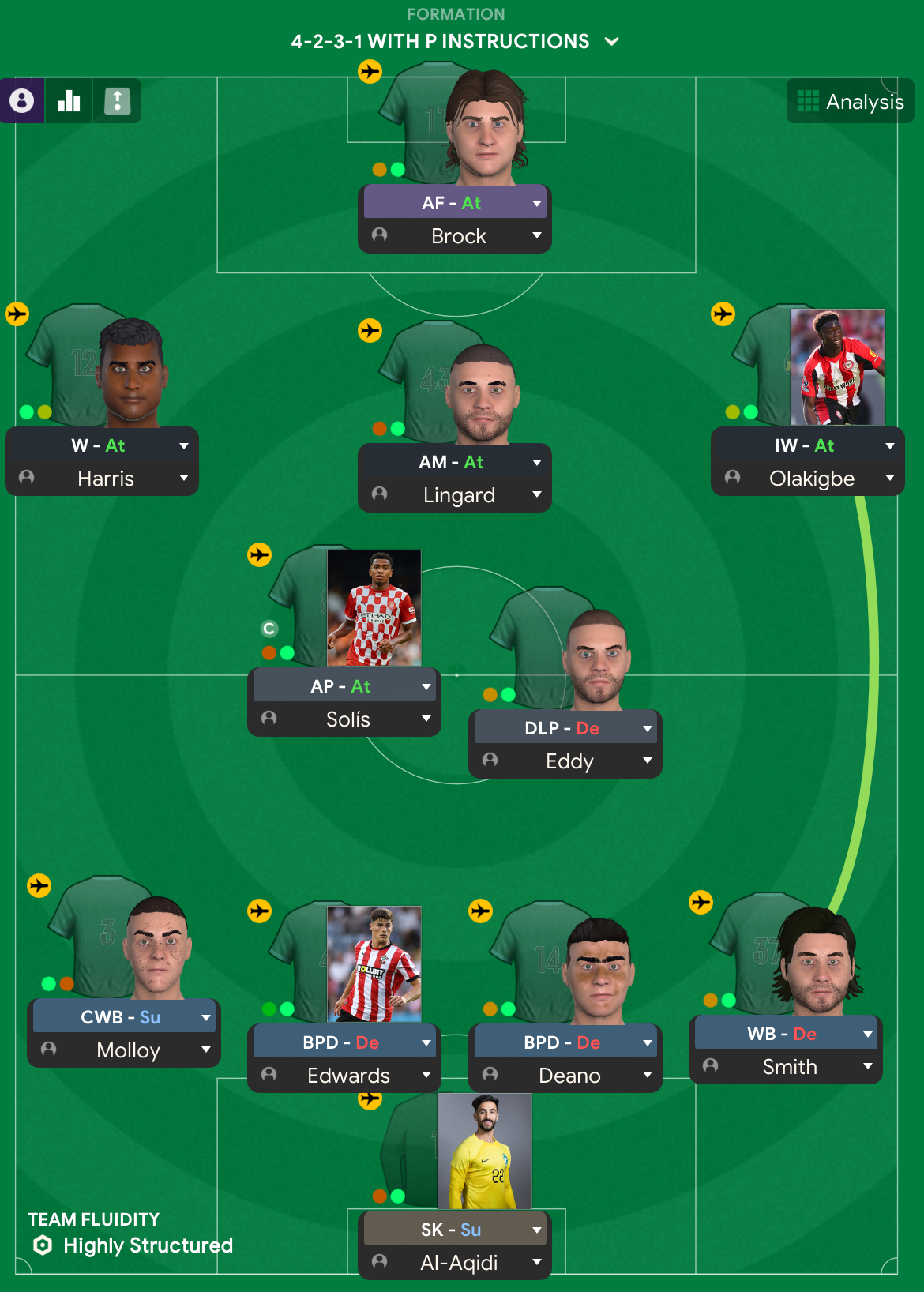
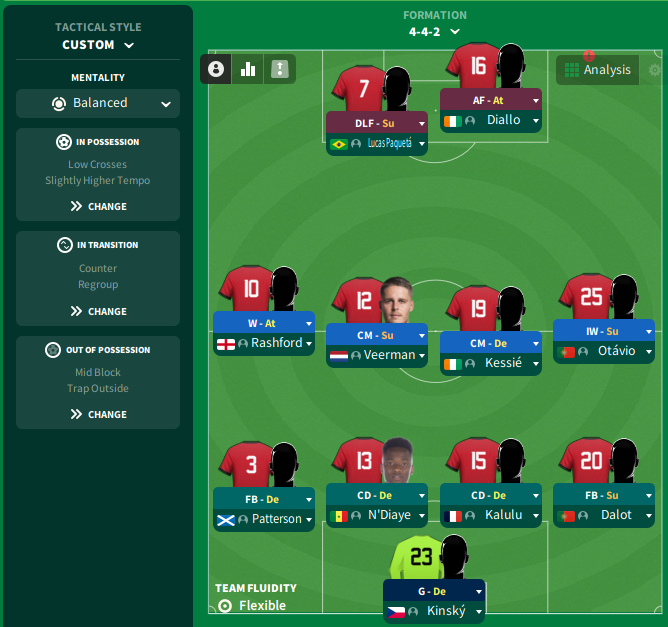
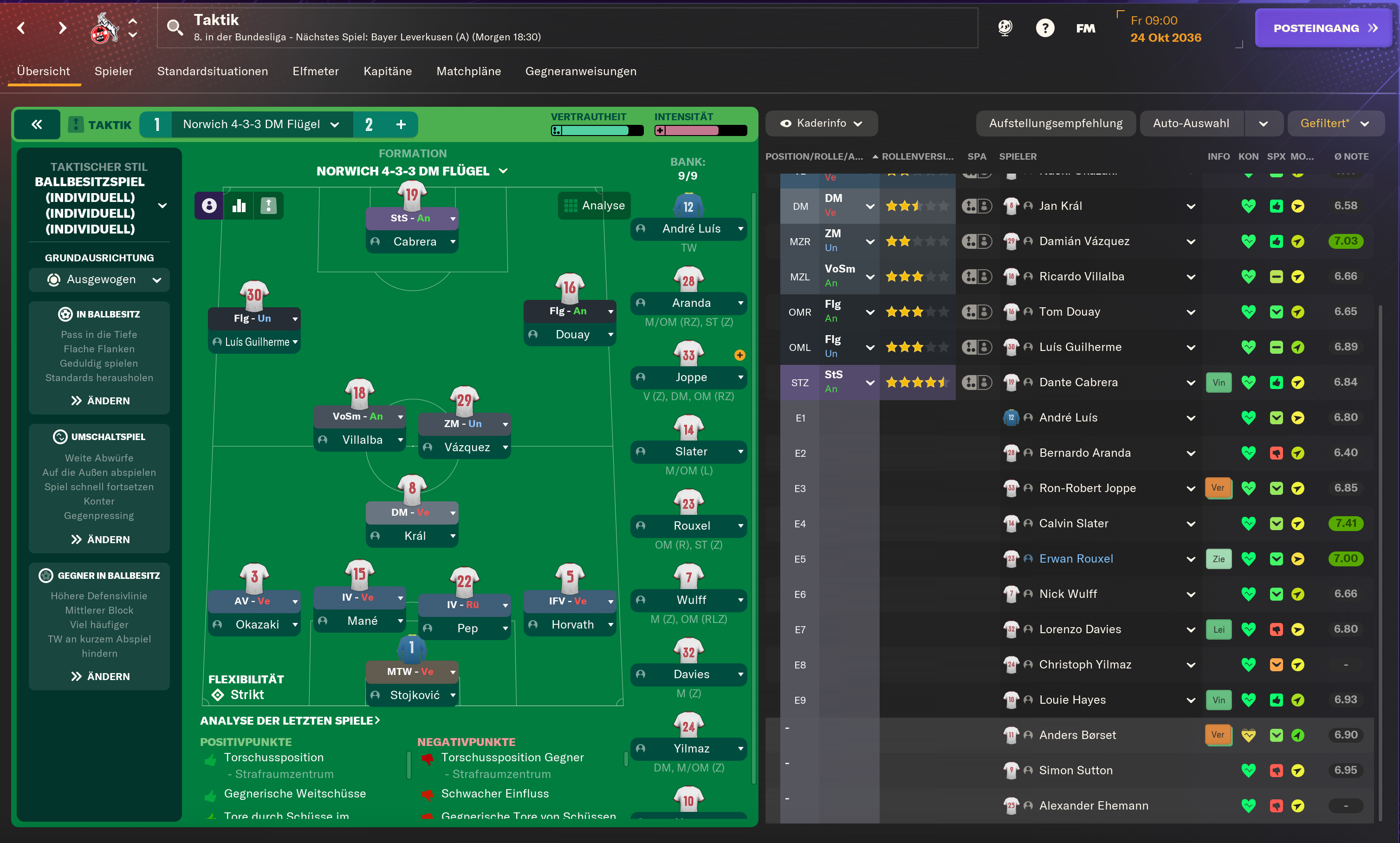
5-2-3 DM Wide
The formation effectively utilizes the width provided by the wingers and wingbacks, allowing for dynamic plays down the flanks.
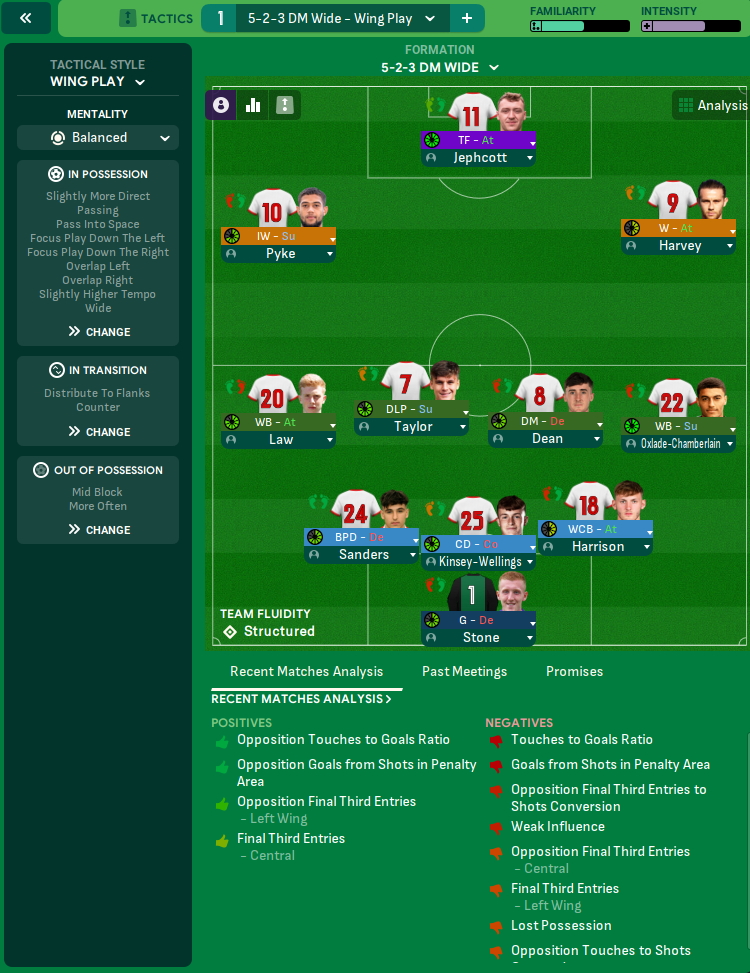
Loading tactical analysis...
Wing Play
Balanced
5-2-3 DM Wide
Structured
Slightly More Direct Passing
Pass Into Space
Focus Play Down the Left
Overlap Left
Slightly Higher Tempo
Wide
Counter
Mid Block
More Often
TF
Target Forward
Attack
IW
Inside Forward
Support
W
Winger
Attack
DLP
Deep-Lying Playmaker
Support
DM
Defensive Midfielder
Defend
BPD
Ball Playing Defender
Defend
CD
Central Defender
Cover
WCB
Wide Centre Back
Attack
WB
Wing Back
Support
G
Goalkeeper
Defend
The formation effectively utilizes the width provided by the wingers and wingbacks, allowing for dynamic plays down the flanks.
With three central defenders and one defensive midfielder, the setup provides a robust defensive unit capable of absorbing pressure.
The instructions for the wingbacks to overlap may conflict with the wide play from the wingers, causing crowding on the flanks.
The structured fluidity may hinder quick transitions while countering, as players might not break forward quickly.
How can we maximize the effectiveness of the Target Forward in linking play?
Are the wingers providing enough width, or should they cut inside more often?
How can we improve our transition play while maintaining a structured shape?
Should the wingbacks focus more on defending or contributing to the attack?
What adjustments can be made to reduce the overload on the flanks?
Is the central midfield trio effectively supporting both defensive and attacking transitions?
The tactical theory behind the 5-2-3 DM Wide: roles, instructions, and the trade-offs that decide whether the system holds up.
The deliberate underdog tactic in FM: formation choices, duty distribution, and why Counter-Press is exactly wrong inside a low block.
Protect a 1-0, chase a 1-0, hold a draw away. How to manage game state in FM through duties and roles, not by lurching to Defensive.
Mentality, duty, role, instruction, sub. The change hierarchy from lightest to heaviest intervention, and 60th-minute patterns by game state.