Uploaded Tactic
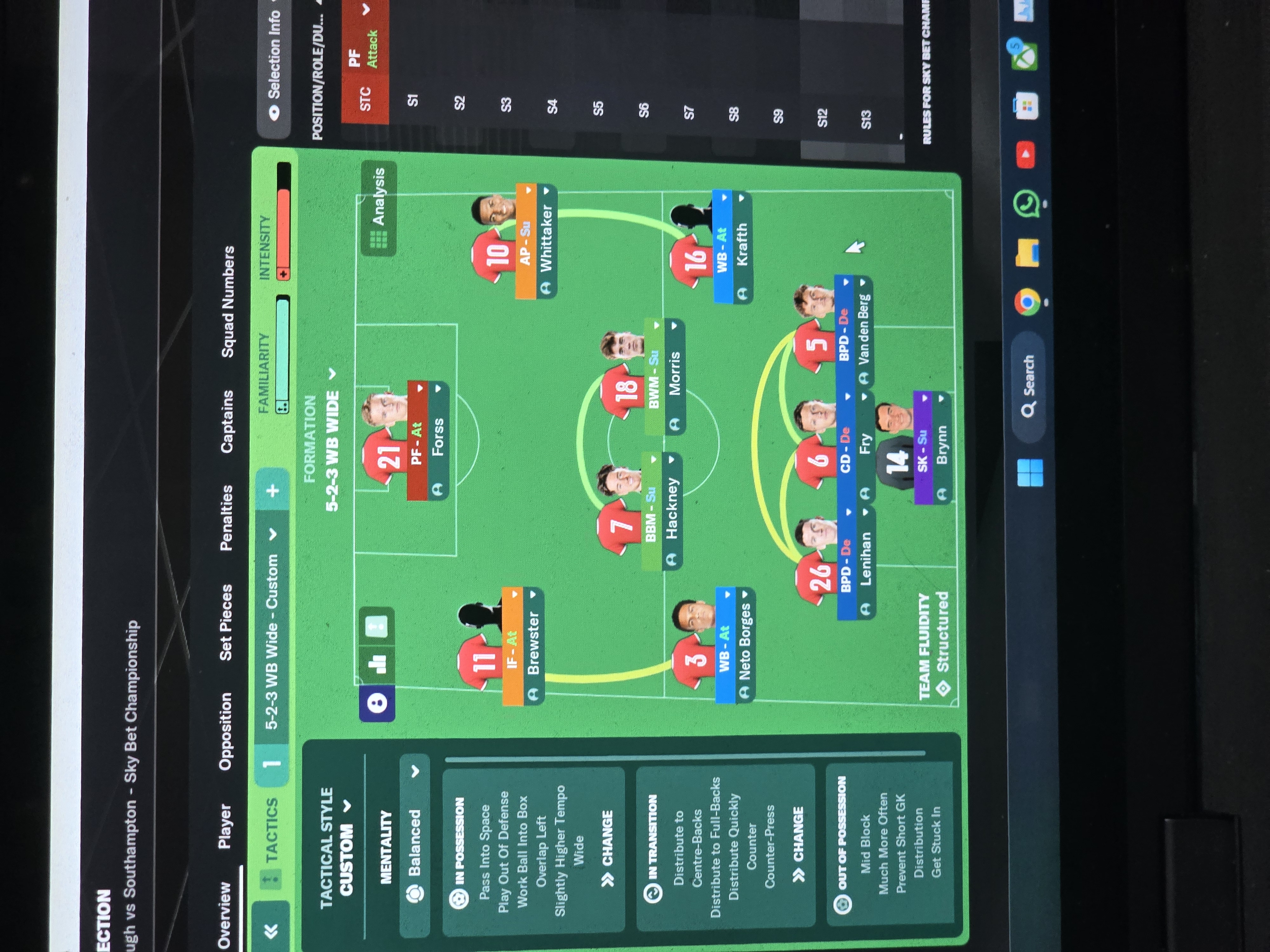
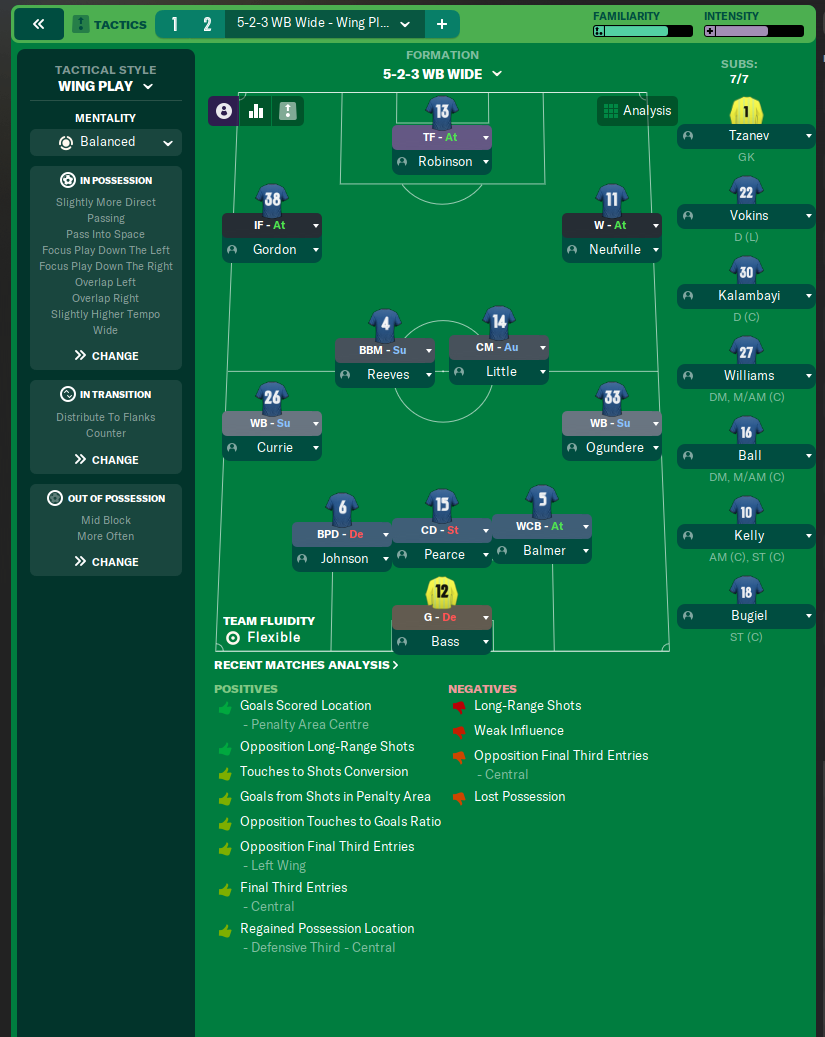
Formation & Style
Tactical Style:Custom
Mentality:Balanced
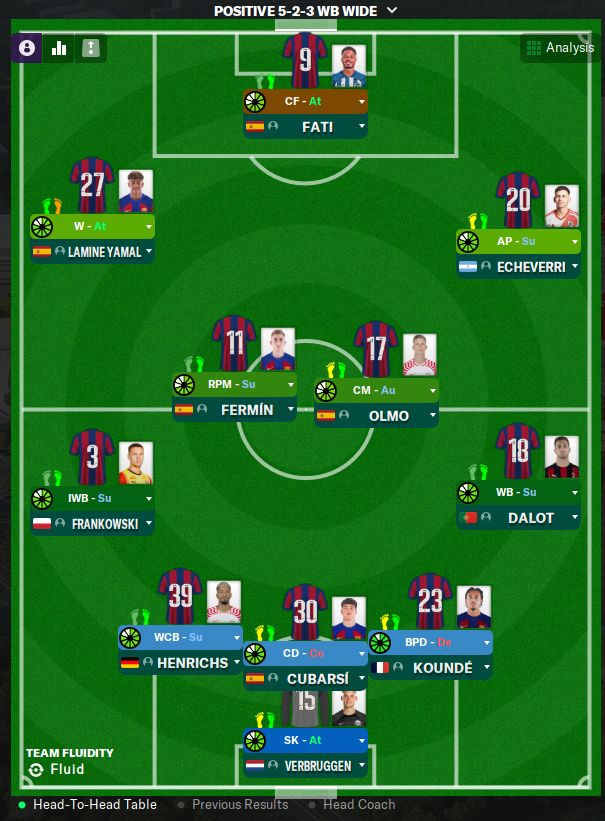
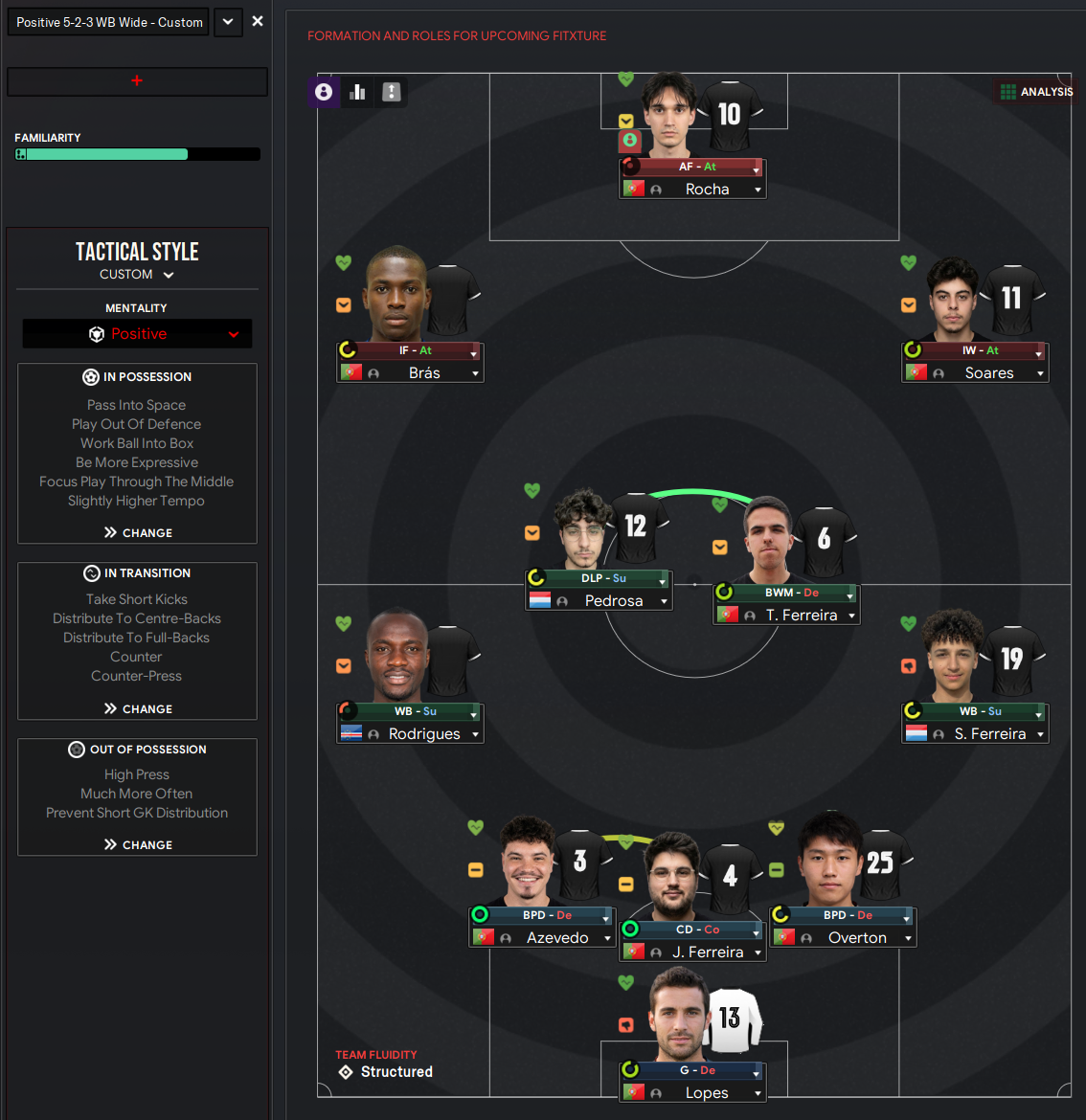
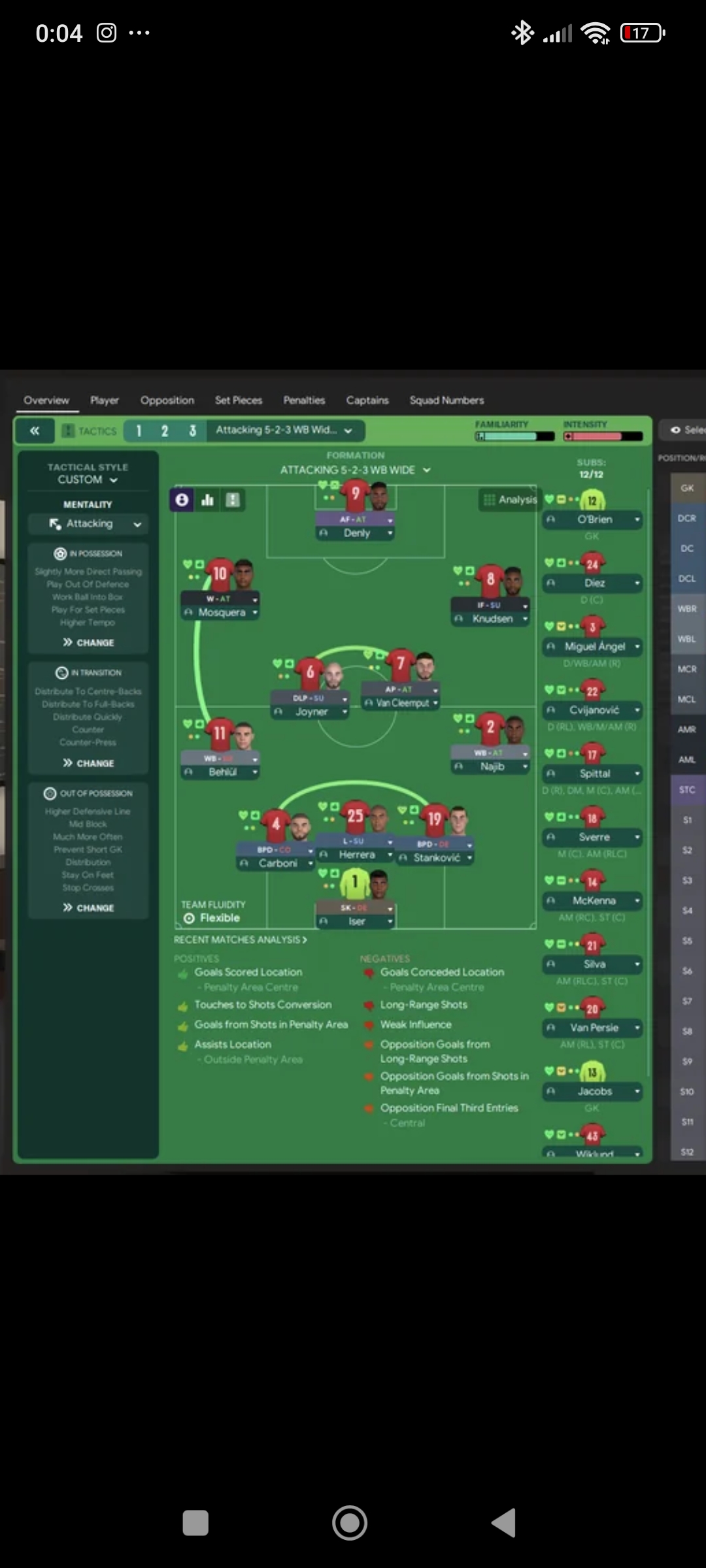
Formation:5-2-3 WB Wide
Team Fluidity:Structured
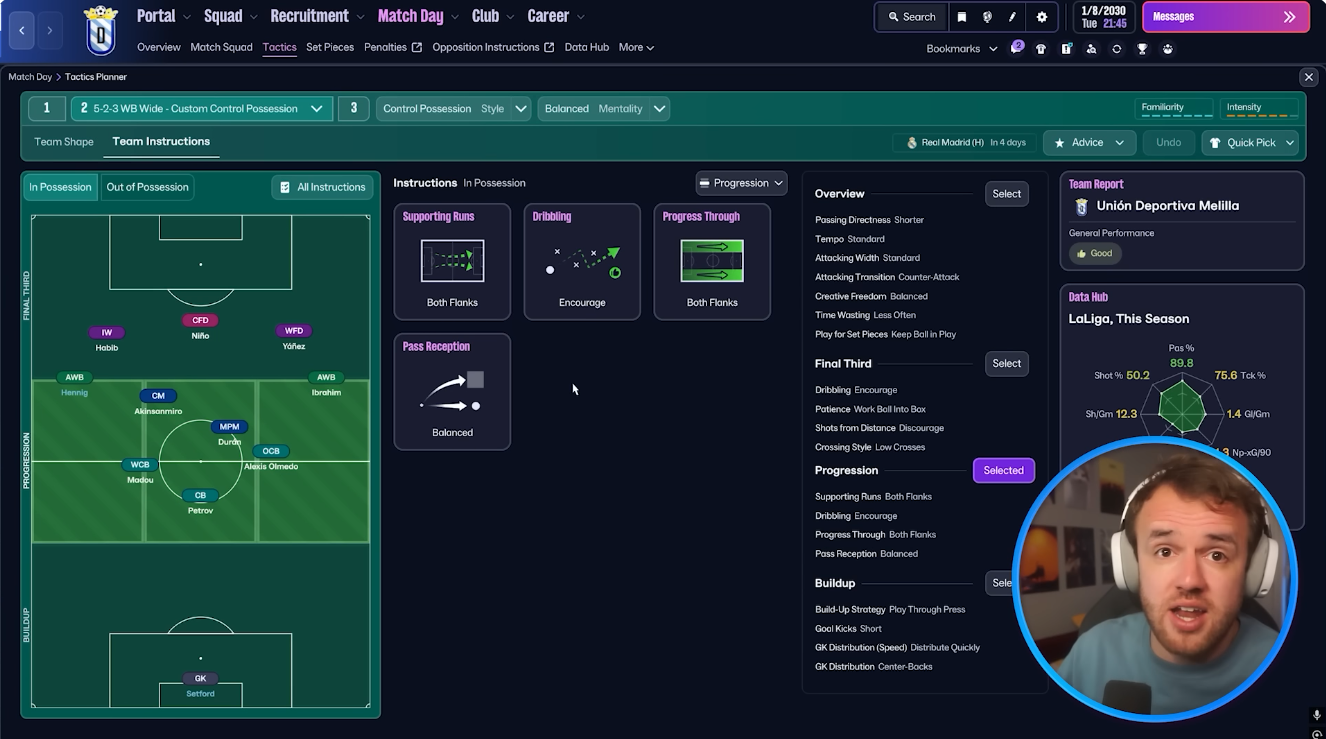
In Possession
Pass Into Space
Work Ball Into Box
Overlap Left
Slightly Higher Tempo
In Transition
Distribute to Centre-Backs
Distribute to Full-Backs
Distribute Quickly
Counter
Out of Possession
Mid Block
Much More Often Prevent Short GK Distribution
Get Stuck In
Team Shape Without Ball
No team shape without ball data available
Team Shape With Ball
No team shape with ball data available
Key Strengths
Wide Play Exploitation
Utilizing wing-backs and inside forwards creates dangerous wide situations, stretching the opposition defense.
Fluent Build-up
The team combines short passes and movement, employing an advanced playmaker to facilitate creative transitions from defense to attack.
Counter-Attacking Potential
The tactical setup emphasizes quick transitions, allowing the team to capitalize on opponents' mistakes.
Defensive Solidity
A back five arrangement offers robust defensive coverage, minimizing spaces for the opposition to exploit.
Conflicting Directions
Pressing Structure
The pressing forward role may lead the team to press high up while the midfielders remain structured, causing gaps between the lines.
Tempo vs. Control
A slightly higher tempo might conflict with the balanced mentality, leading to rushed plays instead of controlled build-up.
Player Balance in Midfield
The combination of a Box-to-Box and Ball-Winning midfielder can lead to congestion in midfield, limiting creativity and options.
Wing-Backs vs. Inside Forwards
If wing-backs push high, it may leave too much space behind, potentially exposing the central defenders to counter-attacks.
Tactical Suggestions
Consider Adjusting Mentality
Switch to a more attacking mentality in matches where a win is essential to increase offensive pressure.
Implement a Target Man
Introduce a target man role in the forward line, which can complement the inside forwards and provide an aerial threat.
Vary Wing Play Approach
Experiment with wider positioning of inside forwards to draw defenders away from the center and create more space for overlapping wing-backs.
Adjust Defensive Duties
Consider changing one of the Ball Playing Defenders to a more traditional role to focus on solidity when wing-backs are caught forward.
Ask Questions About Your Lineup
Related Tactics
Guides for this formation
The tactical theory behind the 5-2-3 WB Wide: roles, instructions, and the trade-offs that decide whether the system holds up.