Uploaded Tactic
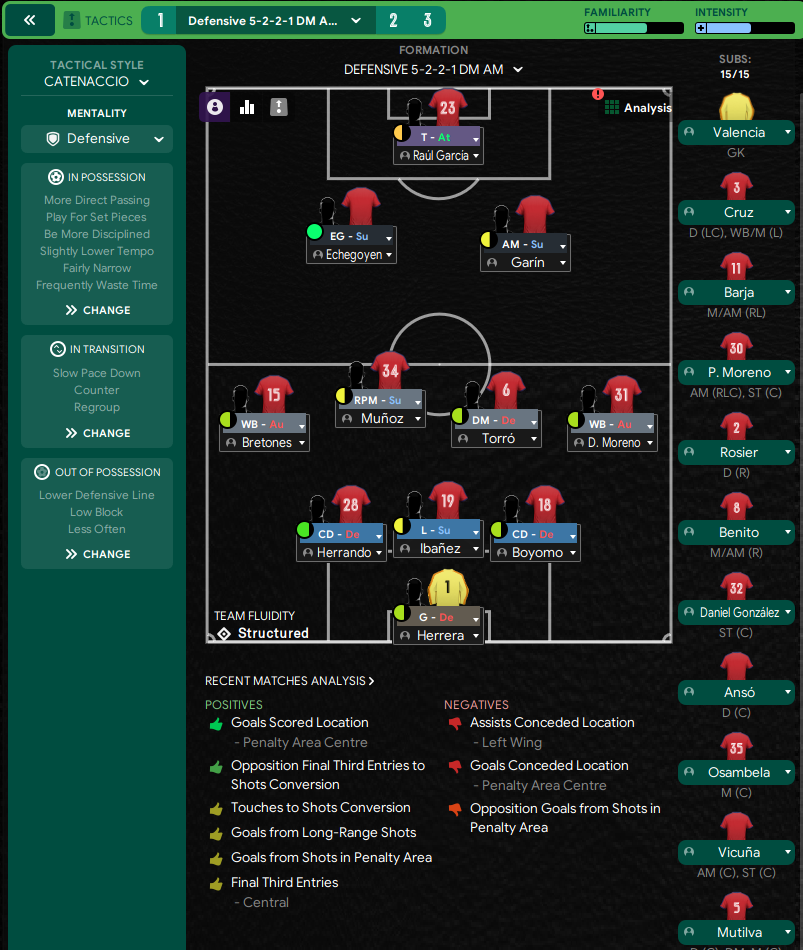
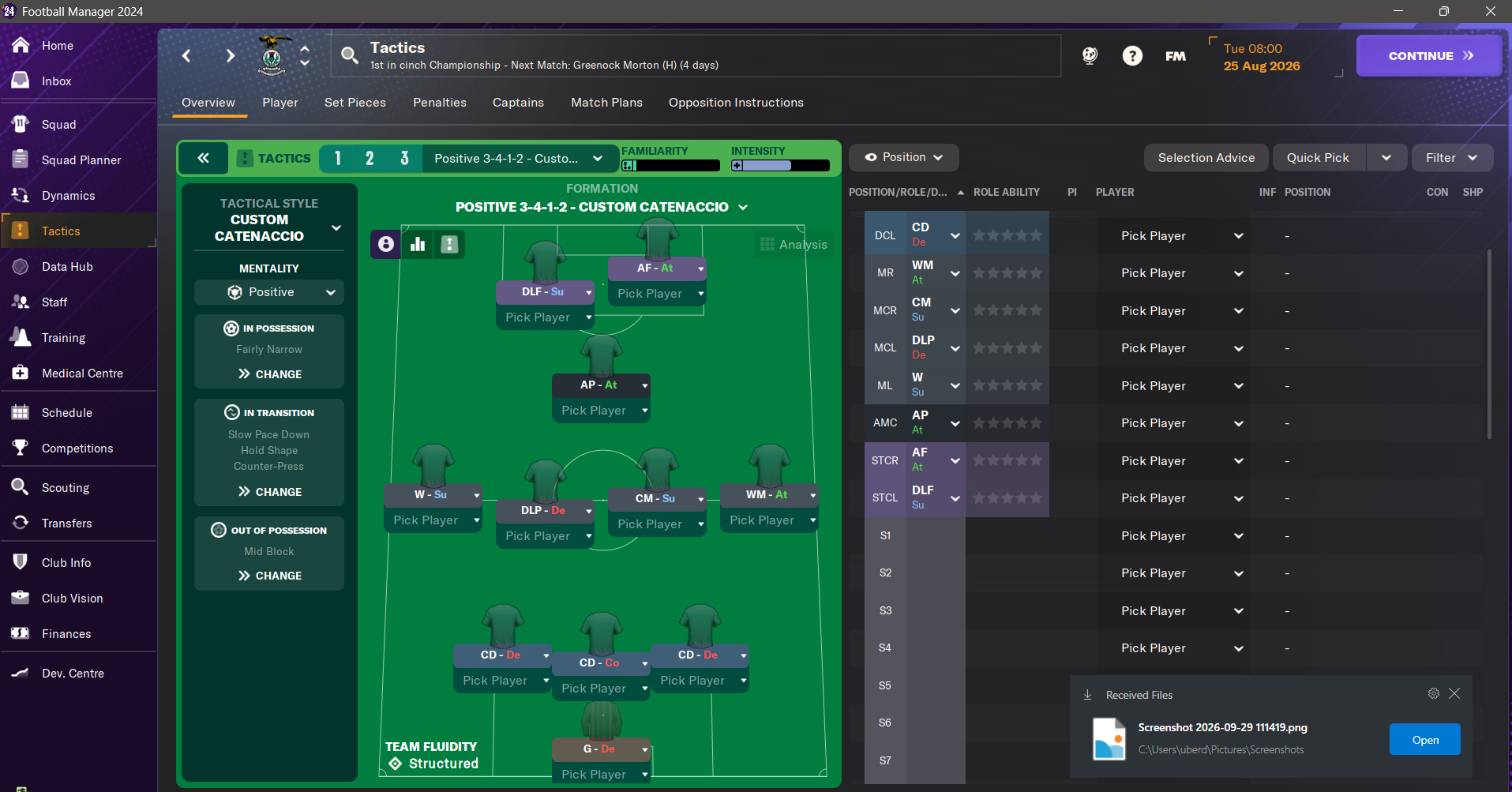
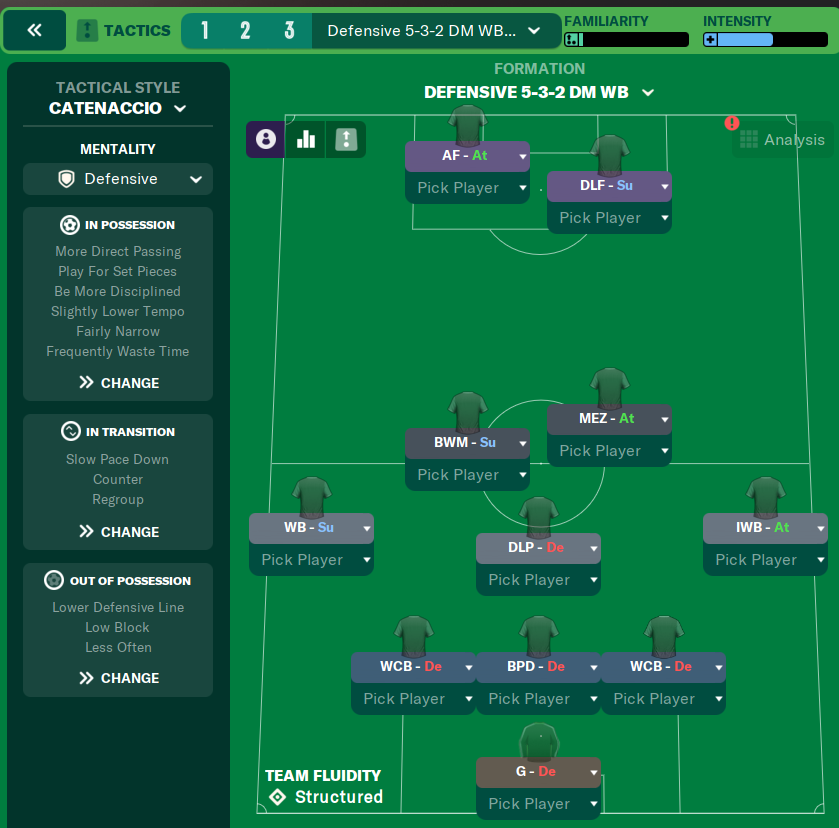
Formation & Style
Tactical Style:Catenaccio
Mentality:Defensive
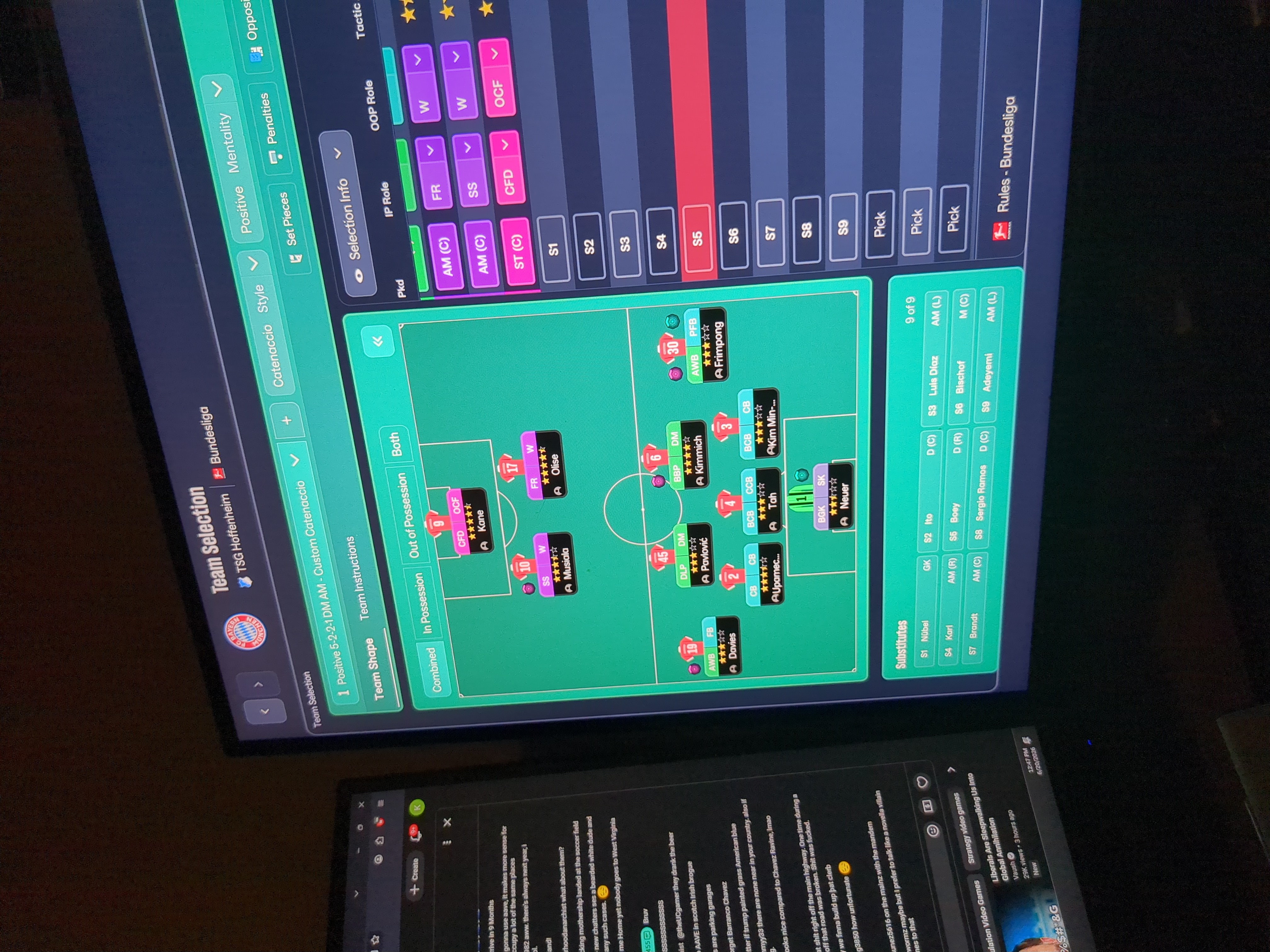
Formation:Defensive 5-2-2-1 DM AM
Team Fluidity:Structured
In Possession
More Direct Passing
Play for Set Pieces
Be More Disciplined
Slightly Lower Tempo
Frequently Waste Time
In Transition
Slow Pace Down
Counter
Regroup
Out of Possession
Lower Defensive Line
Low Block
Less Often
Team Shape Without Ball
Shape:5-4-1
Description:A compact formation designed to absorb pressure and disrupt opponent attacks.
Evidence:Presence of 5 defenders at the back and a lowered defensive line.
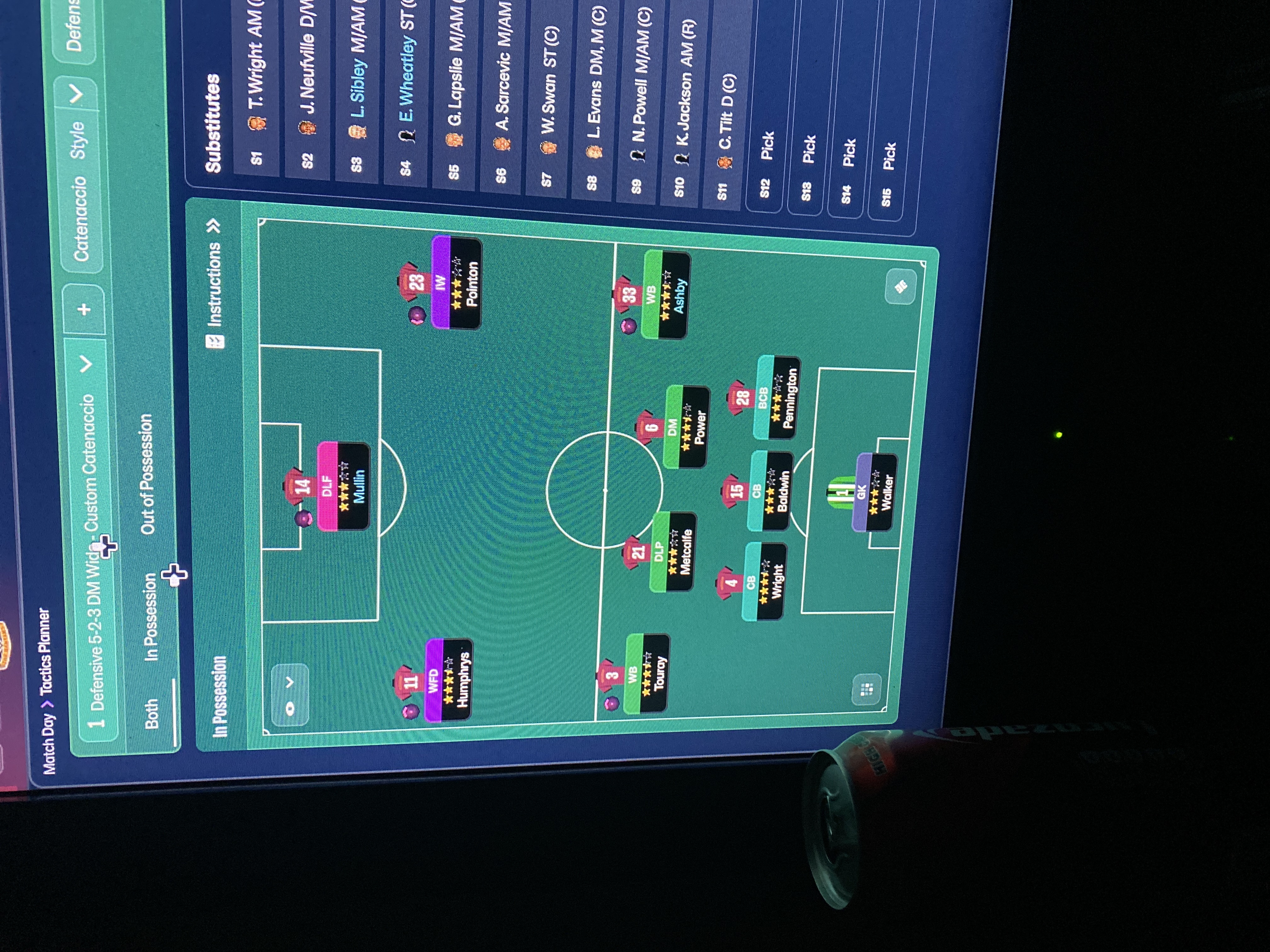
Team Shape With Ball
Shape:5-2-1-2
Description:Utilizes wing-backs for width while maintaining central strength through a target man.
Evidence:Two wing-backs pushing up with a single striker and support behind.
Phase Description
Attacking Play
Primarily reliant on set pieces and counter-attacks, utilizing width from wing-backs.
Defensive Transition
Regroups swiftly into a low block, stifling opponent progression.
Main Focus
To deny space and utilize defensive discipline while waiting for counter opportunities.
Key Strengths
Strong Defensive Stability
Three central defenders provide a solid backbone to absorb pressure.
Effective Counter-Attacks
The use of wing-backs allows for quick transitions into attacking spaces.
Set Piece Threat
Utilizes height and positioning for both attacking and defending set pieces.
Conflicting Directions
Vulnerability on the Wings
While the wing-backs provide width, they can leave gaps when caught upfield.
Reliance on Transition
Heavily depends on counter-attacks; if pressed, build-up play may struggle.
Vulnerability to Central Attacks
Conceding goals in the penalty area suggests weakness against central play.
Tactical Suggestions
Consider Adjusting Wing-Back Duties
Shifting one wing-back to a more defensive duty could increase security against counters.
Increase Defensive Width
Encouraging more compact play may enhance defensive stability against width-oriented teams.
Utilize More Forward Press
Integrating a more assertive pressing strategy could regain possession higher up the pitch.