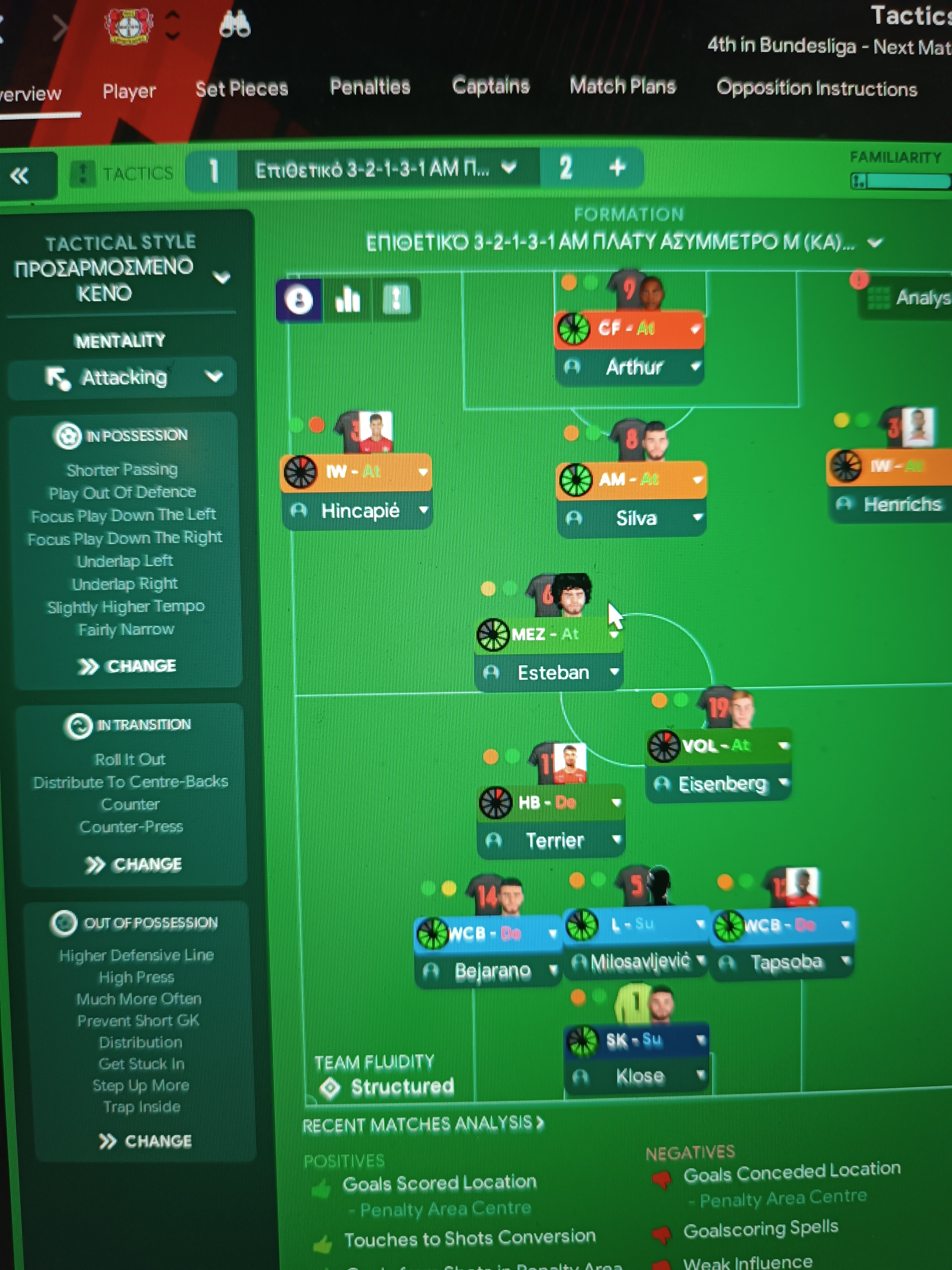
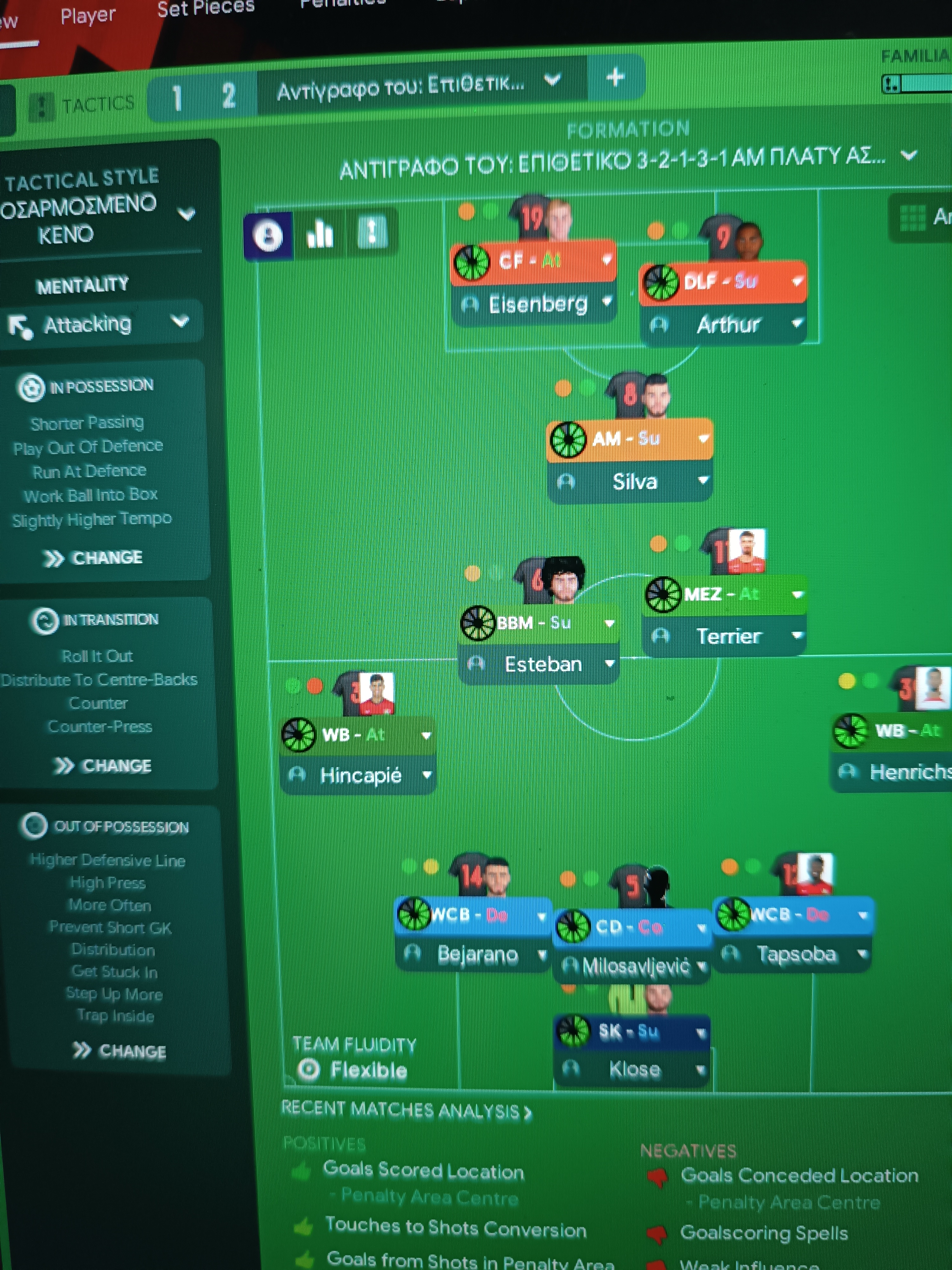
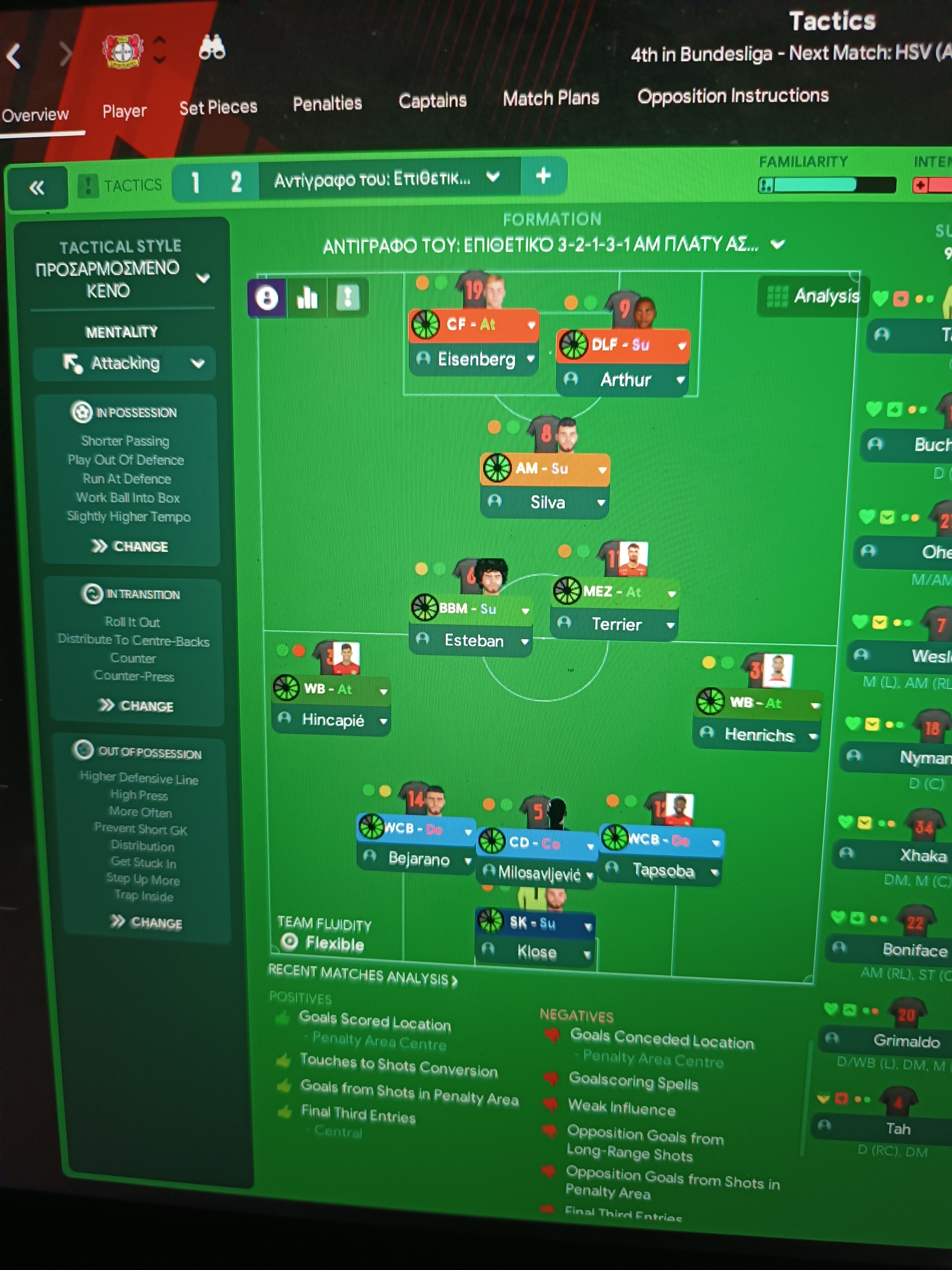
3-2-1-3-1
Utilizing width from wingers and the False Nine's movement to create space. Three central defenders provide a strong defensive foundation to build from.
Loading tactical analysis...
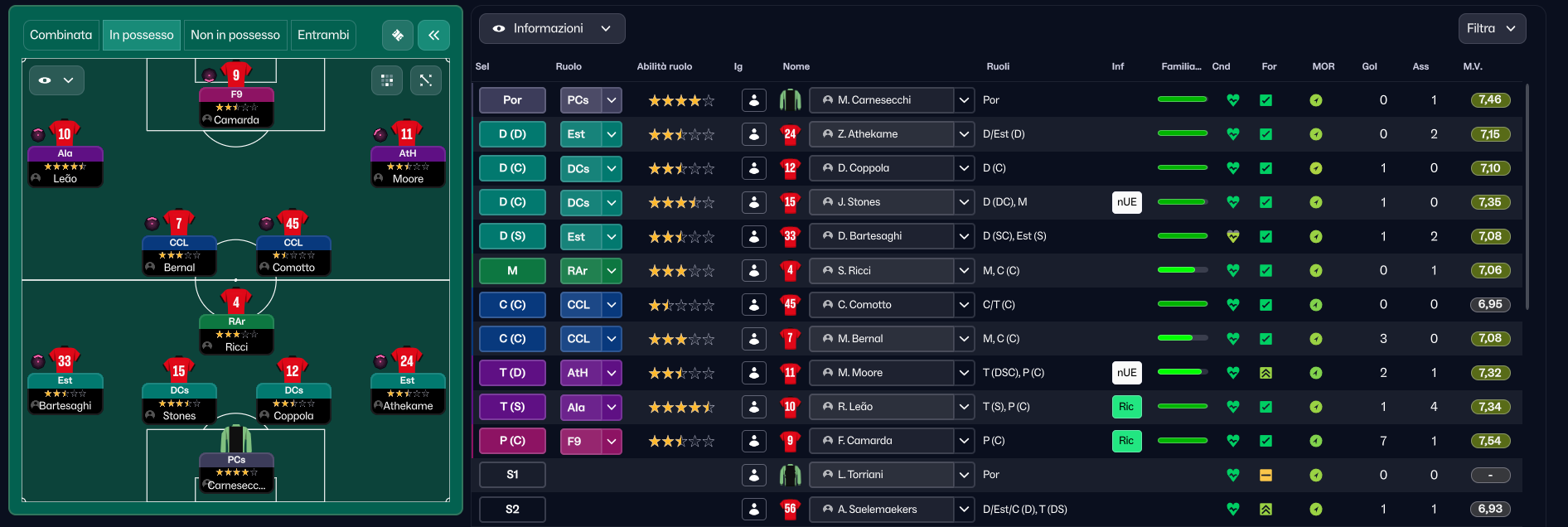
3-2-1-3-1
Play Out of Defence
Work Ball Into Box
Focus Play Down Right
Counter
Counter-Press
Higher Defensive Line
Higher Line of Engagement
Press More Often
GK
GK
De
DC
CB
De
DC
CB
De
DC
CB
De
DM
DLP
Su
CM
CM
Su
AM
TREQ
At
RW
W
At
LW
W
At
ST
F9
At
Focused attacking play with a playmaker orchestrating from midfield and wingers stretching the opposition.
Quick counter-press to regain possession immediately after losing the ball.
Utilizing width from wingers and the False Nine's movement to create space.
Compact 3-Defender Block
Three central defenders compacting the space and denying central penetration.
3 CB at [2,1], [2,2], [2,3] maintain defensive solidity.
Wide Attacking Shape
Wingers hugging the touchline to stretch opposition and create space for the central attacker.
W players at [6,1] and [6,5] with a F9 at [6,3].
Three central defenders provide a strong defensive foundation to build from.
3 CBs at [2,1], [2,2], [2,3] enhance defensive stability.
The Deep-Lying Playmaker with support from a central midfielder offers control in the middle.
DLP-S at [3,3] and CM-S at [4,3] lead to effective ball progression.
While a higher pressing approach could disrupt opponents, simultaneous counter-pressing could lead to fatigue.
Press More Often and Counter-Press instructions.
Balancing width through wingers with central play through the False Nine may lead to positional conflict.
Wingers at [5,1] and [5,5] versus F9 at [6,3].
Defensive Transitions
Vulnerability when transitioning from attack to defense, especially against fast opponents.
Counter opportunities may arise if players are caught high up.
Wide Areas
Wingers may leave central areas exposed if not tracked back effectively.
W at [5,1] and [5,5] could lead to central overloads.
DLP-S and W
The DLP can provide through balls to the wingers who can exploit space.
DLP at [3,3] with W at [5,1] and [5,5].
F9 and W
The F9's movements can draw defenders out of position, allowing wingers to exploit gaps.
F9 at [6,3] creating space for W at [5,1] and [5,5].
How can the defensive structure be improved to limit counter-attacks?
What adjustments could be made to optimize the playmaker's influence on the game?
Is the pressing strategy sustainable throughout the match?
The tactical theory behind the 3-2-1-3-1: roles, instructions, and the trade-offs that decide whether the system holds up.
Why circulation density and zonal occupation aren't the same thing in FM, and the half-space occupation rule that decides build-up.
Build through the wide areas or through the middle? A working framework for picking the right one for your squad.
The five seconds after losing the ball decide most matches. Counter-press, drop-and-recover, and how to know which one you should be doing.