Uploaded Tactic
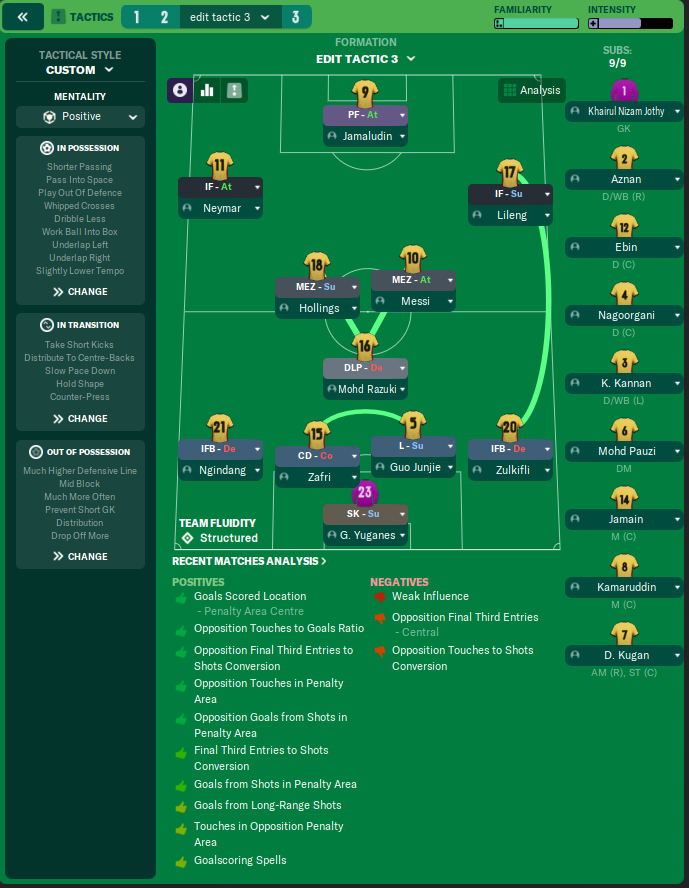
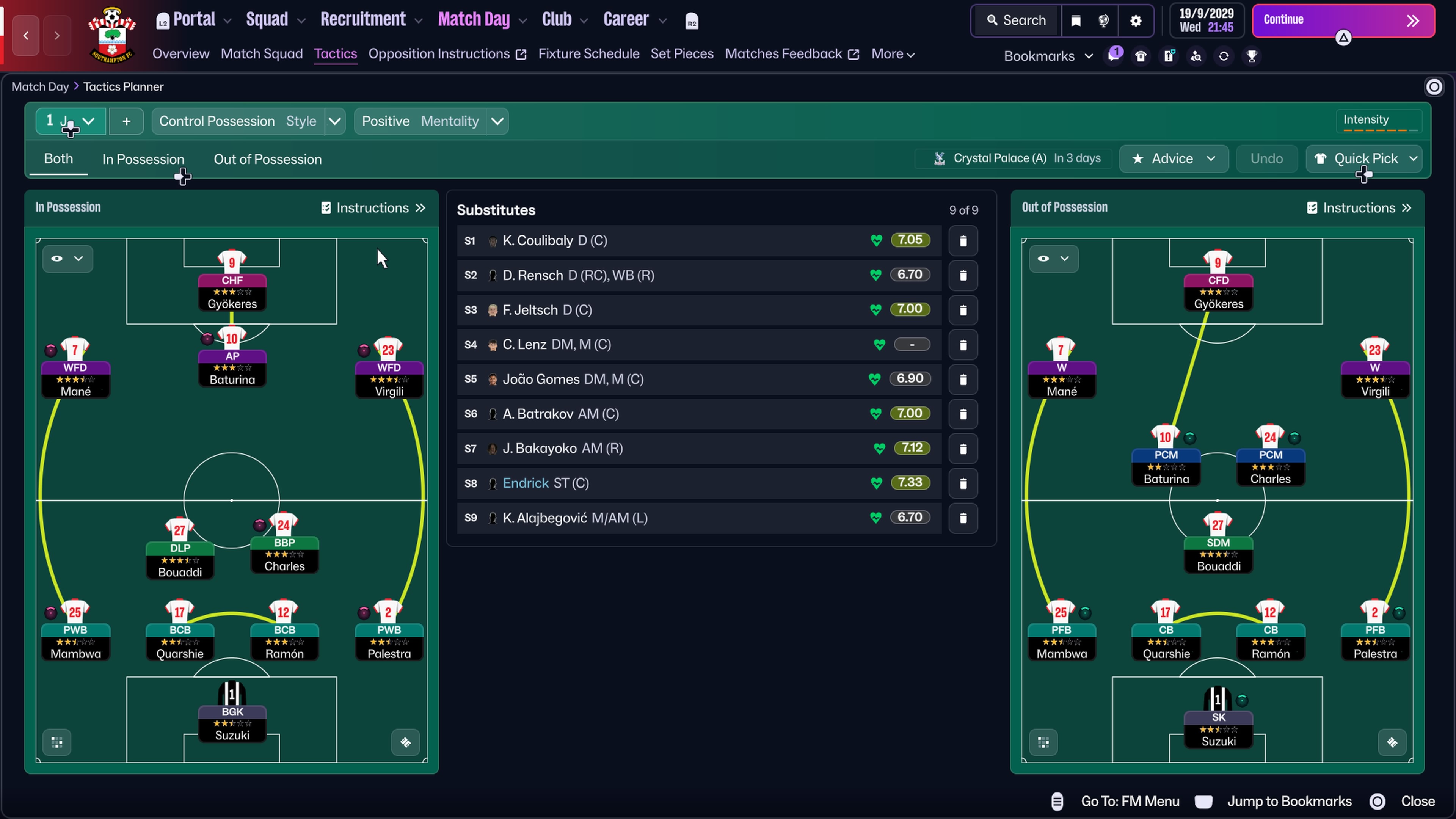
Formation & Style
Tactical Style:Custom
Mentality:Positive
Formation:3-2-2-3
Team Fluidity:Structured
In Possession
Shorter Passing
Pass Into Space
Play Out of Defence
Whipped Crosses
Dribble Less
Work Ball Into Box
Underlap Left
Slightly Lower Tempo
In Transition
Take Short Kicks
Distribute To Centre-Backs
Counter-Press
Out of Possession
Much Higher Defensive Line
Mid Block
Prevent Short GK Distribution
Drop Off More
Team Shape Without Ball
No team shape without ball data available
Team Shape With Ball
No team shape with ball data available
Key Strengths
Attacking Width
The use of Inside Forwards and a Wing-Back enhances width in attack, stretching the opposition's defense.
Creative Build-Up
Incorporating shorter passing and 'Play Out of Defence' promotes fluid ball movement from the back.
Defensive Solidity
The structured fluidity paired with a compact midfield preserves defensive stability.
High Pressing Intensity
Counter-pressing ensures immediate recovery of possession after losing the ball.
Conflicting Directions
Higher Defensive Line vs Mid Block
A much higher defensive line could expose the team to counter-attacks, particularly against pacey forwards.
Dribble Less vs Inside Forwards
Encouraging players to dribble less may limit the creativity and flair of the Inside Forwards.
Slightly Lower Tempo vs High Pressing
A lower tempo contradicts the intensity expected from a counter-pressing strategy, leading to slower recoveries.
Prevent Short GK Distribution vs Building from the Back
Preventing short goal-kick distributions can hinder the team’s build-up play, violating the intended passing strategies.
Tactical Suggestions
Adjust Defensive Line
Consider lowering the defensive line to accommodate faster opposition attackers, reducing the risk of being caught out.
Increase Tempo
Increasing the tempo may help better exploit spaces during counter-press situations.
Encourage Dribbling
Allowing Inside Forwards more freedom to dribble could enhance the unpredictability of forward movements.
Reassess GK Distribution
Evaluate the effectiveness of the 'Prevent Short GK Distribution' instruction to see if a more flexible approach is more beneficial.
Ask Questions About Your Lineup
Related Tactics
Guides for this formation
The tactical theory behind the 3-2-2-3: roles, instructions, and the trade-offs that decide whether the system holds up.