Uploaded Tactic
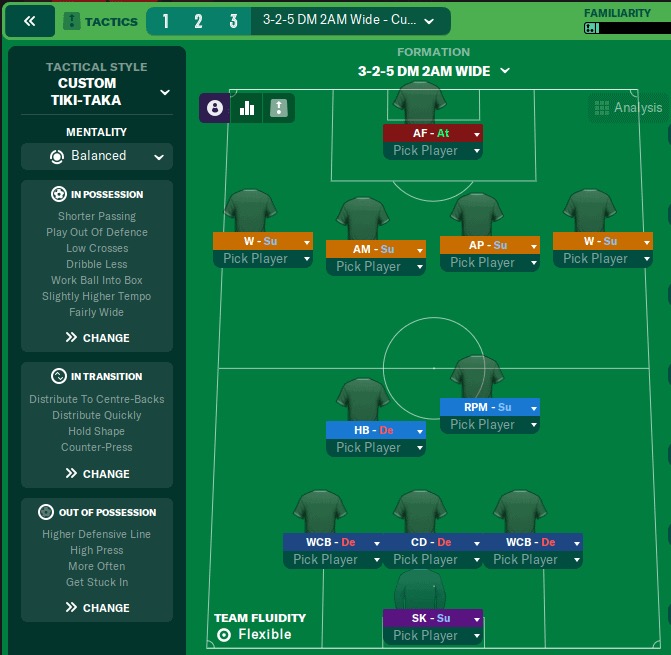
Formation & Style
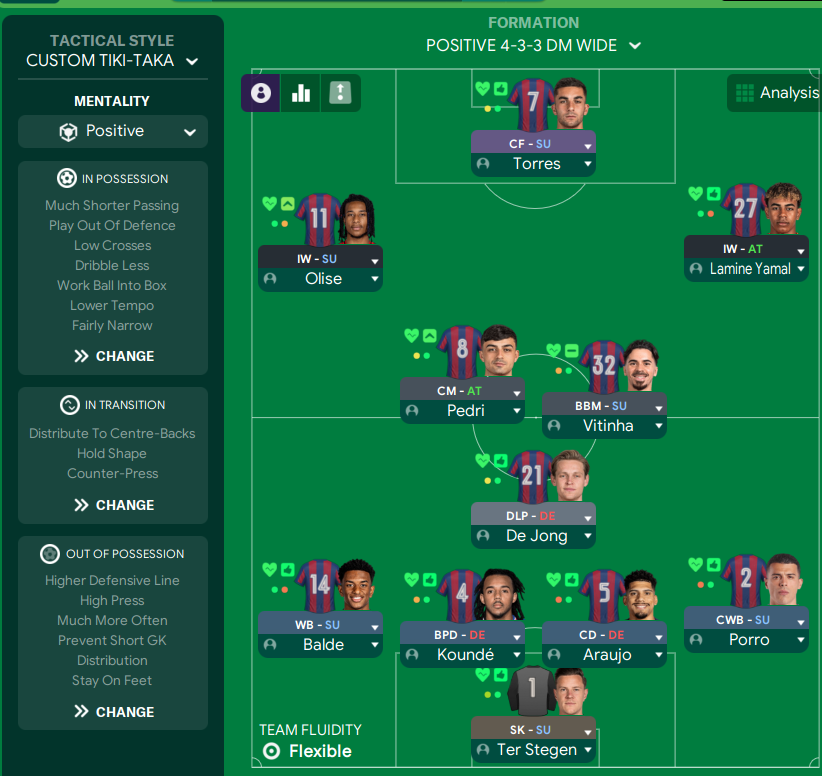
Tactical Style:Custom Tiki-Taka
Mentality:Balanced
Formation:3-2-5 DM 2AM Wide
Team Fluidity:Flexible
In Possession
Shorter Passing
Play Out Of Defence
Low Crosses
Dribble Less
Work Ball Into Box
Slightly Higher Tempo
Fairly Wide
In Transition
Distribute To Centre-Backs
Distribute Quickly
Hold Shape
Counter-Press
Out of Possession
Higher Defensive Line
Mark Tighter
Press More Often
Get Stuck In
Team Shape Without Ball
No team shape without ball data available
Team Shape With Ball
No team shape with ball data available
Key Strengths
Possession Play
The Tiki-Taka style emphasizes short passing and ball retention, making it effective for maintaining possession and controlling the game.
Flexibility in Midfield
With an Attacking Midfielder and Advanced Playmaker, the midfield can creatively support both the attack and defence, providing multiple passing options.
Wide Play
Utilizing wingers allows for stretching the opposition's defence, creating space for central players to exploit.
Counter-Pressing
The focus on counter-pressing enables quick recovery of the ball after losing possession, maintaining pressure on the opposition.
Conflicting Directions
Defensive Setup vs. Offensive Focus
The three-man defence combined with attacking duties may leave gaps, especially against teams that counter-attack swiftly.
High Line with Deep-Lying Players
The higher defensive line could conflict with the Half Back role, which generally operates deeper, potentially leading to space behind the defence.
Balanced Mentality with Attacking Players
While the attacking roles like Advanced Forward and Wingers are key, a balanced mentality may limit their offensive impact.
Tempo Management
A slightly higher tempo may conflict with the tiki-taka's inherent slow build-up approach, risking hurried decisions.
Tactical Suggestions
Adjust Defensive Line
Consider lowering the defensive line to mitigate risks of counter-attacks, especially in matches against fast-paced teams.
Enhance Midfield Roles
Experiment with a more defensive midfielder to better shield the back three and offer additional cover during transitions.
Consider a Varied Mentality
Shifting to a more attacking mentality in certain matches can exploit weak defences while ensuring a flexible game plan.
Utilize Fluid Player Roles
Encourage fluidity in player roles, especially on the flanks, to interchange positions and confuse defensive setups.
Ask Questions About Your Lineup
More Custom Tiki-Taka tactics
Guides for this formation
The tactical theory behind the 3-2-5 DM 2AM Wide: roles, instructions, and the trade-offs that decide whether the system holds up.