Uploaded Tactic
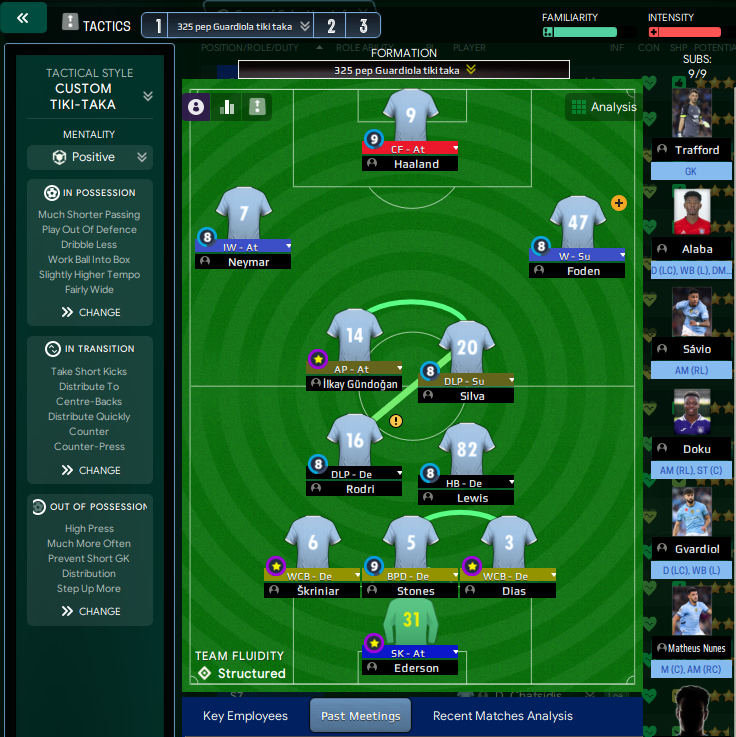
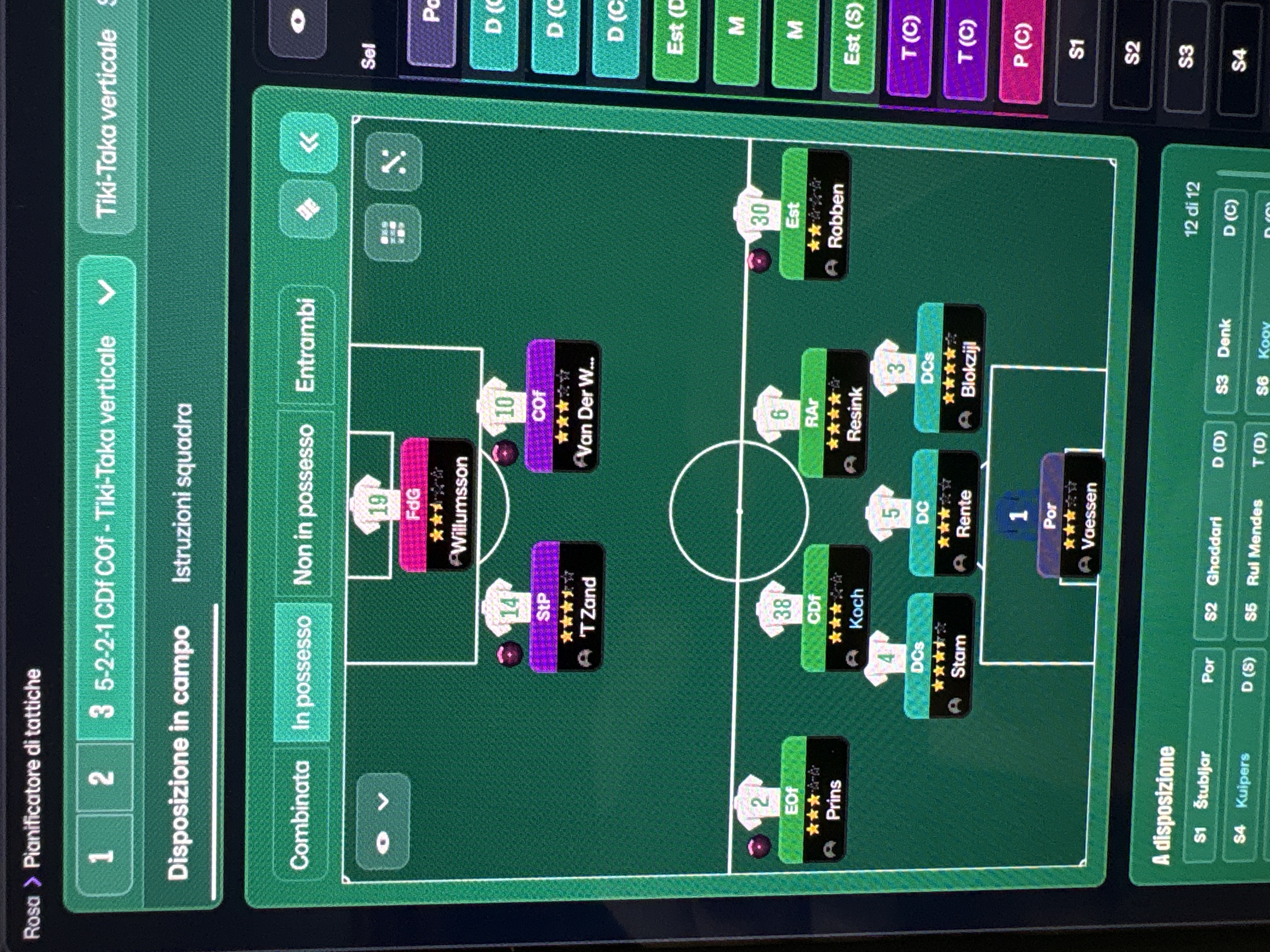
Formation & Style
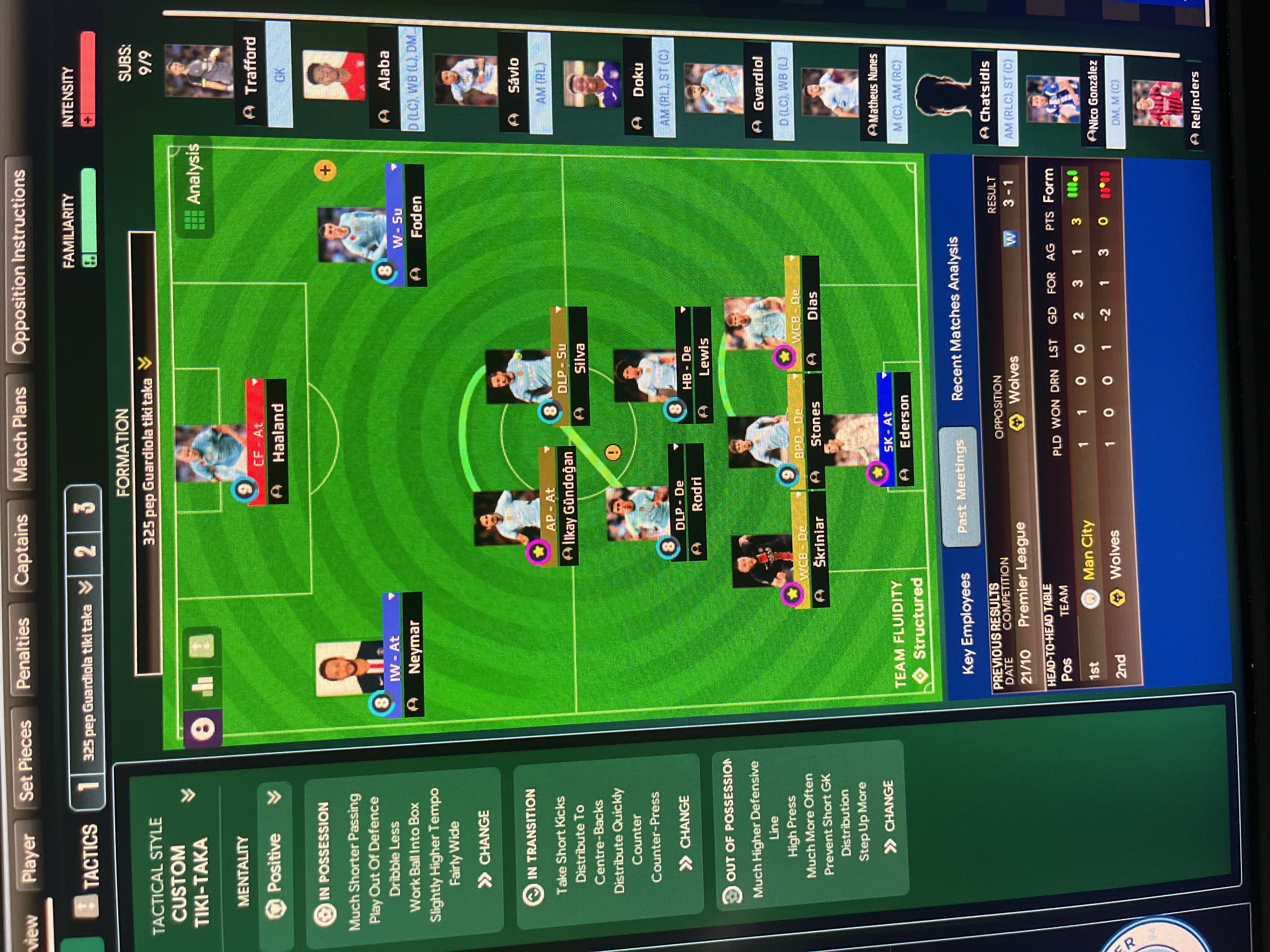
Tactical Style:Tiki-Taka
Mentality:Positive
Formation:3-2-5
Team Fluidity:Structured
In Possession
Much Shorter Passing
Play Out of Defence
Dribble Less
Work Ball into Box
Slightly Higher Tempo
Fairly Wide
In Transition
Take Short Kicks
Distribute to Centre-Backs
Distribute Quickly
Counter-Press
Out of Possession
High Press
Much More Urgent
Prevent Short GK Distribution
Step Up More
Team Shape Without Ball
No team shape without ball data available
Team Shape With Ball
No team shape with ball data available
Key Strengths
Fluid Build-Up
The combination of the Deep Lying Playmakers and the Advanced Playmaker helps in maintaining possession while transitioning effectively from defense to attack.
Attacking Variety
Utilizing both Inside Forwards and a Winger provides width and options for both central and wide attacks, ensuring defensive lines are stretched.
High Press Efficiency
The tactical choice for high press and counter-press allows quick recovery of possession, disrupting the opponent's transitions.
Intense Midfield Control
The three-man midfield setup ensures dominance in central areas, allowing control of the game tempo.
Conflicting Directions
Player Duty Overlap
Having two Deep Lying Playmakers may cause confusion in defensive duties, as both might occupy similar spaces when defending.
Transition Balance
Highly aggressive pressing could lead to defensive vulnerabilities if the midfield is bypassed quickly.
Full-Back Engagement
The lack of traditional full-backs can lead to isolation in wide areas, making the team susceptible to counter-attacks.
Formation Flexibility
A rigid formation with three center-backs could limit the team's attacking dynamics, especially against teams using wide play.
Tactical Suggestions
Adapt Full-Back Roles
Consider adjusting the roles of wide players to include full-backs, providing more defensive and attacking support in wide areas.
Adjust Team Fluidity
Experimenting with a more fluid team set-up could facilitate more dynamic attacking movements and transitions.
Midfield Adjustments
Reassessing one Deep Lying Playmaker to a more creative role could further enhance attacking options and reduce overlap in defensive duties.
Utilize Wing Rotation
Implementing rotation movements for the wingers and inside forwards could create better positional play and confuse opposing defenders.
Ask Questions About Your Lineup
Related Tactics
More Tiki-Taka tactics
Guides for this formation
The tactical theory behind the 3-2-5: roles, instructions, and the trade-offs that decide whether the system holds up.