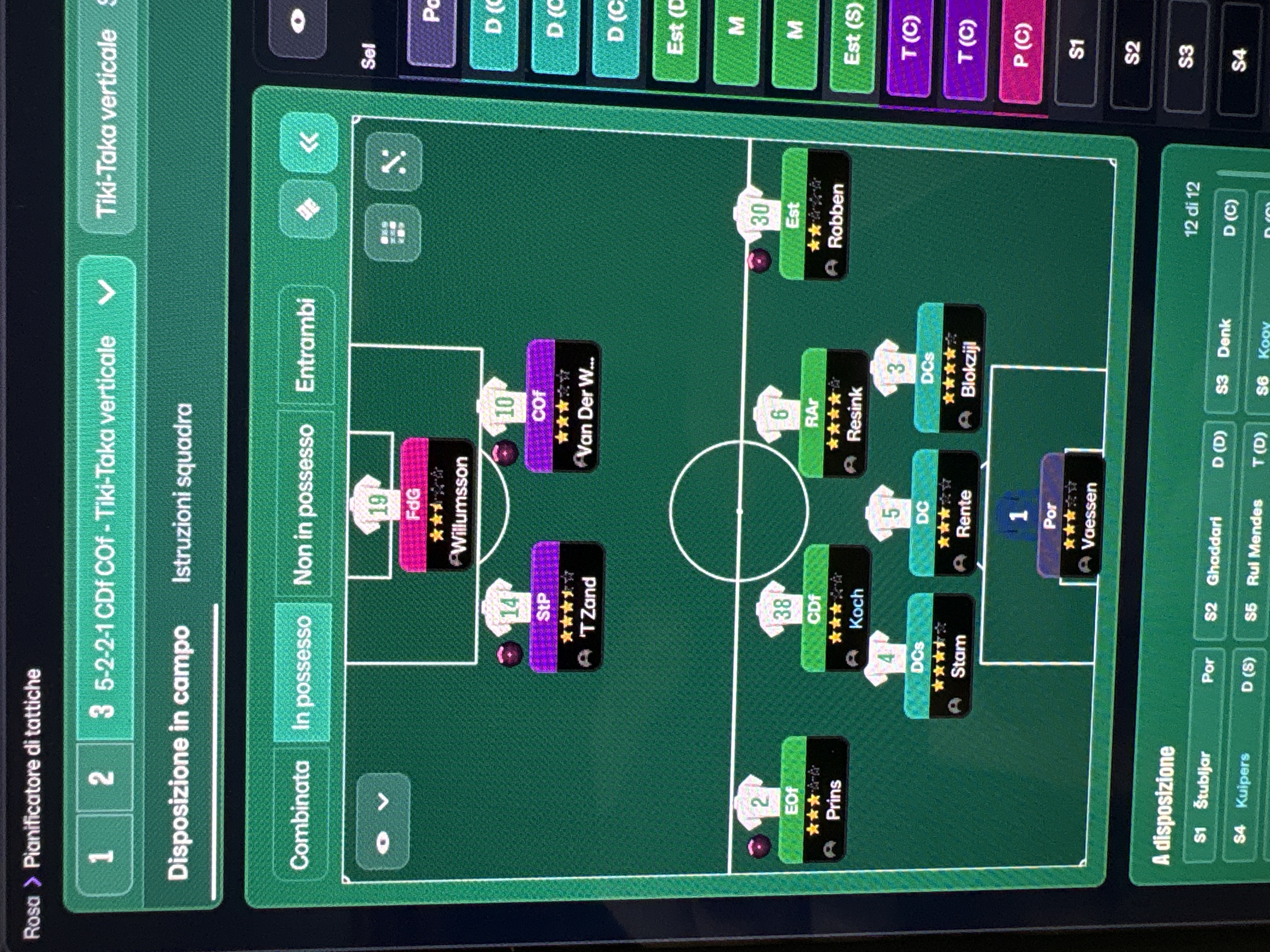
Uploaded Tactic
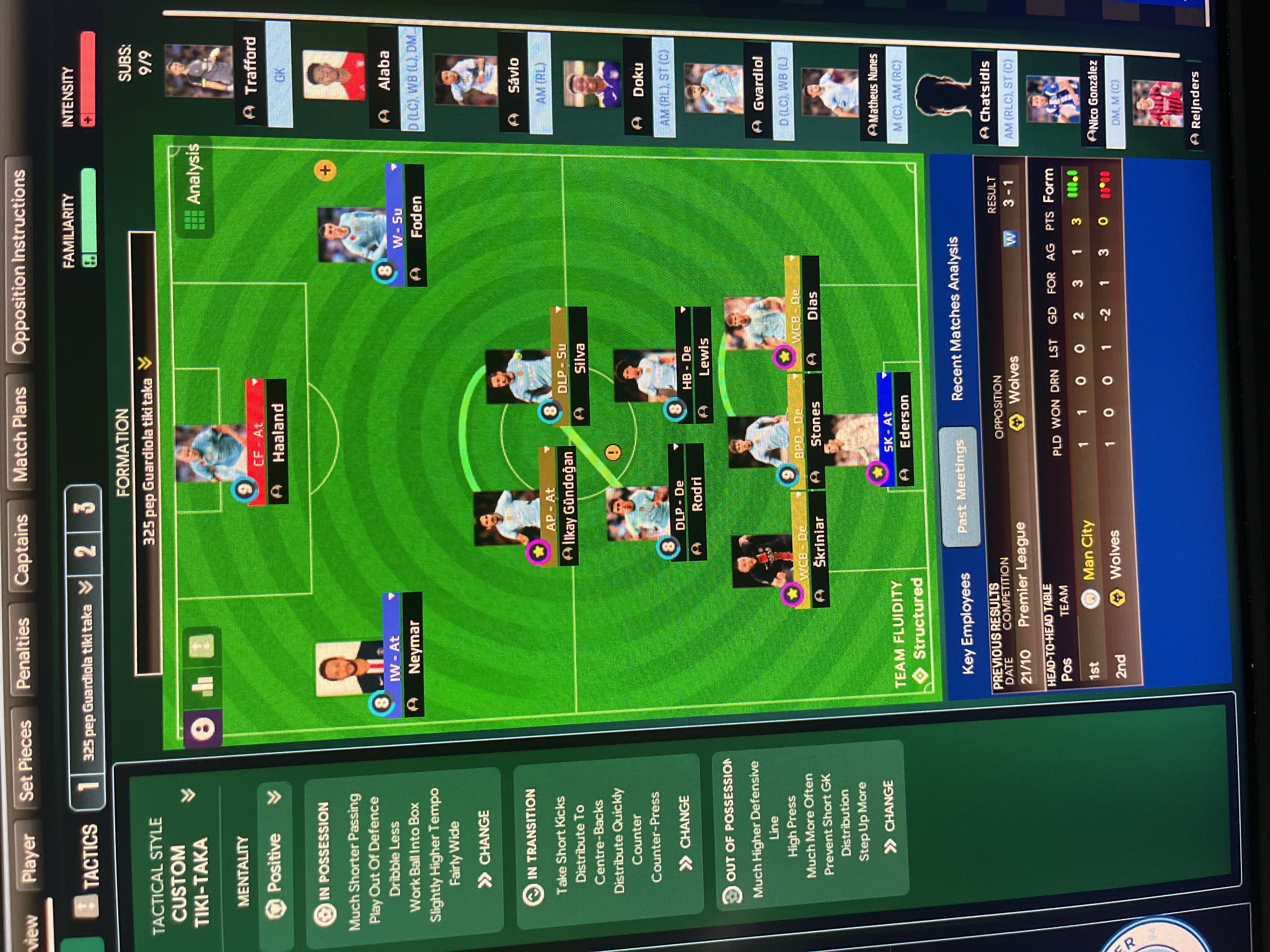
Formation & Style
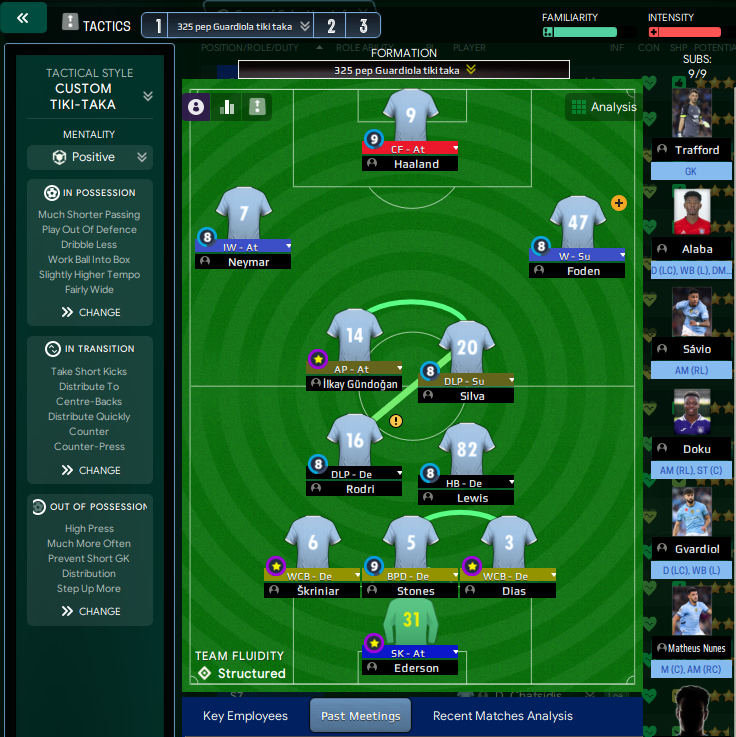
Tactical Style:Tiki-Taka
Mentality:Positive
Formation:3-2-5
Team Fluidity:Structured
In Possession
Much Shorter Passing
Play Out of Defence
Dribble Less
Work Ball Into Box
Slightly Higher Tempo
Fairly Wide
In Transition
Short Take Kicks
Distribute Quickly
Out of Possession
Much Higher Defensive Line
High Press
Much More Often
Prevent Short GK Distribution
Team Shape Without Ball
No team shape without ball data available
Team Shape With Ball
No team shape with ball data available
Key Strengths
Possession Retention
The tiki-taka style emphasizes short passing, allowing for stable possession and controlled build-ups.
Attacking Width
Utilizing wingers and inside forwards creates space and stretches the opponent's defense.
High Defensive Line
This encourages pressing and helps maintain possession higher up the pitch by constricting opponent's space.
Dynamic Midfield
Roles like DLP and AP facilitate fluid transitions and creativity in the midfield.
Conflicting Directions
High Defensive Line Risks
A high defensive line may expose the team to counter-attacks, particularly without quick recovery defenders.
Player Structure vs. Flexibility
The highly structured approach may limit spontaneity in attacking plays, which could be beneficial in breaking down defenses.
Pressing vs. Positional Play
Pressing often may conflict with the patients required for tiki-taka, leading to rushed decisions.
Inside Forwards and Width
Playing with both inside forwards and wingers may lead to positional congestion in the final third.
Tactical Suggestions
Adjust Defensive Line
Consider dropping the defensive line slightly to mitigate counters and allow more time for the defense to recover.
Introduce more Rotation
Encourage players to interchange positions, enhancing unpredictability in attacks and improving fluidity.
Utilize Counter-Pressing
Implement counter-pressing principles to reclaim possession quickly after losing the ball, aligning with the high-press tactic.
Experiment with Player Duties
Try varying the duties of midfield roles to balance creativity and defensive responsibilities more effectively.
Ask Questions About Your Lineup
Related Tactics
More Tiki-Taka tactics
Guides for this formation
The tactical theory behind the 3-2-5: roles, instructions, and the trade-offs that decide whether the system holds up.