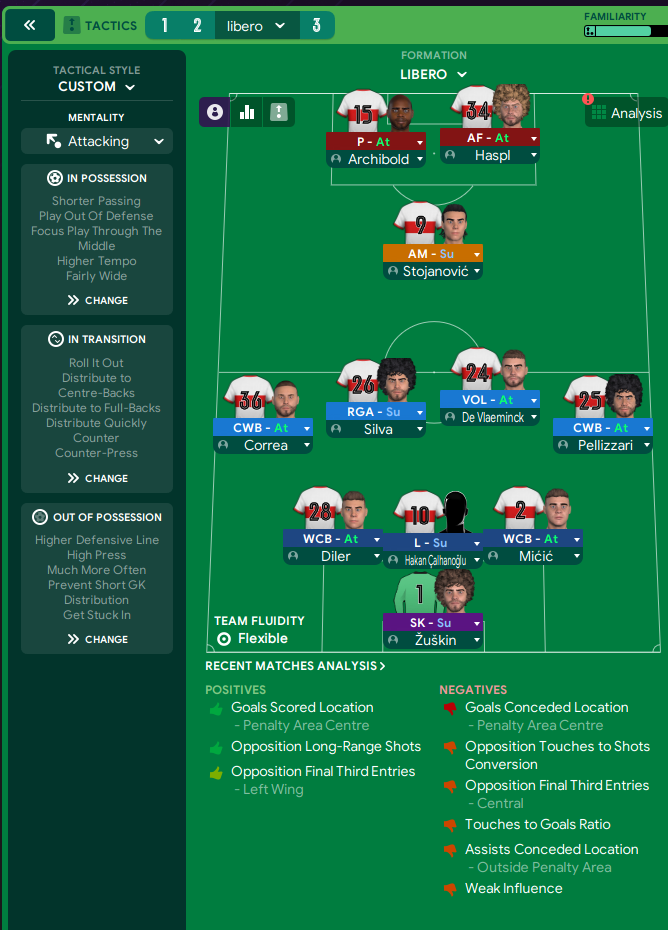
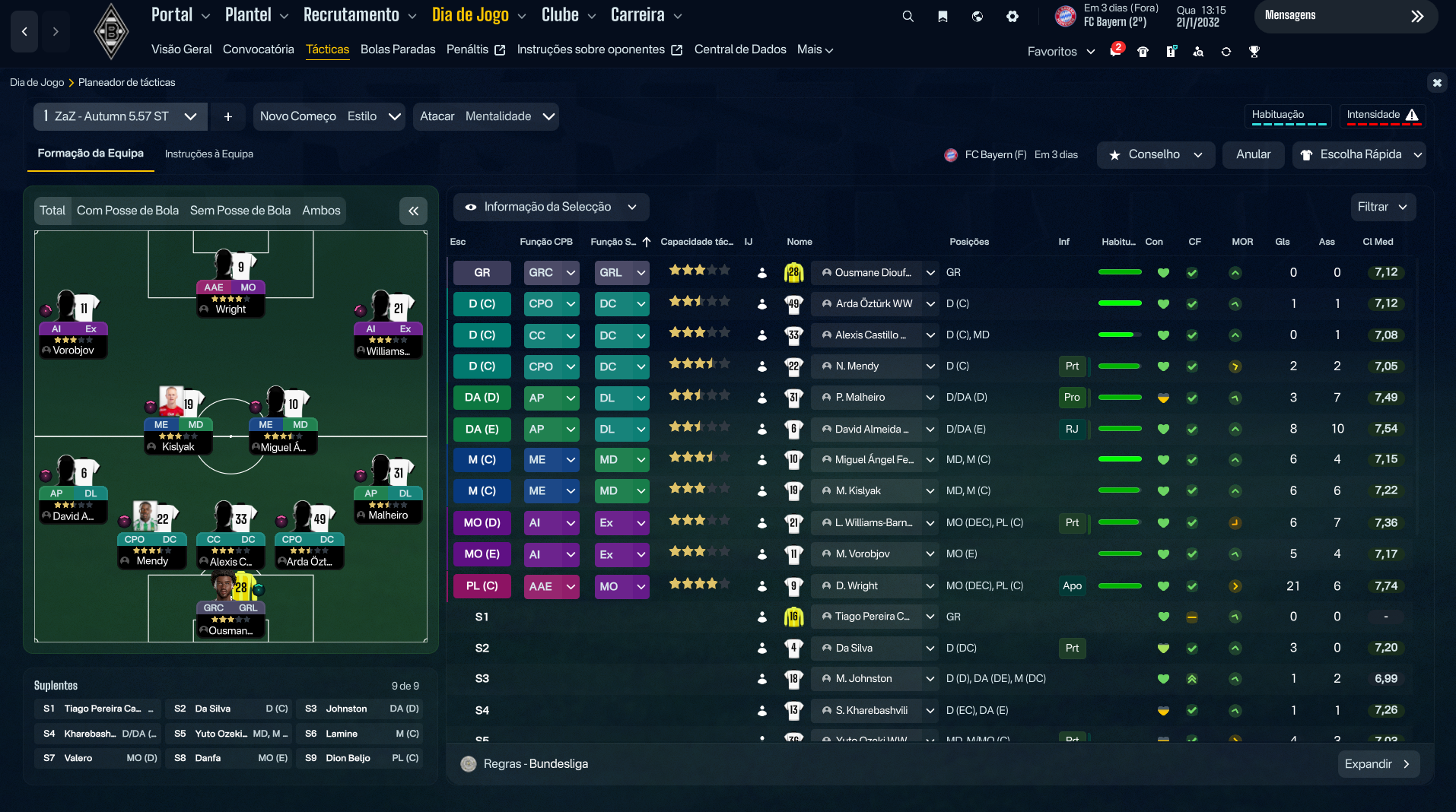
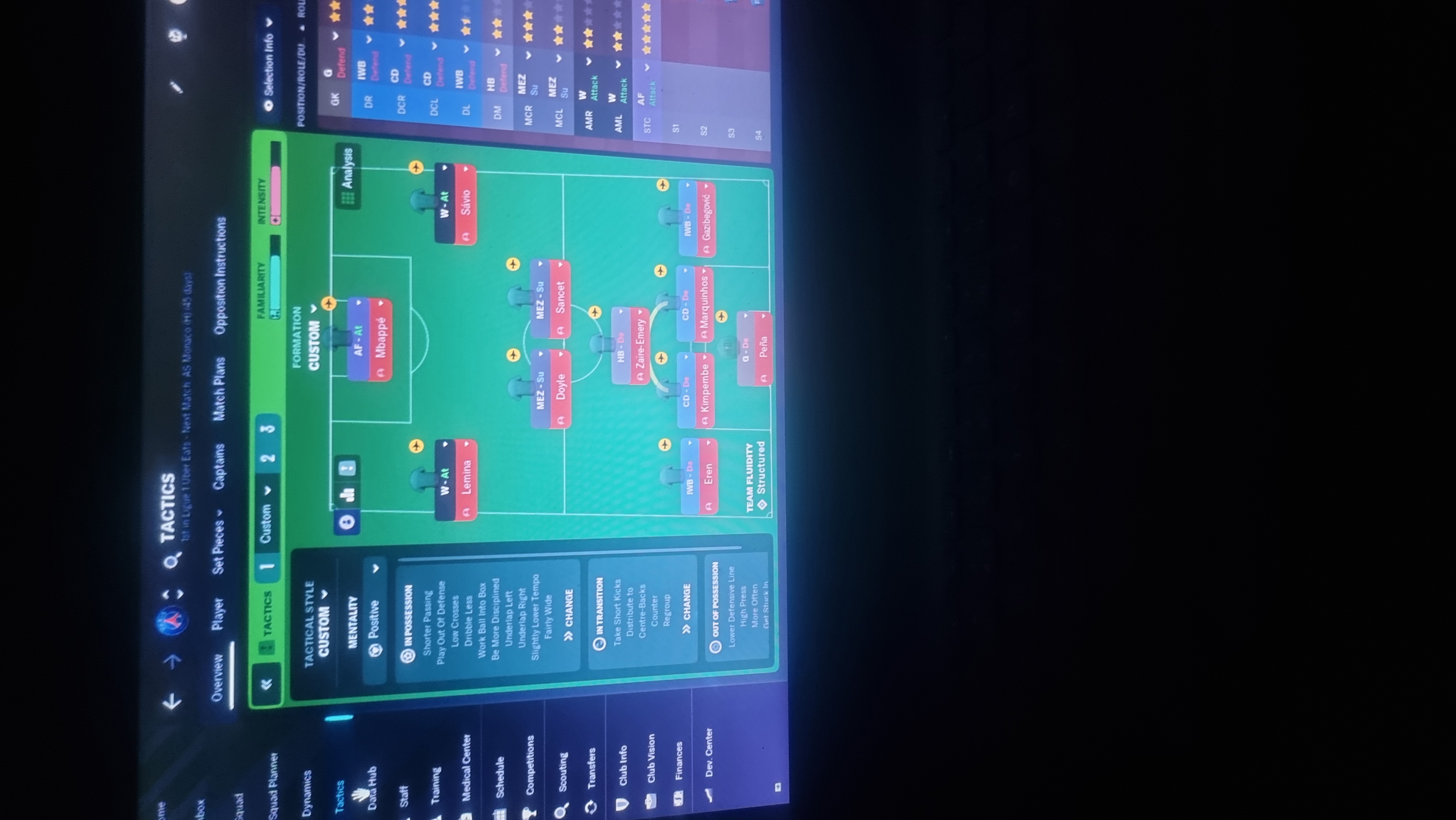
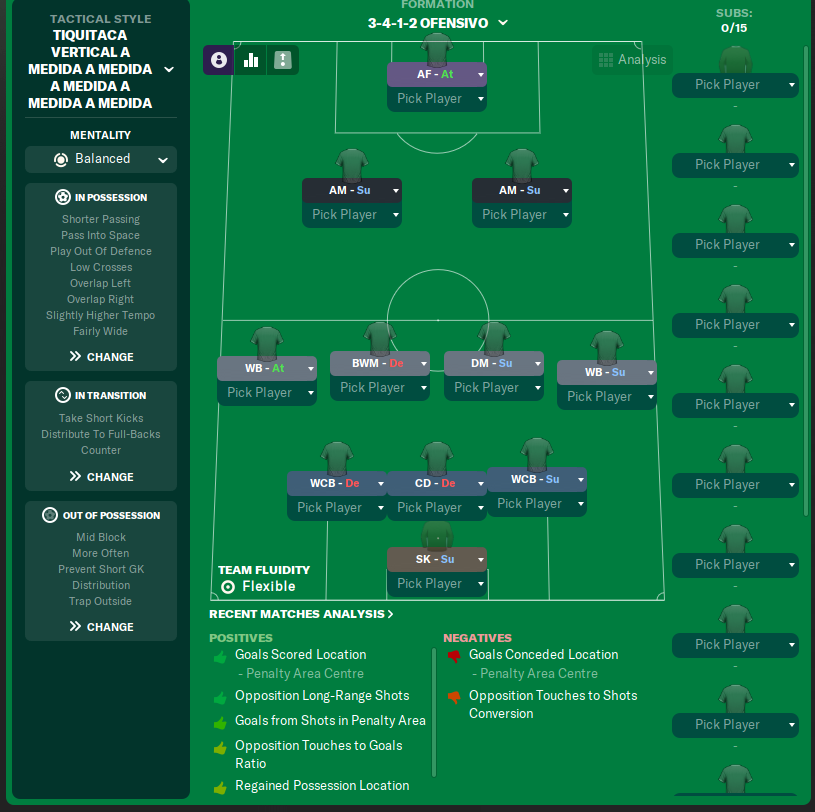
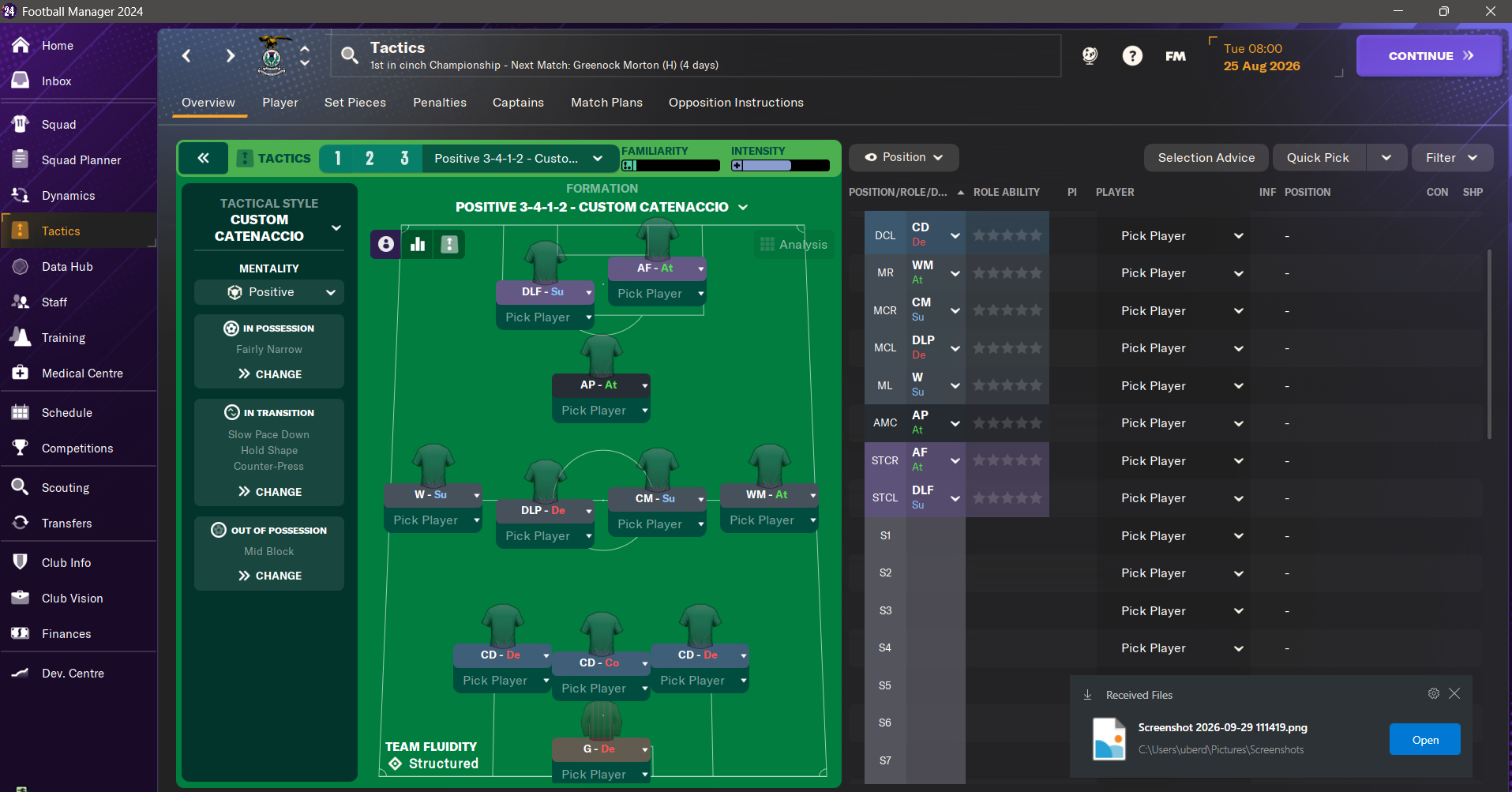
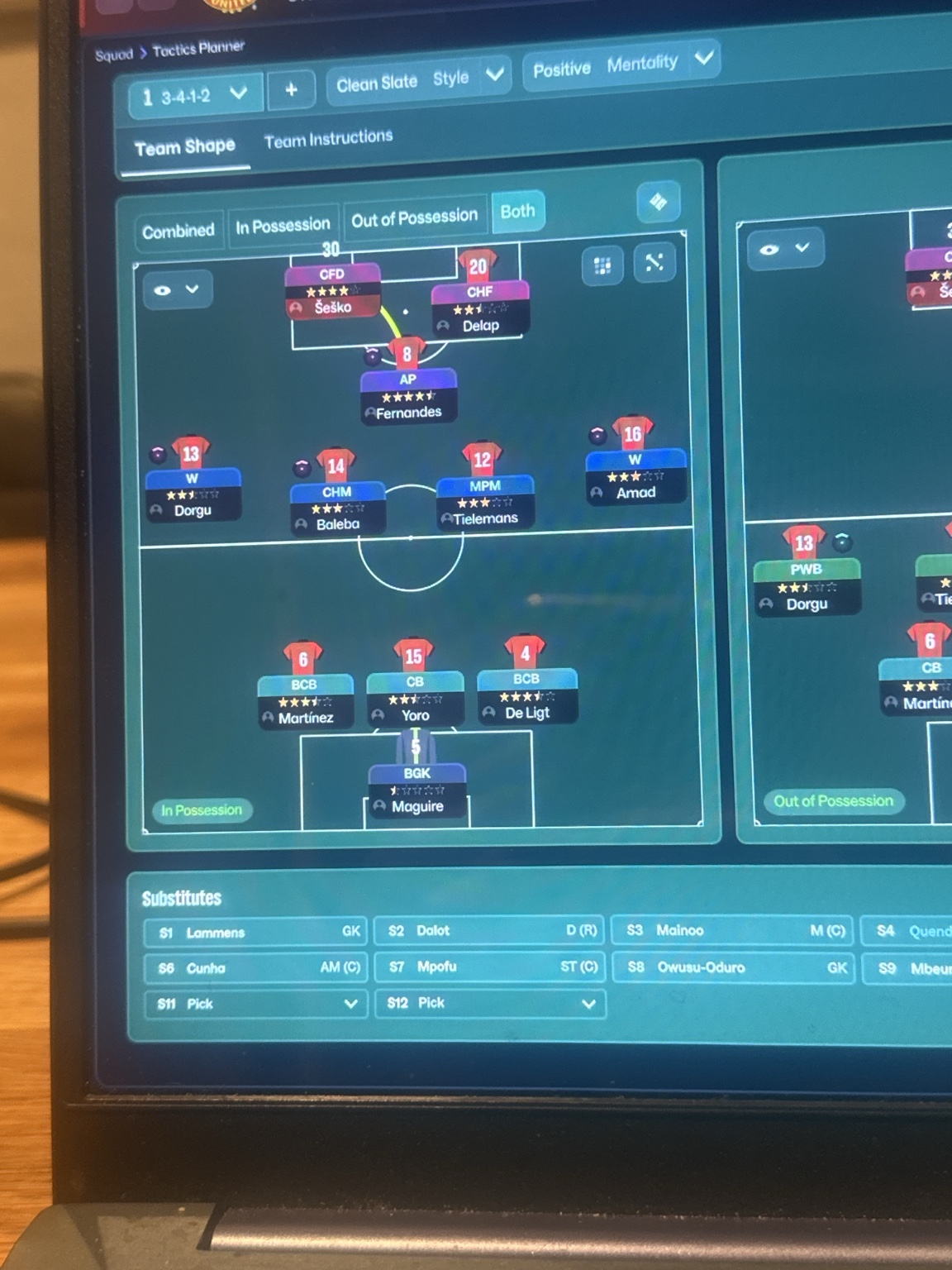
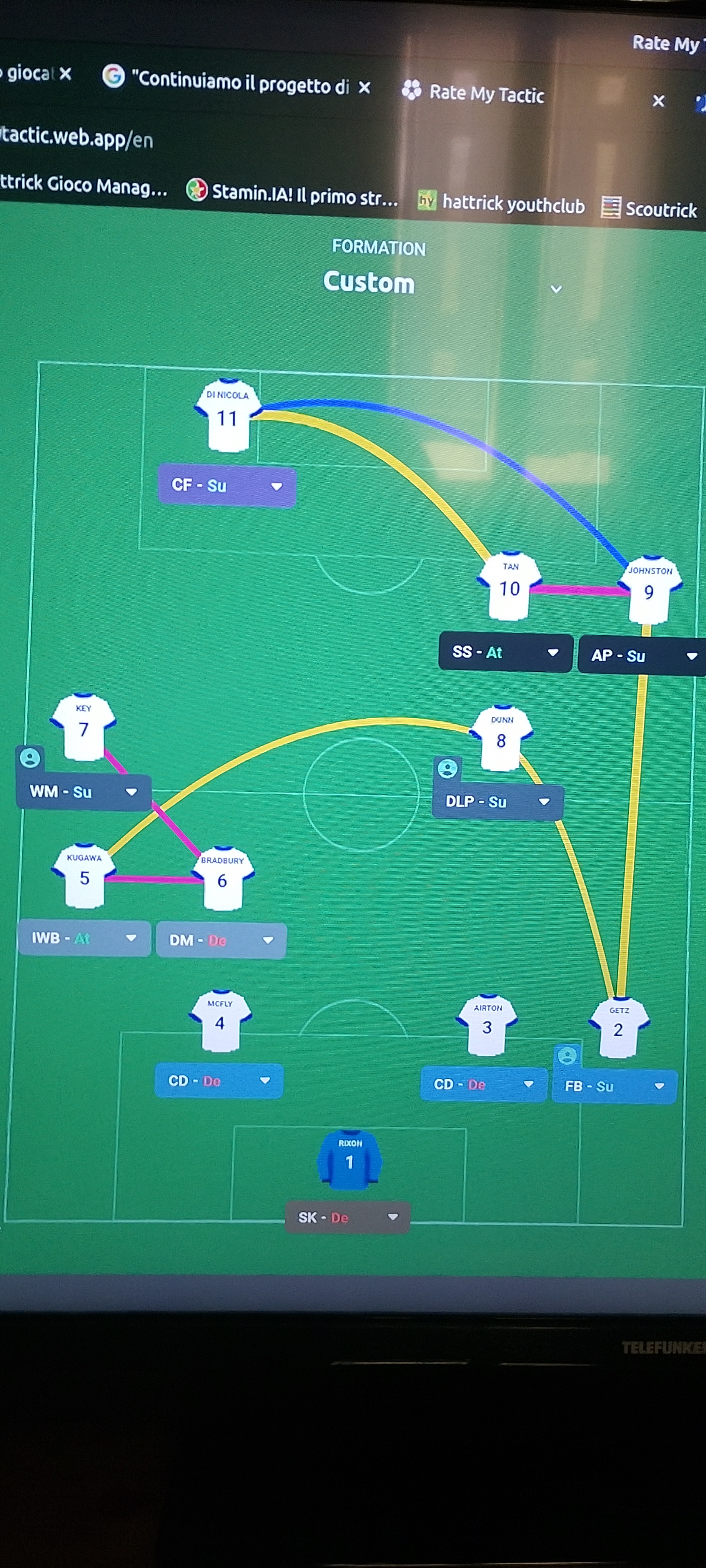
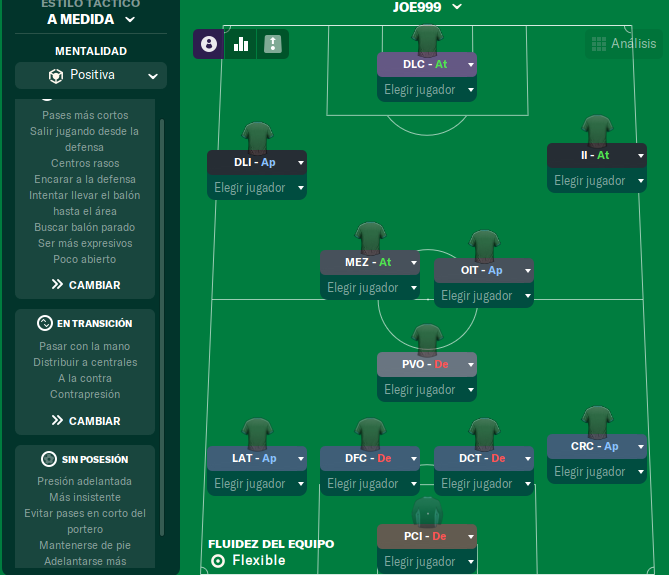
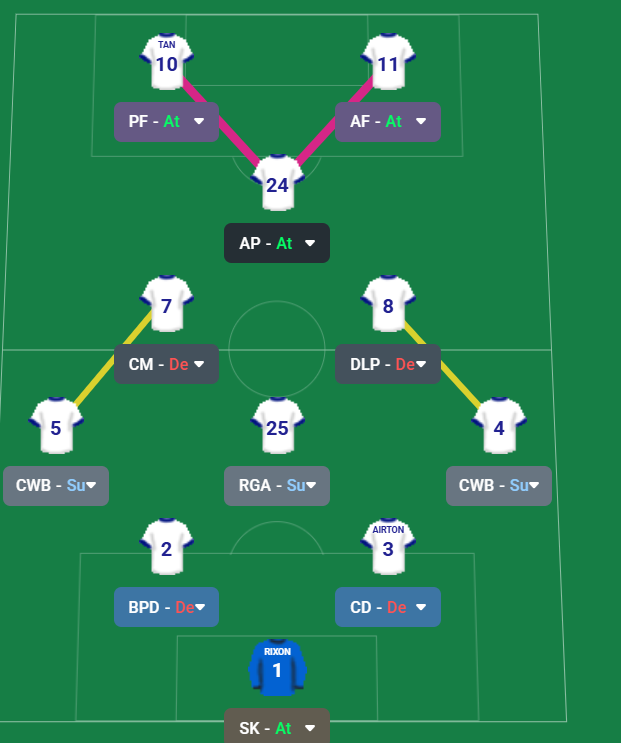
3-4-1-2
Build play through the midfield and utilize the strikers' pace. A combination of defensive duties in midfield helps maintain possession and control the…
Loading tactical analysis...
3-4-1-2
Attack through the middle with quick combinations.
Utilize wing-backs for width and overlapping runs.
Focus on creating chances through the Advanced Playmaker.
Counter-attack quickly when possession is won.
Press high to regain possession swiftly.
Employ a high defensive line.
Use a more urgent pressing scheme to force errors.
GK
Sweeper Keeper
Attack
CB
Ball-Playing Defender
Defend
CB
Centre-Back
Defend
CB
Complete Wing-Back
Support
CM
Central Midfielder
Defend
DM
Deep-Lying Playmaker
Defend
AM
Advanced Playmaker
Attack
ST
Advanced Forward
Attack
ST
Pressing Forward
Attack
Utilize the width of the pitch through wing-backs and create spaces for the advanced playmaker.
Close down quickly to prevent immediate counter-attacks.
Build play through the midfield and utilize the strikers' pace.
Compact
Team sits compact with three central defenders and two defensive-minded midfielders to minimize gaps.
BPD at [2,2], CD at [2,3], CM at [3,2], DLP at [3,3].
Fluid
Wing-backs provide width, while the central duo creates overloads in the final third.
CWB at [2,1] and [2,5] supporting strikers PF and AF at [6,2] and [6,4].
A combination of defensive duties in midfield helps maintain possession and control the game.
DLP-D at [3,3], and CM-D at [3,2] create a solid base.
The presence of an Advanced Playmaker and two attackers provides multiple options in the final third.
AP-A at [4,3] with PF-A at [6,2] and AF-A at [6,4].
With wing-backs pushed high, the team could be vulnerable to counter-attacks.
CWB-S can leave space in the back if caught ahead of the ball.
Defending duties in midfield may lead to a lack of creativity if pressured.
CM-D might not provide enough forward support alongside DLP-D.
Counter-Attack Vulnerability
High attacking width could leave central defenders exposed during counters.
CWB-S positions at wide could allow quick transitions against BPD-D.
Attacking Midfield Pressure
AP-A may find it difficult to receive the ball in tight spaces against aggressive opposition.
High pressing from other teams could limit AP-A’s options.
Wing-Backs and Strikers
CWB provides width while PF and AF look to exploit spaces in behind.
CWB-S at [2,1] with PF-A at [6,2] and AF-A at [6,4].
Deep-Lying Playmaker and Central Midfielder
DLP can distribute the ball while CM provides backup defensively.
DLP-D at [3,3] combined with CM-D at [3,2].
How to address counter-attack vulnerabilities?
What adjustments can enhance midfield creativity?
Should defensive line be lowered to improve stability?
The tactical theory behind the 3-4-1-2: roles, instructions, and the trade-offs that decide whether the system holds up.
Mentality, duty, role, instruction, sub. The change hierarchy from lightest to heaviest intervention, and 60th-minute patterns by game state.
Pass map, average position, xG, possession by zone: what each tablet panel tells you in FM and the tactical change it should trigger.
FM27 keeps FM26's tactic system. Here is what stays the same, the small changes that can catch you out, and what the new Tactical Effectiveness system asks of you.