Uploaded Tactic
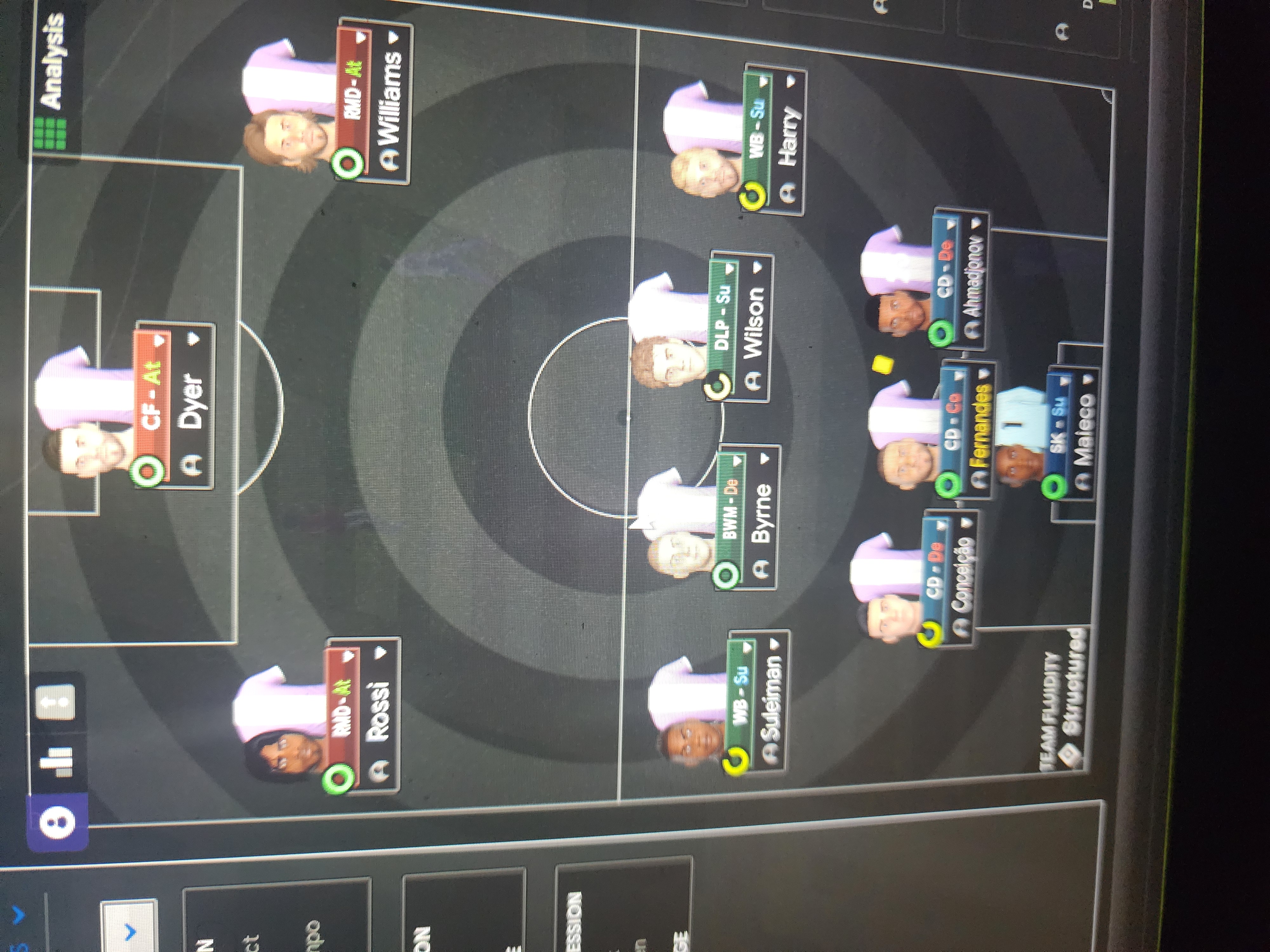
Formation & Style
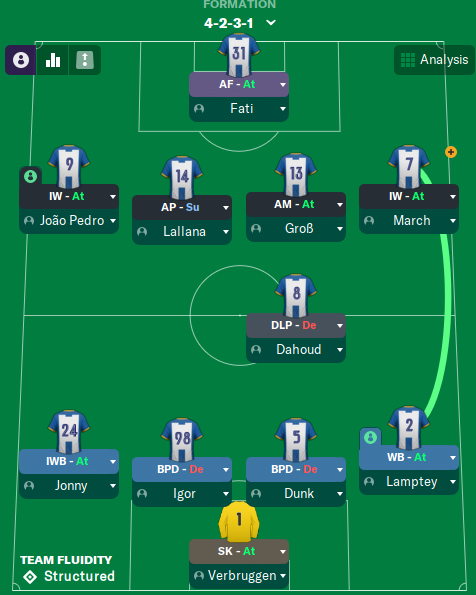
Tactical Style:Structured
Mentality:Positive
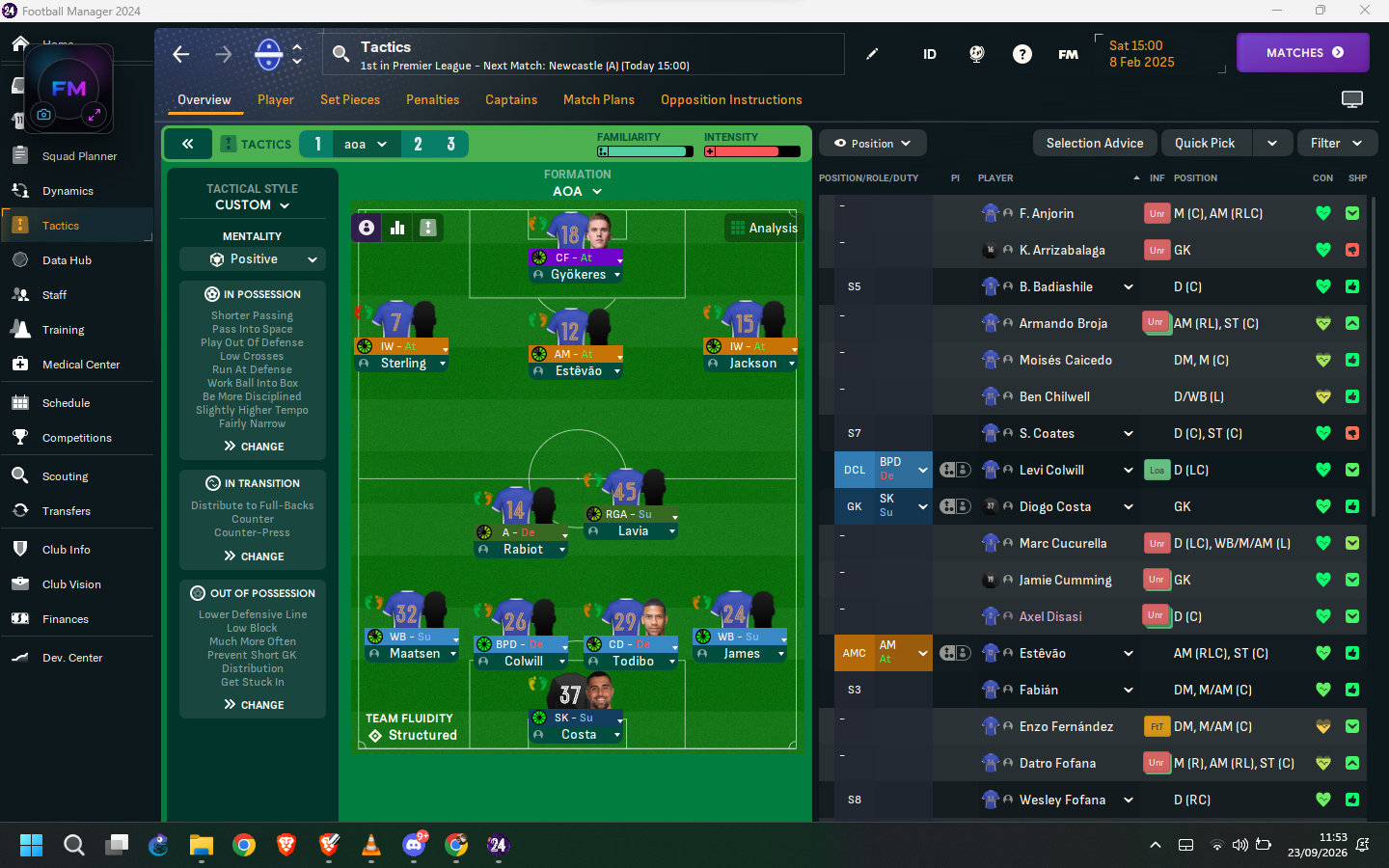
Formation:3-4-3
Team Fluidity:Structured
In Possession
Play out of defence
Run at defence
Exploit the flanks
In Transition
Counter-press
Counter
Out of Possession
Higher defensive line
Prevent short GK distribution
Team Shape Without Ball
No team shape without ball data available
Team Shape With Ball
No team shape with ball data available
Key Strengths
Attacking Width
Utilizing wing-backs and wide midfielders helps stretch the opposition and create space for attacks.
Defensive Solidity
The presence of three central defenders provides a strong base defensively and allows for better coverage against counter-attacks.
Versatile Midfield Roles
The combination of a deep-lying playmaker and ball-winning midfielder allows for both creative buildup and defensive stability.
Counter-Pressing Ability
The tactic aims to regain possession quickly after losing the ball, preventing opposition counter-attacks and keeping pressure on them.
Conflicting Directions
Wide Play vs Central Control
While the tactic promotes wide play with wing-backs and wingers, the central midfield setup could lead to congestion in the middle.
Ball Winning Midfielder's Role
The BWM may struggle to fulfill defensive duties effectively if the wing-backs are often caught high up the pitch.
High Defensive Line Risks
Adopting a higher defensive line could expose the back line to quick opposition counters, especially if wing-backs advance.
Limited Goal Threat from Midfield
With an emphasis on wing play, central midfielders may lack goal-scoring opportunities, which can be mitigated with attacking roles.
Tactical Suggestions
Consider Role Adjustments for Midfielders
Switching the DLP to an Attacking Midfielder could increase offensive output and support for the forwards.
Balance Wing-Backs
Consider making one wing-back more defensive to provide stability and cover when transitioning back for defense.
Utilize an Additional Attacking Player
Introducing a second player in attacking roles, possibly as a second forward, may increase goal-scoring potential.
Implementing Team Instructions
Encouraging players to 'Take More Risks' could enhance creativity but should be managed with caution regarding defensive stability.
Ask Questions About Your Lineup
Related Tactics
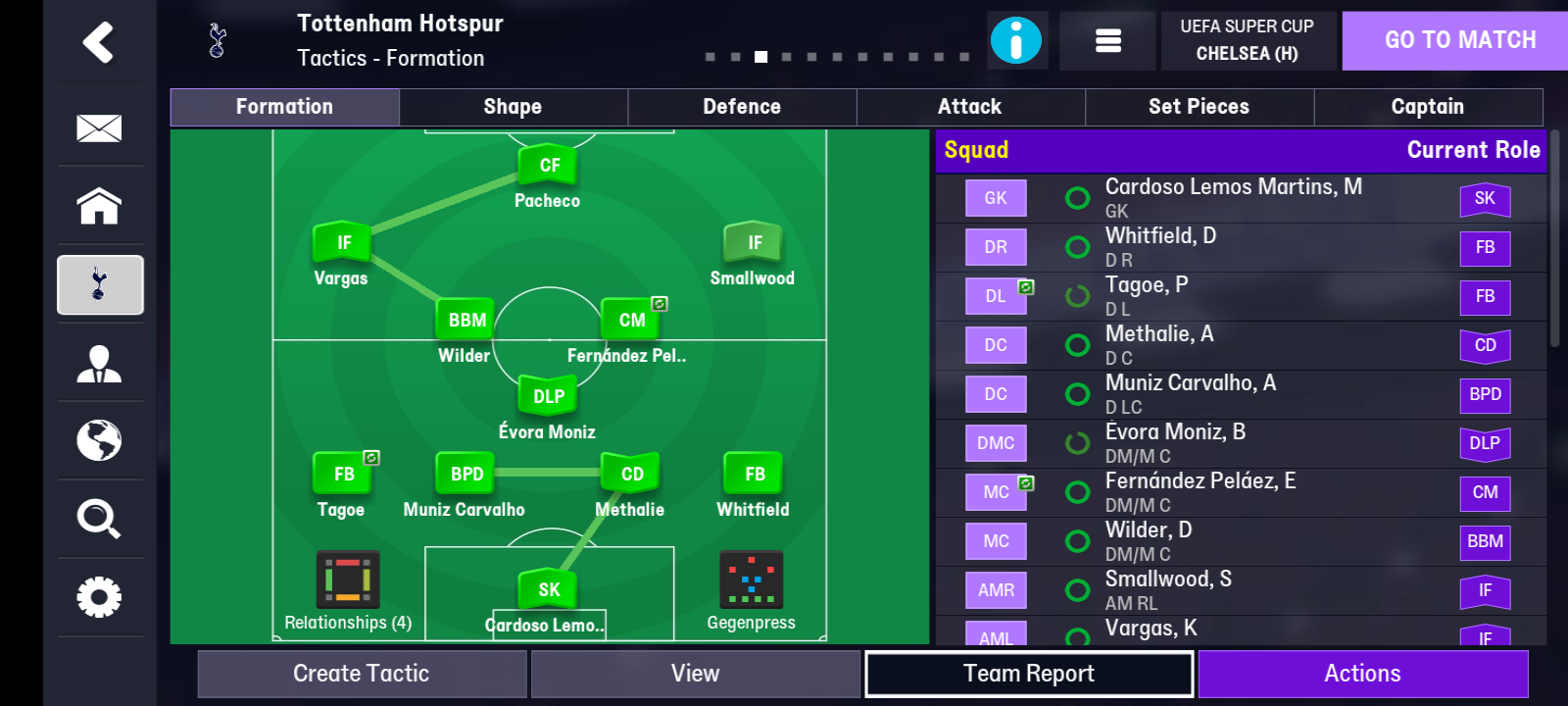
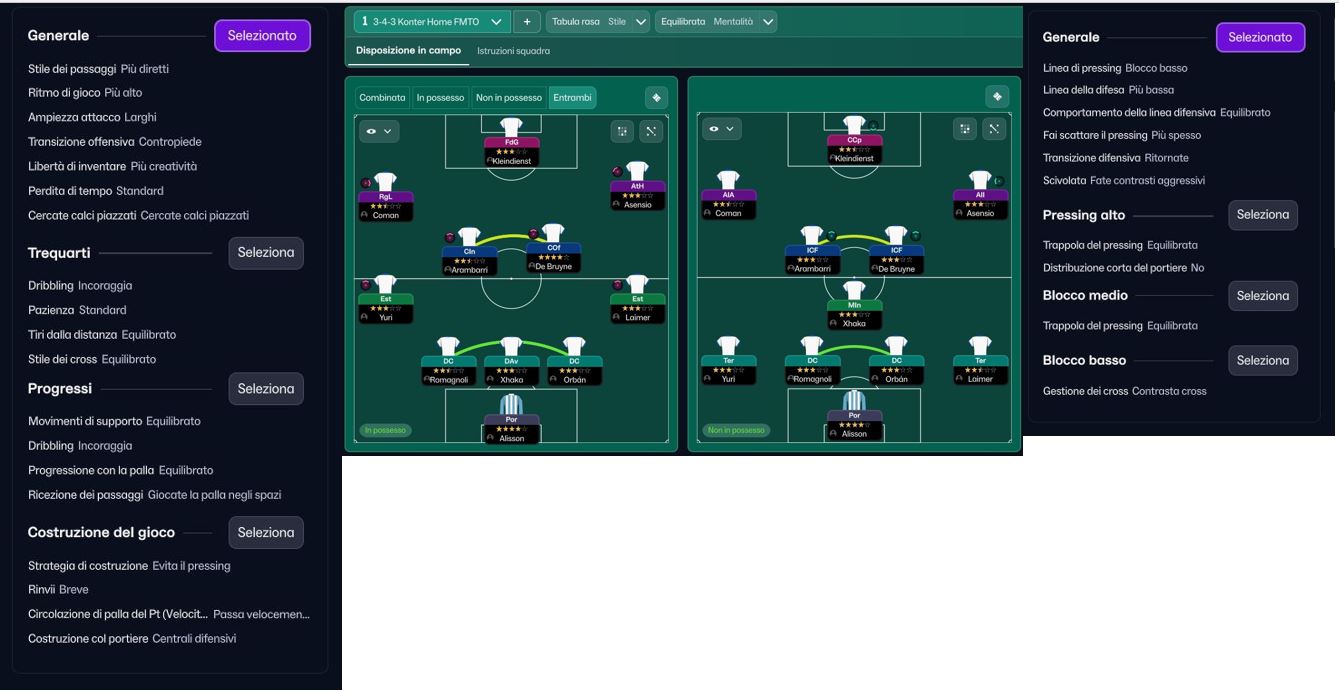
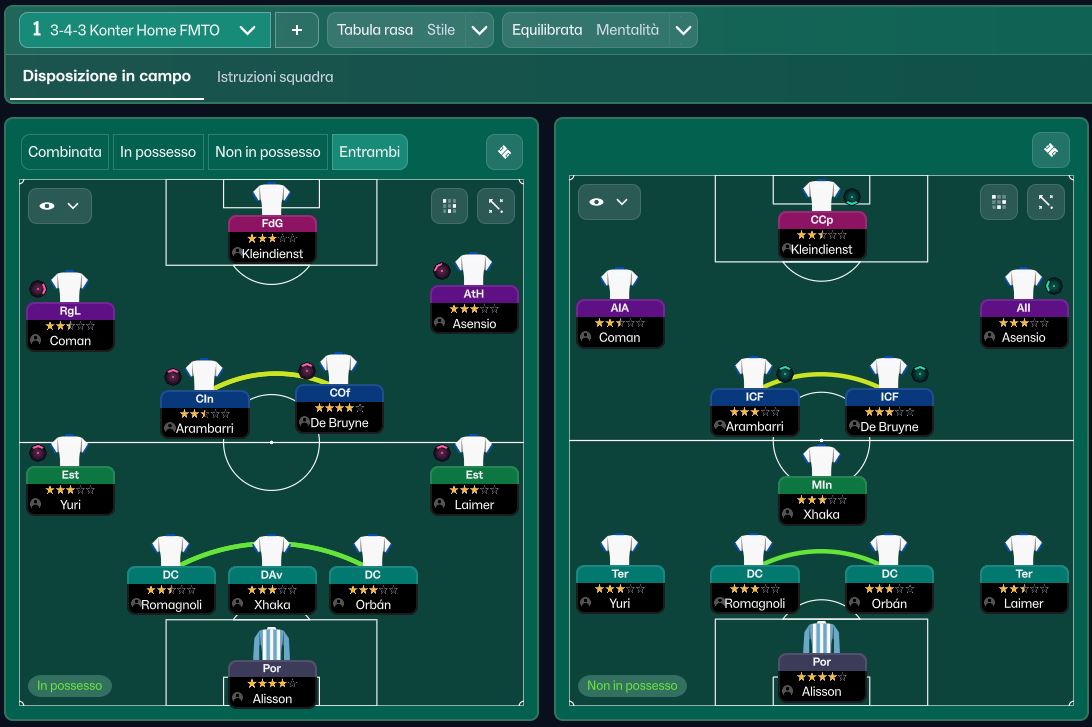
More Structured tactics
Guides for this formation
The tactical theory behind the 3-4-3: roles, instructions, and the trade-offs that decide whether the system holds up.
Playing styles
Direct, Vertical Football
Long-ball football done well in FM. When direct, vertical play is the right choice, and what the Direct Passing TI actually changes.
Read guide
Playing styles
Possession-Based Tactics in Football Manager
Build the patient, control-the-tempo style without watching your opponents counter through the gaps you leave behind.
Read guide