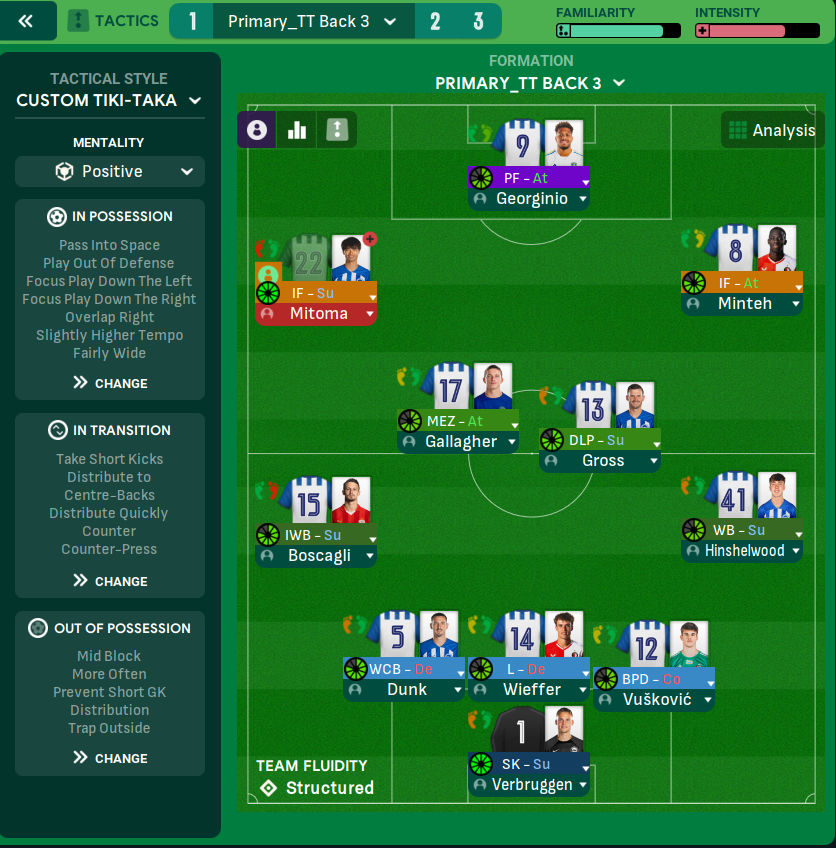
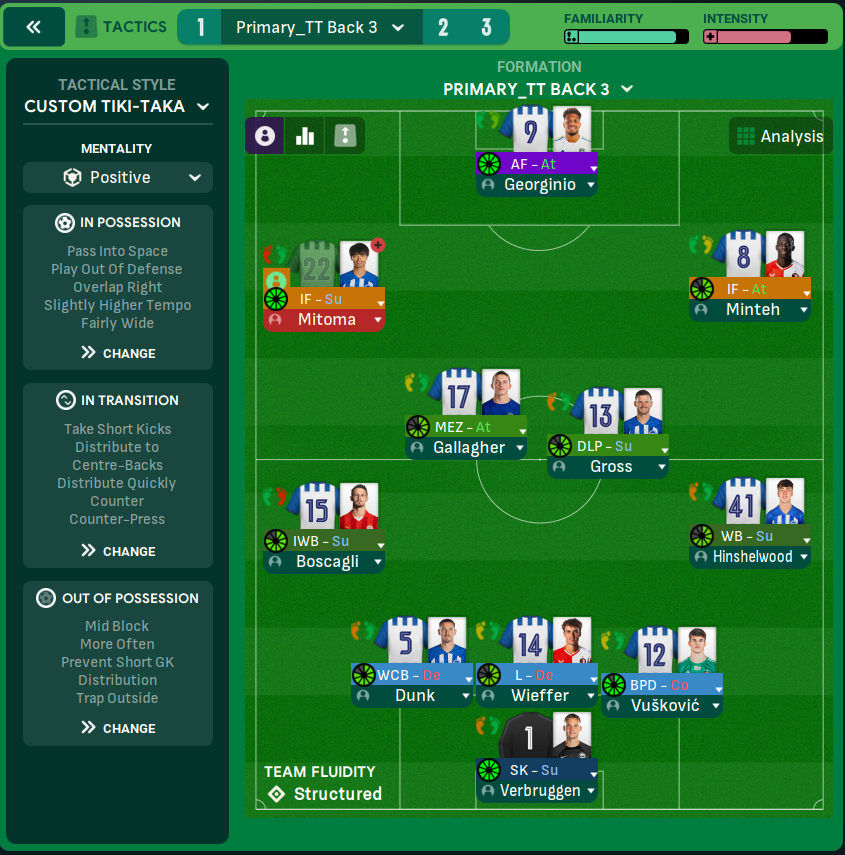
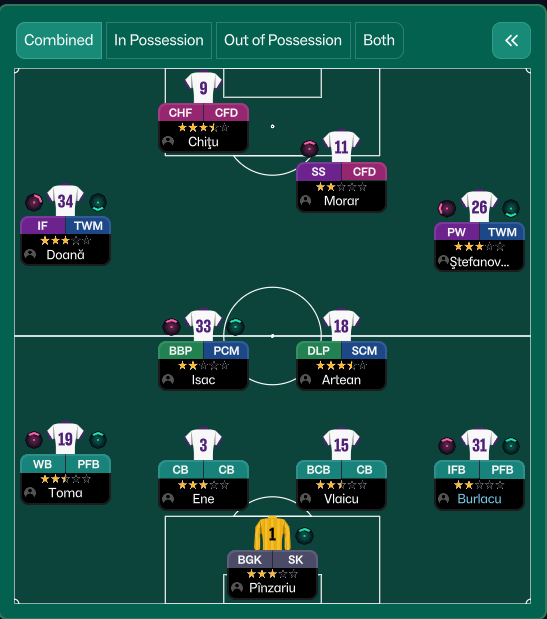
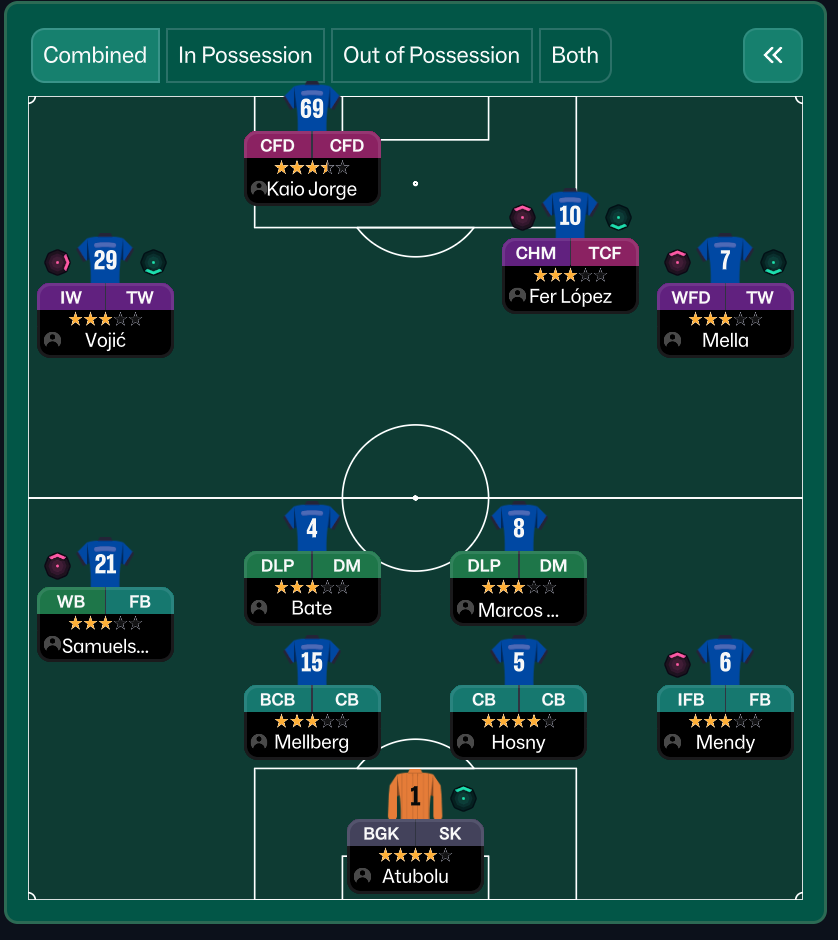
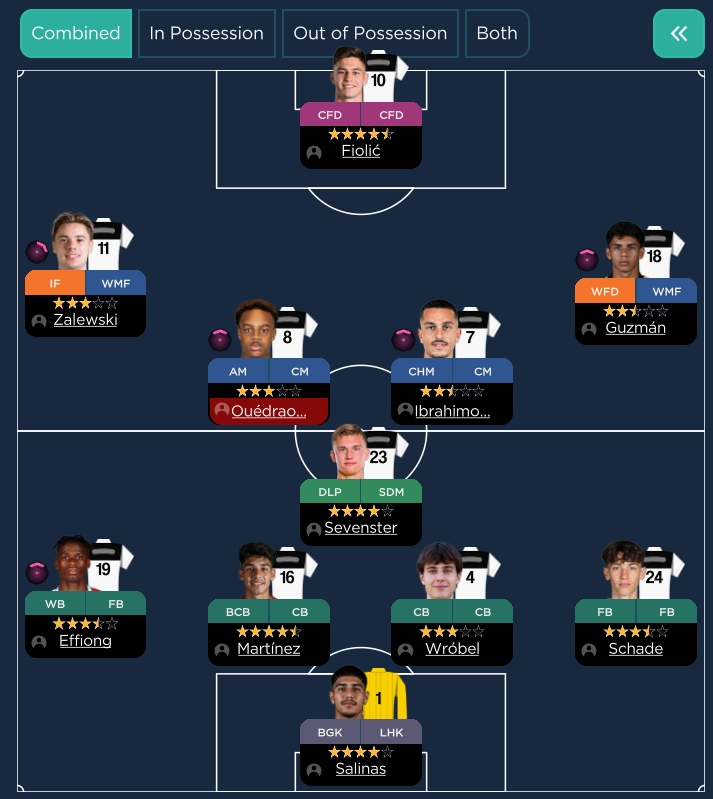
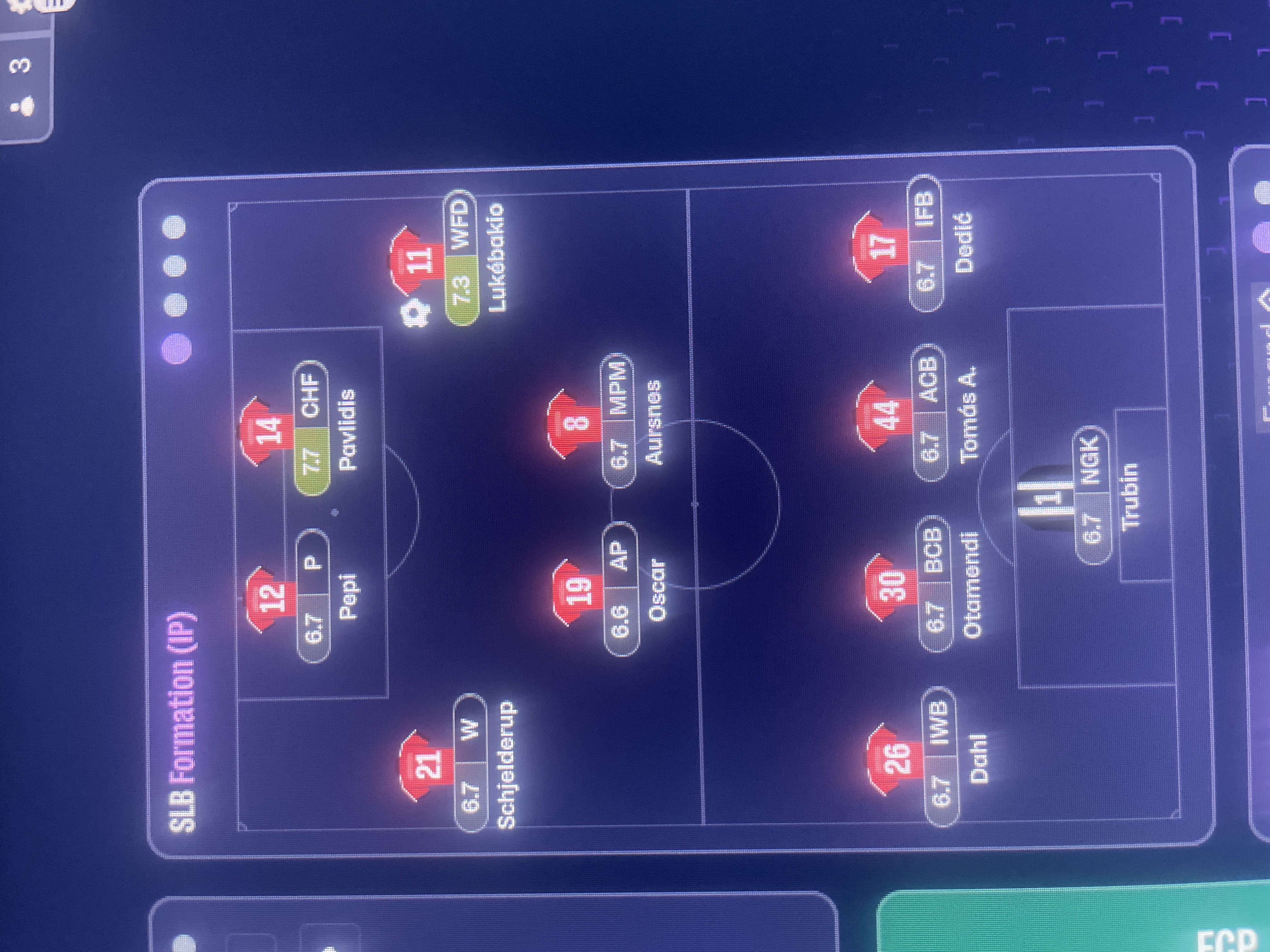
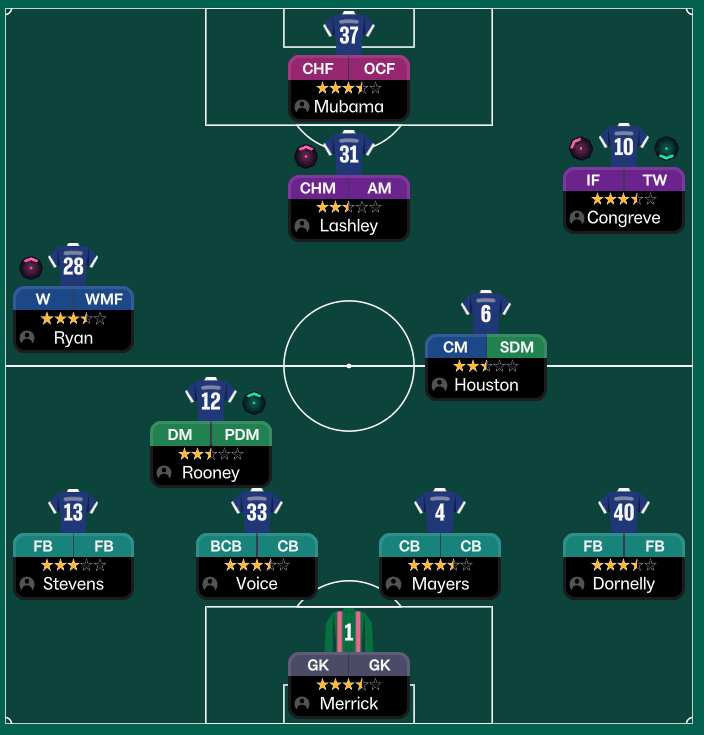
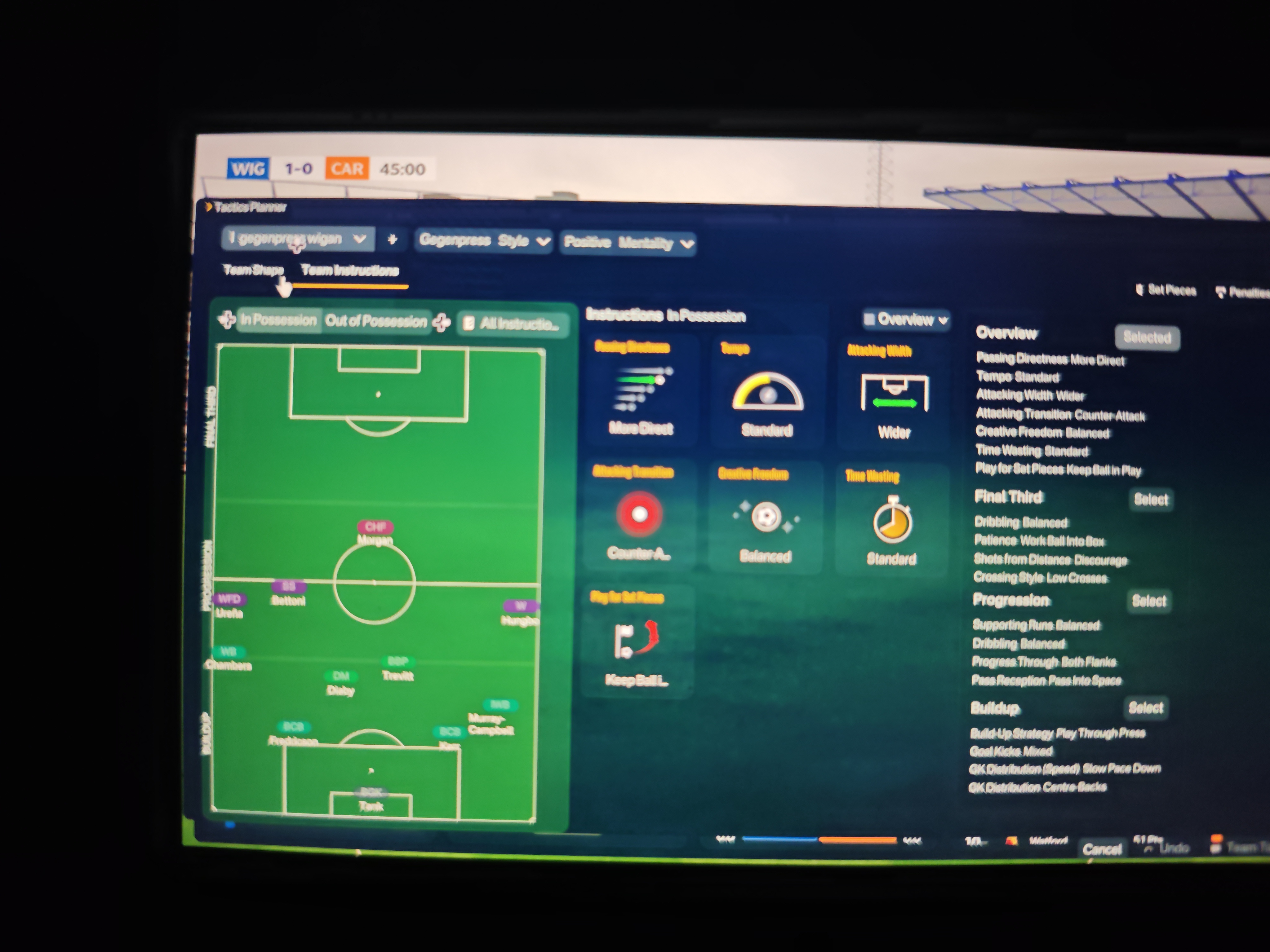
Uploaded Tactic
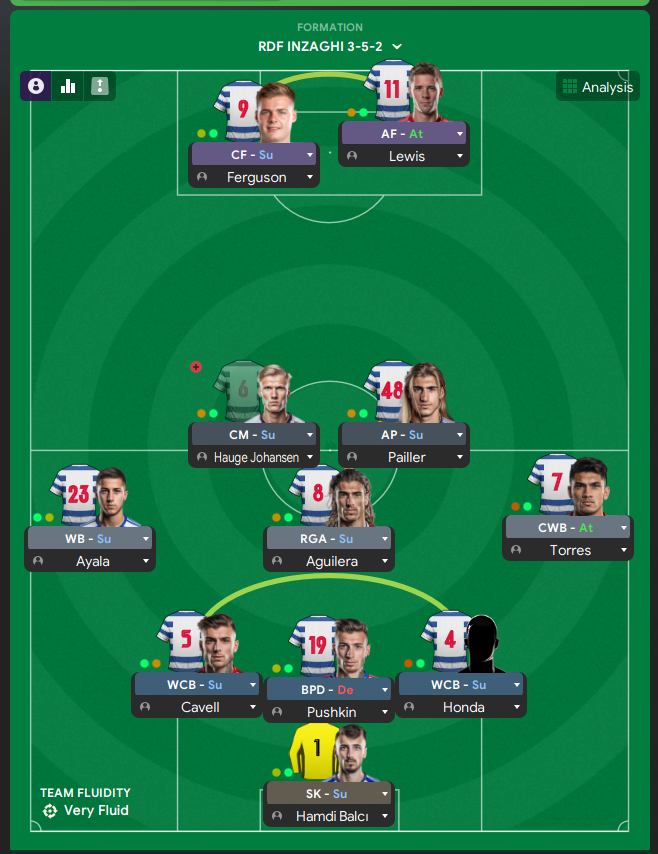
Formation & Style
Tactical Style:Inzaghi
Mentality:Positive
Formation:3-5-2
Team Fluidity:Very Fluid
In Possession
Overlap left flank
Utilize wing-backs for width
Short passing in midfield
In Transition
Counter-pressing after losing possession
Quick transitions to capitalize on counter-attacks
Out of Possession
Maintain a compact defensive shape
Press more intensely on the flanks
Team Shape Without Ball
No team shape without ball data available
Team Shape With Ball
No team shape with ball data available
Key Strengths
Solid Defensive Structure
The three center-backs provide a stable foundation, limiting space for opposing forwards.
Flexibility in Attack
The wing-backs and advanced player roles create varied attacking dynamics, making the system difficult to predict.
Effective Width
Wing-backs exploit space on the flanks, stretching the opposition and creating opportunities for overlaps.
Counter-attacking Potential
Quick transitions through the advanced forward and complete forward can lead to effective counter-attacks.
Conflicting Directions
Soft Midfield Presence
With only one central midfielder in a support role, domination in the midfield may be compromised against aggressive opponents.
Over-reliance on Wing-backs
If wing-backs are marked out of the game, the system may struggle to maintain width and attacking threat.
Lack of Depth in Central Defence
Should one of the center-backs be injured or suspended, depth becomes a concern due to only three defenders.
Limited Creativity in Midfield
Relying on just one advanced playmaker may result in predictable attacks, lacking necessary creativity.
Tactical Suggestions
Add another central midfielder
Consider using a 3-4-1-2 formation to bolster the midfield presence and improve control.
Utilize an additional forward role
Implement a second forward role that can contribute defensively, providing support in midfield during transitions.
Consider a higher defensive line
Adjusting the defensive line could enhance pressure on opponents, but ensure to prepare for counter-attacks.
Focus on set-piece training
Exploit height advantage from center-backs during set-pieces while ensuring organization when defending against them.