Uploaded Tactic
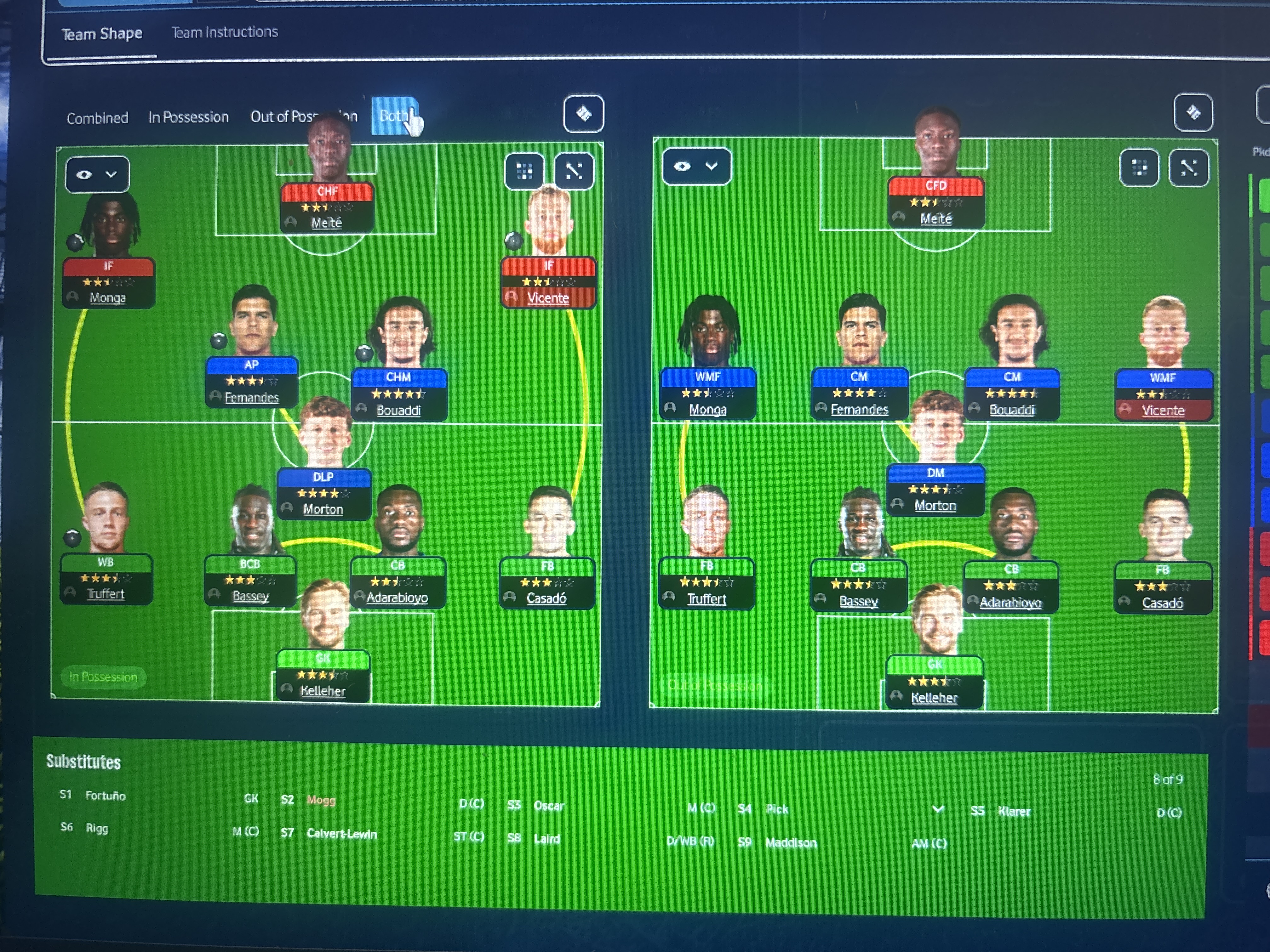
Formation & Style
Tactical Style:Fluid Counter-Attack
Mentality:Positive
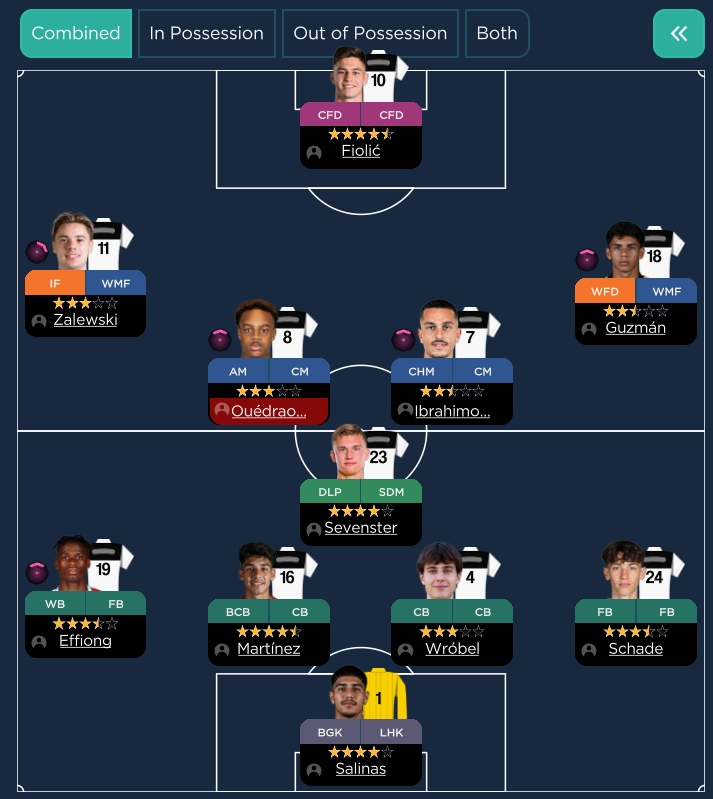
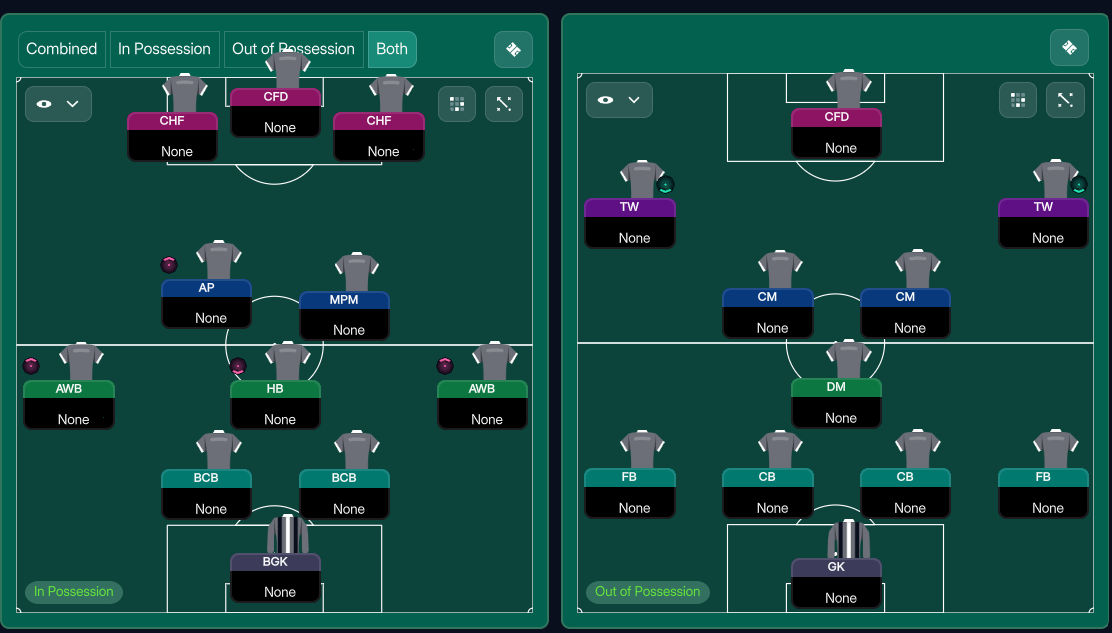
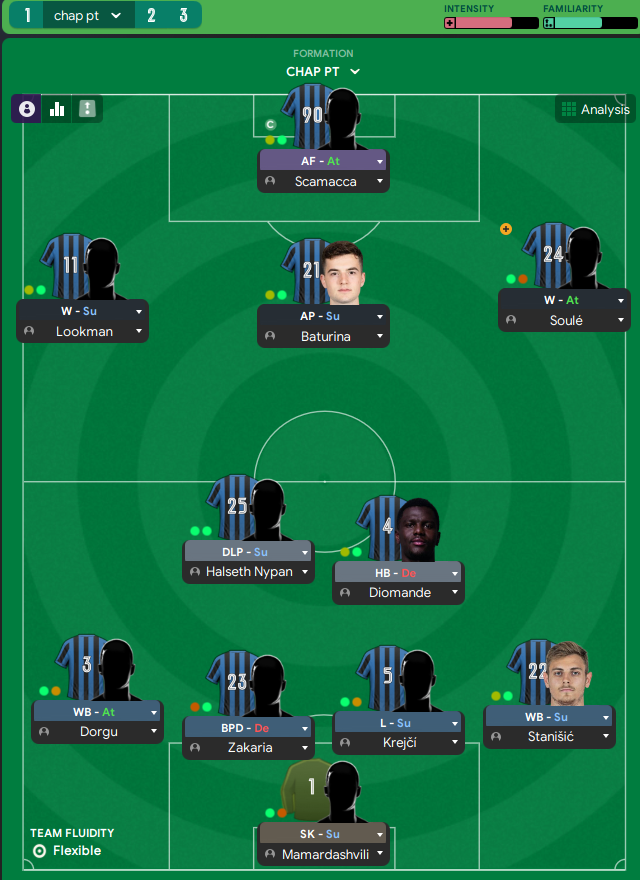
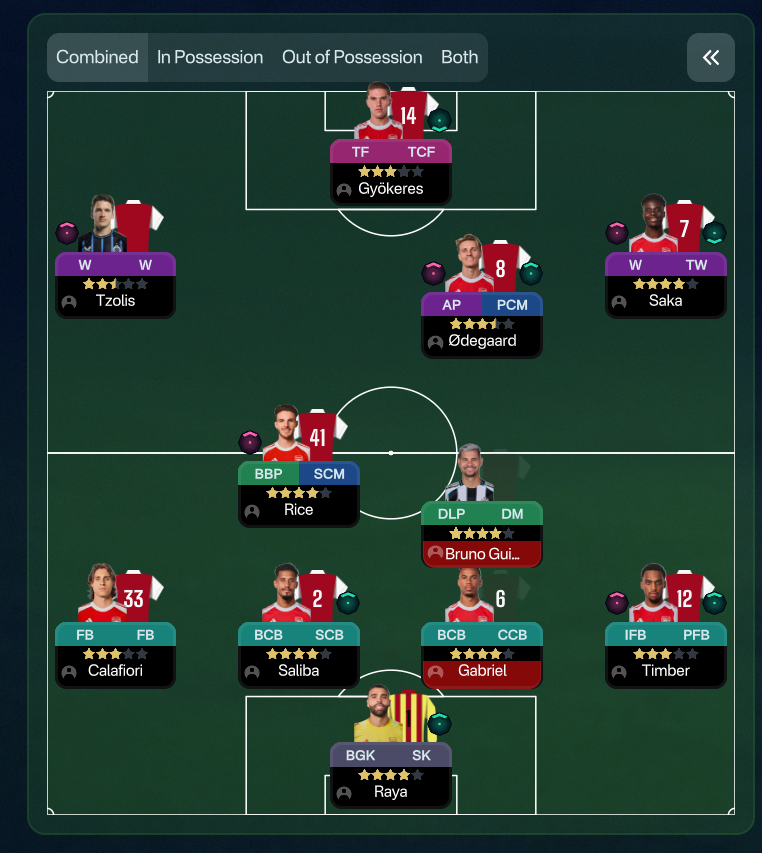
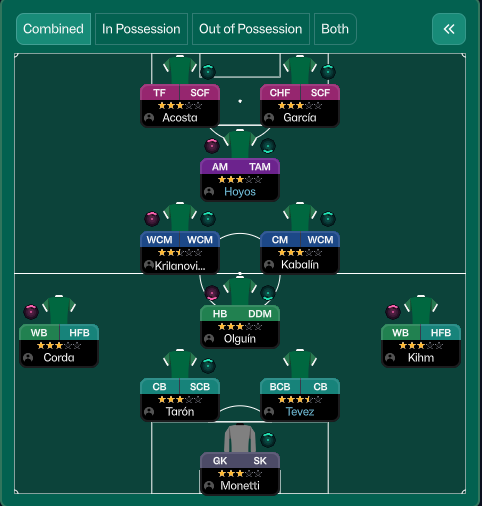
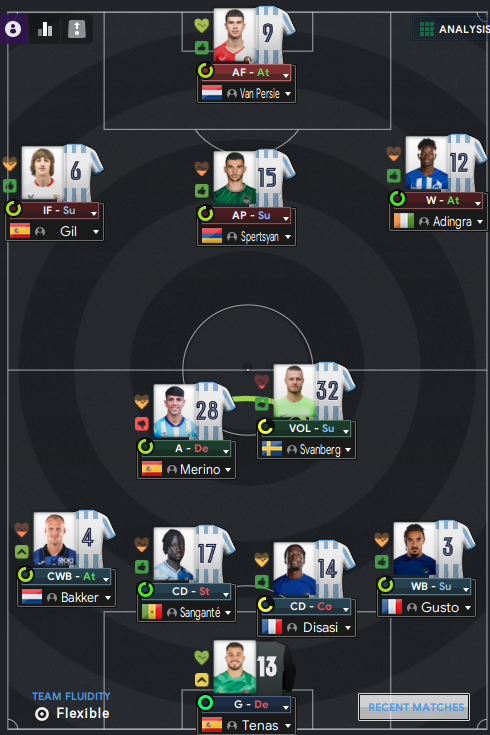
Formation:3-5-2
Team Fluidity:Structured
In Possession
Play Out of Defence
Shorter Passing
Work Ball into Box
Focus Play down the Middle
In Transition
Counter-Press
Counter
Out of Possession
Higher Line of Engagement
Higher Defensive Line
Prevent Short GK Distribution
Team Shape Without Ball
Shape:Compact
Description:The team maintains a compact shape with three defenders and solid midfield support.
Evidence:CB (De) at [2,2],[2,3],[2,4] and DM (Su) at [3,3] ensuring defensive stability.
Team Shape With Ball
Shape:Expansive
Description:Utilizes the width provided by wing-backs and inside forwards to stretch the opposition.
Evidence:WB (Su) at [2,1] and [2,5] with IF (At) at [6,2] and [6,4] creating width.
Phase Description
Attacking Play
Utilizes width from wing-backs while ensuring midfield support from the DLP and AP.
Defensive Transition
Intense pressing after losing possession to quickly regain control of the ball.
Main Focus
Create quick transitions and exploit space left by opponents.
Key Strengths
Solid Defensive Core
Three central defenders provide defensive solidity, complemented by wing-backs.
Dynamic Wing-Backs
Wing-backs can transition effectively between defence and attack, contributing in both phases.
Fluid Midfield Control
A mix of deep-lying and advanced playmakers ensures control in the midfield.
Conflicting Directions
High Defensive Line vs. Quick Counter Attacks
A higher defensive line may leave gaps against quick, direct teams.
Inverted Wing-Backs vs. Width Necessity
Overlapping runs from wing-backs might conflict with their supporting role.
Positive Mentality Risks
A positive mentality could lead to overcommitment in attacks, exposing the defence.
Tactical Suggestions
Consider Wider Attacking Shape
Expanding the width of the attack might stretch opposition defences even more.
Adjust Defensive Width
Tighten the defensive shape to prevent exploitations from pacey wingers.
Utilize Counter-Attack More Effectively
Maximize counter-attacking opportunities to exploit gaps when opponents are out of shape.