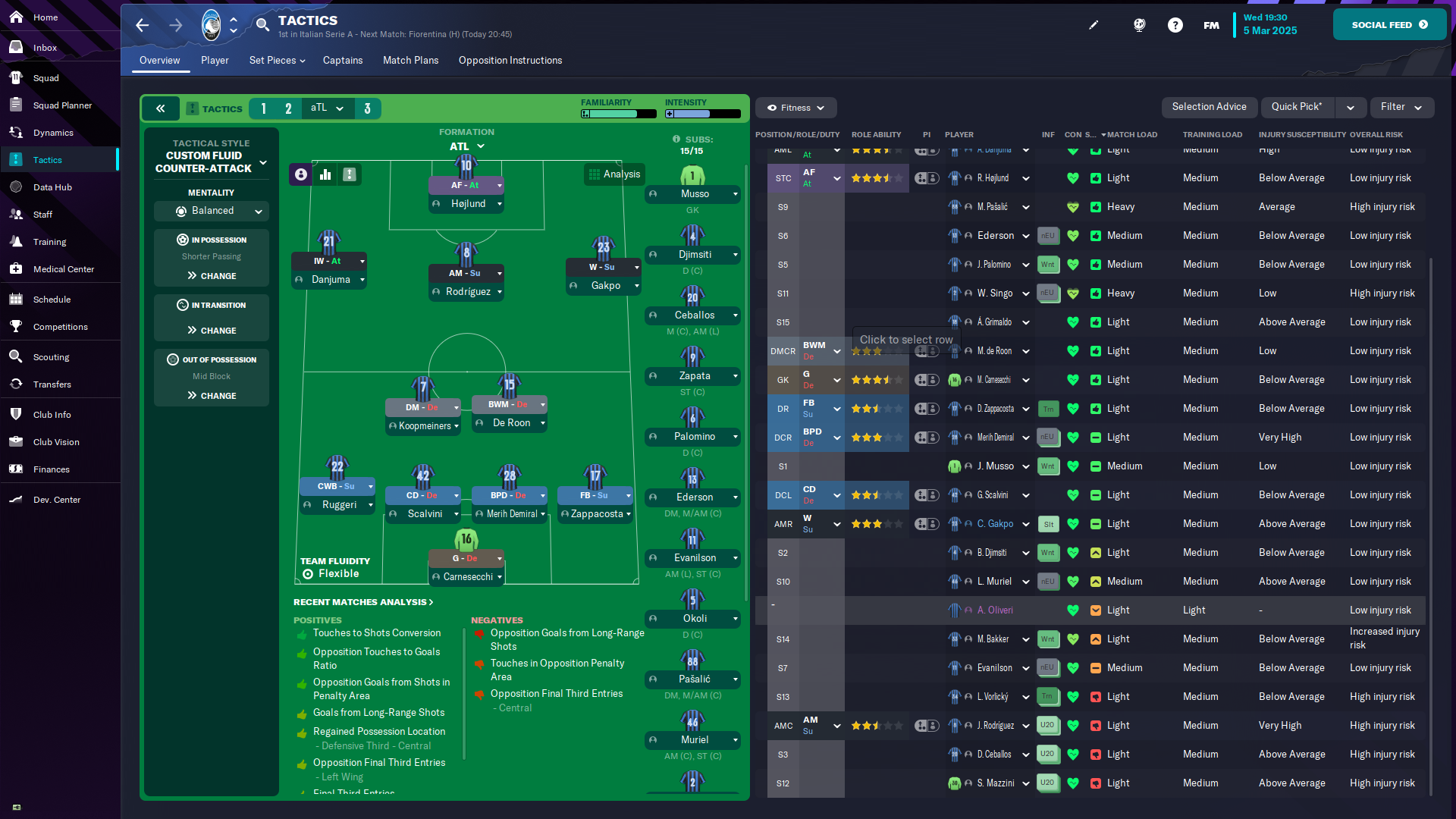
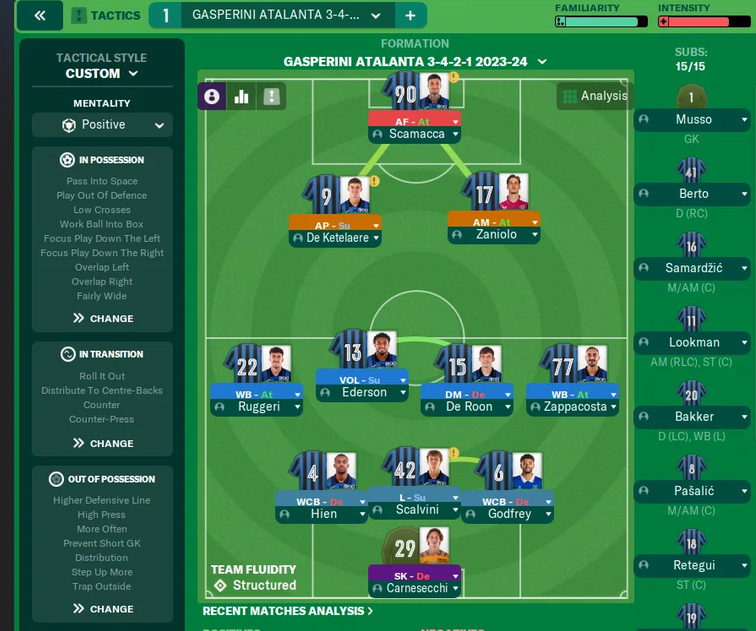
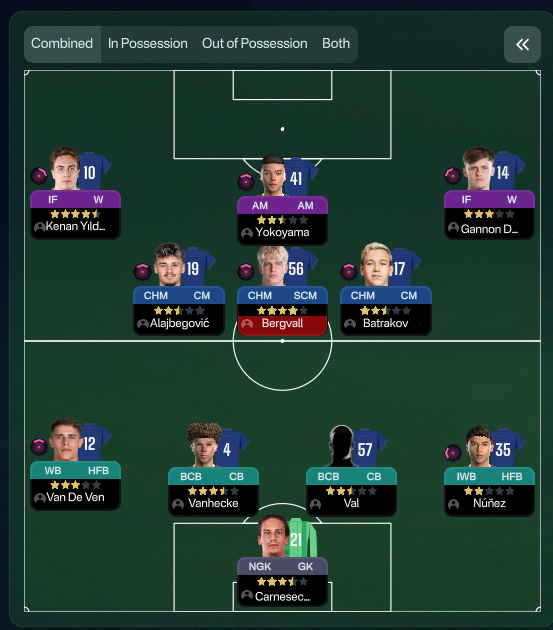
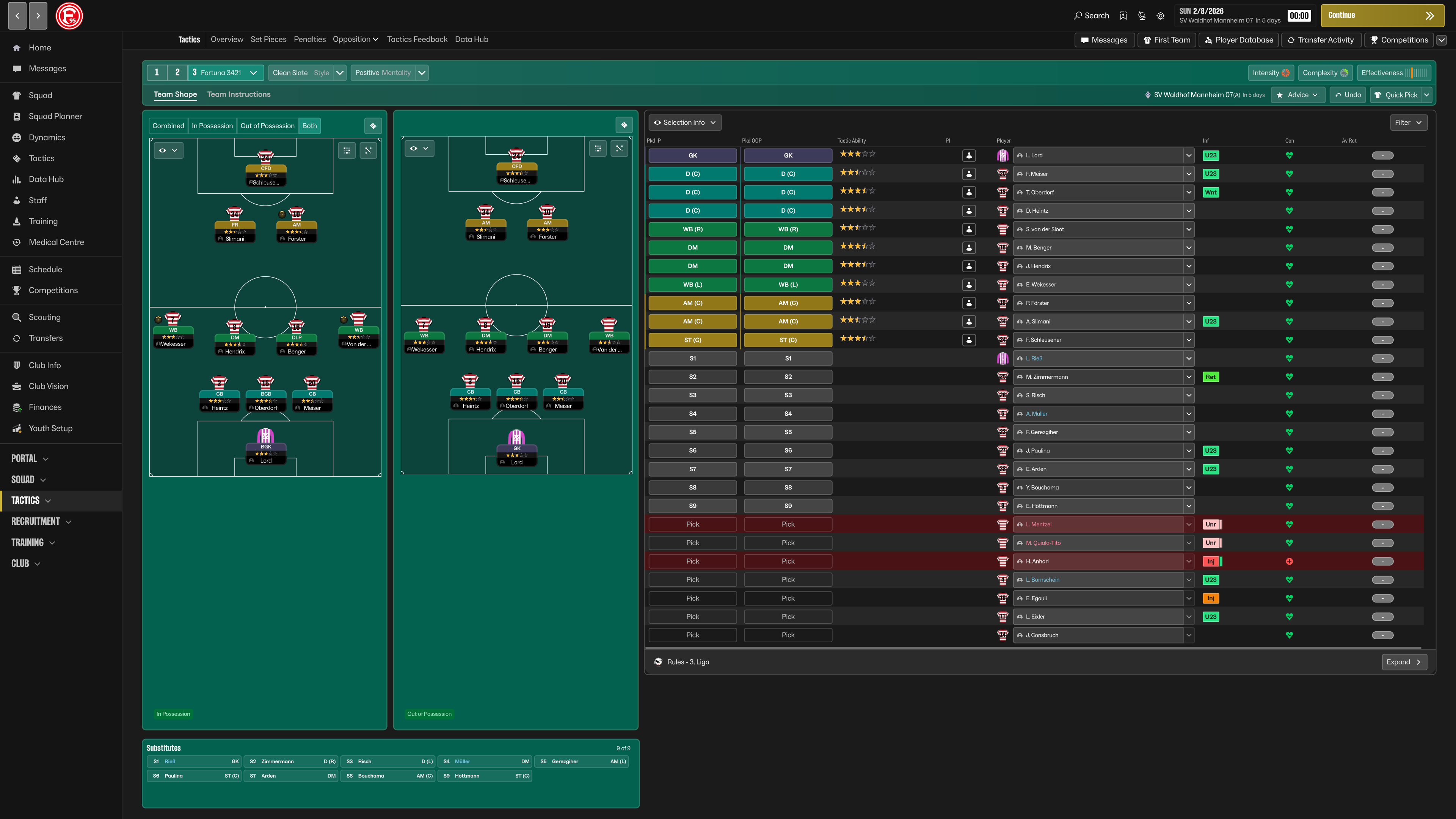
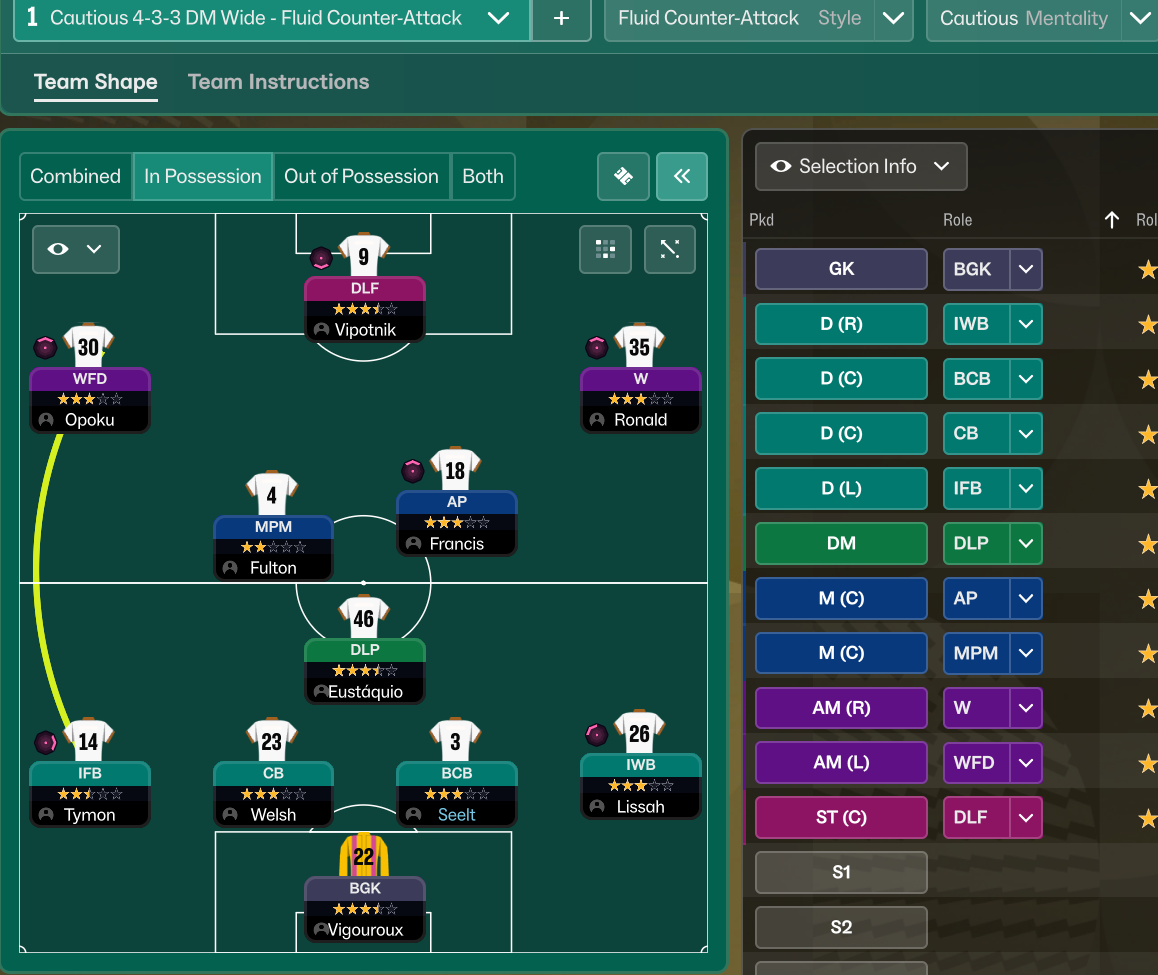
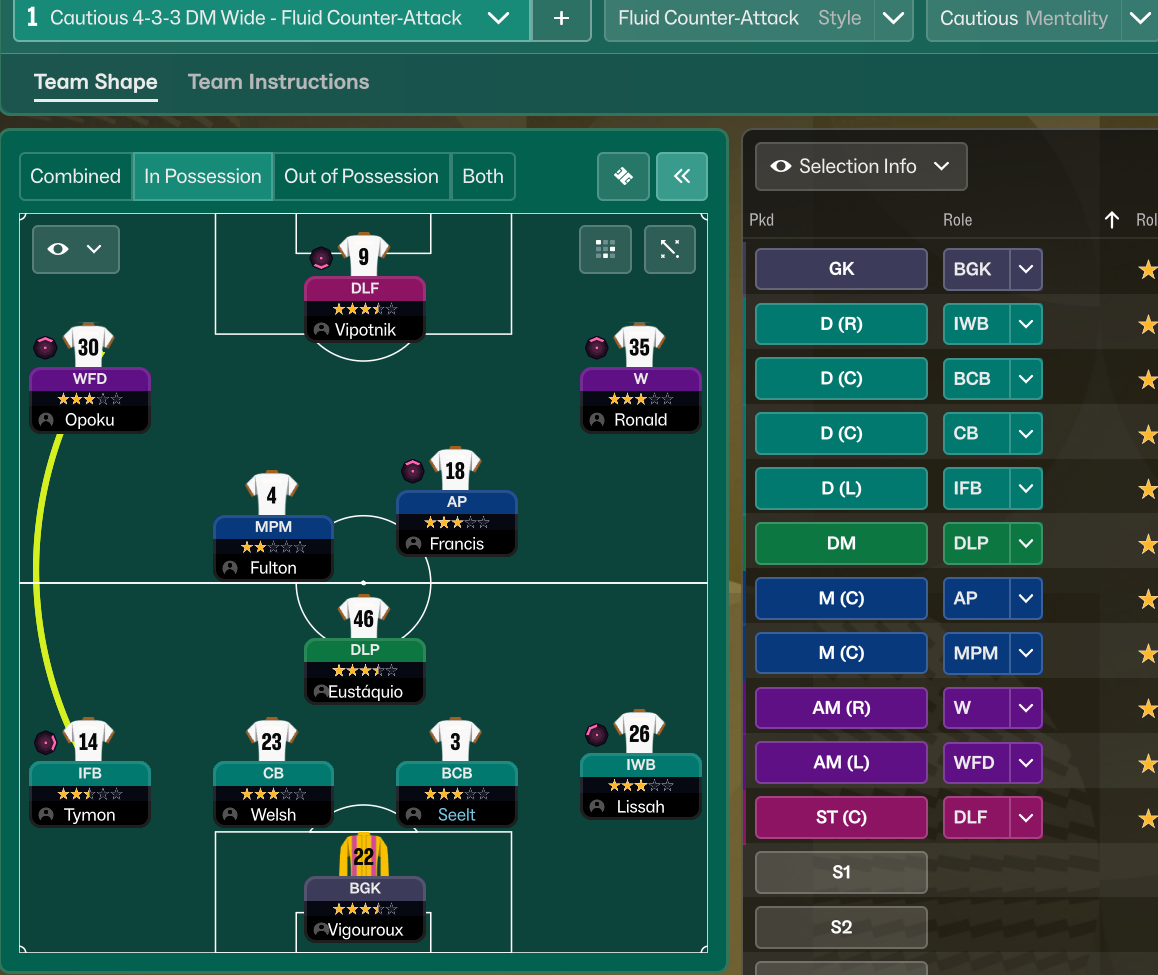
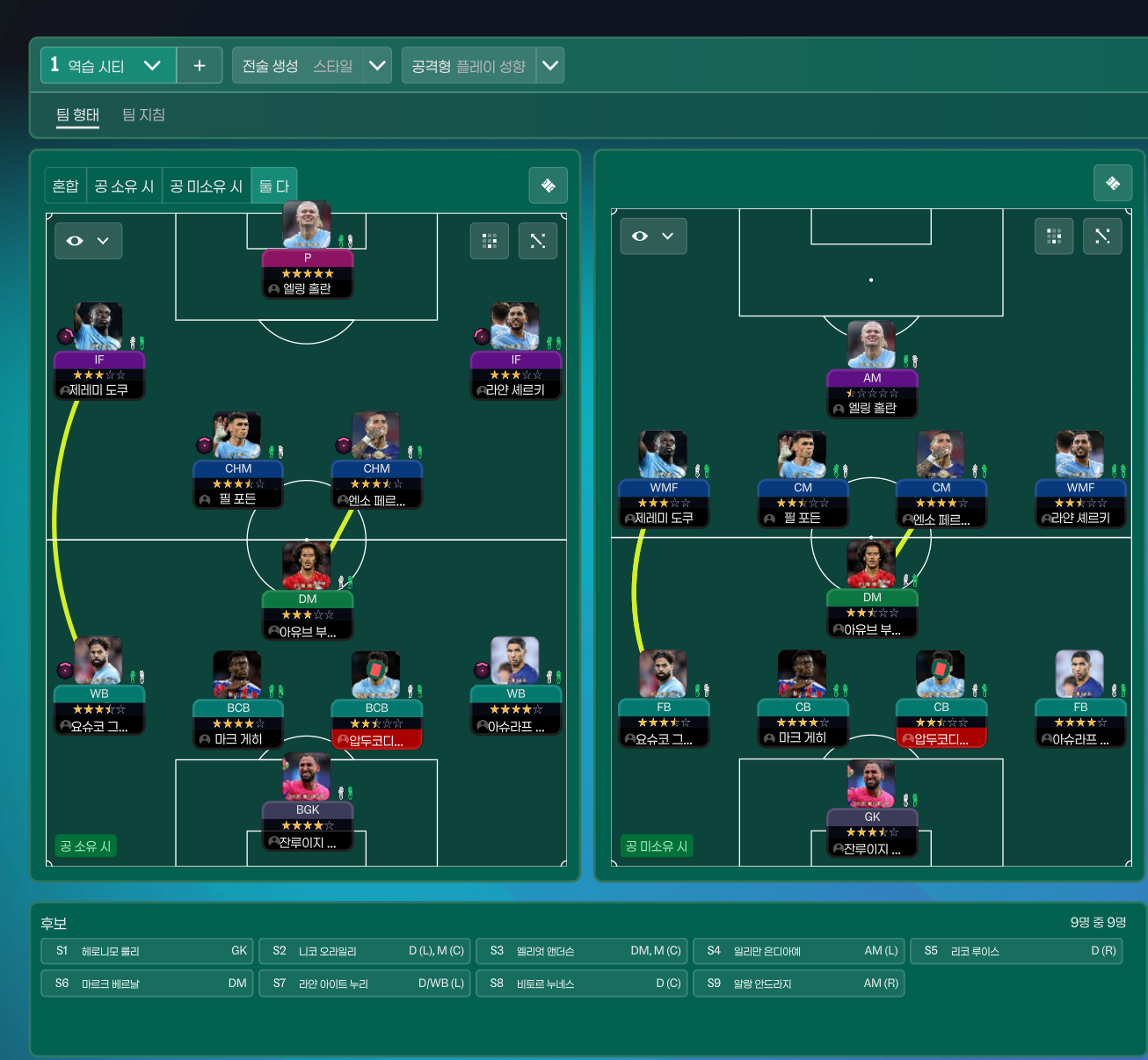
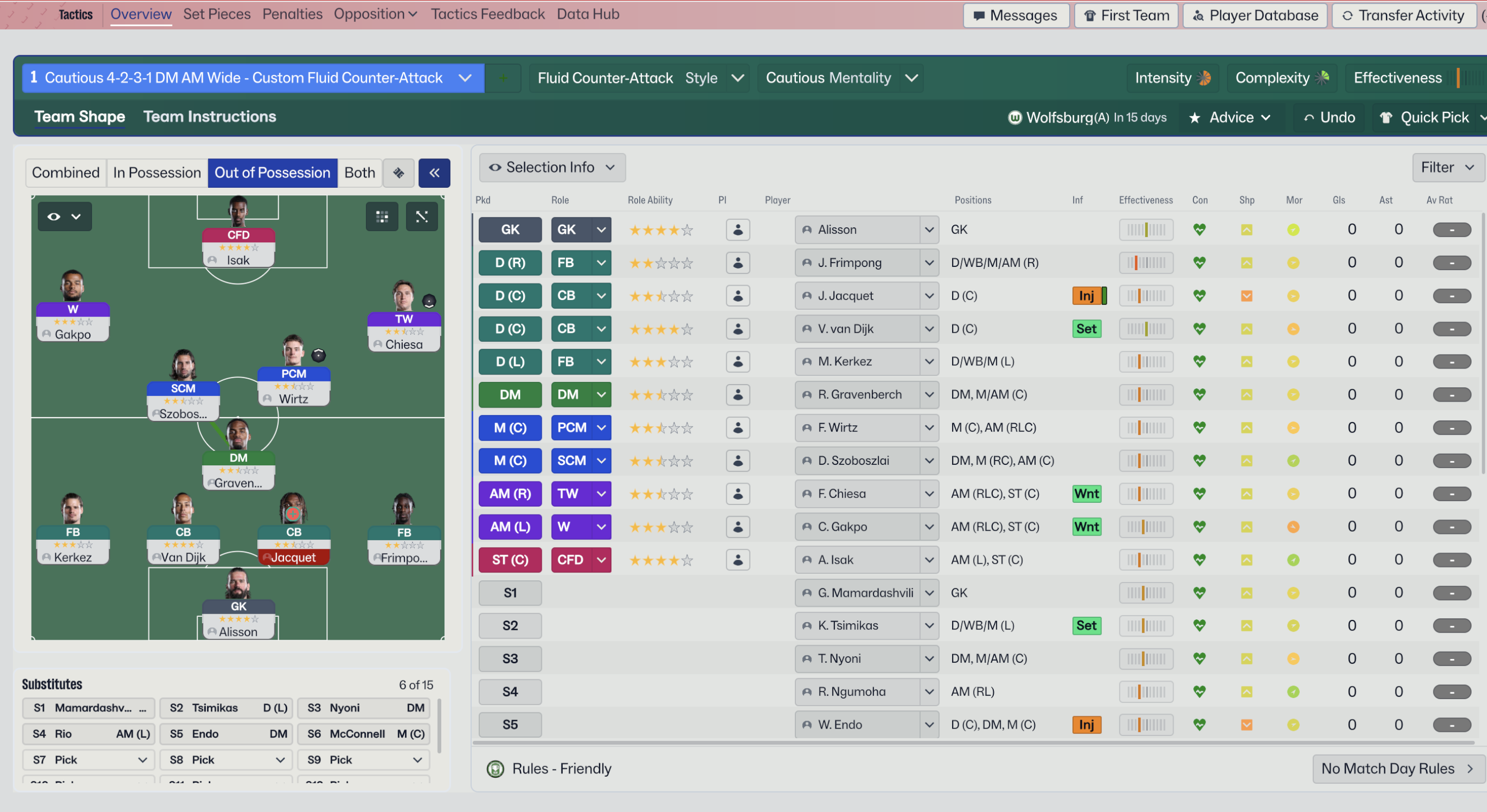
3-4-2-1
Exploit wide areas while maintaining numerical superiority in central zones. Utilizing wingers effectively stretches opposition defenses.
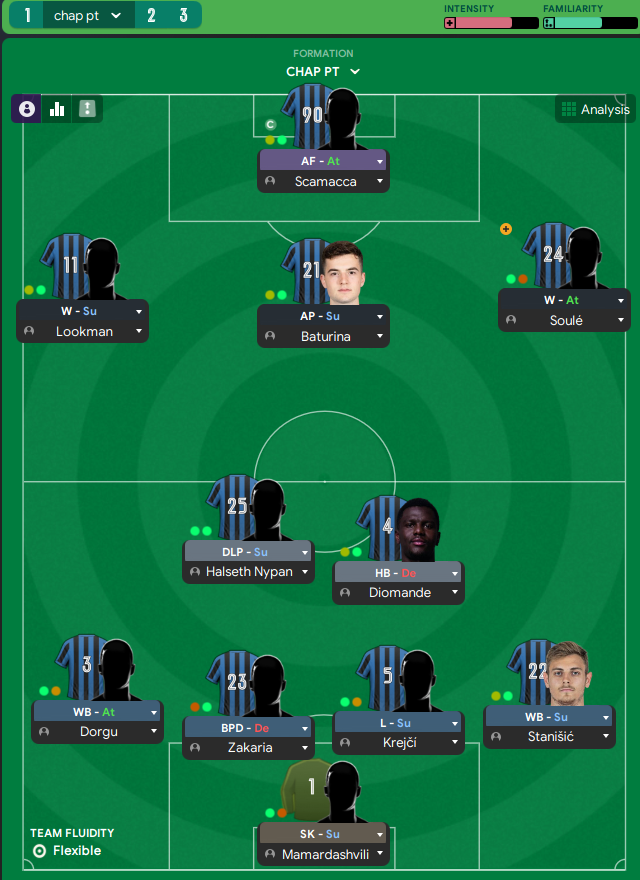
Loading tactical analysis...
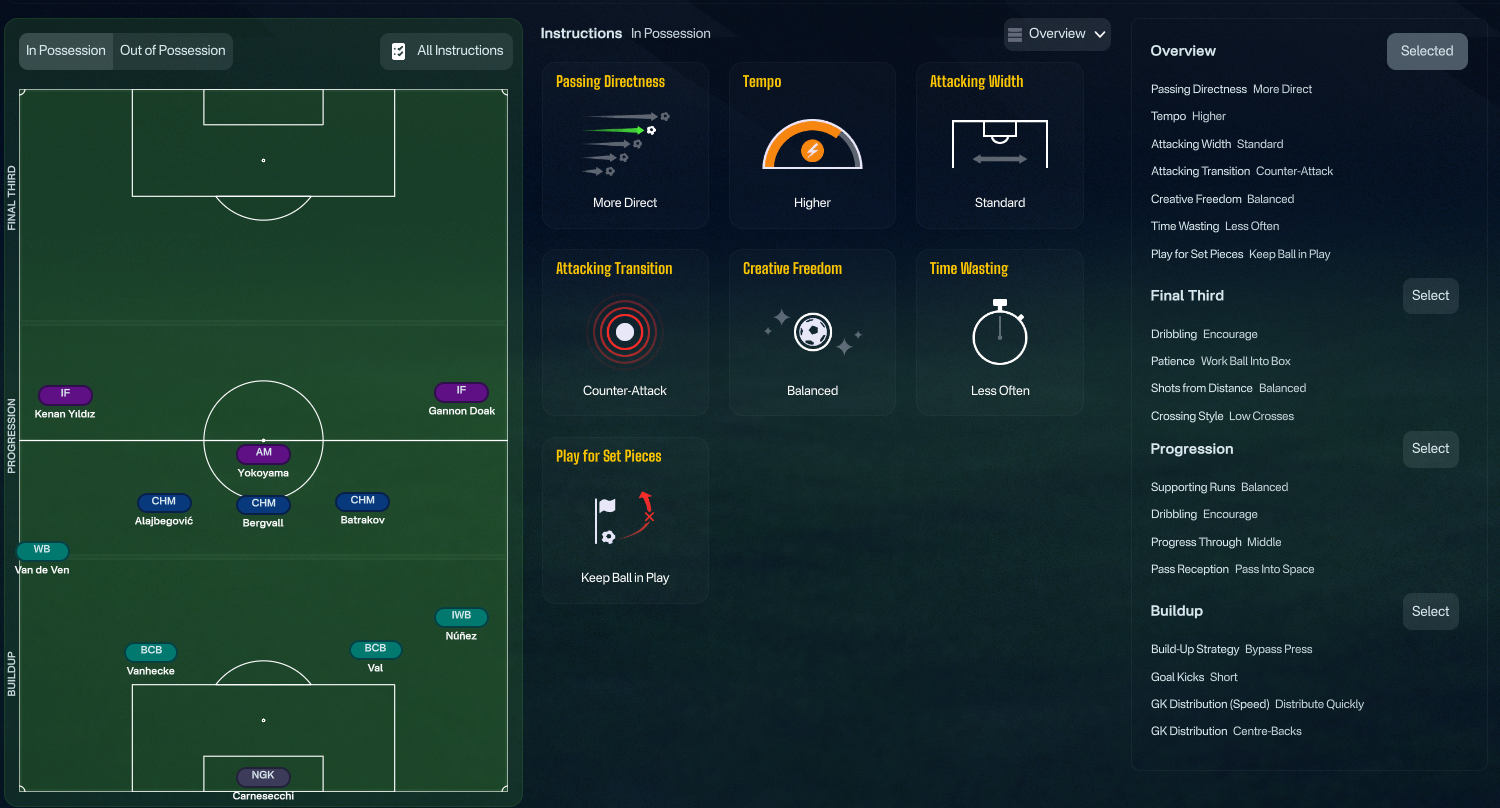
Fluid Counter-Attack
Positive
3-4-2-1
Flexible
Focus Play Down the Flanks
Create Overlap
Work Ball Into Box
Counter
Counter-Press
Higher Line of Engagement
Trigger Press More Often
Much Higher Defensive Line
GK
Sweeper Keeper
Support
CB
Ball-Playing Defender
Defend
L
Libero
Defend
WB
Wing-Back
Attack
FB
Half Back
Defend
CM
Deep-Lying Playmaker
Support
AM
Advanced Playmaker
Support
W
Winger
Attack
ST
Advanced Forward
Attack
Utilizing width to stretch the opponent's defence, combined with quick, incisive passing to create chances.
Quickly transition from pressing to regaining possession, with a focus on counter-attacks.
Exploit wide areas while maintaining numerical superiority in central zones.
Compact 3-4-3
The team maintains central compactness while the wing-backs cover wide areas pressing opposition full-backs.
BPD-D at [2,3] and HB-D at [3,2] help stabilize the back line.
Dynamic 3-4-2-1
Fluid movement from wing-backs and advanced players allows for diverse attacking patterns.
WB-A at [2,1] and W-A at [5,3] create width and depth in forward play.
Utilizing wingers effectively stretches opposition defenses.
W-A at [5,3] and WB-A at [2,1] create space.
The combination of a Deep-Lying Playmaker and Half Back allows solid ball retention and distribution.
DLP-S at [3,3] and HB-D at [3,2] provide stability.
When playing a high defensive line, quick opponents can exploit space behind.
Higher Defensive Line instruction with HB-D at [3,2].
If wing-backs are pushed too far forward, the team might lack defensive cover.
WB-A at [2,1] and [2,5] can leave gaps.
Defensive Line
High line exposes the defence to quick opponents.
Higher Defensive Line instruction with susceptible wide areas.
Midfield Distribution
If the DLP is marked out, the team may struggle to build play.
DLP-S at [3,3] reliance on passes through central areas.
DLP-S and HB-D
Together, they provide balance in midfield and support defensive transitions.
DLP-S at [3,3] with HB-D at [3,2].
WB-A and AF-A
The forward runs of the wing-back create space for the advanced forward.
WB-A at [2,1] allows AF-A at [6,3] to exploit gaps.
How can we adapt if the opponent employs a counter-attacking strategy?
Should we consider a rotation for the midfield duo for better balance?
What additional tactical instructions can support ball retention?
The tactical theory behind the 3-4-2-1: roles, instructions, and the trade-offs that decide whether the system holds up.
Counter-Press, Regroup, Stand Off, Trigger Press: what each pressing instruction does in FM and how to pair them without contradicting.
The pairing rule for Defensive Line and Line of Engagement, all 9 combinations, and the gap that costs goals.
What Higher Tempo, Wider, and Narrower actually do in FM, plus the dial contradictions and antipatterns players run into most often.