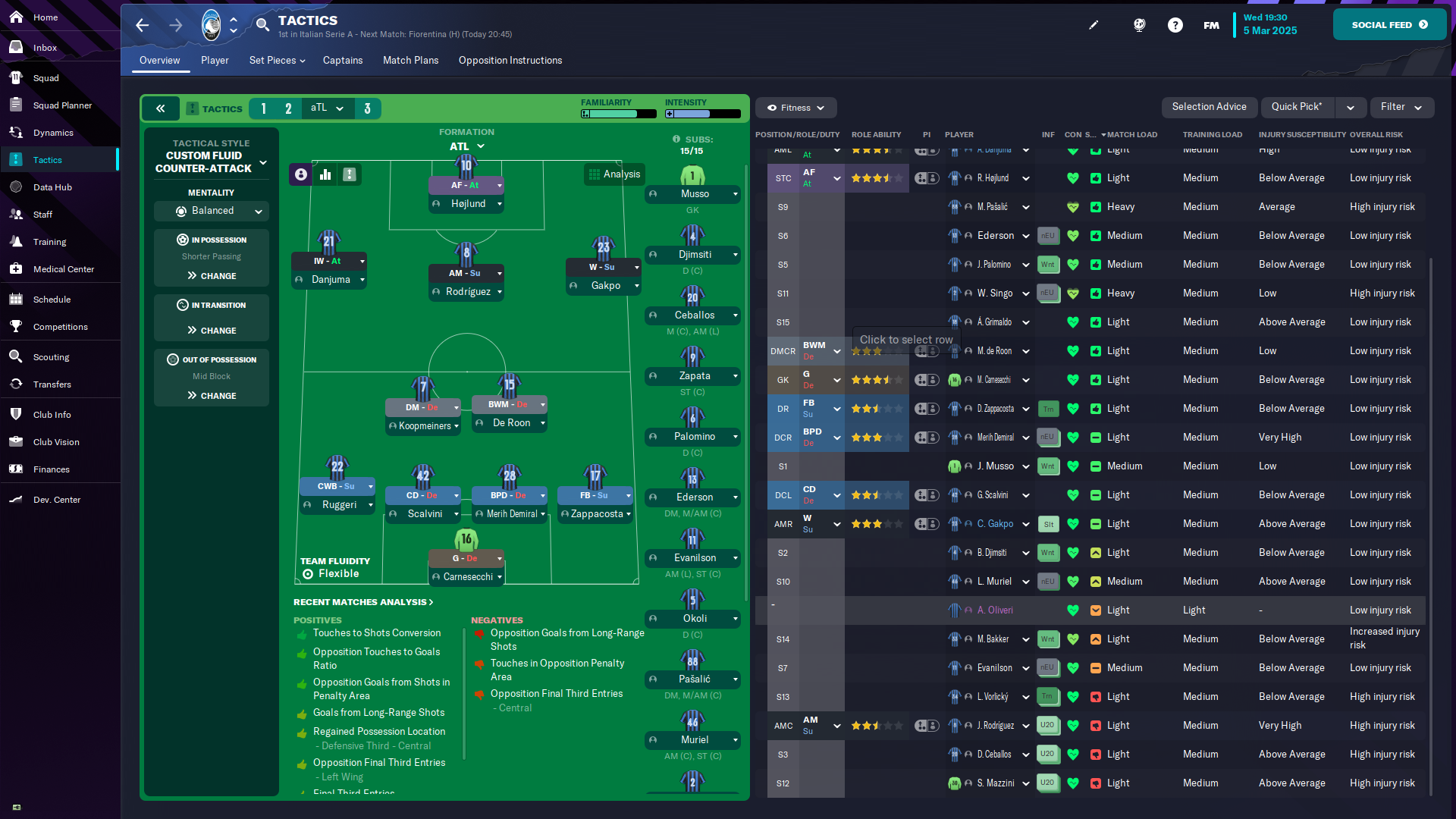
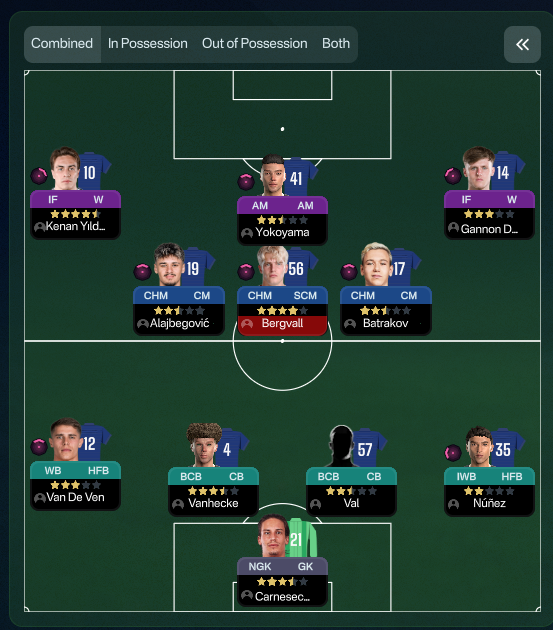
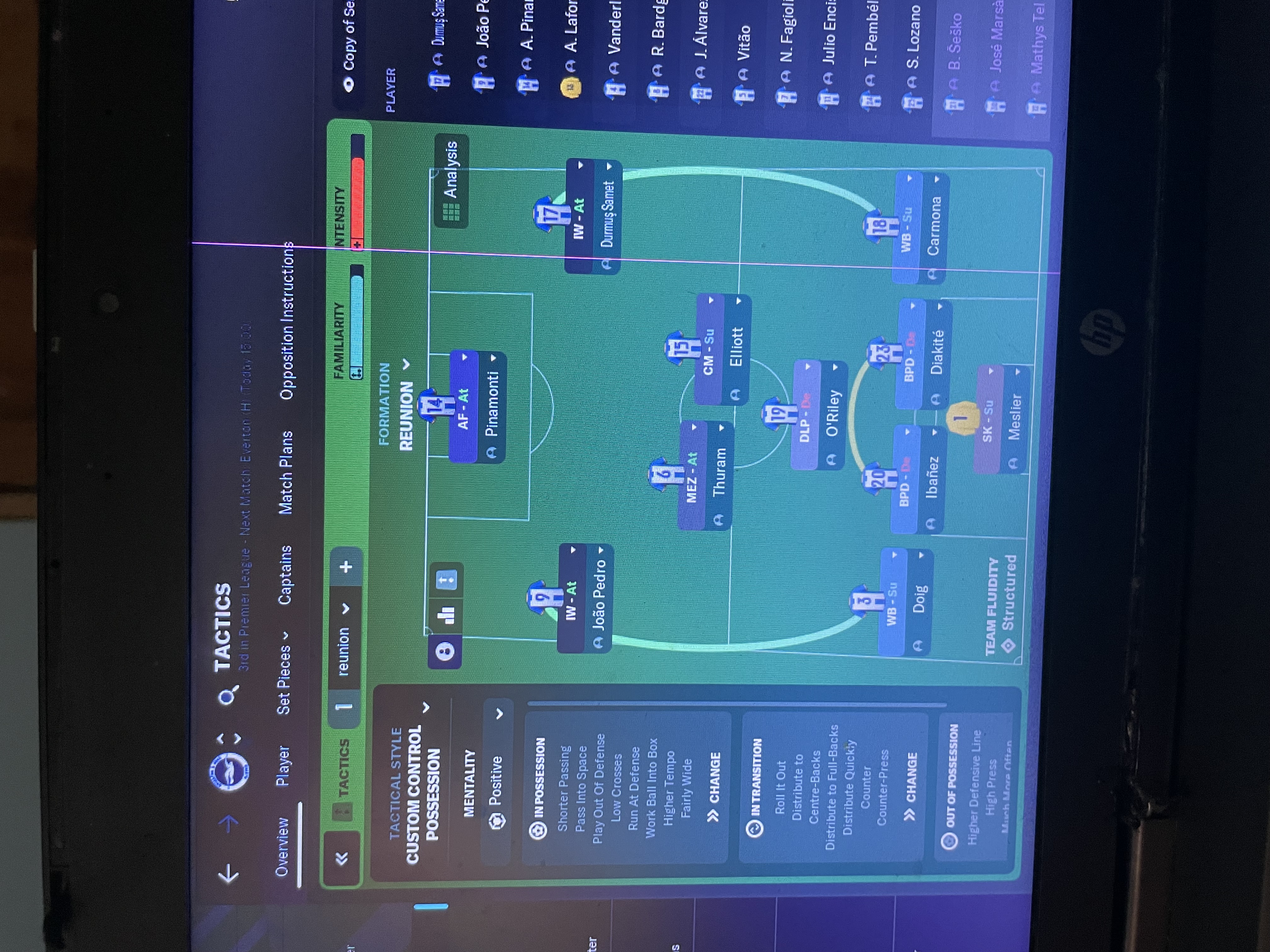
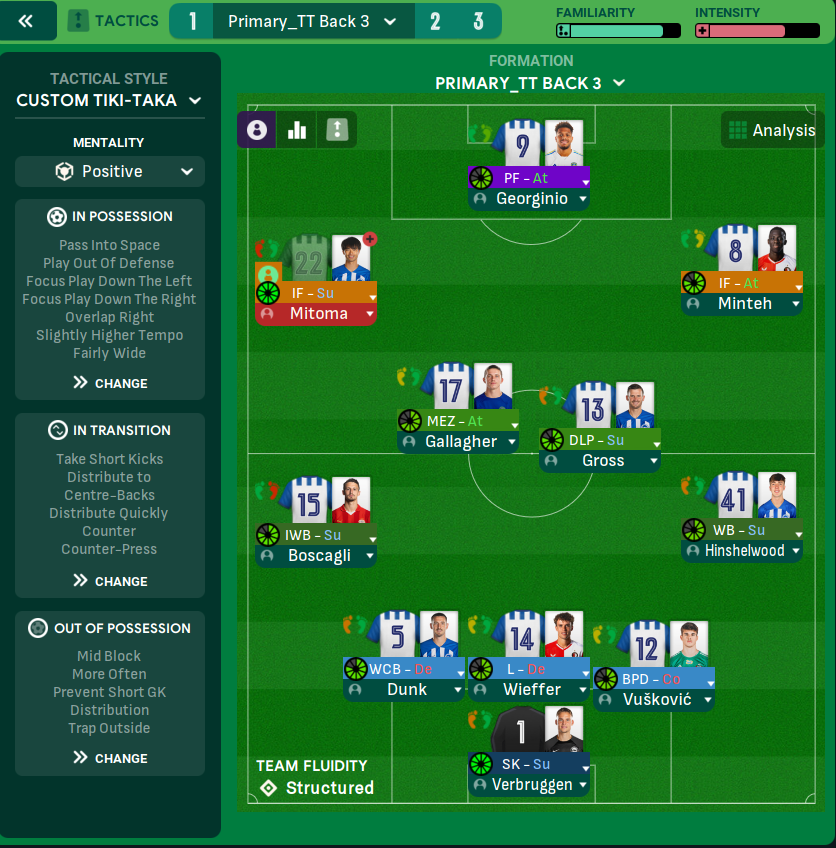
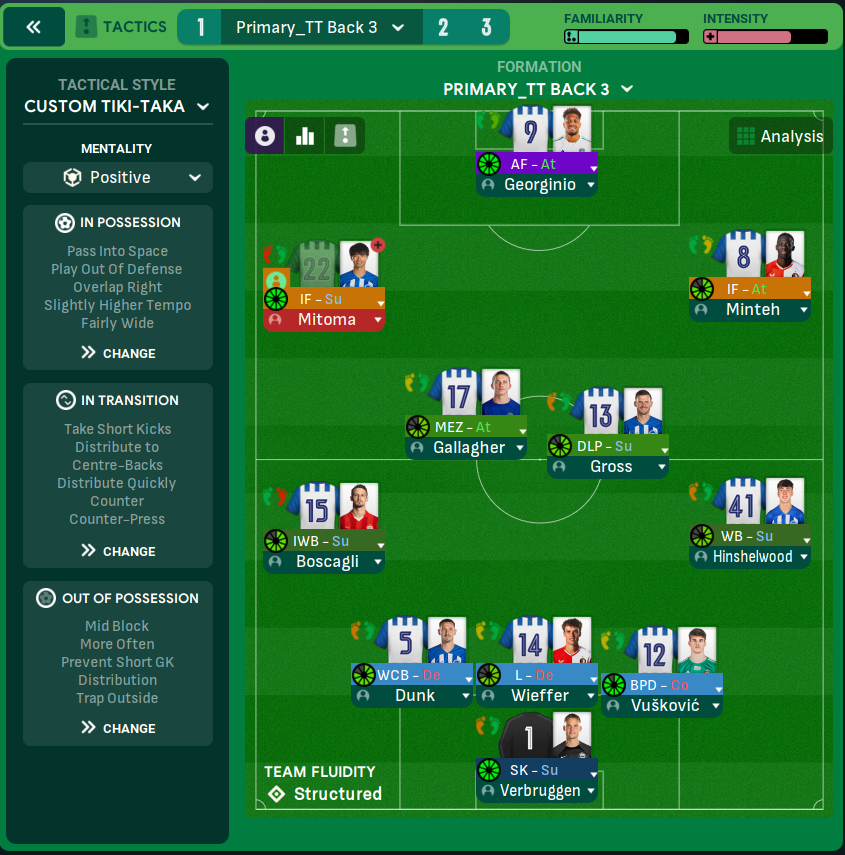
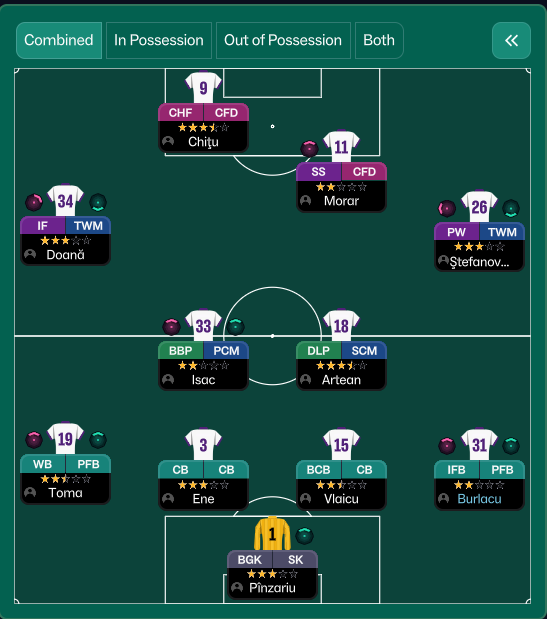
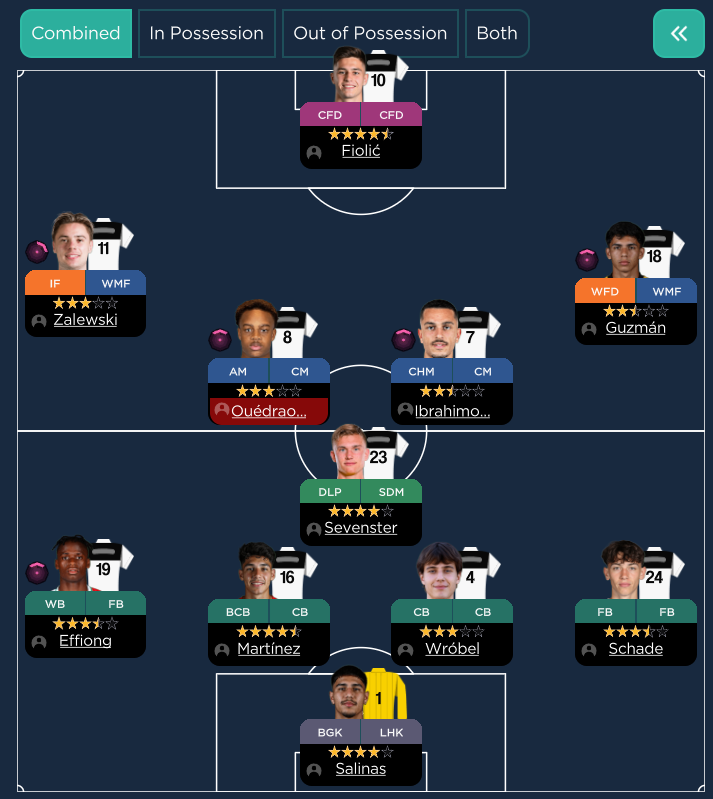
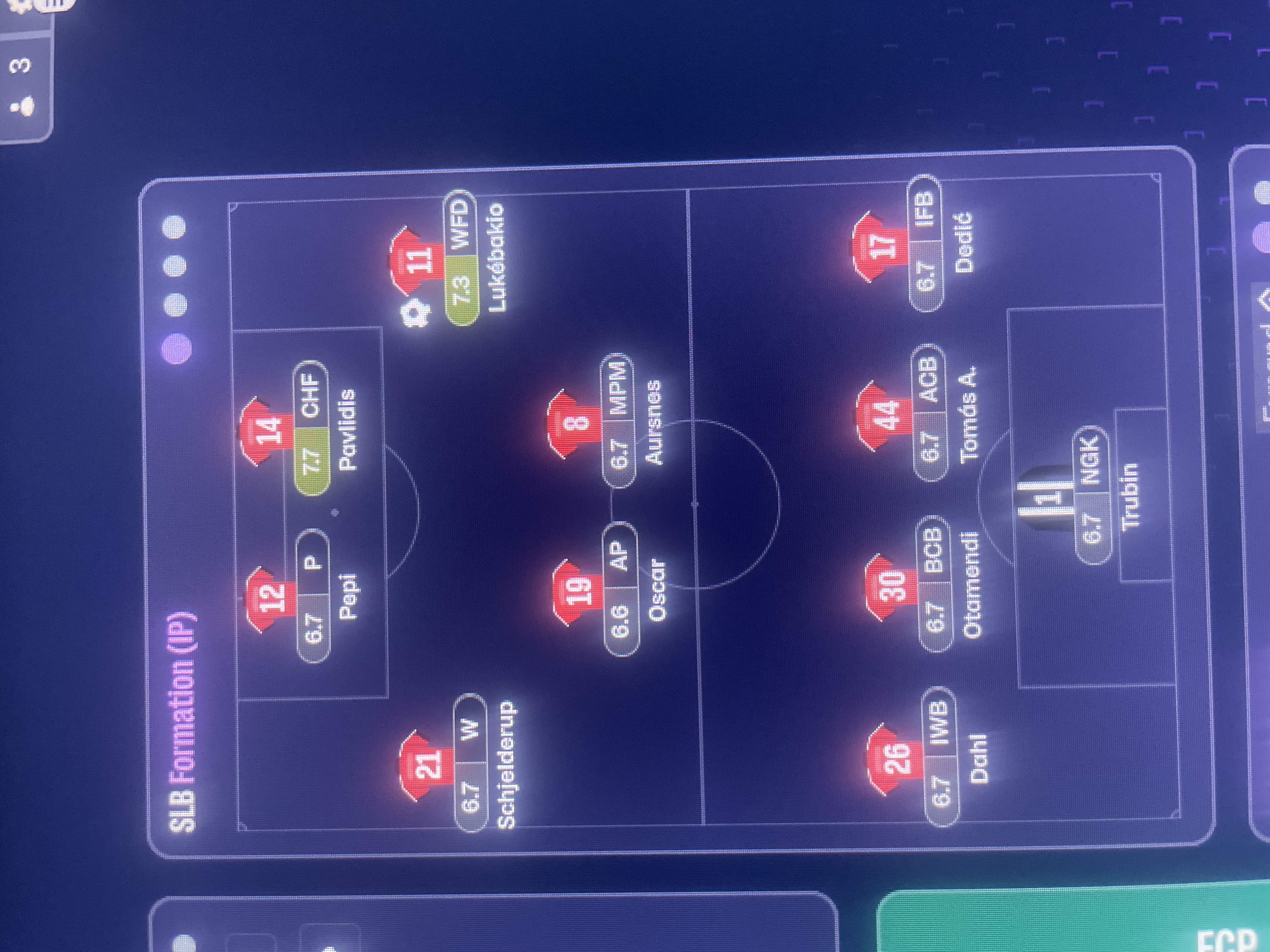
3-5-2
Exploit flanks and create goal-scoring opportunities through intricate passing and movement. With three central defenders, the team can effectively absorb…
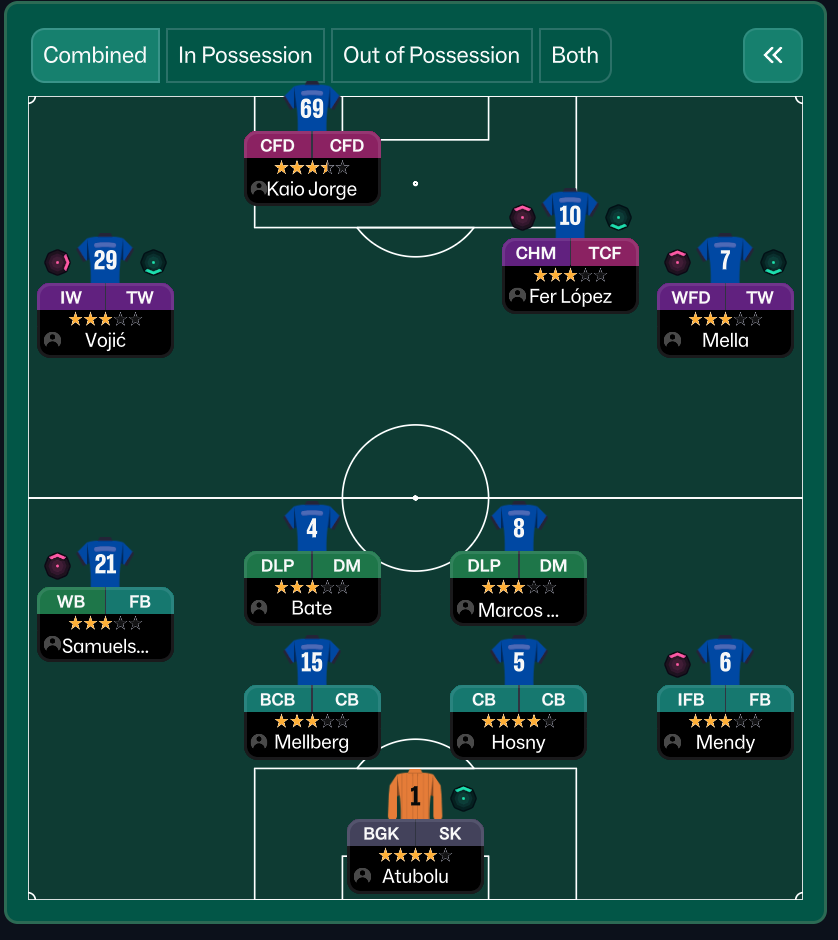
Loading tactical analysis...
Attacking
Positive
3-5-2
Fluid
Work Ball Into Box
Pass Into Space
Play Out Of Defence
Shorter Passing
Counter-Press
Counter
Higher Defensive Line
Higher Line of Engagement
Prevent Short GK Distribution
Aggressive Press
GK
Sweeper Keeper
Support
CB
Ball-Playing Defender
Defend
CB
No-Nonsense Centre-Back
Defend
CB
No-Nonsense Centre-Back
Defend
WB
Wing-Back
Attack
FB
Full-Back
Support
DM
Deep-Lying Playmaker
Support
DM
Defensive Midfielder
Defend
CM
Central Midfielder
Support
IW
Inside Forward
Attack
ST
Complete Forward
Attack
ST
Complete Forward
Attack
Utilizes wide players and overlapping wing-backs to create space for the strikers and midfield playmakers.
Focus on quick pressing to regain possession and transition quickly into counter-attacks.
Exploit flanks and create goal-scoring opportunities through intricate passing and movement.
Compact
Defensive unit holds a tight shape, with emphasis on marking and blocking passing lanes.
No-Nonsense Centre-Backs at [2,2] and [2,3] maintain a robust back line.
Fluid
Fluid movements from strikers and wing-backs, creating width and chances.
Wing-Backs at [2,1] and [2,5] push up to support the attack while inside forwards cut in.
With three central defenders, the team can effectively absorb pressure.
Centre-Backs (NCB) at [2,2] and [2,3] plus Ball-Playing Defender (BPD) at [2,1].
Wing-Backs provide width and crossing opportunities.
Wing-Back at [2,1] (FB) pushing forward effectively, combined with Inside Forward at [6,1].
High defensive line may leave spaces behind for swift counter-attacks.
Higher Defensive Line and Higher Line of Engagement create potential risks.
Wing-Backs may become isolated if opponents exploit their advanced positions.
Wing-Backs at [2,1] and [2,5] may lack cover if possession is lost.
Defensive Transition
High line can expose the backline to through balls and pacey counter-attacks.
Higher Defensive Line and Higher Line of Engagement amplify risks.
Overreliance on Width
Could lead to predictability in attacking plays, making it easier to defend against.
Heavy reliance on wing-backs and inside forwards in their roles.
Wing-Back and Inside Forward
The synergy creates space and options for overlapping runs.
WB at [2,1] working in tandem with IW at [6,1].
Striker Duo
Complete Forwards can exchange positions to confuse defenders.
Both CFs at [6,2] and [6,3] fostering unpredictability in the attack.
How can the defensive tactics be adjusted to minimize counter-attack risks?
What adjustments could enhance midfield control against stronger opponents?
Are there specific roles that could increase attacking threat without compromising defense?
The tactical theory behind the 3-5-2: roles, instructions, and the trade-offs that decide whether the system holds up.
FM27 keeps FM26's tactic system. Here is what stays the same, the small changes that can catch you out, and what the new Tactical Effectiveness system asks of you.
How Mentality, Duty, and Role interact in FM, why duty trumps mentality every time, and the role-on-top-of-duty composition rules.
Counter-Press, Regroup, Stand Off, Trigger Press: what each pressing instruction does in FM and how to pair them without contradicting.