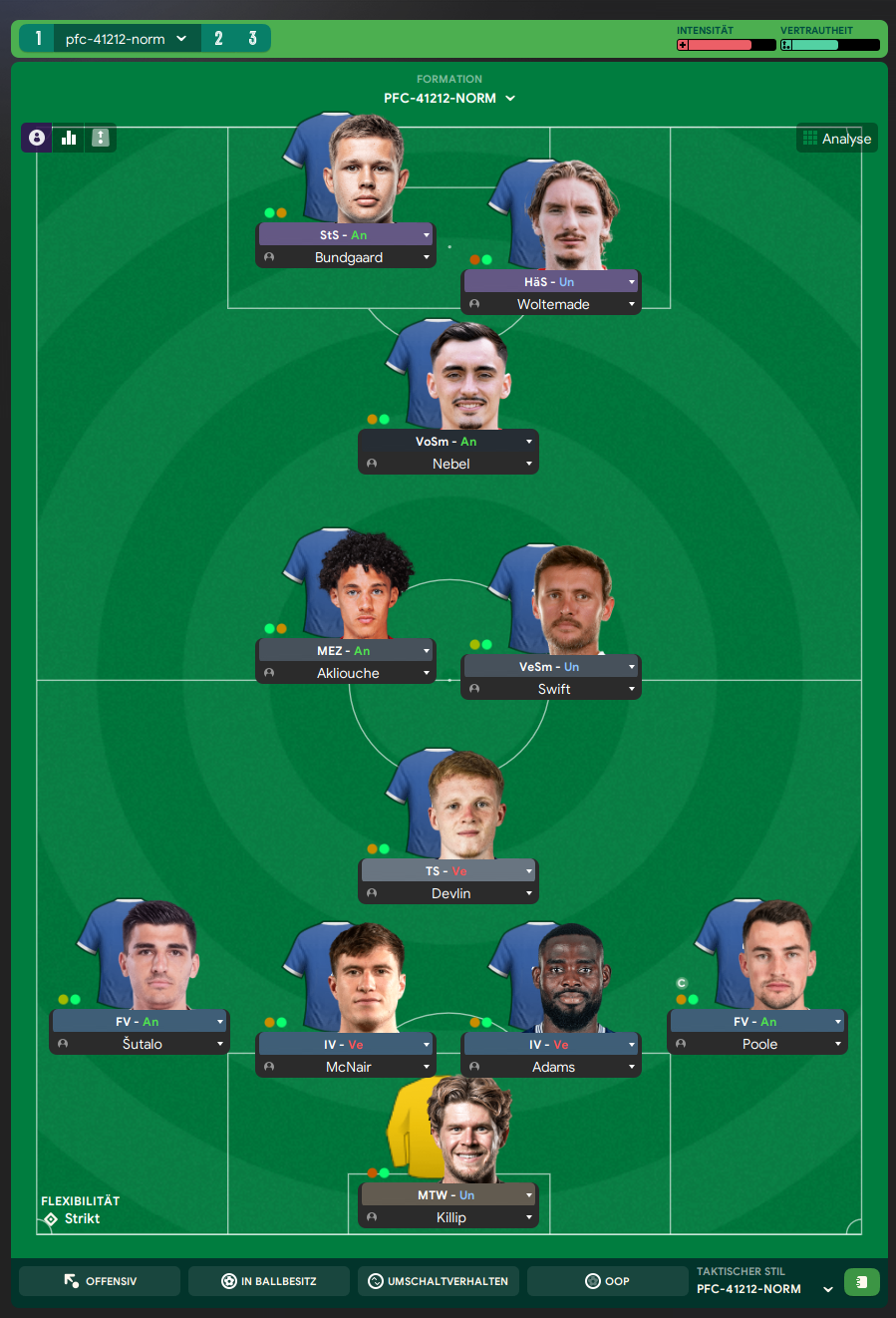
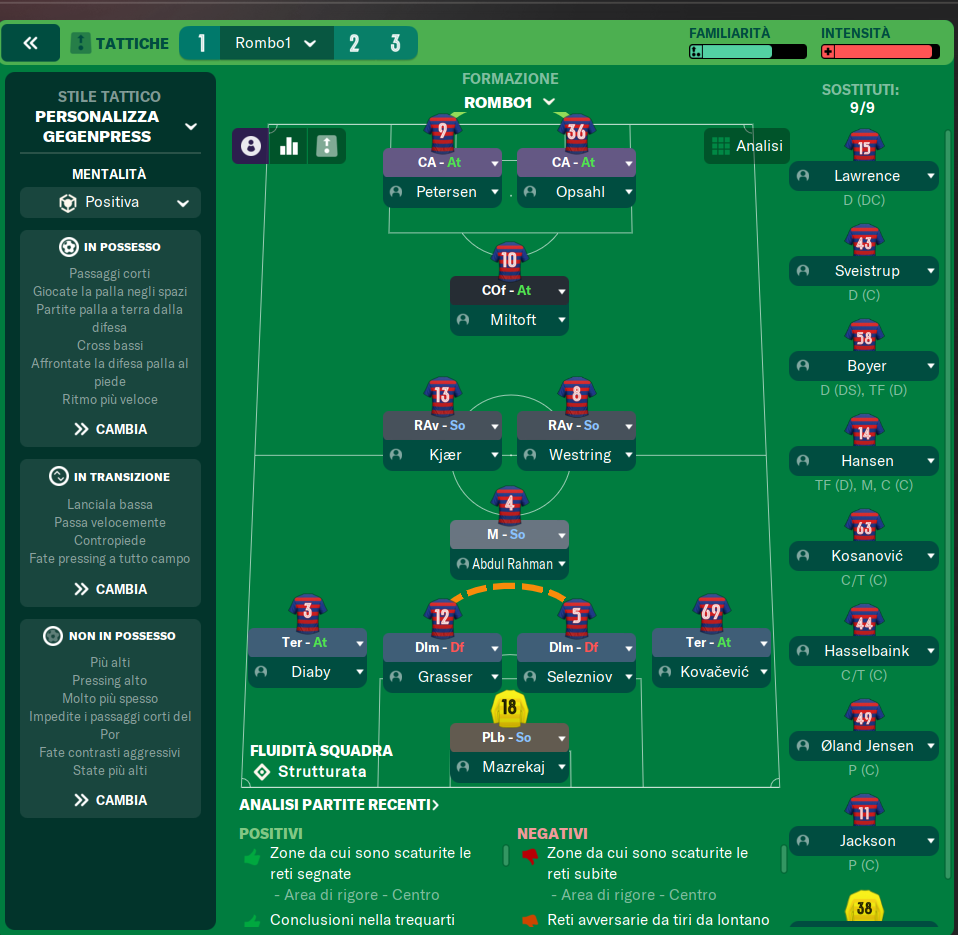
Uploaded Tactic

Formation & Style
Tactical Style:Possession-based
Mentality:Balanced
Formation:4-1-2-1-2 Narrow
Team Fluidity:Structured
In Possession
Focus Play Down the Middle
Shorter Passing
Work Ball Into Box
In Transition
Counter-press
Counter
Out of Possession
Higher Defensive Line
Pressing Intensity High
Team Shape Without Ball
No team shape without ball data available
Team Shape With Ball
No team shape with ball data available
Key Strengths
Central Dominance
The narrow formation provides excellent control in the middle of the pitch, allowing for quick passing and movement.
Flexible Attacking Options
With two strikers and an attacking midfielder, the system can be effective in creating goal-scoring opportunities from various angles.
High Press
The high pressing intensity aims to win the ball back quickly, disrupting opponents' build-up play.
Solid Defensive Structure
The inclusion of a ball-winning midfielder helps in breaking up opposition attacks and provides a strong shield for the defense.
Conflicting Directions
Fluid Movement vs. Structure
While the team is set up with structured fluidity, players might feel restricted. A more fluid approach could improve attacking transitions.
High Line Risks
The high defensive line may lead to vulnerabilities against fast counter-attacks, especially if the midfield fails to track back.
Attacking Full-Backs Needs Balance
The wing-back's attacking duty could leave gaps defensively. Consider balancing with a more conservative full-back role.
Midfield Overlap
Players in midfield might step on each other's toes, especially if not defined clearly in terms of duties.
Tactical Suggestions
Adjust Full-Back Roles
Consider making one full-back a more defensive option to provide cover and balance, which can help mitigate counter-attacks.
Utilize Width
While the formation is narrow, instructing the wingers to spread wide when in possession can create more space for central players.
Reevaluate Defensive Line
Adjust the defensive line to prevent opponents from exploiting the space especially when pressing high.
Consider Role Depth in Midfield
Ensure that midfield roles have clear duties, possibly differentiating between more offensive or defensive responsibilities.