Uploaded Tactic
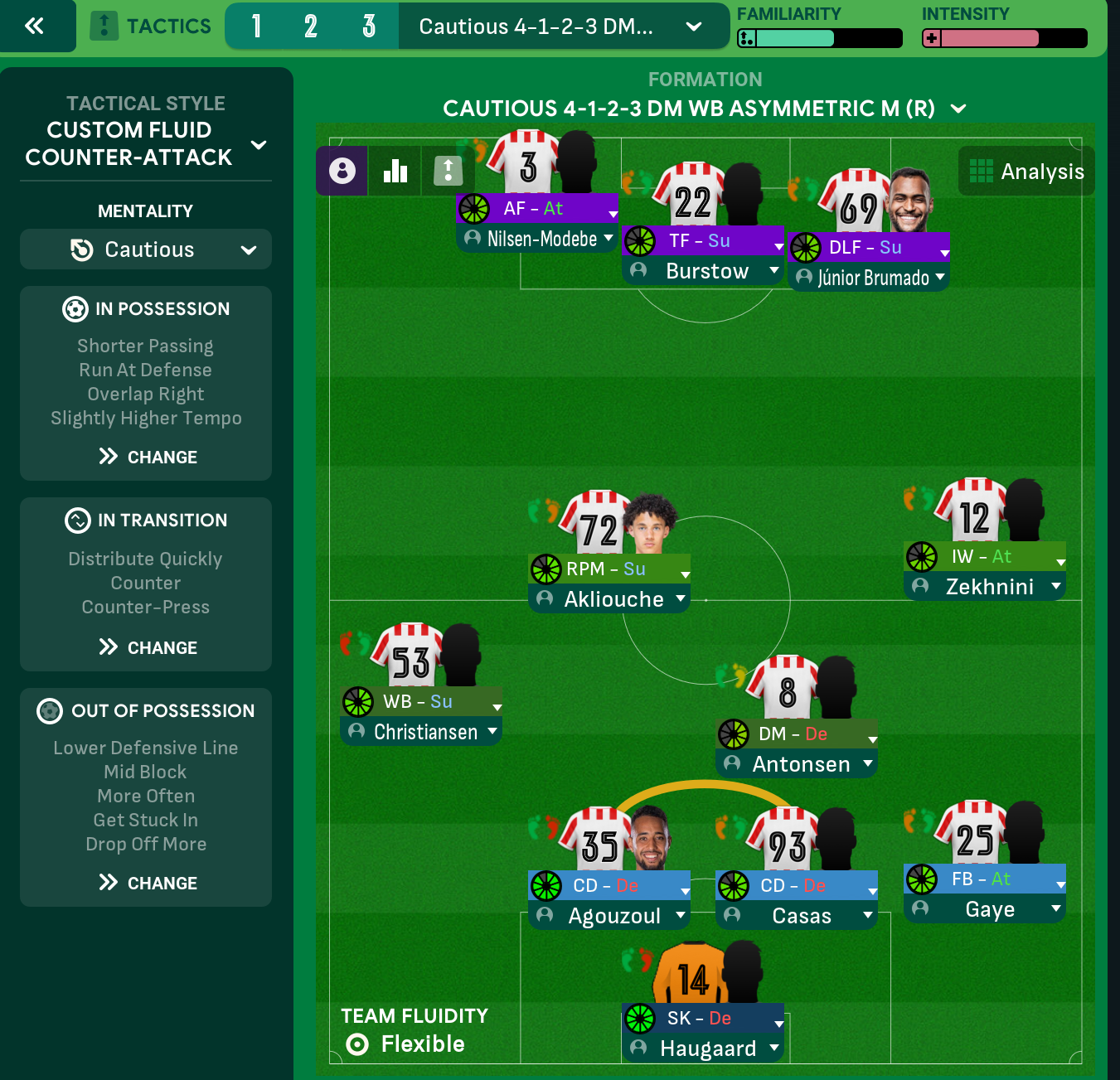
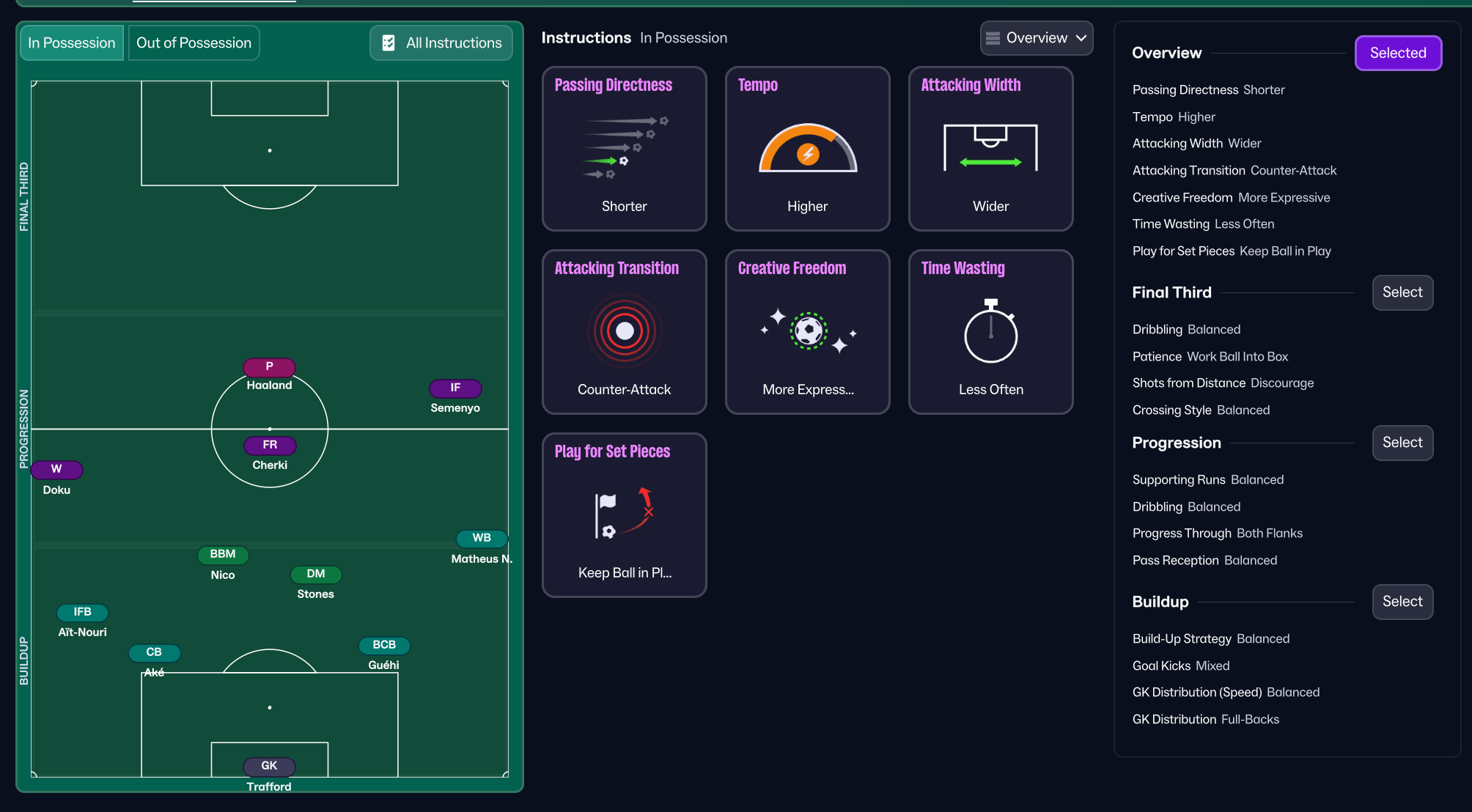
Formation & Style
Tactical Style:Counter-Attack
Mentality:Cautious
Formation:4-1-2-3 DM WB Asymmetric M (R)
Team Fluidity:Flexible
In Possession
Shorter Passing
Run At Defense
Overlap Right
Slightly Higher Tempo
In Transition
Distribute Quickly
Counter
Counter-Press
Out of Possession
Lower Defensive Line
Mid Block
Get Stuck In
Drop Off More
Team Shape Without Ball
No team shape without ball data available
Team Shape With Ball
No team shape with ball data available
Key Strengths
Counter-Attacking Play
The tactic effectively utilizes quick transitions to capitalize on opposition mistakes, making the most of the Cautious mentality.
Width on the Right
The asymmetric formation allows for significant width on the right side, particularly through the overlapping wing back and inside forward.
Defensive Stability
The lower defensive line and mid block create a strong defensive foundation, limiting opposition chances.
Variety in Attacking Roles
The combination of the Advanced Forward, Target Forward, and Deep-Lying Forward provides versatility in the attack, keeping defenses unsettled.
Conflicting Directions
Cautious vs. Fluid Play
While cautious mentality aids in defending, it may limit fluidity in attack, affecting player chemistry and creating goal-scoring opportunities.
Overlap Right vs. Short Passing
Encouraging overlaps may conflict with shorter passing requirements, as quick interplay can sometimes be sacrificed for width.
Counter-Press vs. Cautious Approach
A counter-press approach may clash with the cautious style, as it typically encourages a more aggressive pressing strategy.
Lower Defensive Line vs. Get Stuck In
Lowering the defensive line can create issues with the instruction to 'get stuck in,' potentially leading to fouls in dangerous areas.
Tactical Suggestions
Consider a Balanced Mentality
Switching to a balanced mentality might enhance offensive play without compromising defensive solidity.
Optimize Player Roles
Experiment with roles such as Advanced Playmaker or Box-to-Box Midfielder in midfield for increased creativity and support.
Adjust Overlapping
Consider adjusting overlaps to both flanks to ensure defensive support without sacrificing width.
Introduce a Playmaker
Introducing a playmaker in central midfield could help connect defense and attack, enhancing overall fluidity.
Ask Questions About Your Lineup
More Counter-Attack tactics
Guides for this formation
The tactical theory behind the 4-1-2-3 DM WB Asymmetric M (R): roles, instructions, and the trade-offs that decide whether the system holds up.