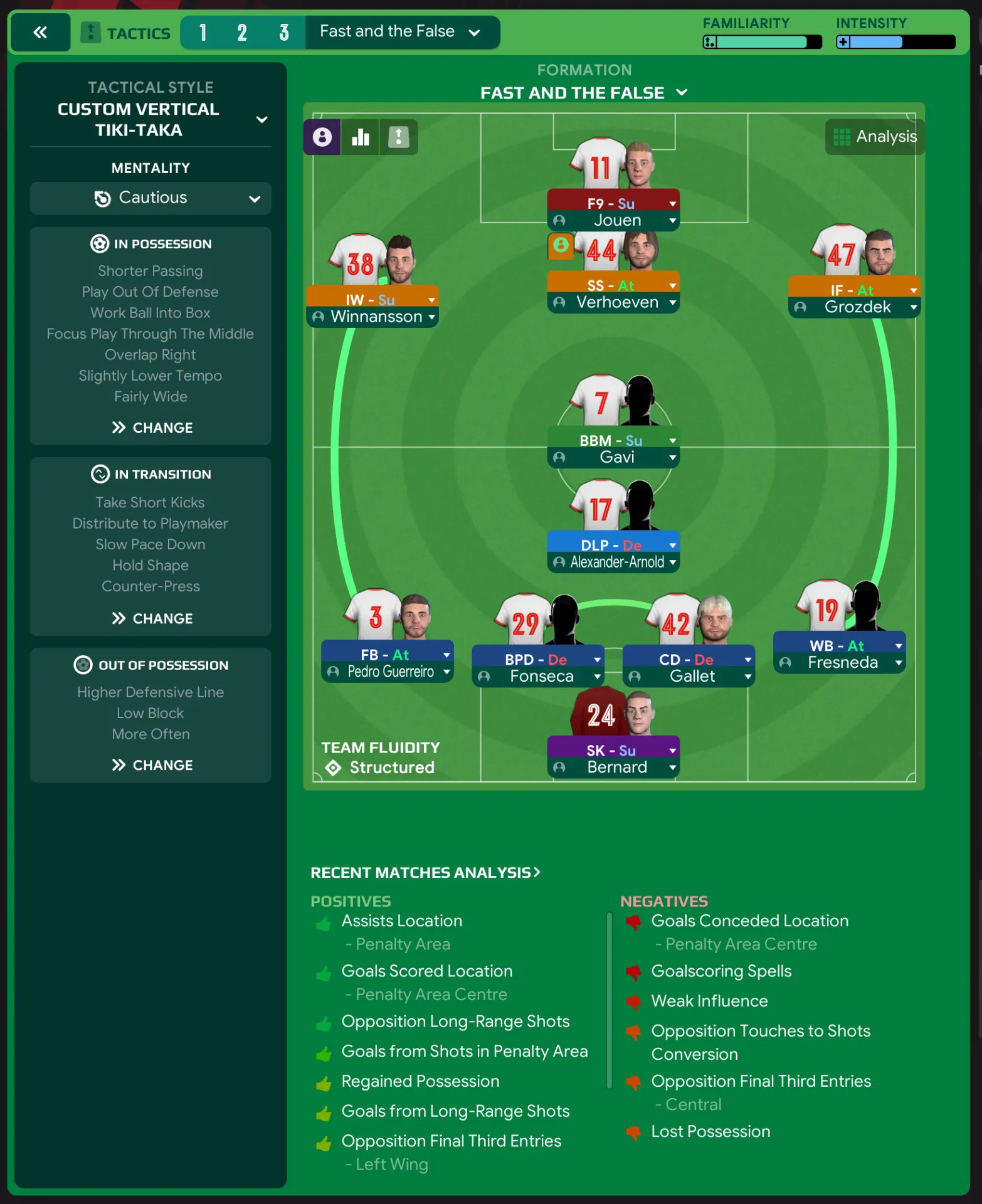
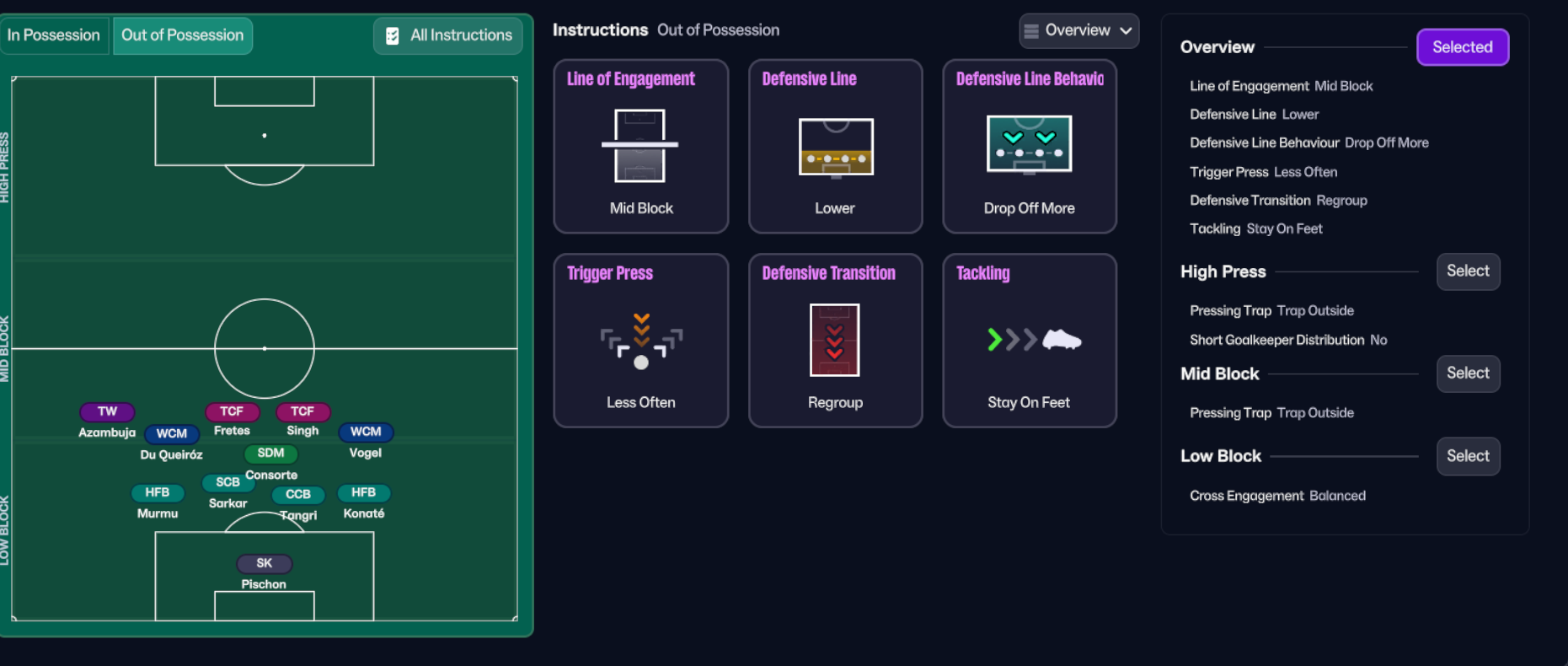
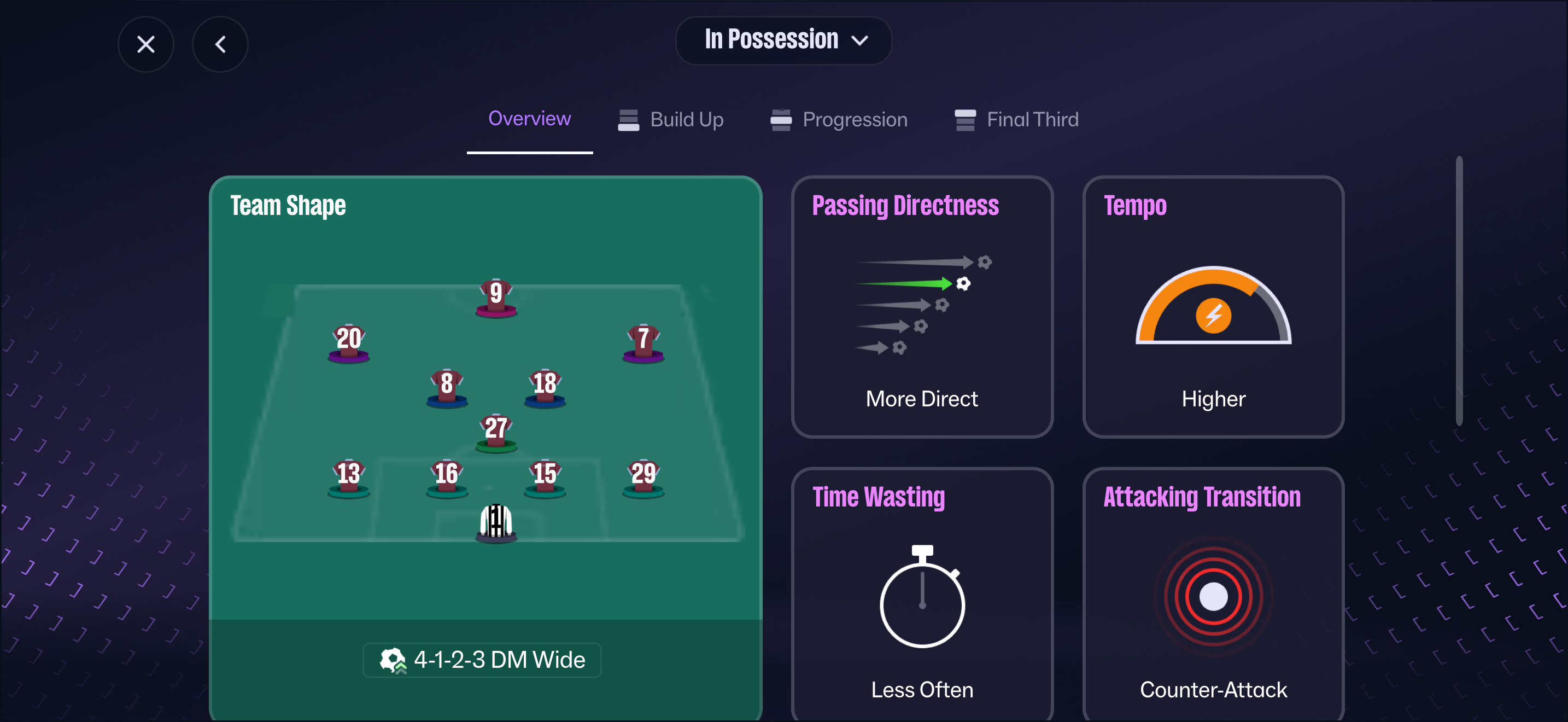
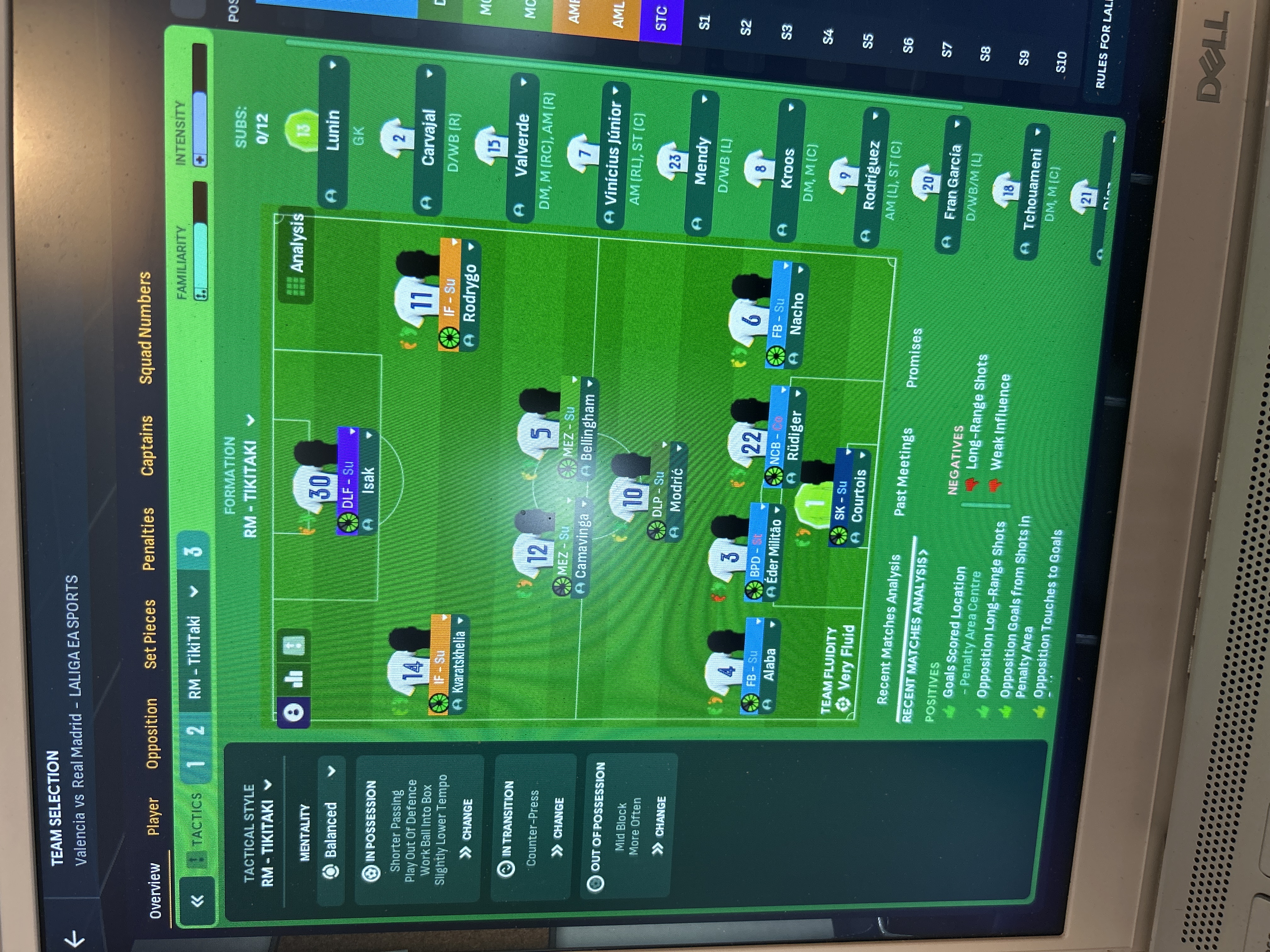
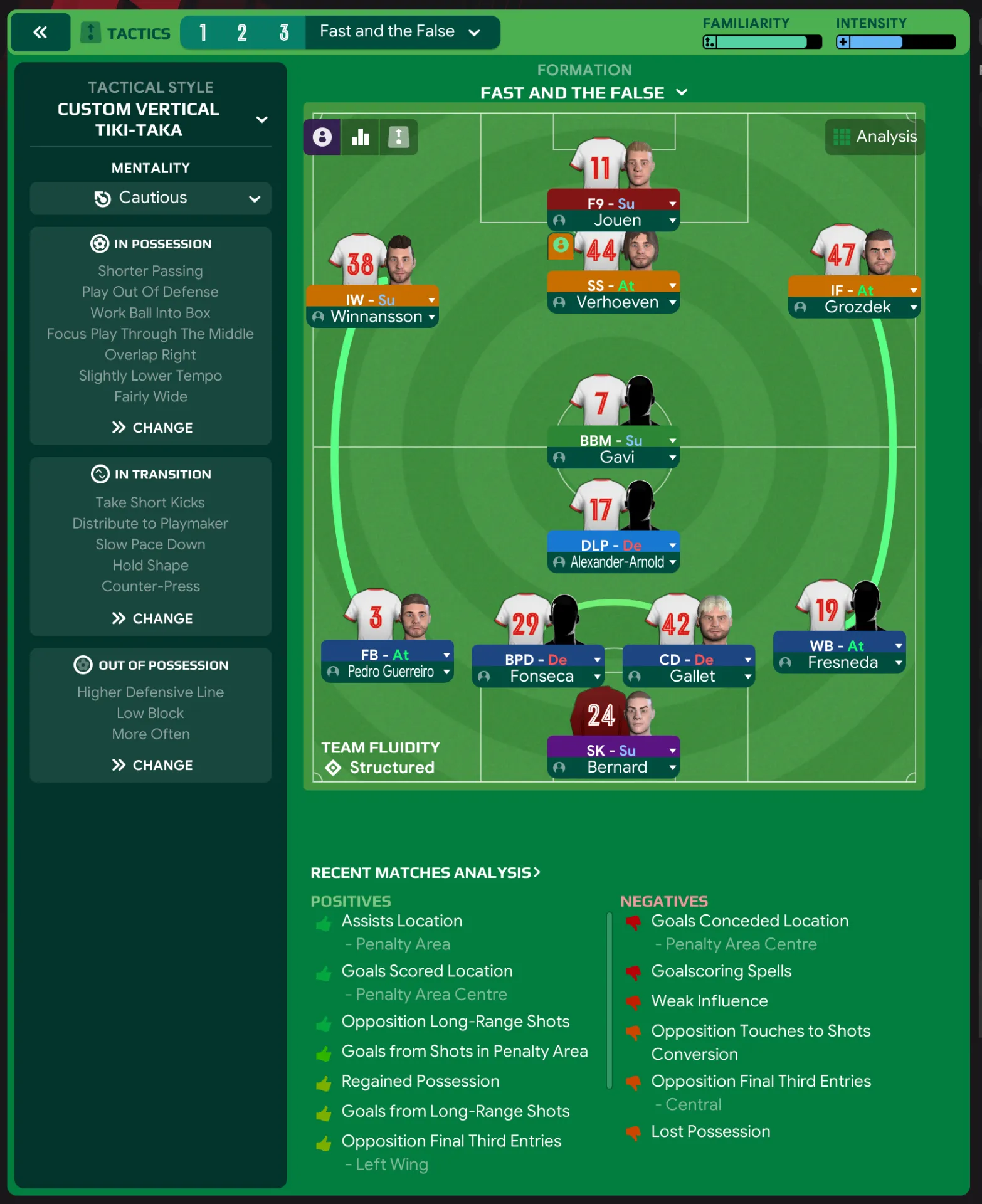
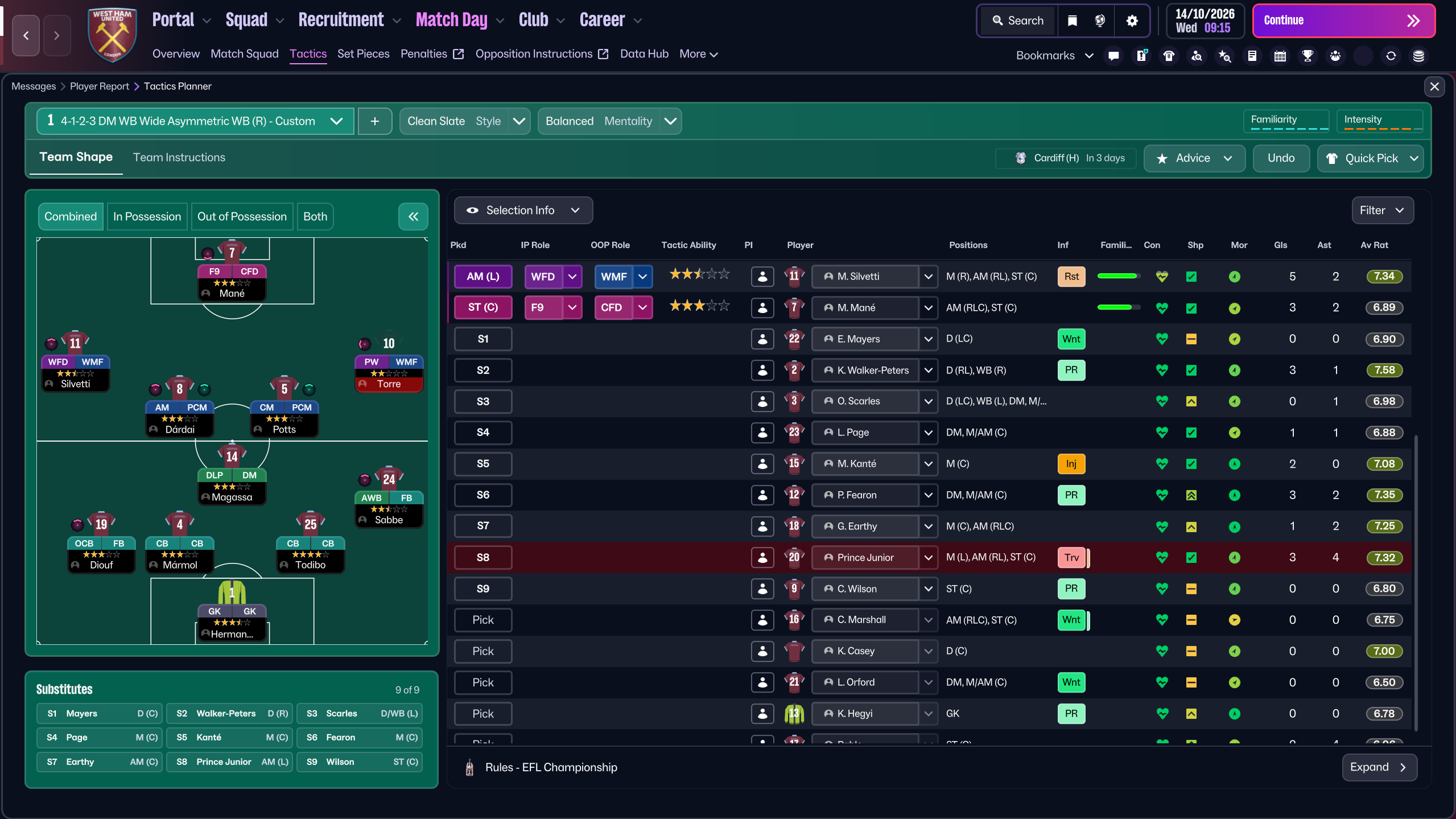
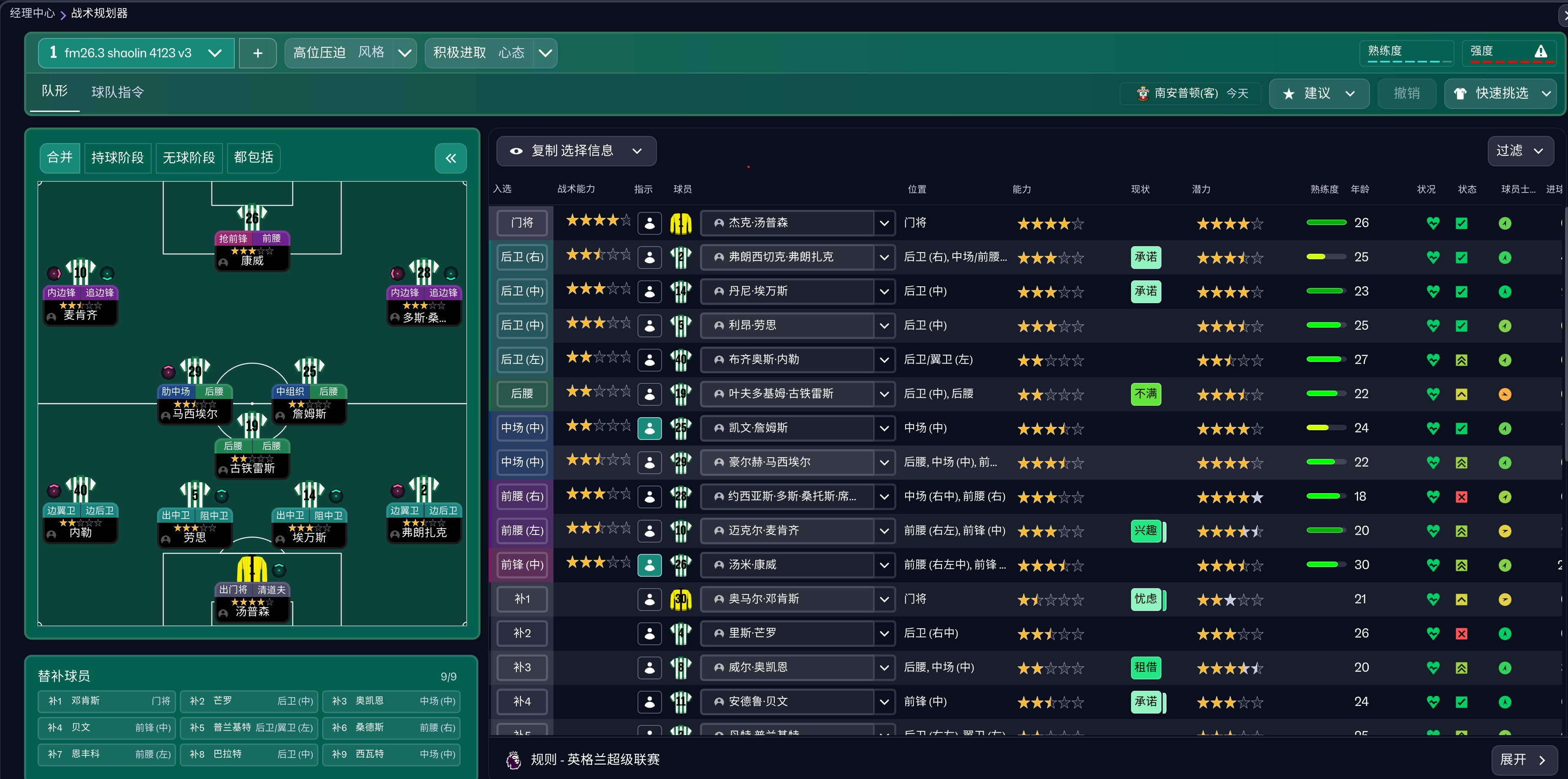
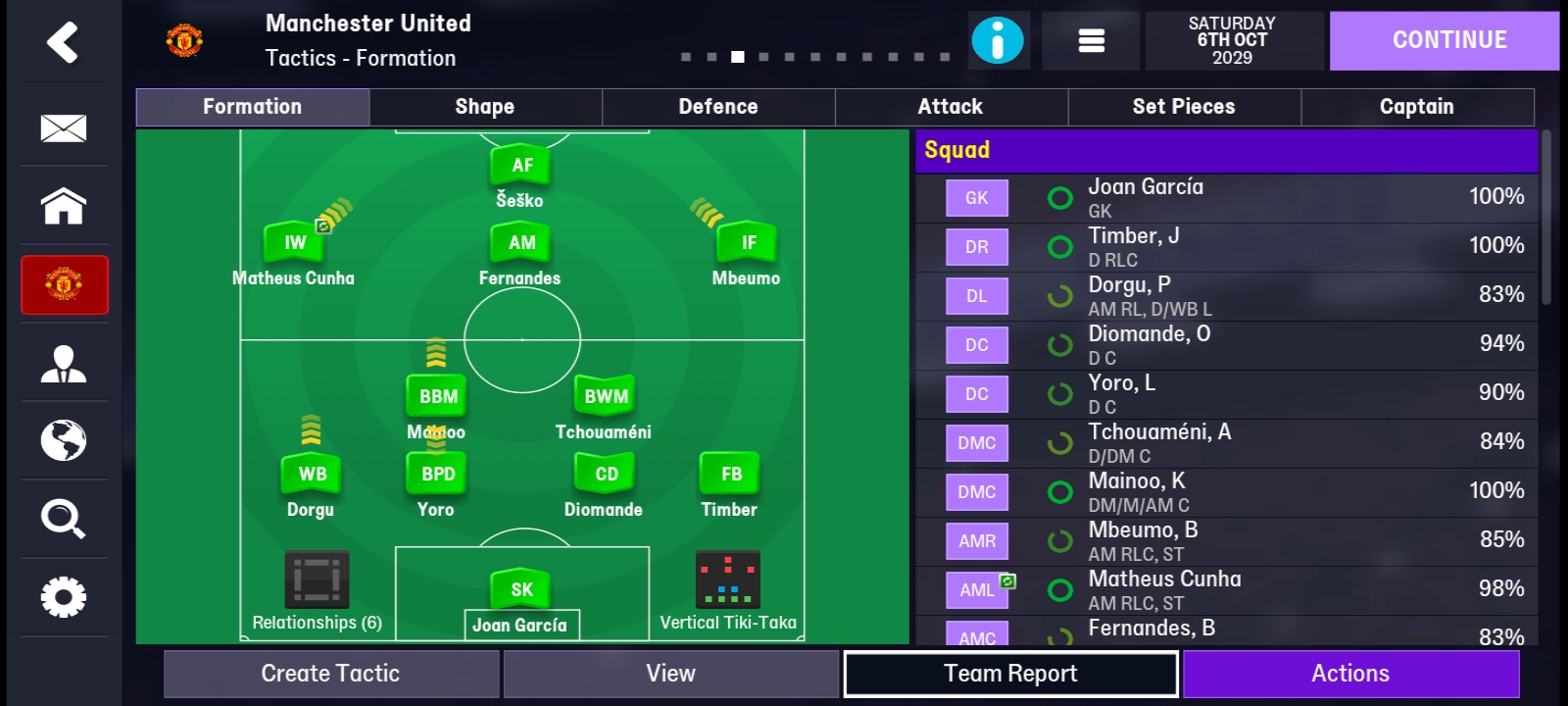
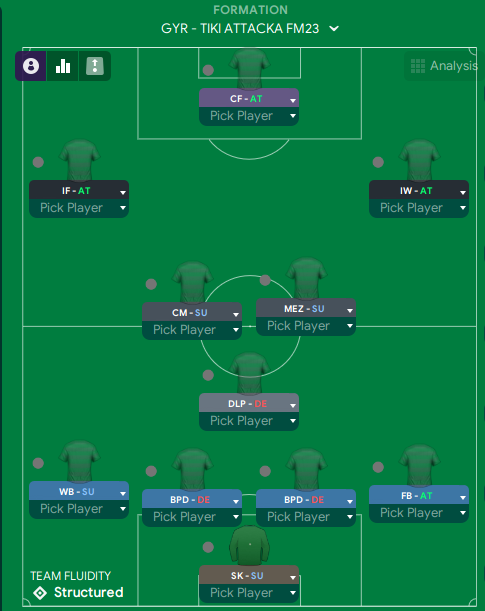
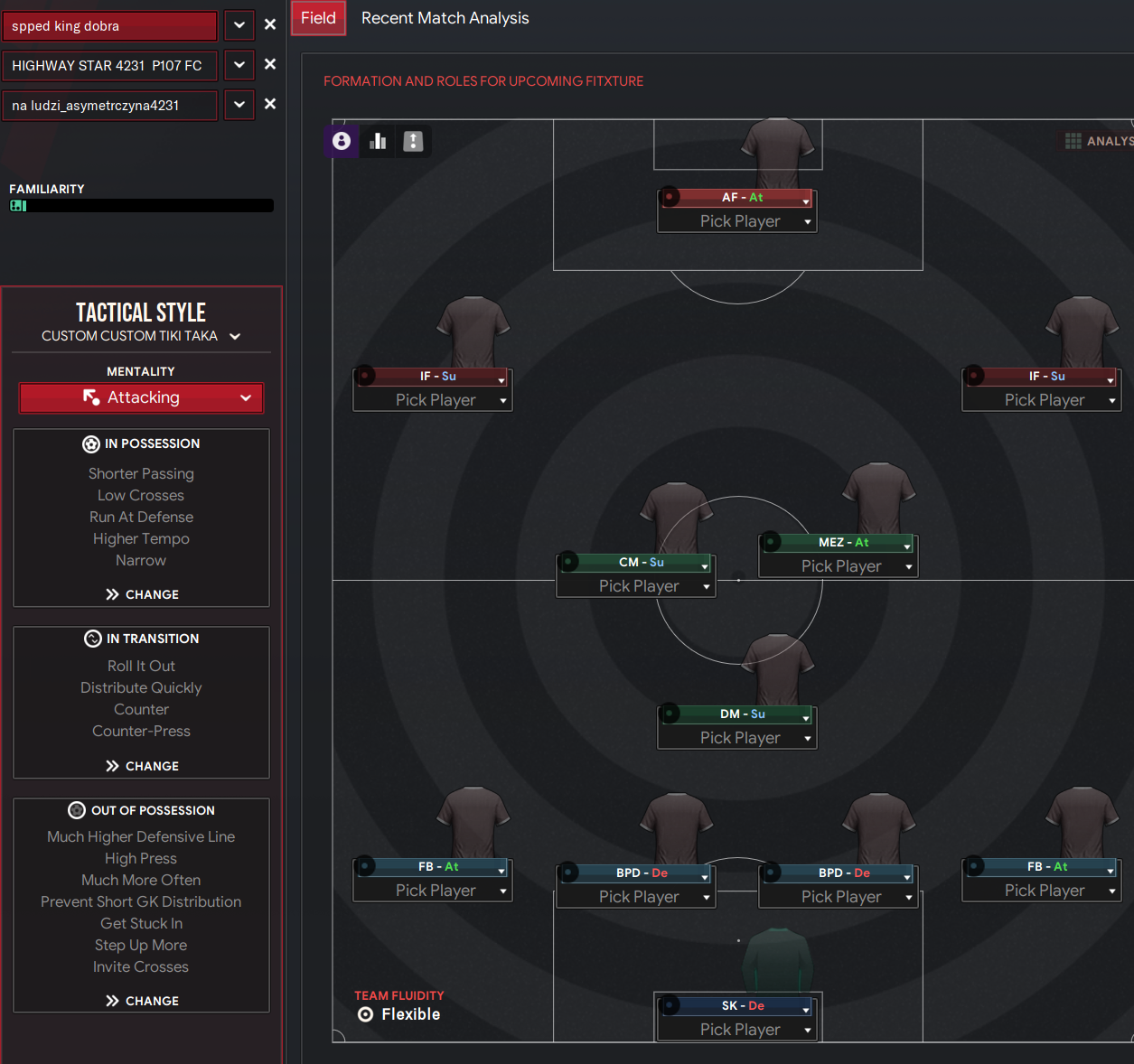
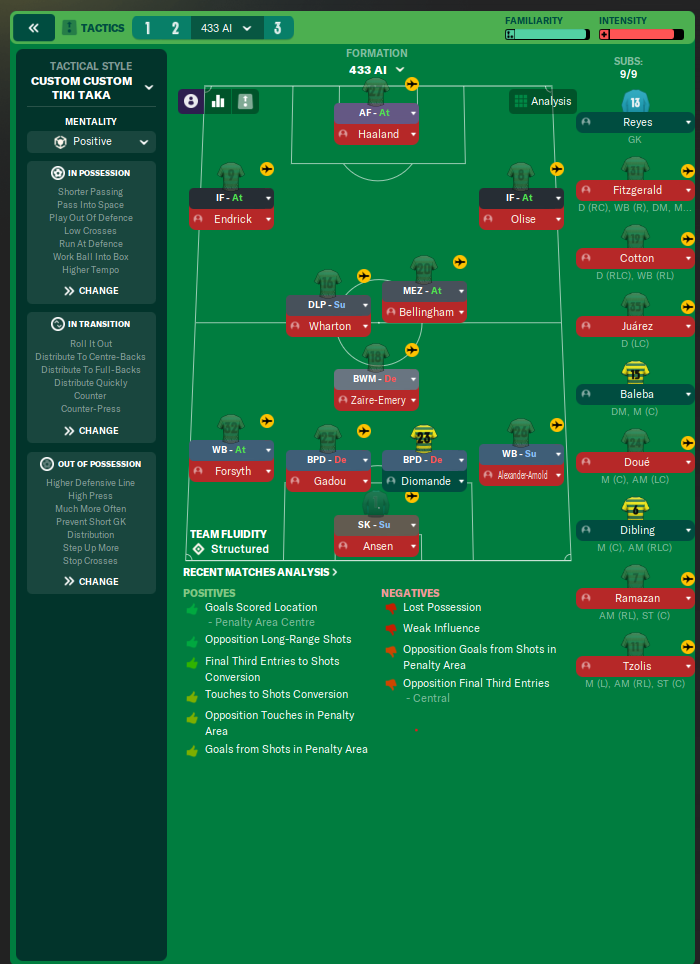
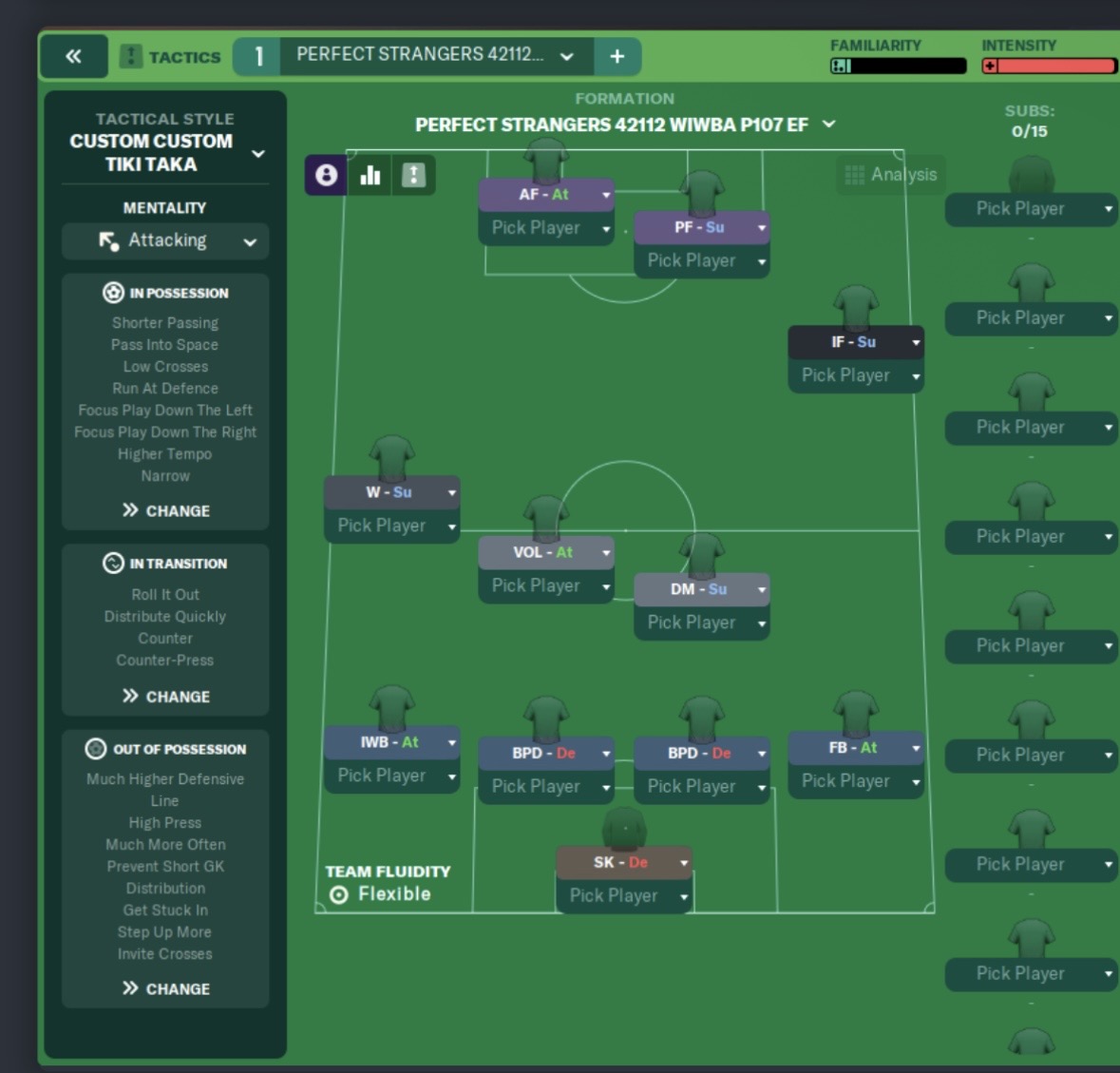
4-1-2-3
The shorter passing style, combined with Tik Taka principles, maintains high possession and allows for patient buildup.
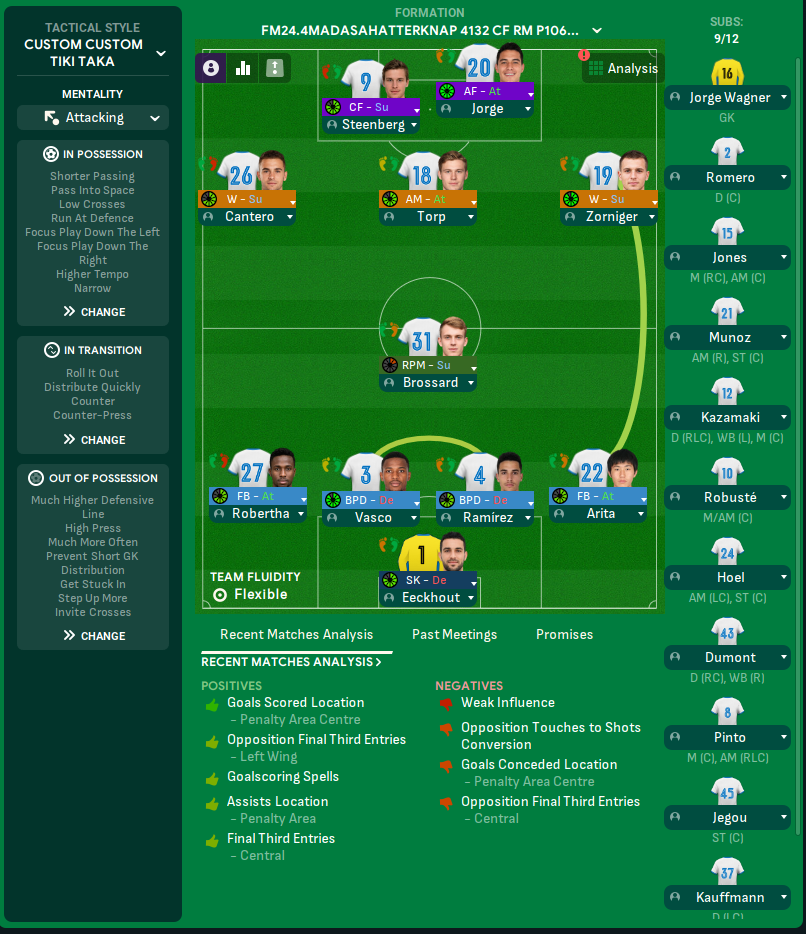
Loading tactical analysis...
Tiki Taka
Attacking
4-1-2-3
Flexible
Shorter Passing
Pass Into Space
Low Crosses
Focus Play Down The Left
Focus Play Down The Right
Higher Tempo
Narrow
Roll It Out
Distribute Quickly
Counter
Counter-Press
Much Higher Defensive Line
High Press
Much More Often
Prevent Short GK Distribution
Get Stuck In
Step Up More
Invite Crosses
CF
Advanced Forward
Attack
AM
Attacking Midfielder
Attack
W
Winger
Support
BPD
Ball Playing Defender
Defend
FB
Full Back
Attack
The shorter passing style, combined with Tik Taka principles, maintains high possession and allows for patient buildup.
Utilizing Wingers and full-backs effectively stretches the opposition and creates space for attacking midfield options.
While focusing play down the left and right, primary wingers may become isolated if full-backs do not support enough.
High defensive line and aggressive pressing can lead to vulnerabilities against quick counter-attacks.
How can the team's width be further utilized to create more space?
Are the full-backs contributing effectively to both attack and defense?
Is the midfield providing enough cover during transitions?
How often are wingers getting to the byline for crosses?
Are the players comfortable with the pressing intensity?
Is there a need to adjust the tempo to better match opponent tactics?
The tactical theory behind the 4-1-2-3: roles, instructions, and the trade-offs that decide whether the system holds up.
Holder, runner, creator: the role distribution rule for three-man midfields, the AMC variants, and the antipatterns that break them.
Mentality, duty, role, instruction, sub. The change hierarchy from lightest to heaviest intervention, and 60th-minute patterns by game state.
Pass map, average position, xG, possession by zone: what each tablet panel tells you in FM and the tactical change it should trigger.