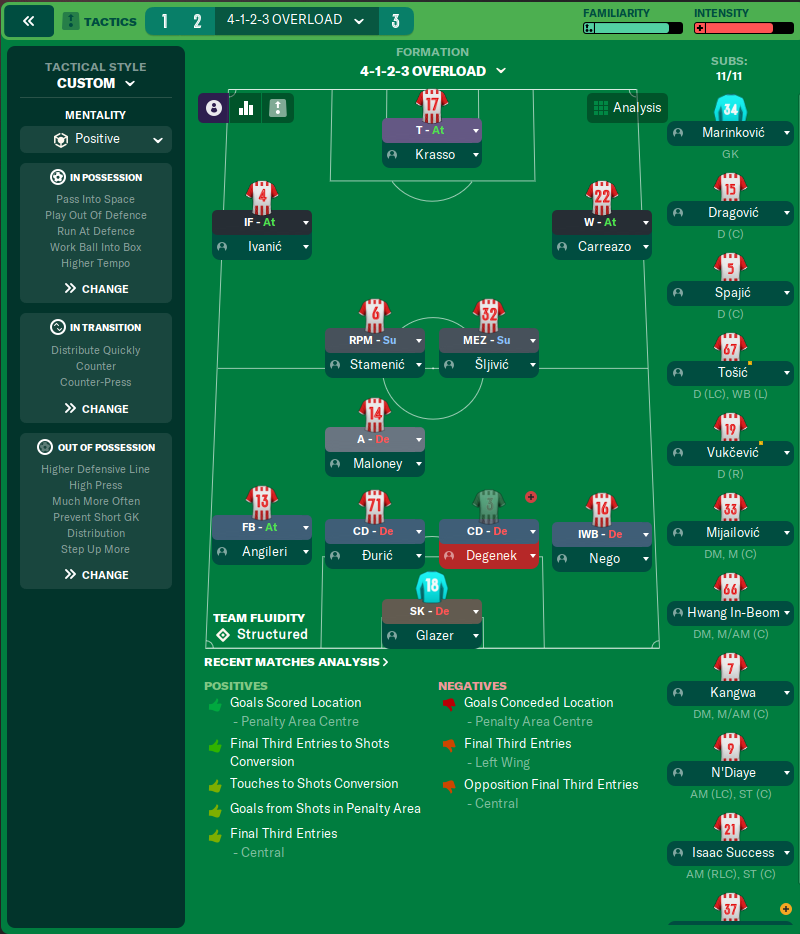
4-1-2-3 Overload
The combination of Inside Forwards, Winger, and Mezzala creates multiple routes to goal, offering both width and penetration.
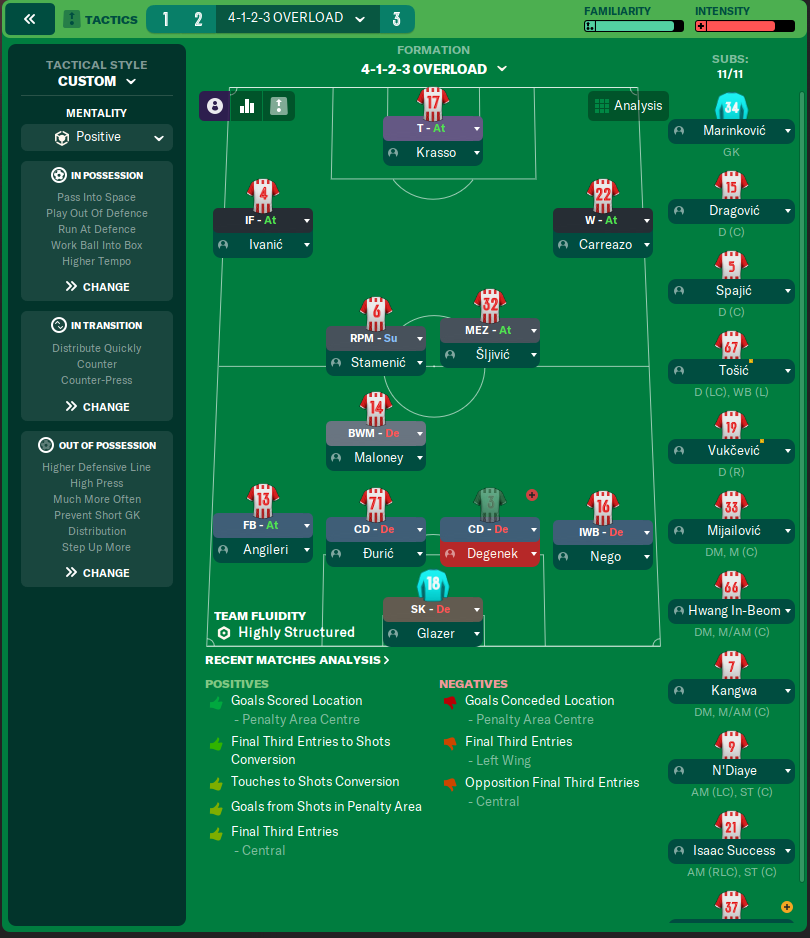
Loading tactical analysis...
Custom
Positive
4-1-2-3 Overload
Highly Structured
Pass Into Space
Play Out Of Defence
Run At Defence
Work Ball Into Box
Higher Tempo
Distribute Quickly
Counter-Press
Higher Defensive Line
High Press
Much More Often
Prevent Short GK Distribution
Step Up More
ST
Target Man
Attack
IF
Inside Forward
Attack
W
Winger
Attack
RPM
Raumdeuter
Support
MEZ
Mezzala
Attack
BWM
Ball Winning Midfielder
Defend
FB
Full Back
Attack
CD
Central Defender
Defend
IWB
Inverted Wing Back
Defend
SK
Sweeper Keeper
Defend
The combination of Inside Forwards, Winger, and Mezzala creates multiple routes to goal, offering both width and penetration.
The high pressing strategy aims to win the ball back quickly, disrupting the opponent's play and creating turnover chances.
The high line and aggressive pressing can leave defensive gaps, particularly against pacey counter-attacks.
While it supports a pressing game, it can also expose defenders to balls over the top or quick transitions.
How effective is the team in recovering the ball during counter-press situations?
Are the defensive players maintaining compactness when the ball is lost?
Is the overload in midfield creating enough goal-scoring opportunities?
How does the formation perform against teams with a strong counter-attacking strategy?
Are the players comfortable with the high pressing and defensive line tactics?
Is the depth of the squad sufficient to maintain intensity throughout multiple matches?
The tactical theory behind the 4-1-2-3 Overload: roles, instructions, and the trade-offs that decide whether the system holds up.
Holder, runner, creator: the role distribution rule for three-man midfields, the AMC variants, and the antipatterns that break them.
Counter-Press, Regroup, Stand Off, Trigger Press: what each pressing instruction does in FM and how to pair them without contradicting.
The pairing rule for Defensive Line and Line of Engagement, all 9 combinations, and the gap that costs goals.