4-1-3-1 (Positive) Tactic
4-1-3-1
Maintaining possession and creating high-quality chances through intricate passing and movement. A focus on short passing and movement keeps the ball and…
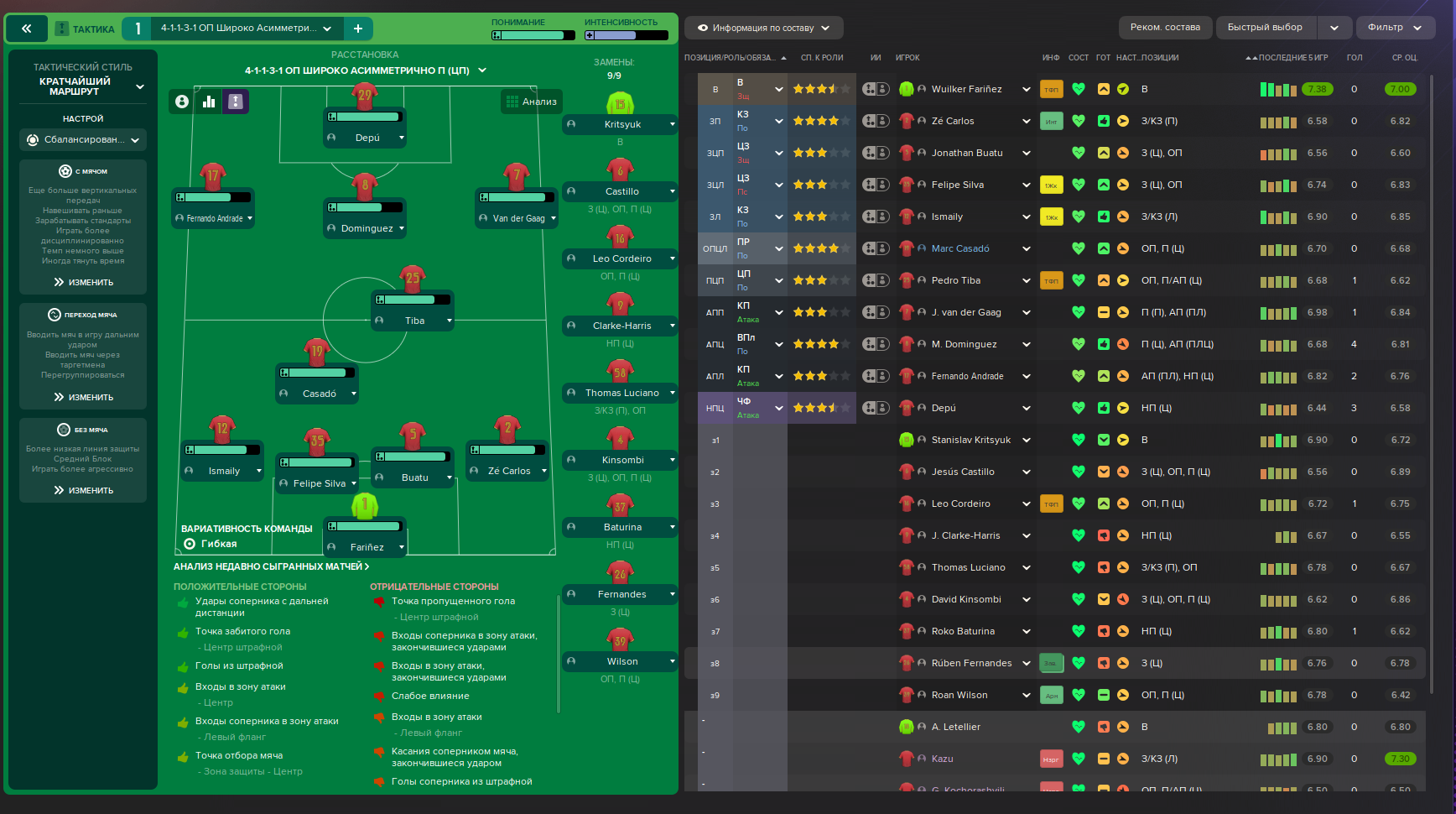
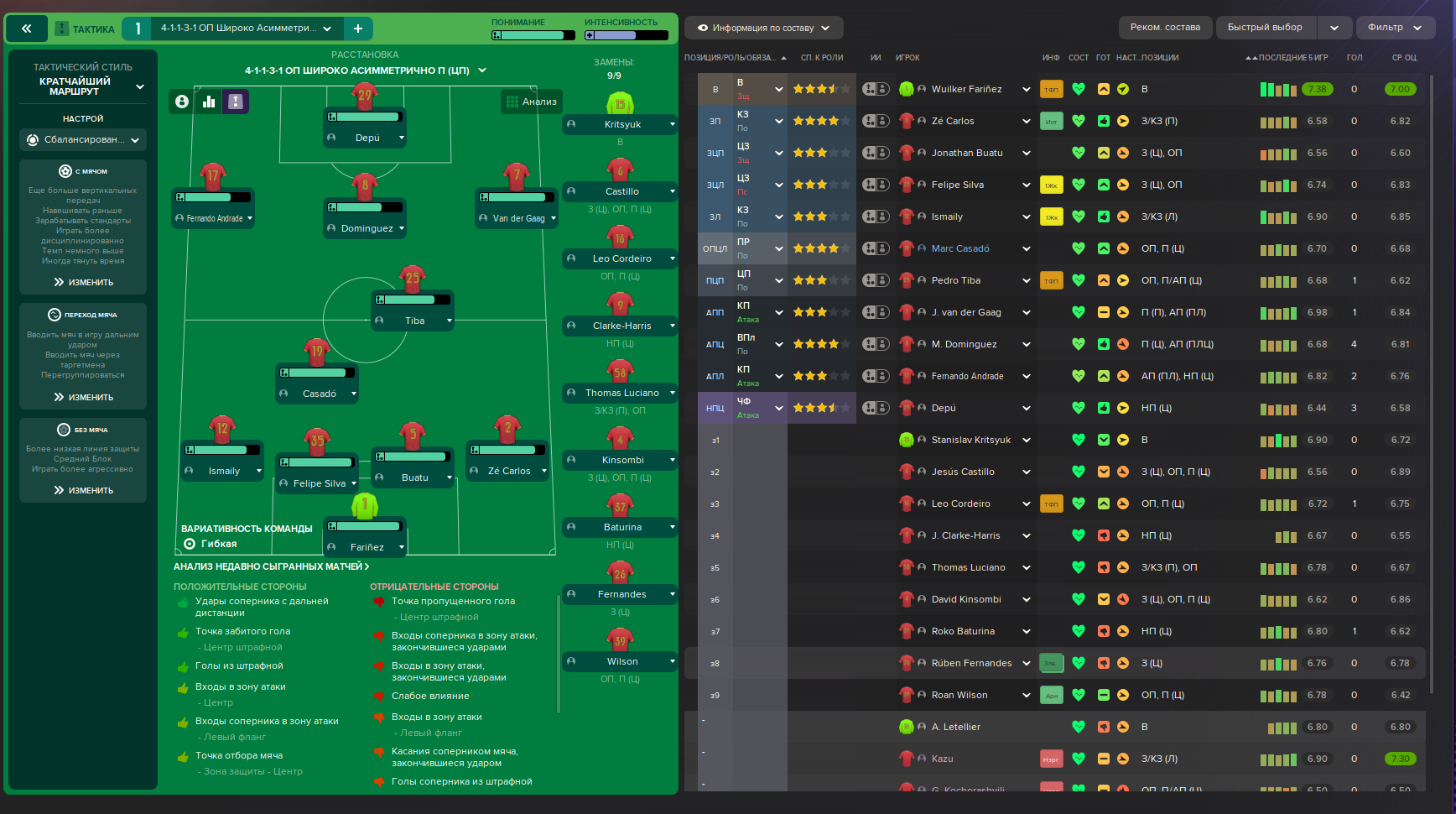
Loading tactical analysis...
Formation and style
Shorter Passing
Positive
4-1-3-1
Structured
In possession
Focus Play Down Both Flanks
Work Ball Into Box
Play Out of Defence
In transition
Counter-Press
Counter
Out of possession
Higher Defensive Line
Higher Line of Engagement
Prevent Short GK Distribution
Player roles
GK
Goalkeeper
Defend
DC
Ball-Playing Defender
Defend
DC
No-Nonsense Centre-Back
Defend
DC
Ball-Playing Defender
Defend
FB
Wing-Back
Support
FB
Wing-Back
Support
DM
Deep-Lying Playmaker
Support
MC
Central Midfielder
Support
MC
Advanced Playmaker
Attack
AMC
Attacking Midfielder
Attack
ST
Pressing Forward
Attack
Phase description
Utilizes width effectively, with wing-backs providing depth and attacking options from the flanks.
The team quickly transitions to a counter-pressing style, aiming to regain possession swiftly.
Maintaining possession and creating high-quality chances through intricate passing and movement.
Team shape defence
4-1-3-1
A solid defensive unit with a shield in front to break up attacks.
DM (DLP-S) at [3,3] provides support to defense while maintaining a structure.
Team shape attack
4-1-3-1
The structure allows for width and support in attack, with wing-backs pushing forward.
Wing-Backs (WB-S) at [2,1] and [2,5] create options for crossing and alternate play.
Key strengths
Possession Retention
A focus on short passing and movement keeps the ball and creates penetration.
DLP-S at [3,3] with 'Play Out of Defence' enhances build-up play.
Width in Attack
Utilization of wide players to stretch the opposition's defense while keeping central options open.
Wing-Backs (WB-S) at [2,1] and [2,5] provide width.
Conflicting tactics
Lack of High Press
Minimal pressure on the opposition's backline may lead to easy ball progression for them.
Limited pressing instructions may allow opponents to build up play easily.
Vulnerability on Counter
The team's structured play may leave gaps during offensive transitions.
Attack-minded wing-backs (WB-S) at [2,1] and [2,5] could be exposed.
Risk exposures
Risk Exposures
Items
Counter-Attacks
Team may be exposed to swift counters due to forward commitments.
Attack-minded players forward could overcommit in attack.
Set-Piece Defense
Vulnerabilities during set pieces can lead to conceding goals.
Height and aerial ability of defenders can be a concern.
Role synergies
Role Synergies
Items
DLP-S and CM-S
The combination supports structured build-up and playmaking.
DLP-S at [3,3] works well with CM-S at [4,3] for continuity.
WB-S and AM-A
Wing-backs provide width for the attacking playmaker to exploit space.
WB-S at [2,1] and AM-A at [5,3] are well-connected.
Suggested questions
How can the midfield increase their offensive contributions?
What adjustments are necessary to mitigate counter-attack vulnerabilities?
Should the wing-backs be more aggressive in their forward runs?

Guides for this tactic
The tactical theory behind the 4-1-3-1: roles, instructions, and the trade-offs that decide whether the system holds up.
FM27 Tactics: What Changed from FM26
FM27 keeps FM26's tactic system. Here is what stays the same, the small changes that can catch you out, and what the new Tactical Effectiveness system asks of you.
Mentality, Duty & Roles
How Mentality, Duty, and Role interact in FM, why duty trumps mentality every time, and the role-on-top-of-duty composition rules.
Pressing Triggers and Intensity
Counter-Press, Regroup, Stand Off, Trigger Press: what each pressing instruction does in FM and how to pair them without contradicting.