Uploaded Tactic
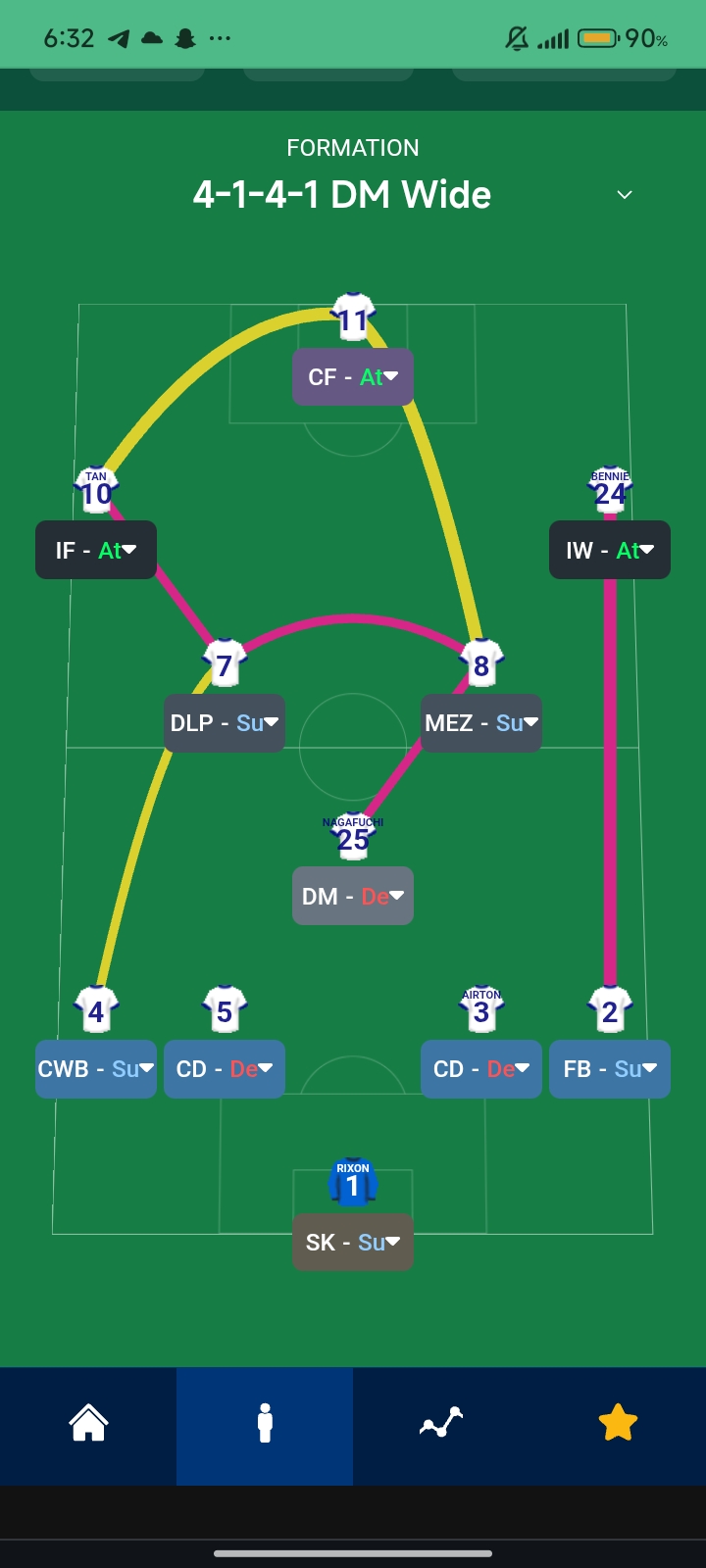
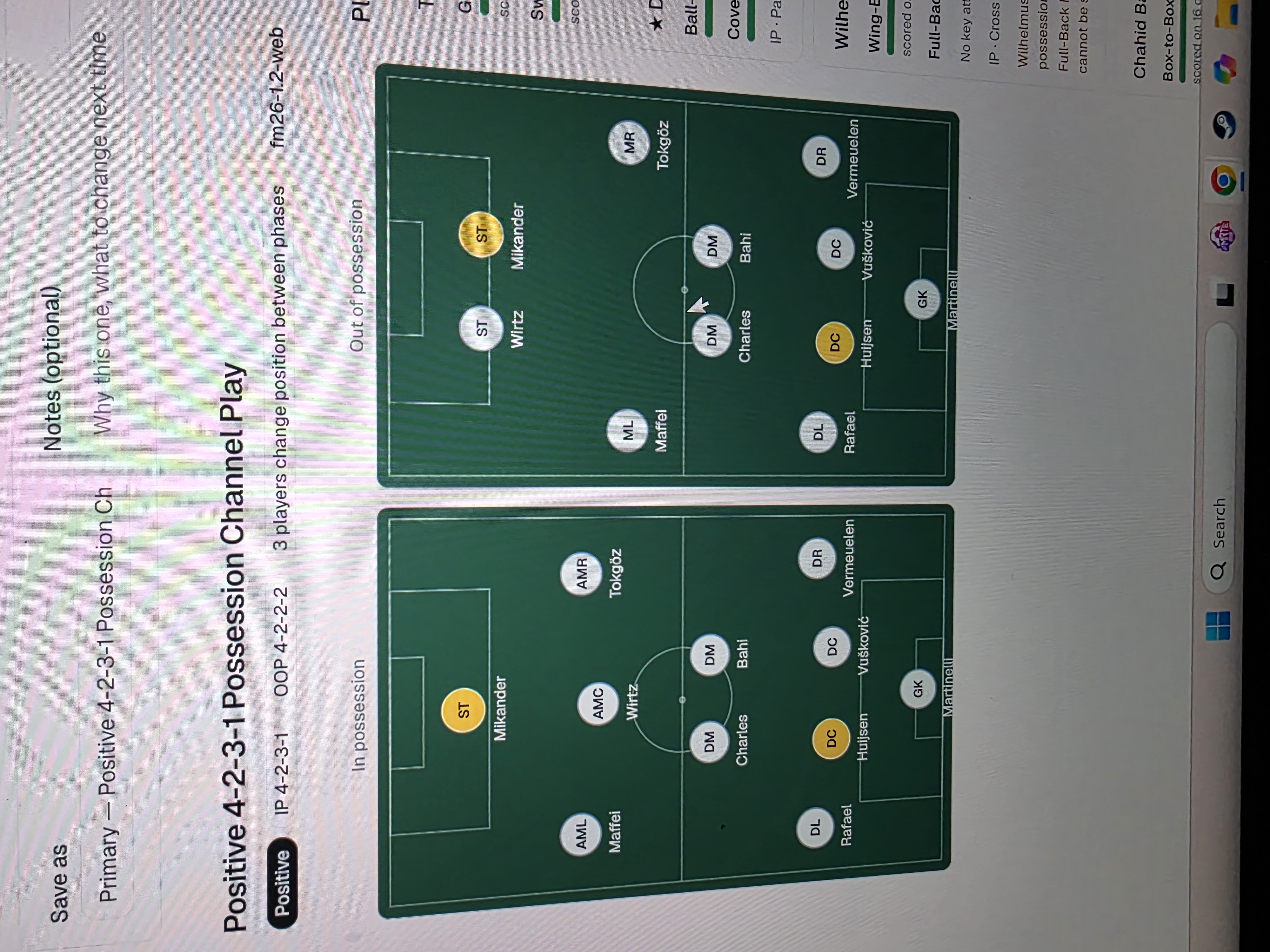
Formation & Style
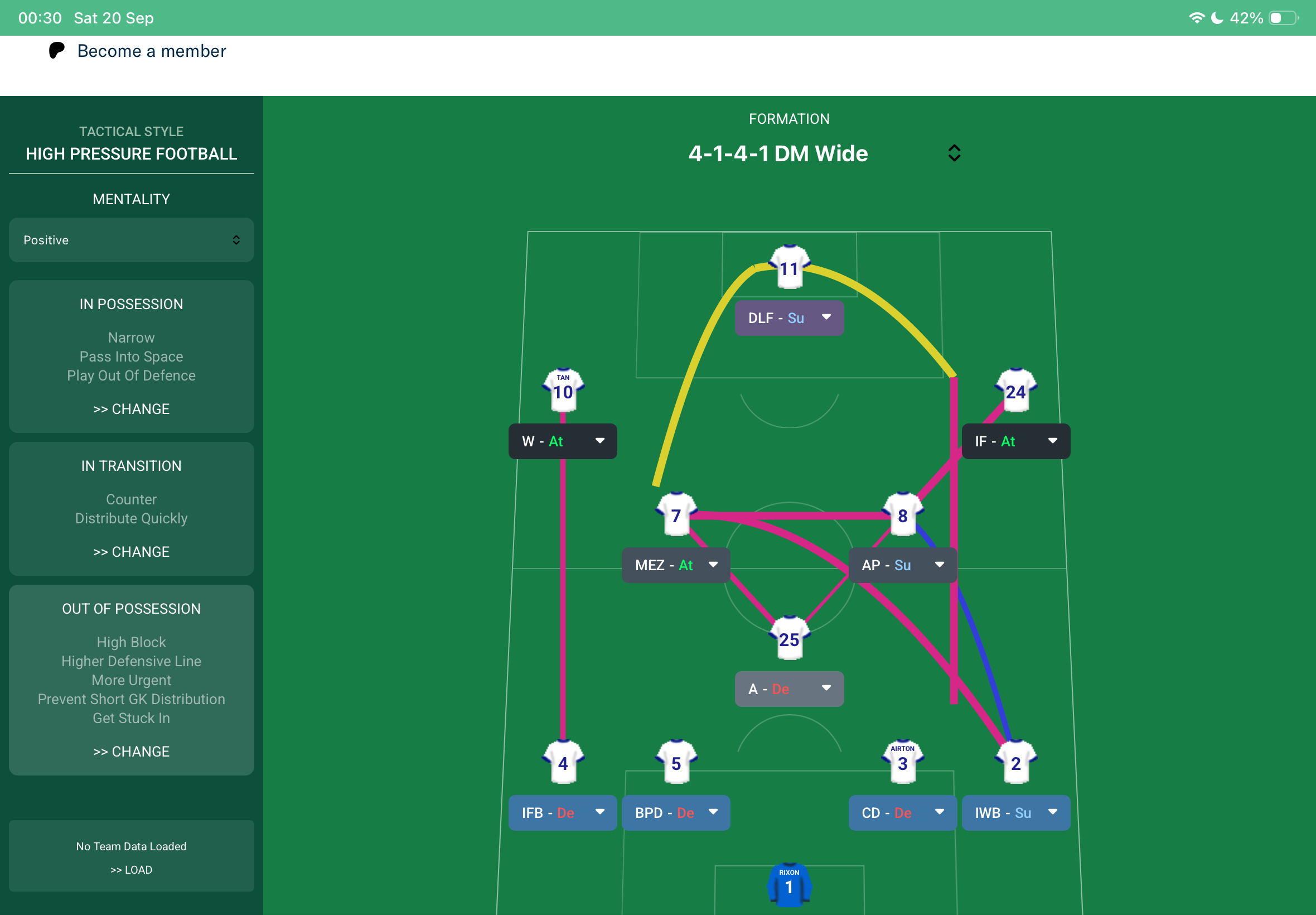
Tactical Style:Possession
Mentality:Positive
Formation:4-1-4-1 DM Wide
Team Fluidity:Flexible
In Possession
Shorter Passing
Work Ball into Box
Overlap Left/Right
In Transition
Counter-Press
Counter
Out of Possession
Higher Defensive Line
Press More
Team Shape Without Ball
No team shape without ball data available
Team Shape With Ball
No team shape with ball data available
Key Strengths
Fluid Attack
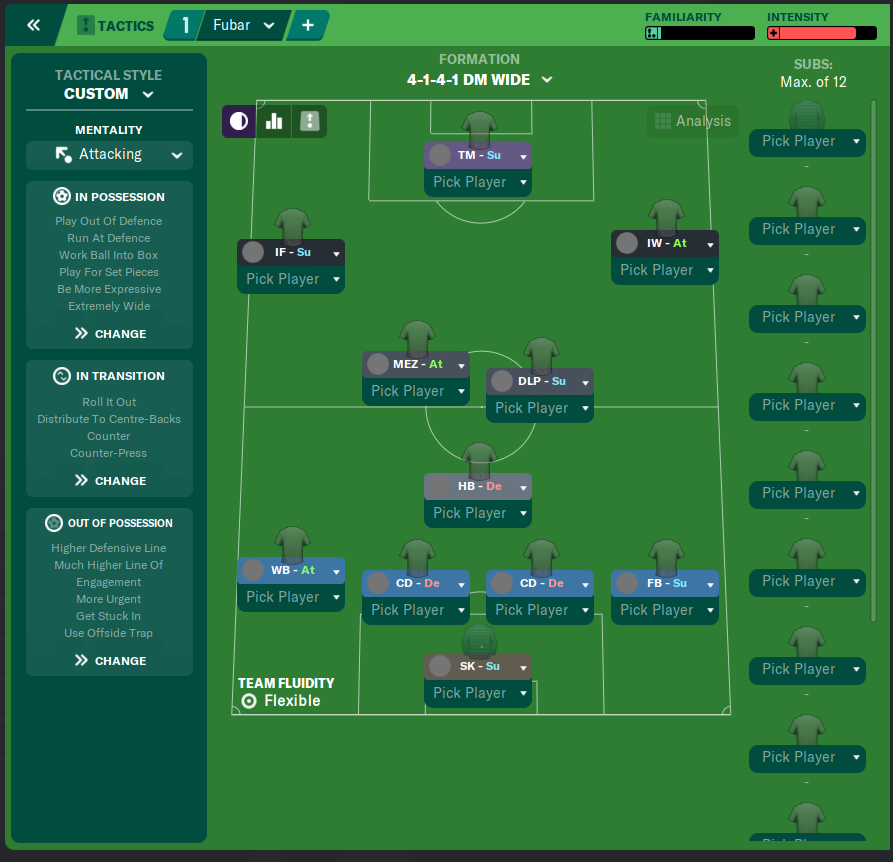
The combination of Inside Forwards and an Inverted Winger creates space and options for penetrating the opposition defense.
Midfield Control
The DLP and Mezzala work in tandem to dominate the midfield, facilitating ball progression and creativity.
Wide Overlaps
The CWB and FB provide width, allowing for overlapping runs that stretch the opposing defense, creating open spaces.
Defensive Solidity
The presence of a Defensive Midfielder offers protection to the backline and ensures a strong defensive structure.
Conflicting Directions
Attacking Duty Balance
All attacking players have attacking duties which may lead to a lack of defensive cover when possession is lost.
Pressing Intensity
With a higher defensive line and pressing more, the team might be vulnerable to counter-attacks if their shape is not maintained.
Full Back Role Conflict
Having both a Full Back and a Wing Back on support can create confusion over width and space occupation on the flanks.
Slow Build-Up
The tactic may become too predictable if the team does not mix up the tempo, especially with short passing.
Tactical Suggestions
Adjust Player Duties
Consider changing one attacking player to a support role to maintain a better defensive shape when possession is lost.
Exploit Counter-Attacking
Utilize counter-attacking strategy more prominently, especially with the pace of the wingers.
Improve Width Options
Consider changing the Full Back to a Wing Back for increased attacking presence along the left flank.
Increase Depth in Defense
Adjusting the Defensive Midfielder to a Support duty might help transition from defense to attack more smoothly.
Ask Questions About Your Lineup
Related Tactics
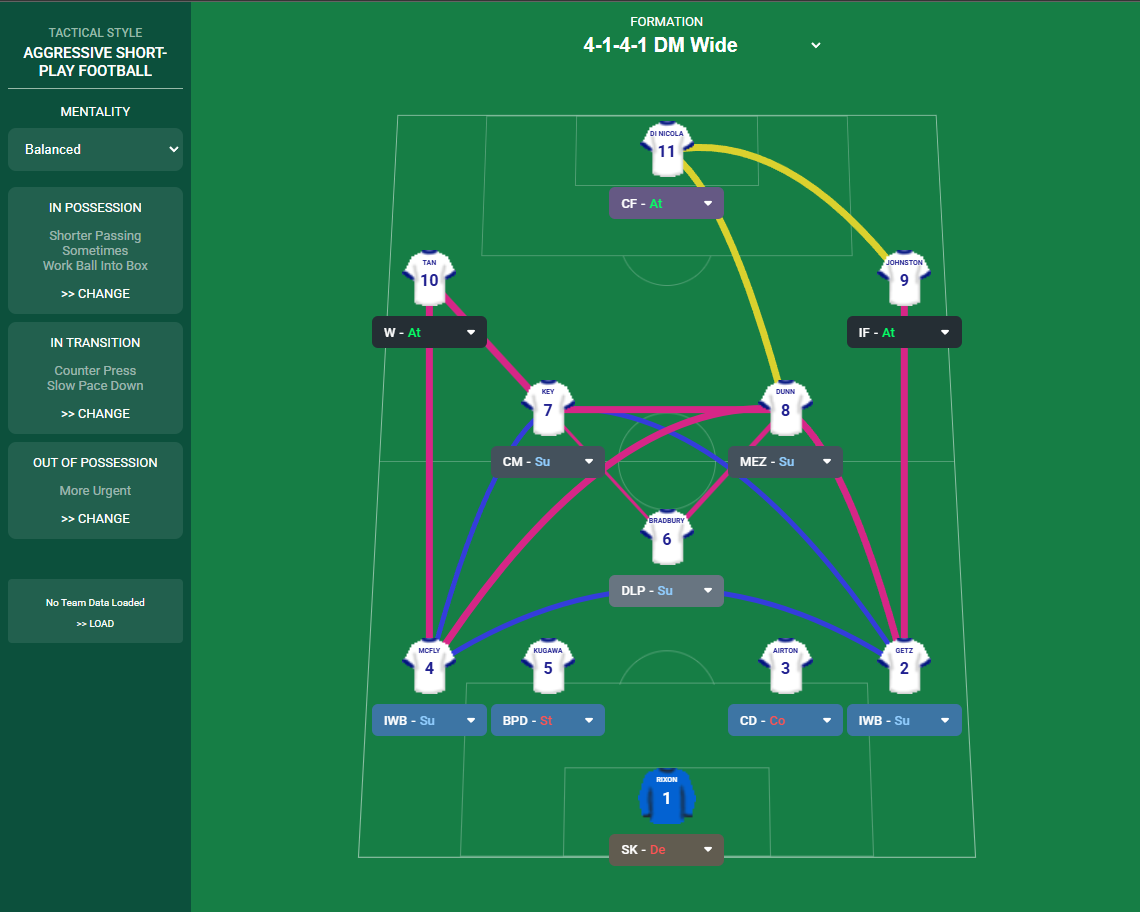
Aggressive Short-Play Football 4-1-4-1 DM Wide
Aggressive Short-Play Football
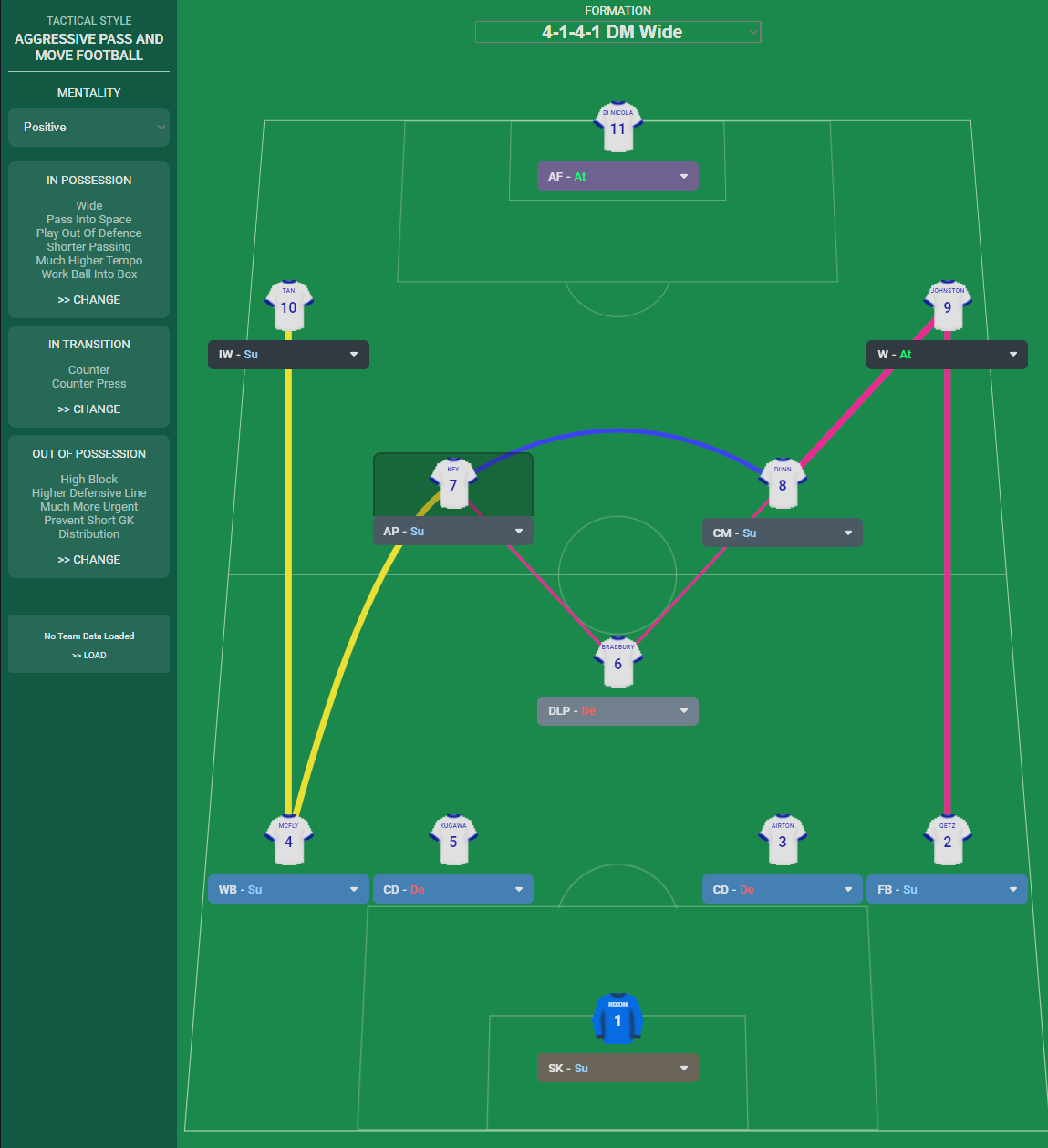
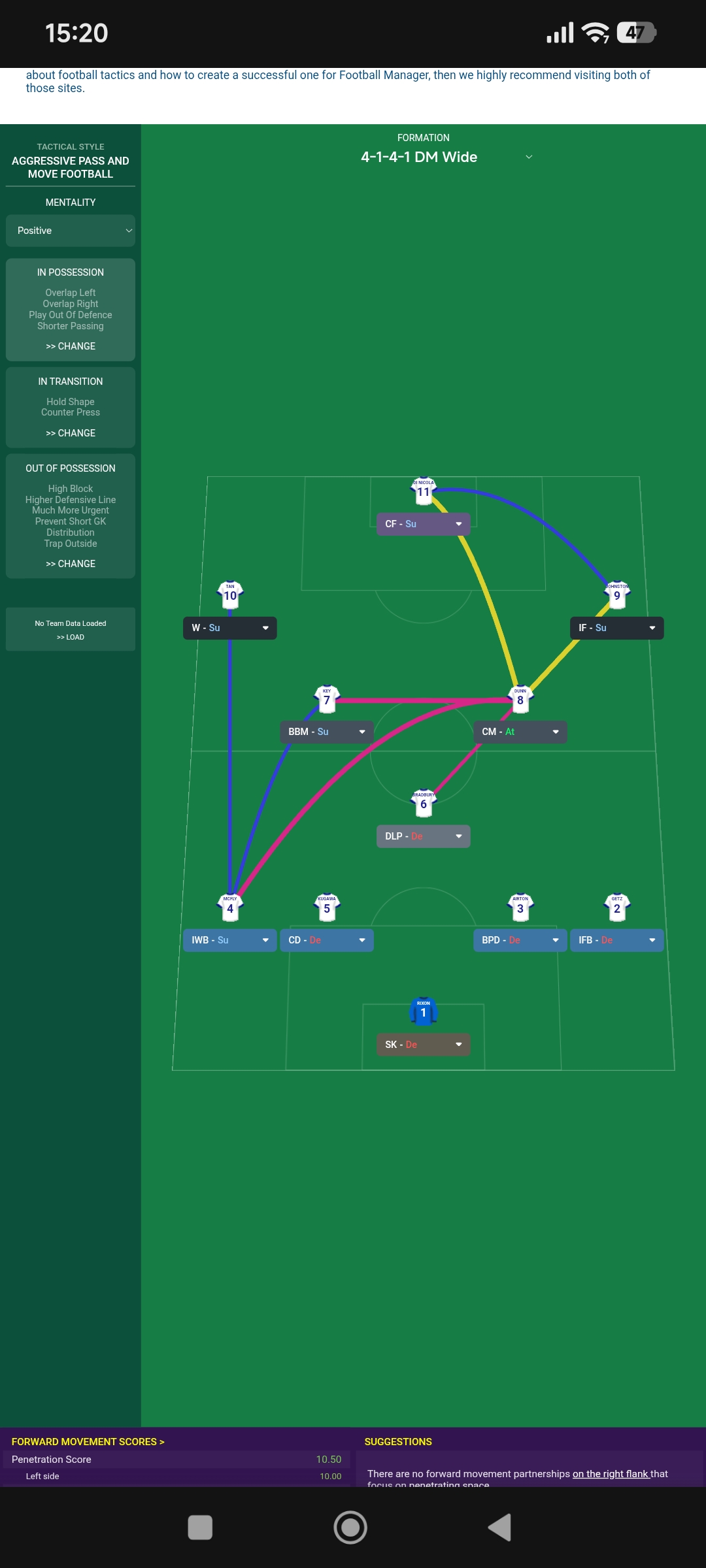
Aggressive Pass and Move Football 4-1-4-1 DM Wide
Aggressive Pass and Move Football
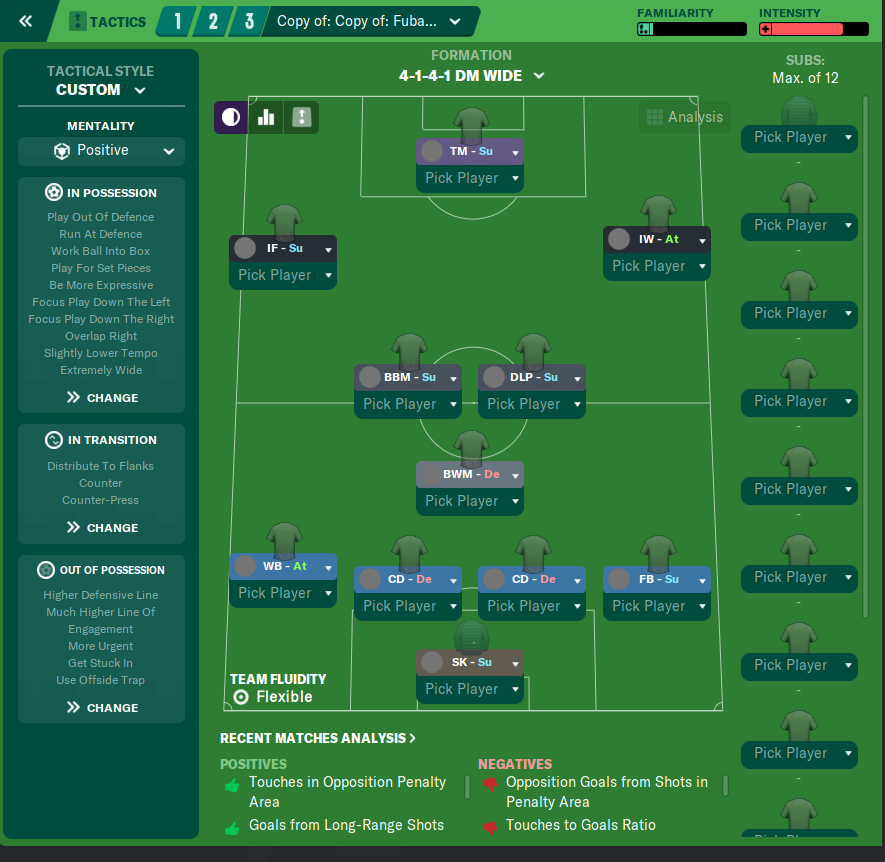
4-1-4-1 DM Wide Formation
Custom
4-1-4-1 DM Wide Formation
Custom
Aggressive Pass and Move Football 4-1-4-1 DM Wide
Aggressive Pass and Move Football
4-1-4-1 DM Wide Formation
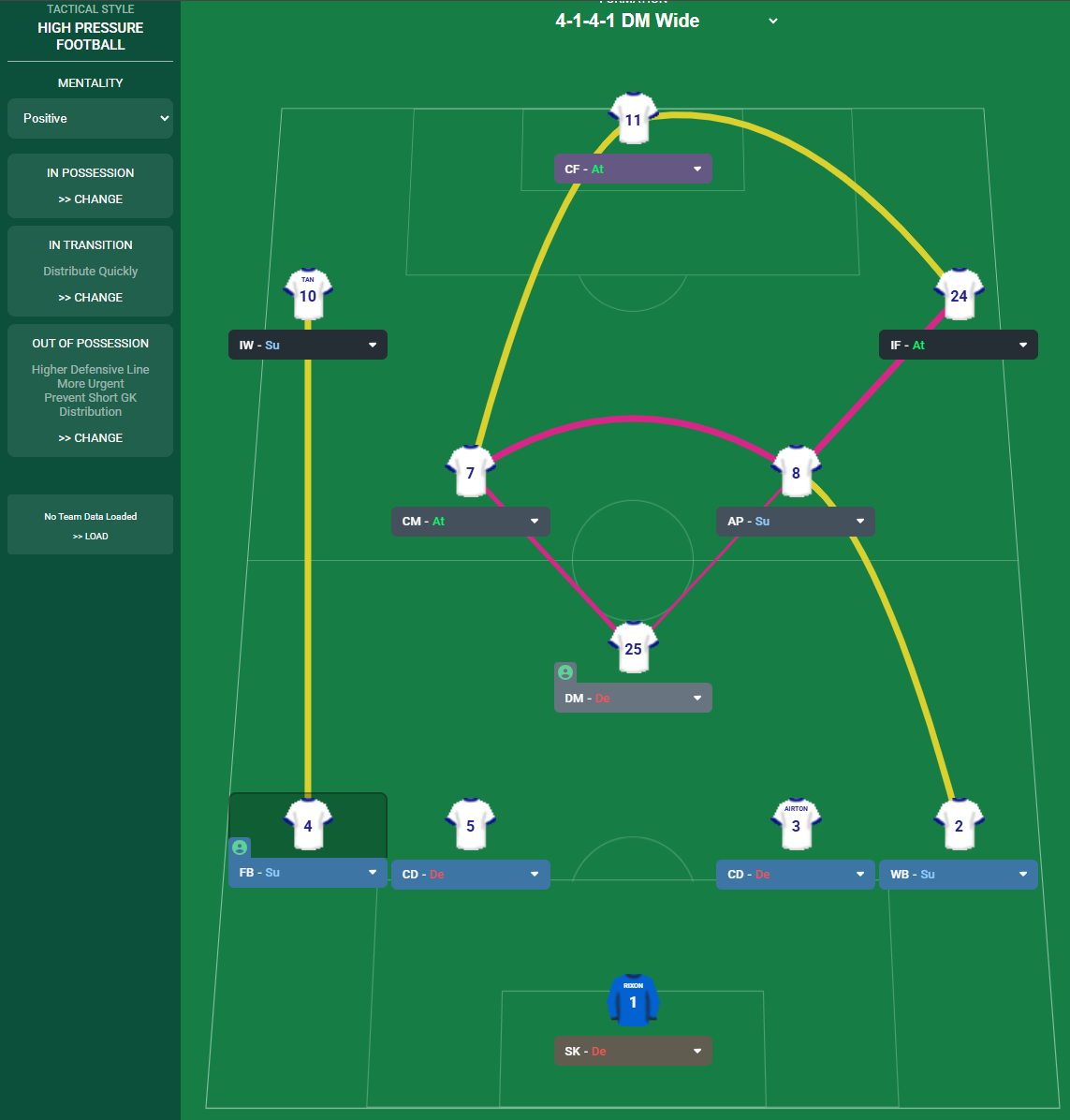
High Pressure Football
4-1-4-1 DM Wide Formation
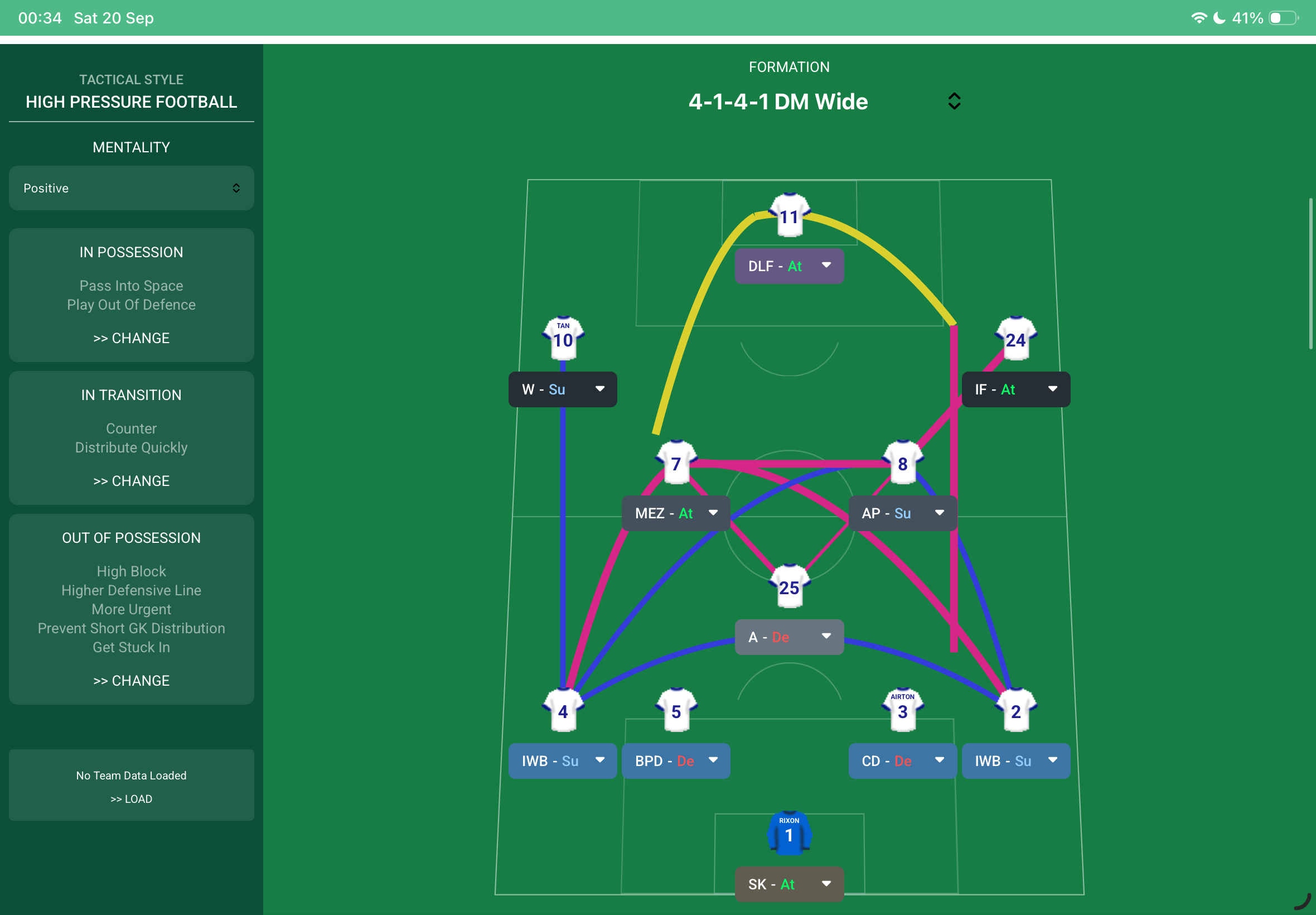
High Pressure Football
4-1-4-1 DM Wide Formation
High Pressure Football
More Possession tactics
Guides for this formation
The tactical theory behind the 4-1-4-1 DM Wide: roles, instructions, and the trade-offs that decide whether the system holds up.