Uploaded Tactic
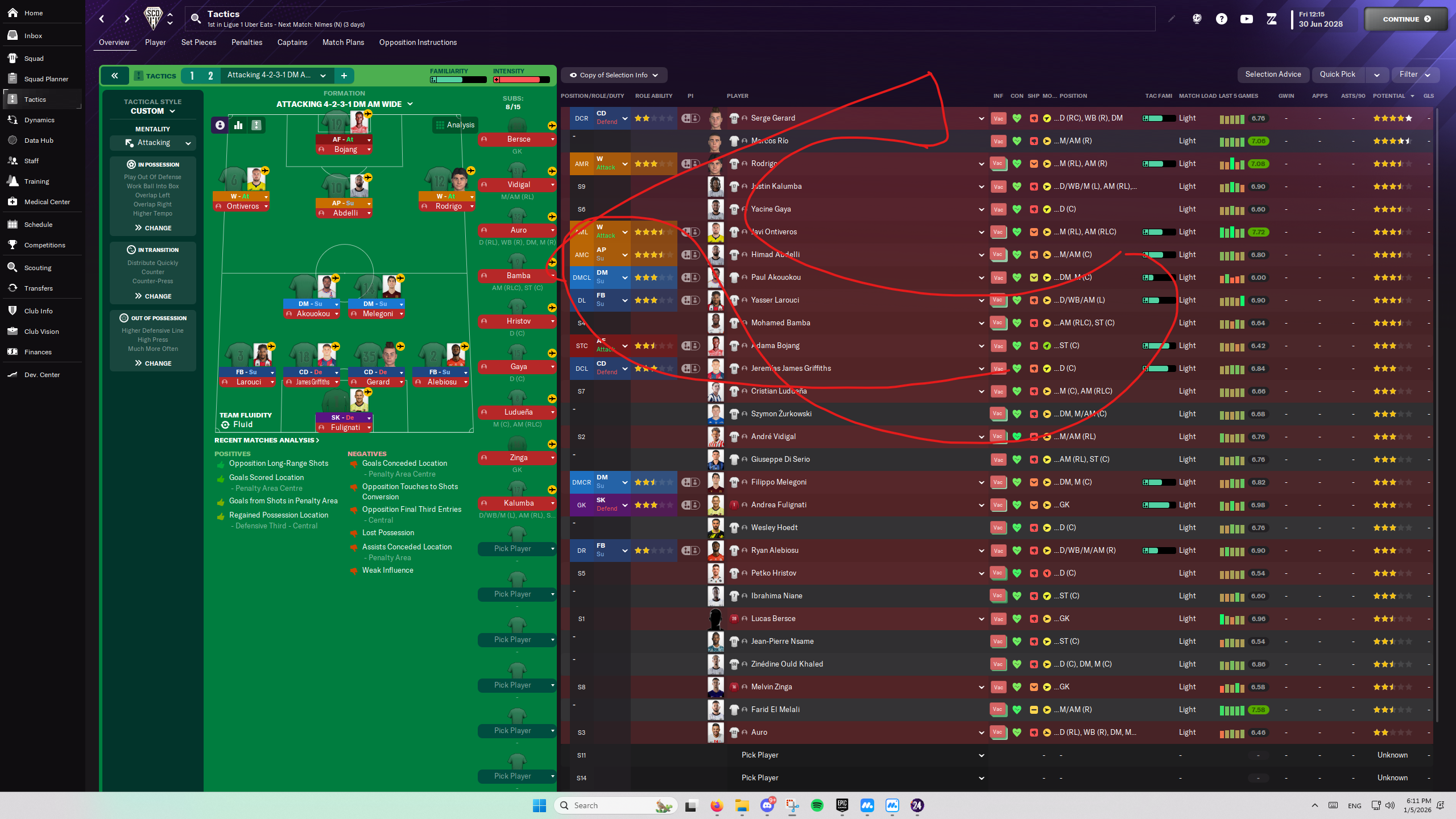
Formation & Style
Tactical Style:Custom
Mentality:Attacking
Formation:4-2-3-1 AM Wide
Team Fluidity:Fluid
In Possession
Higher Tempo
Shorter Passing
Play Out Of Defence
Utilise Width
Overlapping Full-Backs
In Transition
Counter-Press
Counter
Out of Possession
Higher Defensive Line
Higher Line of Engagement
Much More Often Prevent Short GK Distribution
Team Shape Without Ball
Shape:4-2
Description:Compact shape with two holding midfielders providing additional cover for the defence.
Evidence:Two DM roles (BWM-S at [3,2], DLP-S at [3,3]) support the defence.
Team Shape With Ball
Shape:4-3
Description:In attack, the team stretches through wide play while maintaining options in central areas.
Evidence:Inside Forward at [5,3] and Advanced Playmaker at [5,2] enable diverse attacking routes.
Phase Description
Attacking Play
Quick transitions through the midfield with an emphasis on ball retention and exploiting wide areas.
Defensive Transition
Immediate pressure on the ball after losing possession to regain control.
Main Focus
Create chances through quick passing and movement in advanced positions.
Key Strengths
Strong Width Utilization
The wing-backs provide width, allowing for effective exploitation of space down the flanks.
Ball Recovery and Transition
The Counter-Press strategy ensures quick recovery of the ball after losing possession.
Creative Midfield
Combination of an Advanced Playmaker and a Deep-Lying Playmaker allows for varied midfield creativity.
Conflicting Directions
High Line Risks
The higher defensive line may expose the team to counter-attacks, especially against fast forwards.
Over-Reliance on Wide Play
While utilizing width is advantageous, it may lead to predictability if not combined with central penetration.
Midfield Overload
There may be instances where two DMs lead to congestion in midfield, affecting transition speed.
Tactical Suggestions
Adjust Line of Engagement
Consider lowering the line of engagement to mitigate counter-attack risks.
Diversify Attacking Patterns
Integrate more central runs from midfielders to complement wide play and break opposition defenses.
Implement Variability in Player Roles
Experiment with changing the duties of the wing-backs based on opponents to keep unpredictability.
Ask Questions About Your Lineup
Related Tactics
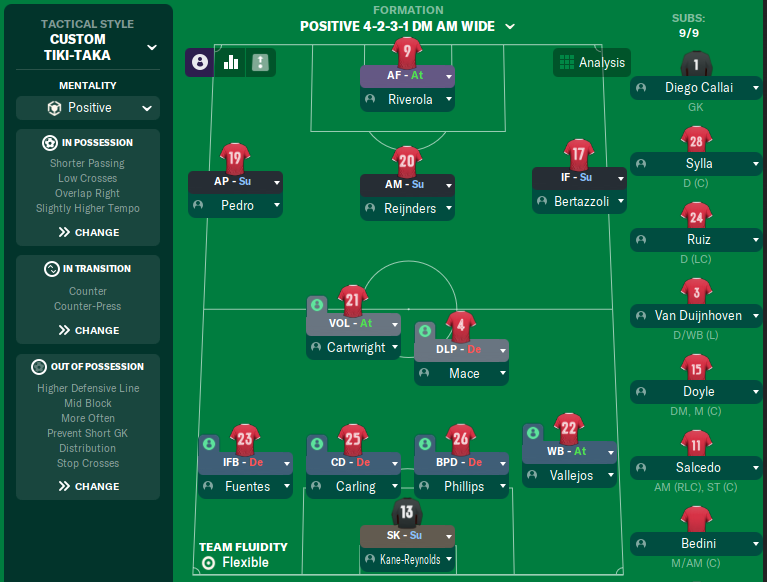
Tiki-Taka 4-2-3-1 AM Wide
Tiki-Taka
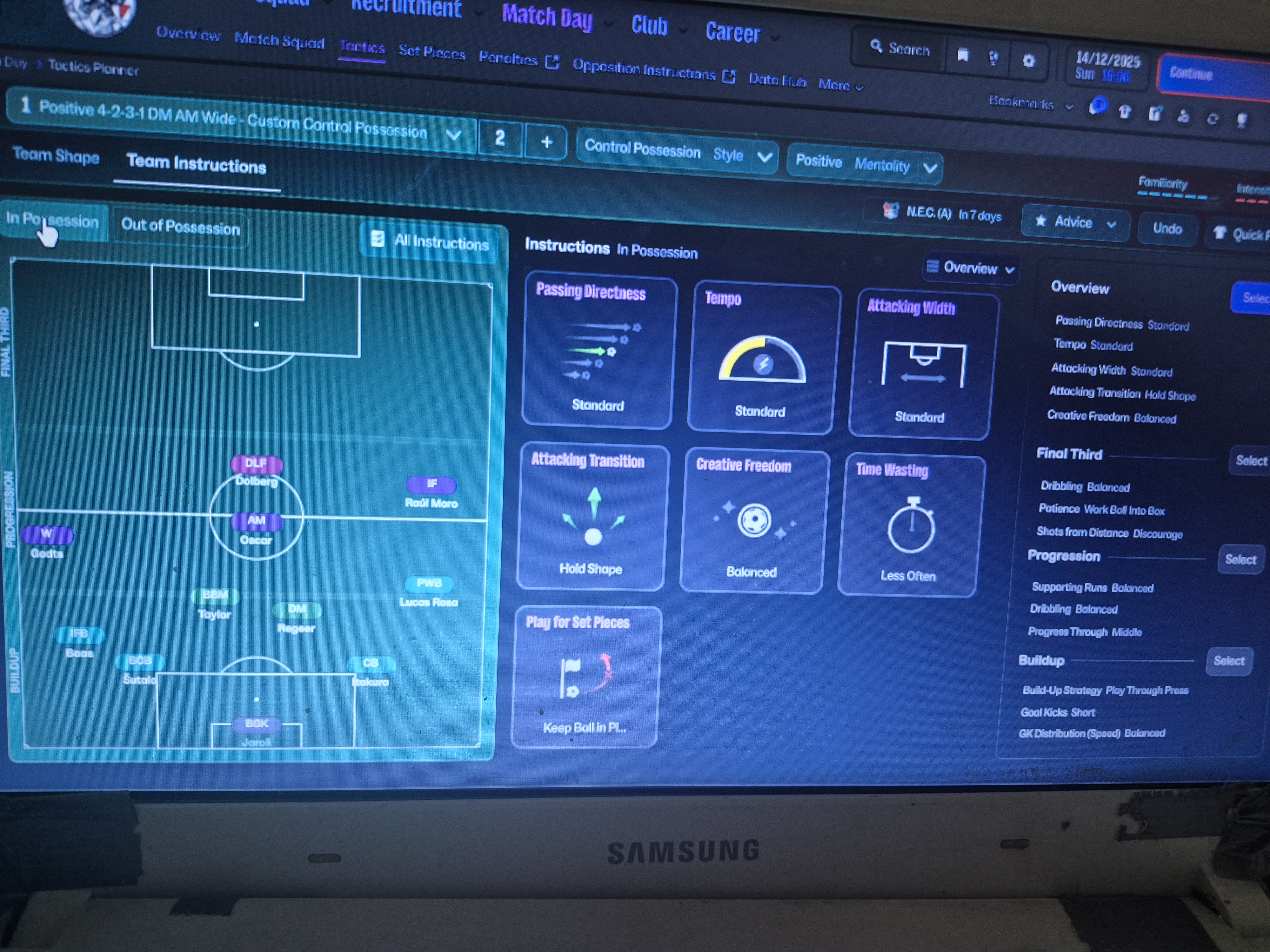
Control Possession 4-2-3-1 AM Wide
Control Possession
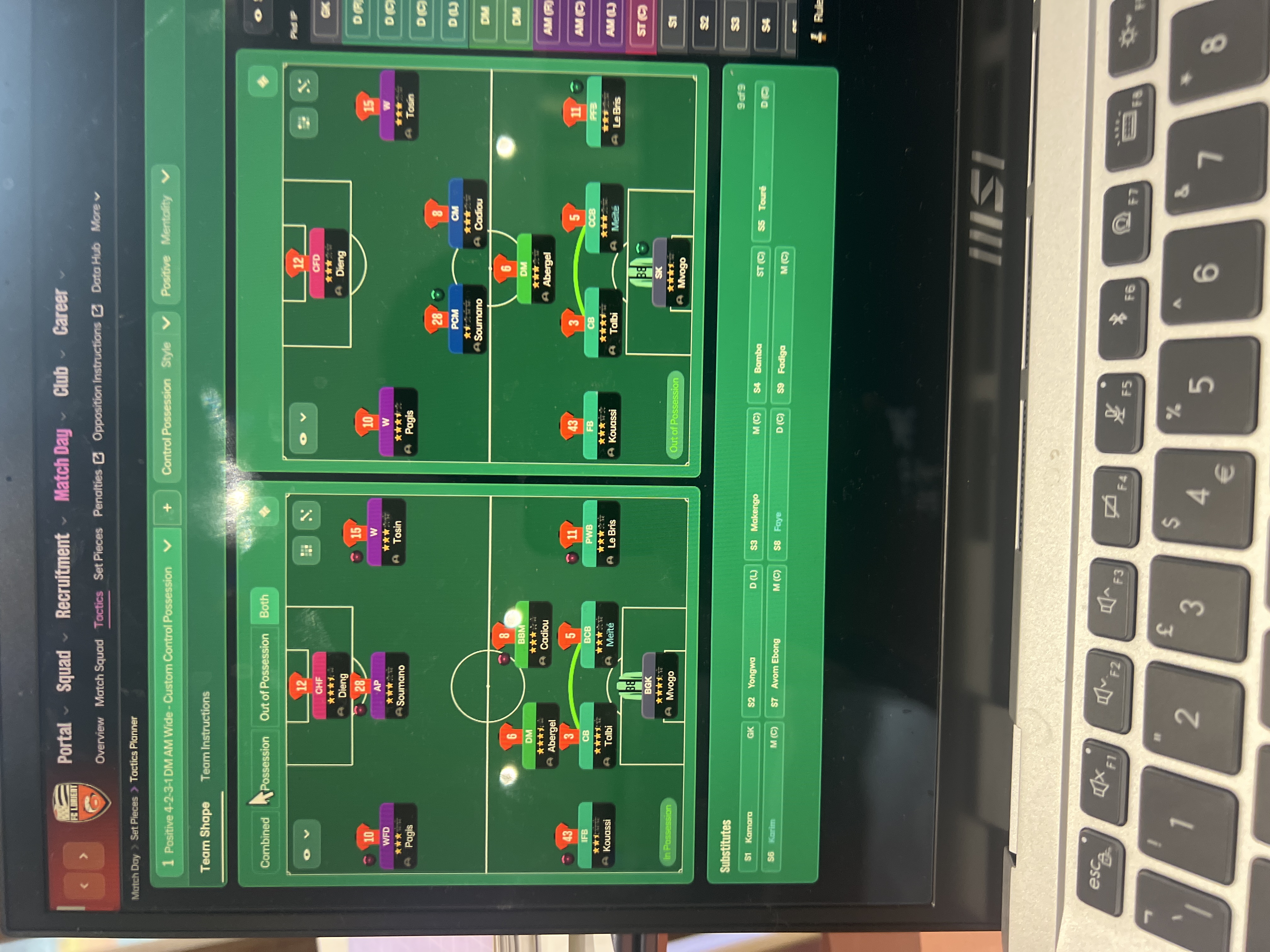
Control Possession 4-2-3-1 AM Wide
Control Possession
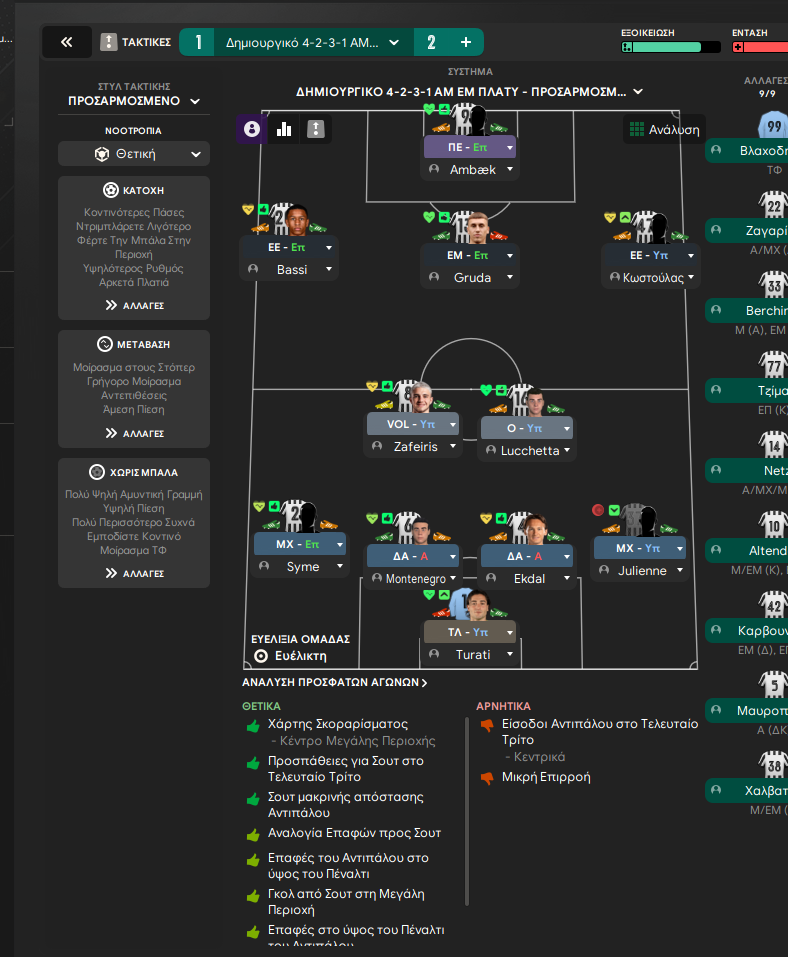
4-2-3-1 AM Wide Formation
Positional
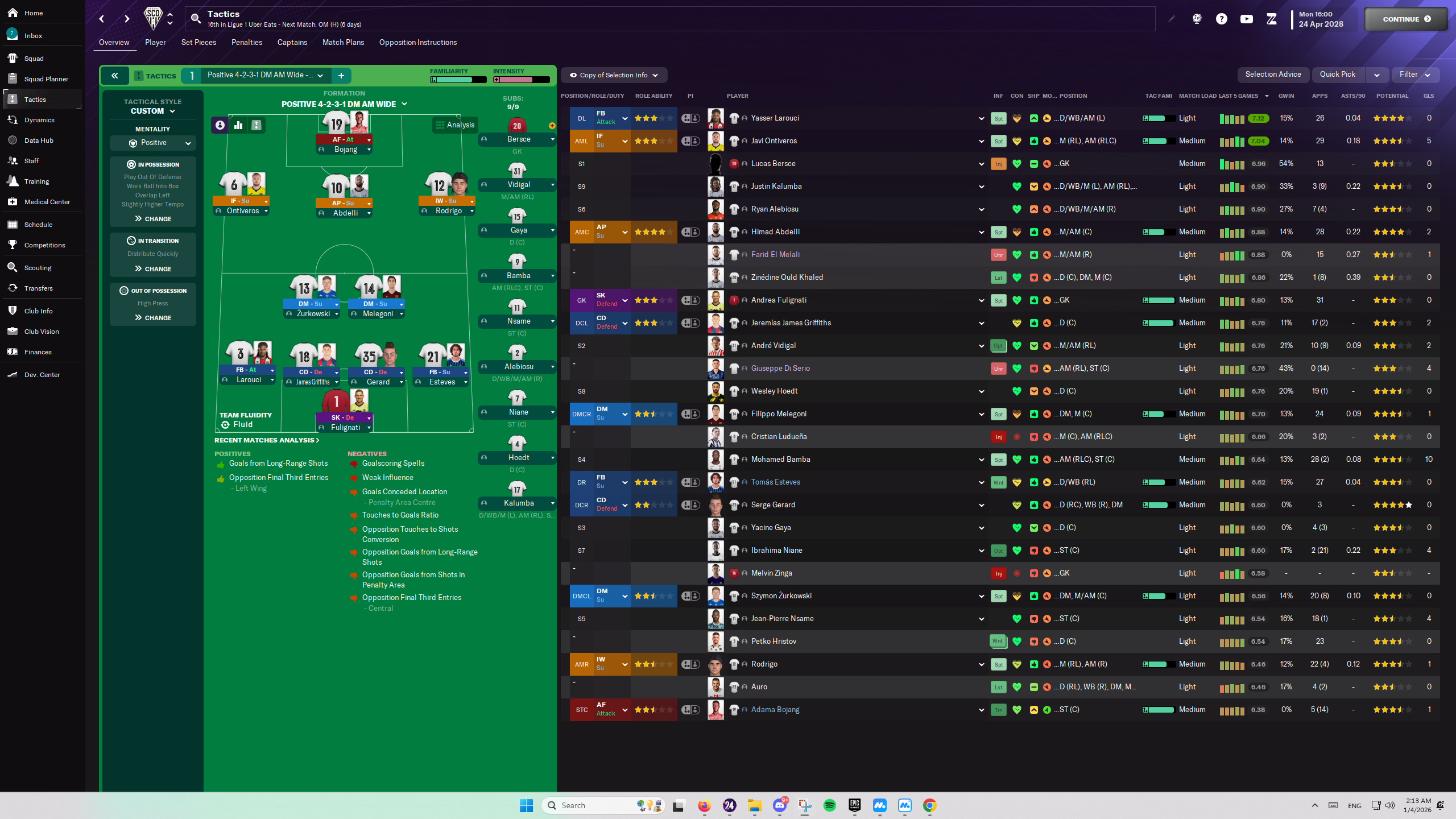
Positive 4-2-3-1 AM Wide
Positive
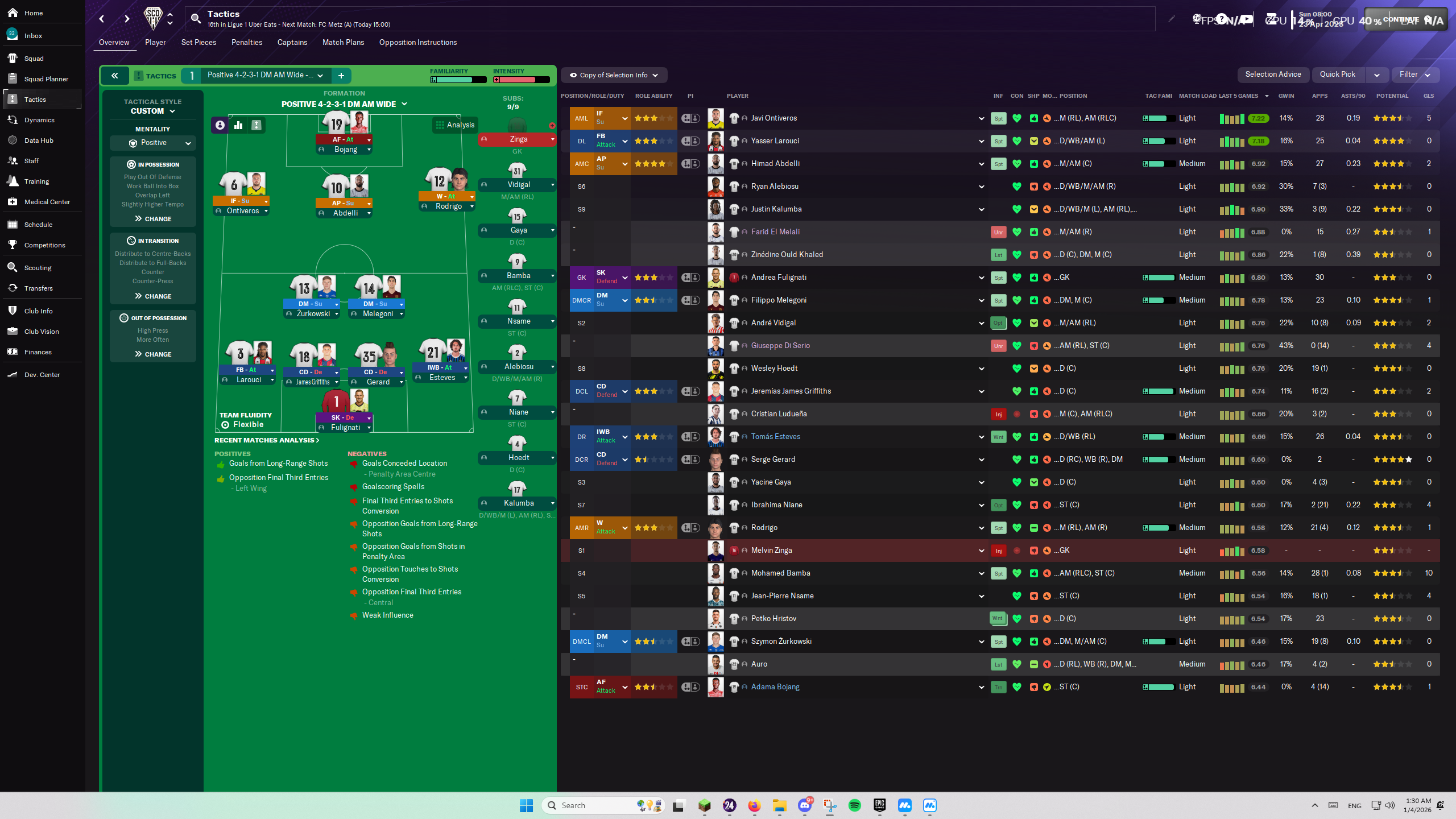
Positive 4-2-3-1 AM Wide
Positive
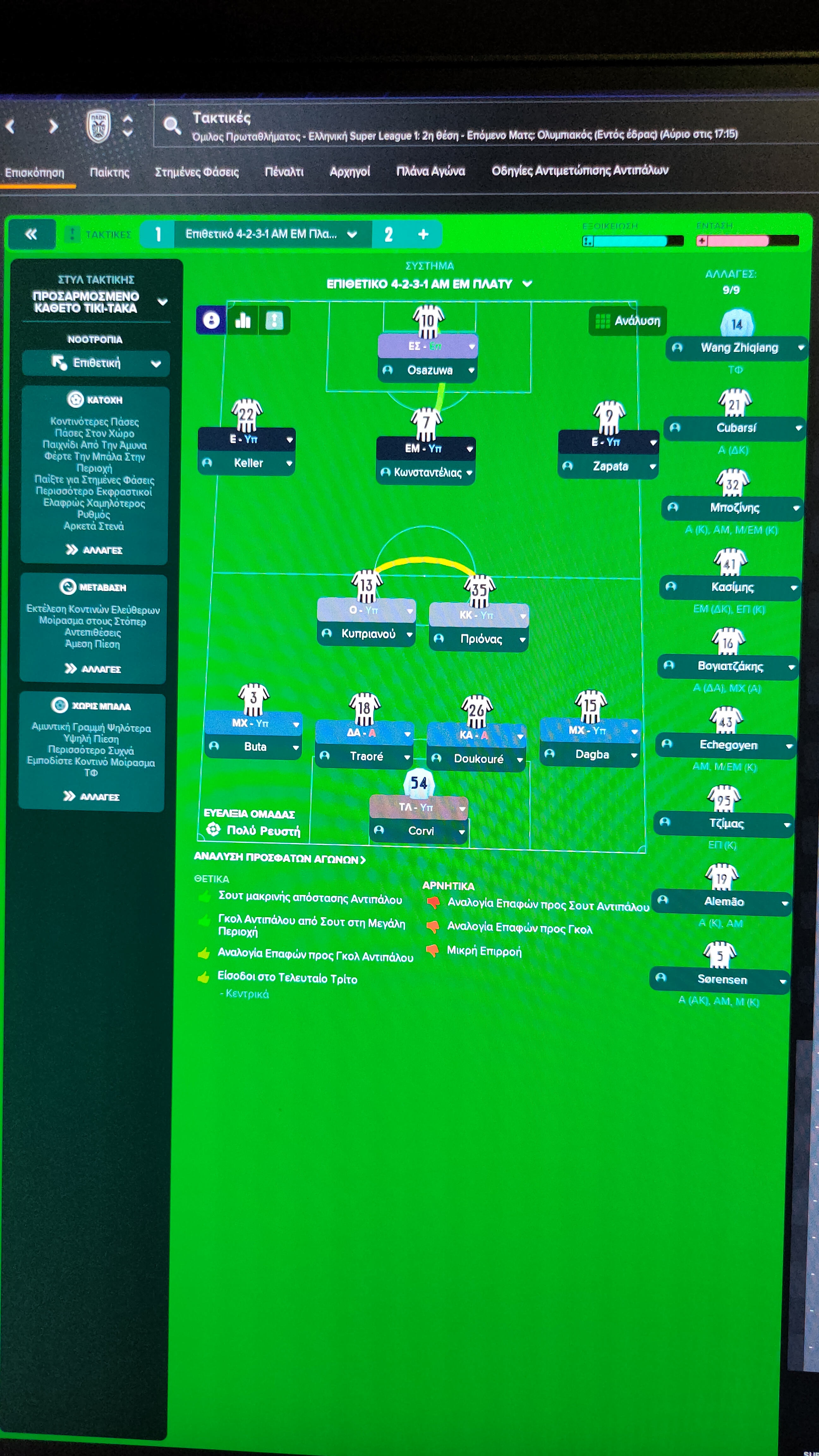
Tiki-Taka 4-2-3-1 AM Wide
Tiki-Taka
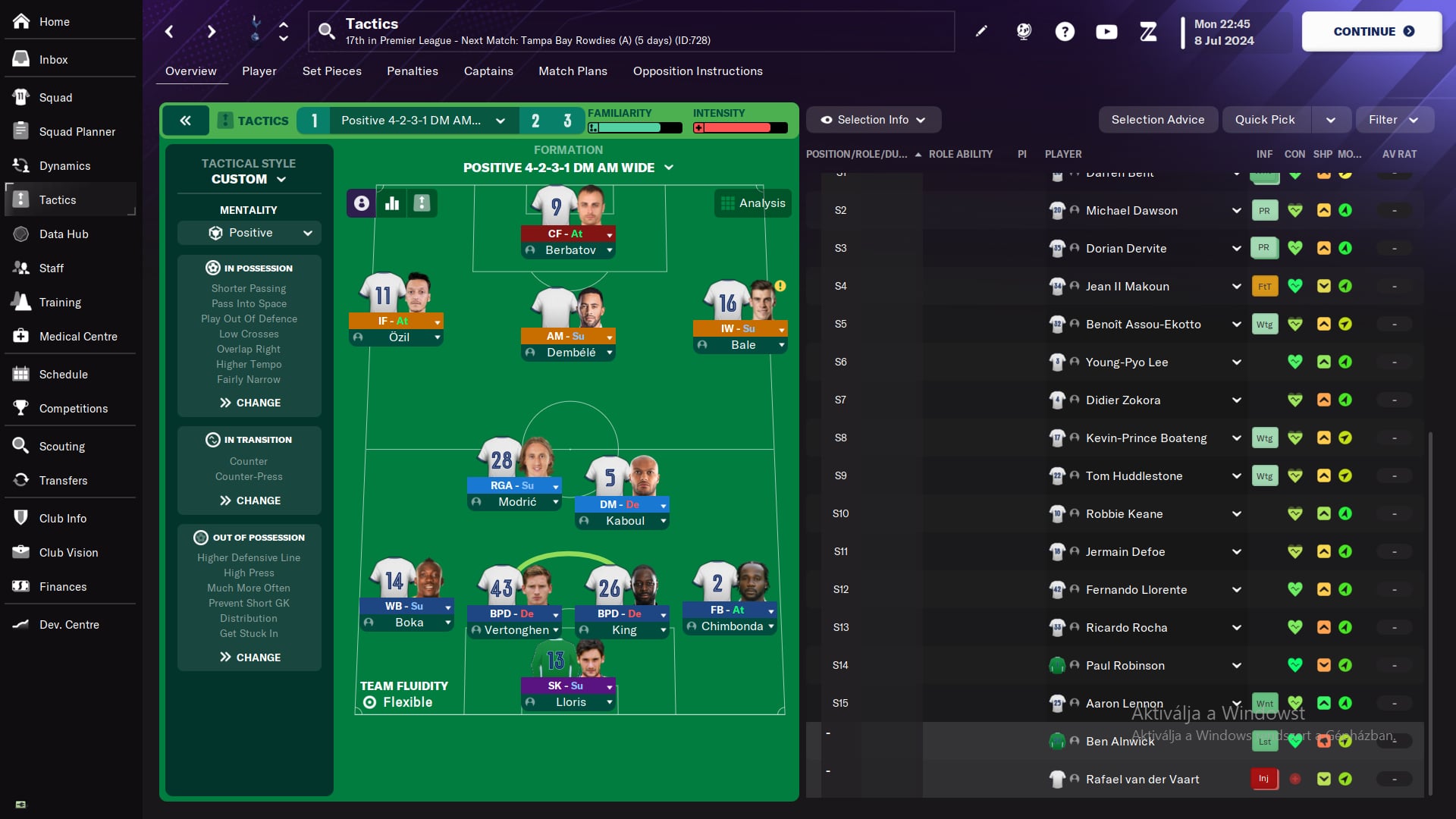
Positive 4-2-3-1 AM Wide
Positive
Guides for this formation
The tactical theory behind the 4-2-3-1 AM Wide: roles, instructions, and the trade-offs that decide whether the system holds up.
Player pairings
Midfield Pairs in 4-2-3-1 and 4-4-2
Double pivots and flat pairs in 4-2-3-1 and 4-4-2: when each pairing works, when it collapses, and the AMC unicorn that rescues both.
Read guide
Playing styles
Gegenpressing: A Full Guide
Klopp-style gegenpressing in FM, including squad profile, line-and-press pairing, sustainable workload, and the antipatterns to avoid.
Read guide