Uploaded Tactic
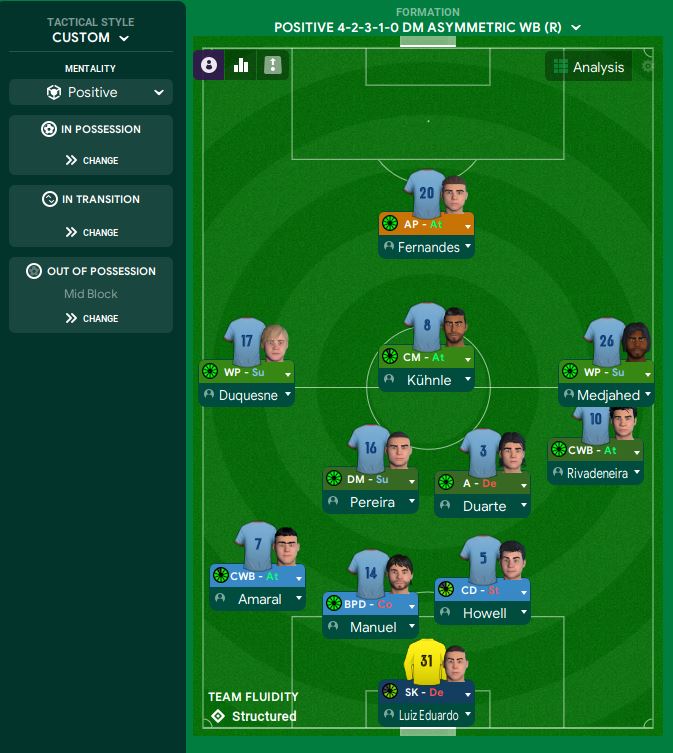
Formation & Style
Tactical Style:Positive
Mentality:Positive
Formation:4-2-3-1 Asymmetric
Team Fluidity:Structured
In Possession
Play Out Of Defence
Shorter Passing
Pass Into Space
In Transition
Counter-Press
Distribution to Flanks
Out of Possession
Mid Block
Prevent Short GK Distribution
Team Shape Without Ball
Shape:4-2
Description:Defensive shape maintains compactness with two holding midfielders supporting the back line.
Evidence:DM-S at [3,3] supports the CBs at [2,2] and [2,3] while CWB-A at [2,1] and [2,5] provide width.
Team Shape With Ball
Shape:4-3
Description:Stresses positional play with wingers stretching the opposition and an advanced midfielder linking the play.
Evidence:AP-A at [5,3] combined with WP-S on both sides creates space for the lone ST at [6,3].
Phase Description
Attacking Play
Utilizes wing play and a central attacking midfielder to create overloads and chances.
Defensive Transition
Employs a counter-pressing strategy to regain possession quickly after losing the ball.
Main Focus
To control the game through possession while attacking from the flanks.
Key Strengths
Wing Play
The use of wingers coupled with complete wing-backs allows for dynamic attacks from the flanks.
Central Control
An advanced playmaker and attacking midfielder create pressure in the central areas.
Defensive Solidity
Two defensive midfielders provide a strong shield to the backline.
Conflicting Directions
High Line Pressing
The moderate defensive structure with a mid block may limit effectiveness for a high pressing game-style.
Overworking Wing-Backs
Complete wing-backs could struggle defensively if overloaded on either flank.
Countering in Transition
While counter-press is employed, it may lead to disorganization if not executed well.
Tactical Suggestions
Consider Deeper Block on Transition
Adjusting to a deeper block allows for better organization after losing possession.
Utilize Central Midfielders for Balance
Encouraging central midfielders to support defense may help in maintaining shape.
Incorporate More Direct Passing
Incorporating more direct passing could accelerate offensive transitions.
Ask Questions About Your Lineup
Related Tactics
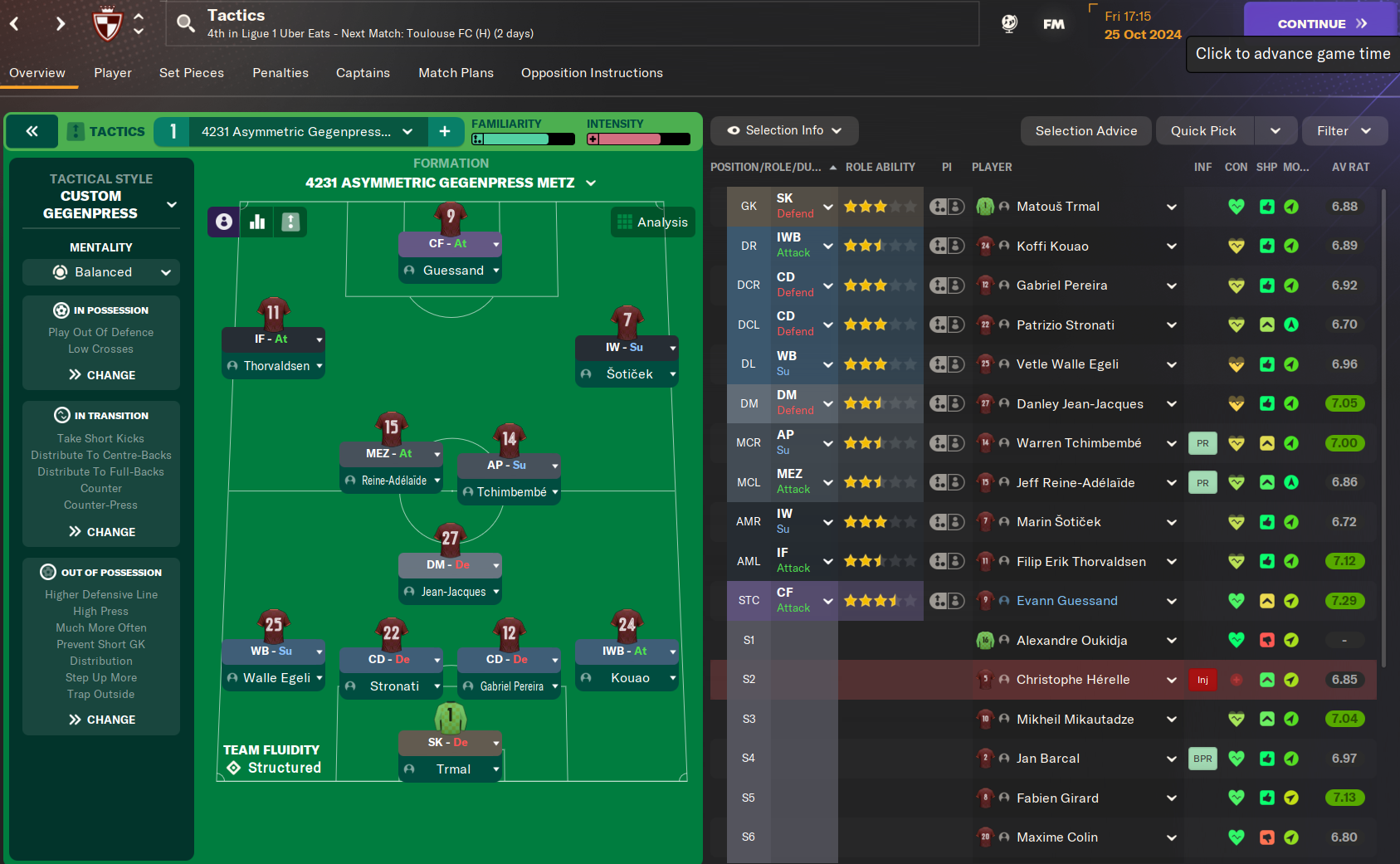
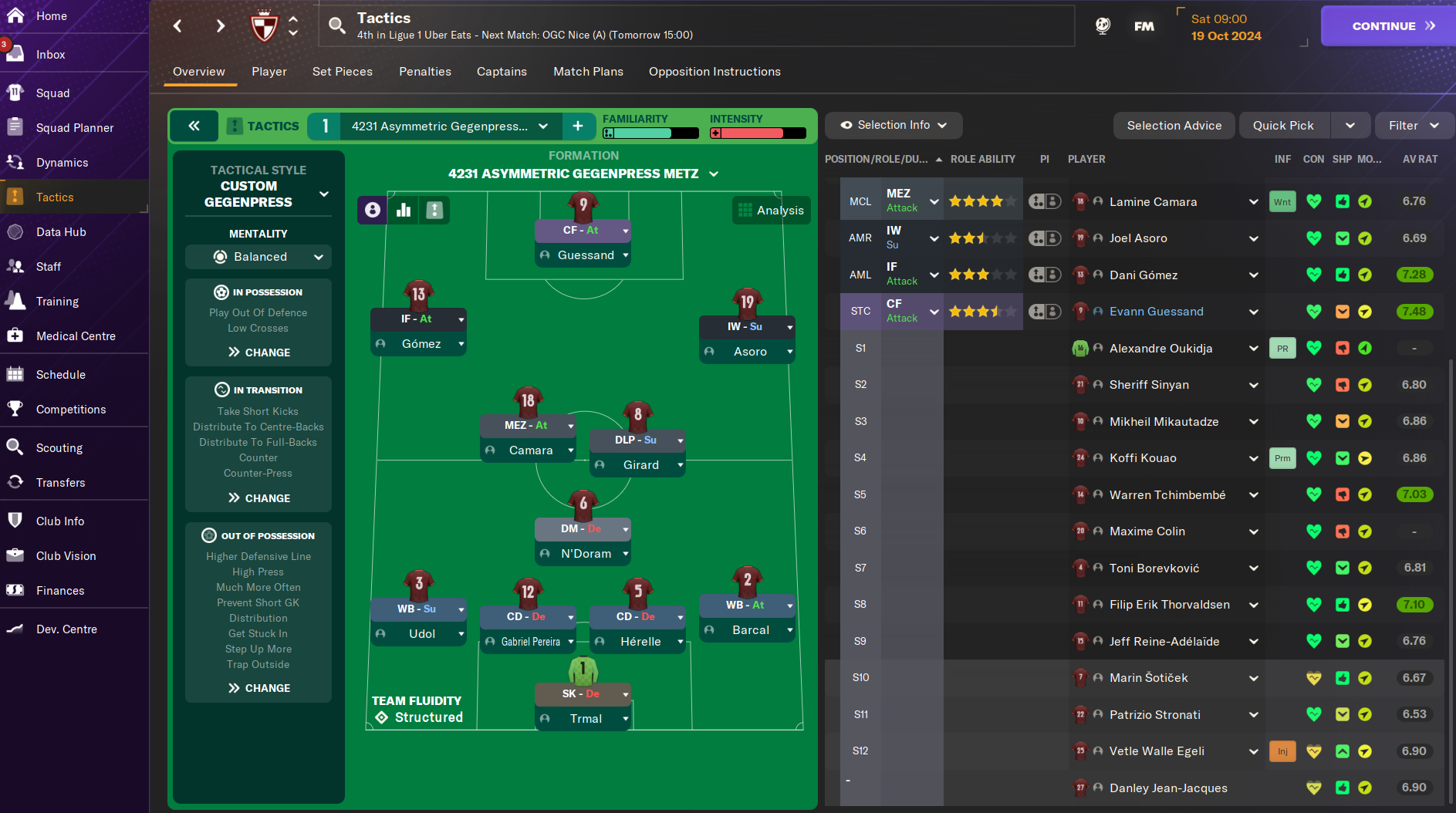
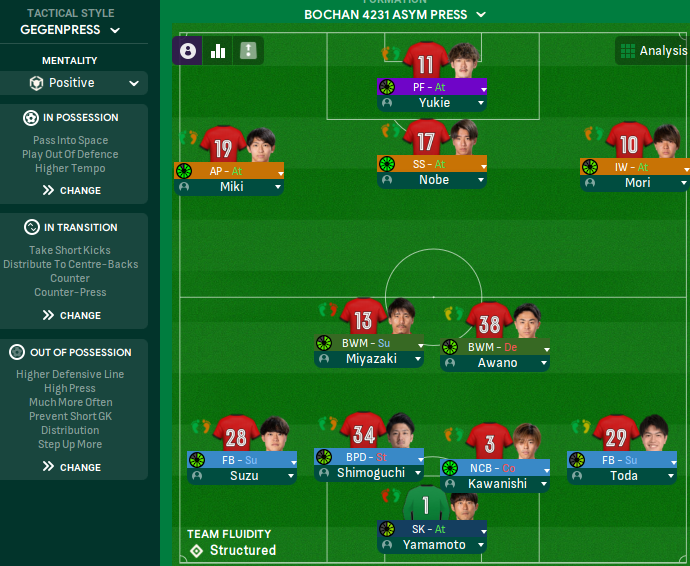
More Positive tactics
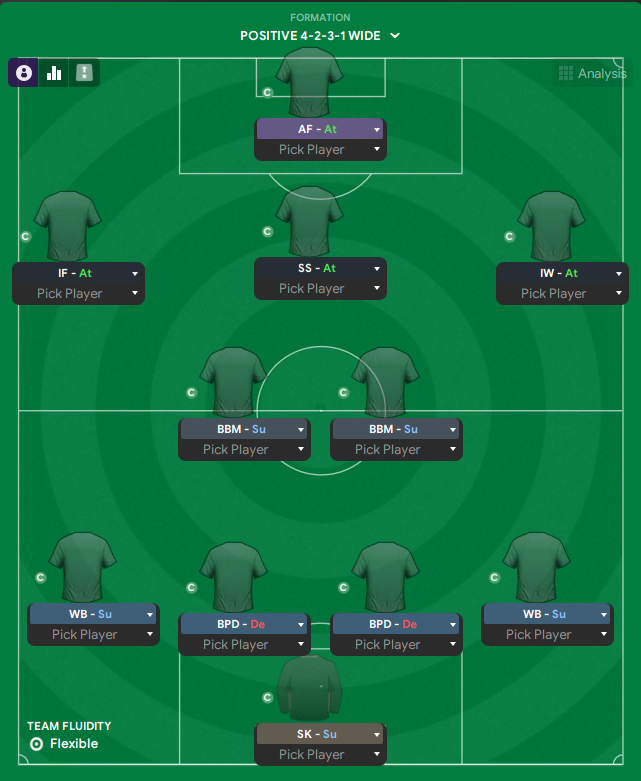
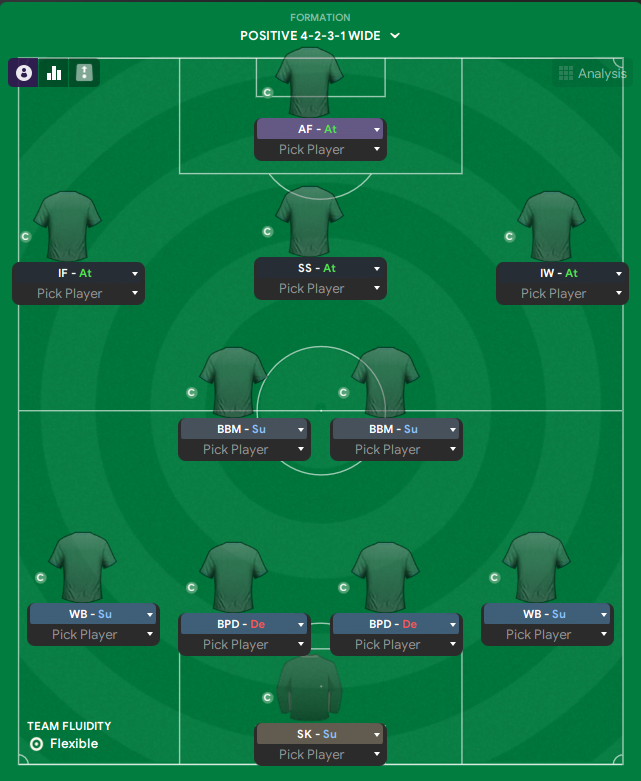
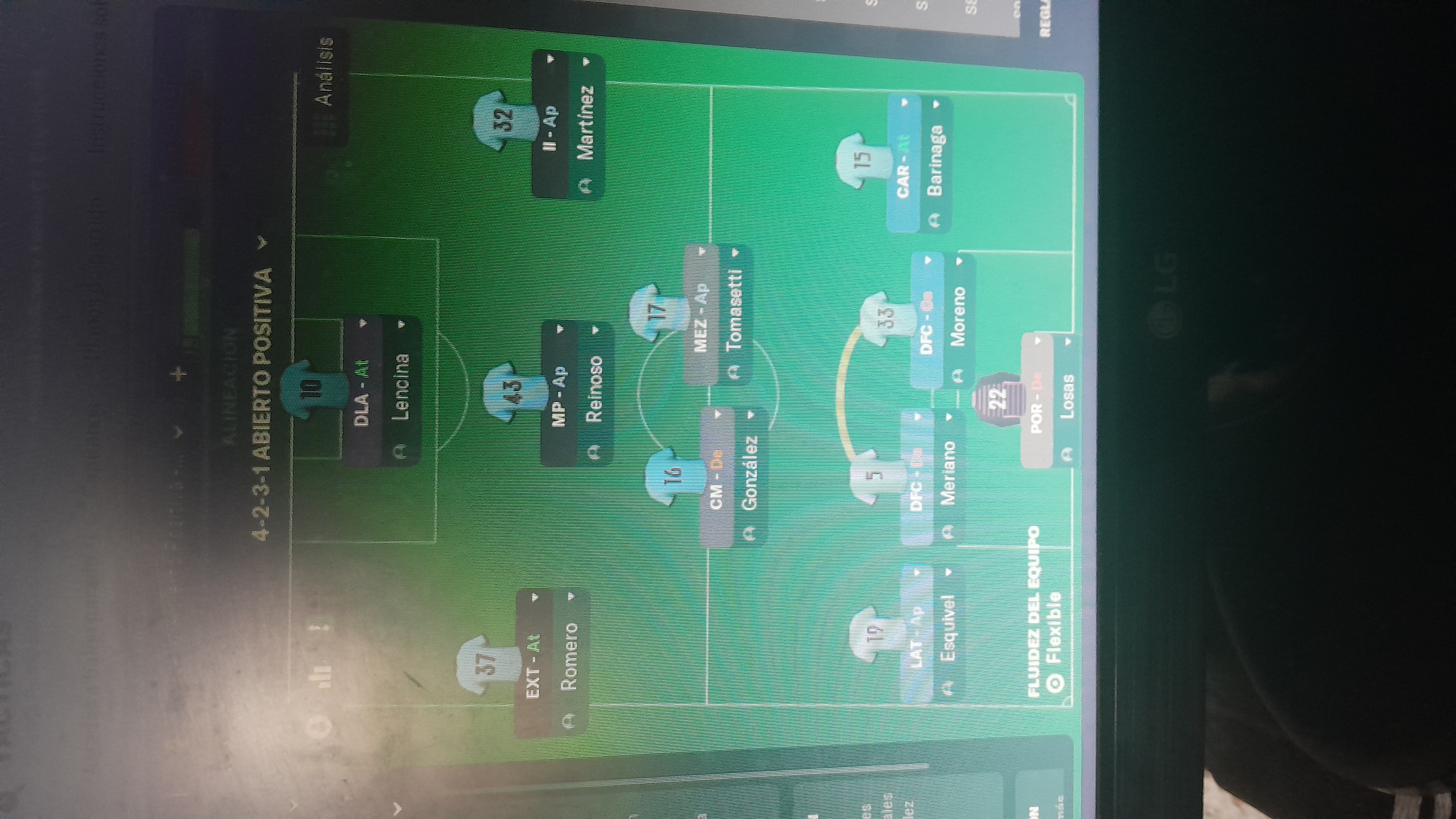
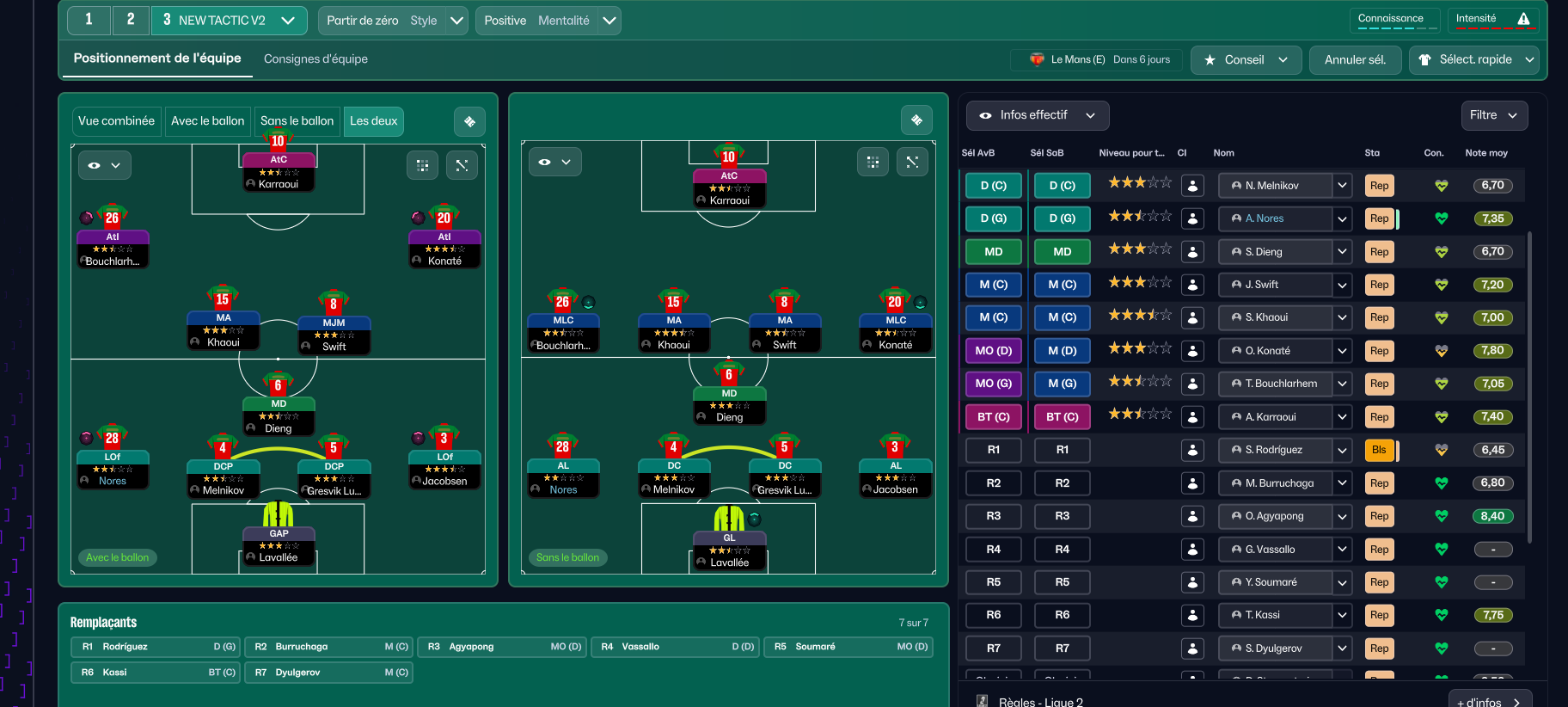
Guides for this formation
The tactical theory behind the 4-2-3-1 Asymmetric: roles, instructions, and the trade-offs that decide whether the system holds up.
Player pairings
Midfield Pairs in 4-2-3-1 and 4-4-2
Double pivots and flat pairs in 4-2-3-1 and 4-4-2: when each pairing works, when it collapses, and the AMC unicorn that rescues both.
Read guide
Playing styles
Gegenpressing: A Full Guide
Klopp-style gegenpressing in FM, including squad profile, line-and-press pairing, sustainable workload, and the antipatterns to avoid.
Read guide