Uploaded Tactic
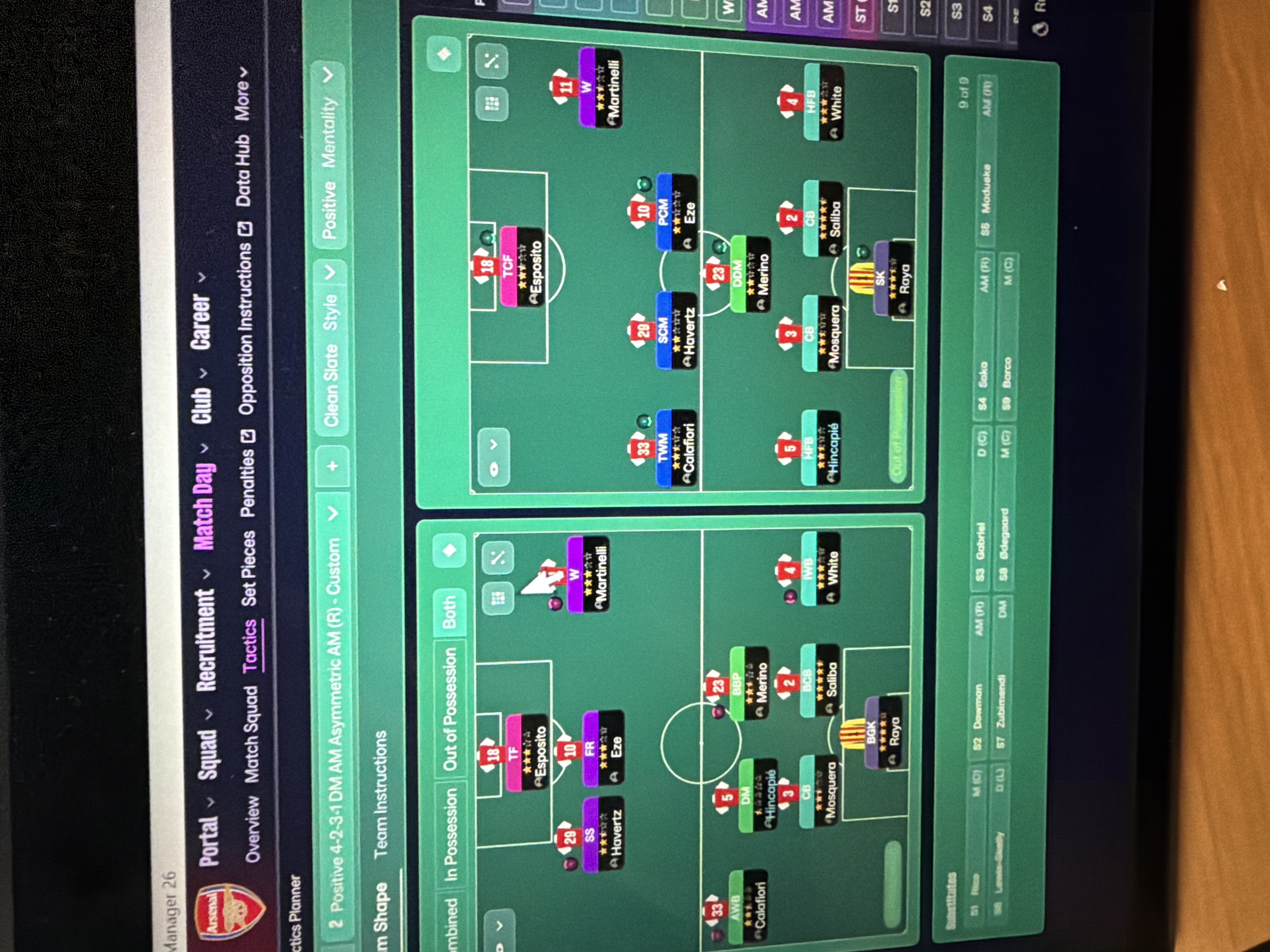
Formation & Style
Tactical Style:Asymmetric
Mentality:Positive
Formation:4-2-3-1 DM Asymmetric
Team Fluidity:Custom
In Possession
Play Out Of Defence
Be More Expressive
Work Ball Into Box
In Transition
Counter Press
Counter
Hold Shape
Out of Possession
Higher Defensive Line
Standard Defensive Width
More Often Prevent Short GK Distribution
Team Shape Without Ball
Shape:4-2
Description:Standard four-man defense flanked by two holding midfielders for immediate support.
Evidence:DM (DLP-D) at [3,3] and [3,1] with CB at [2,2] and [2,4].
Team Shape With Ball
Shape:4-3
Description:Attacking focus shifts into a wide structure with wingers pushing high.
Evidence:AM (AM-A) at [5,3] with W (W-A) at [6,2] and [6,4] creating a 4-3 structure.
Phase Description
Attacking Play
Utilizes width with inverted wing-backs and wingers to create overloads while looking for advanced runs from midfield.
Defensive Transition
Quick recovery through counter pressing and maintaining a compact shape after losing possession.
Main Focus
Control the midfield and create goal-scoring opportunities through dynamic movements and fluid passing.
Key Strengths
Midfield Dominance
The combination of a DLP-D and SV-S provides excellent control in the midfield.
Wing Play
Strong attacking threat from the wingers and wing-back, aiding width in attacks.
Defensive Resilience
A blend of BPD and NCB ensures a solid base in defence.
Conflicting Directions
High Defensive Line Concerns
While a high defensive line can squeeze space, it risks exposure to fast counter-attacks.
Lack of Central Midfield Presence
With only one central midfielder actively supporting, the team could struggle against packed midfields.
Inverted Wing-Back Risk
The inverted wing-back role may leave spaces on the flanks if not supported adequately.
Tactical Suggestions
Enhance Central Control
Consider adding a more central midfielder like a BBM to better control the midfield.
Adjust Defensive Line Height
A slight reduction in the defensive line height could mitigate counter-attacking risks.
Support for Inverted Wing-Back
Ensure the central midfielder is providing cover for the IWB to avoid vulnerability on the flanks.
Ask Questions About Your Lineup
More Asymmetric tactics
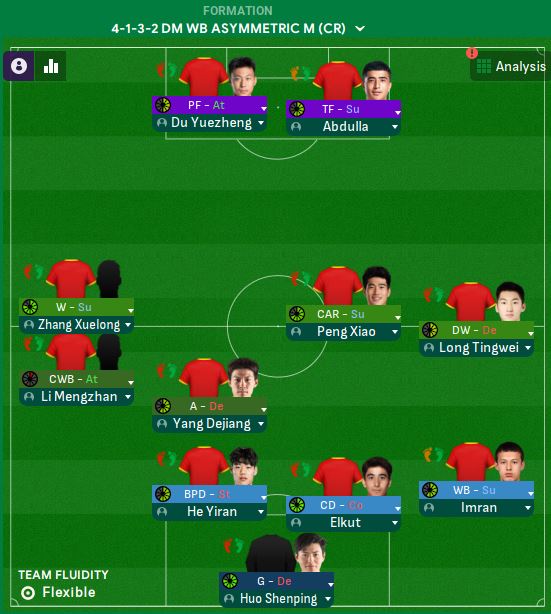
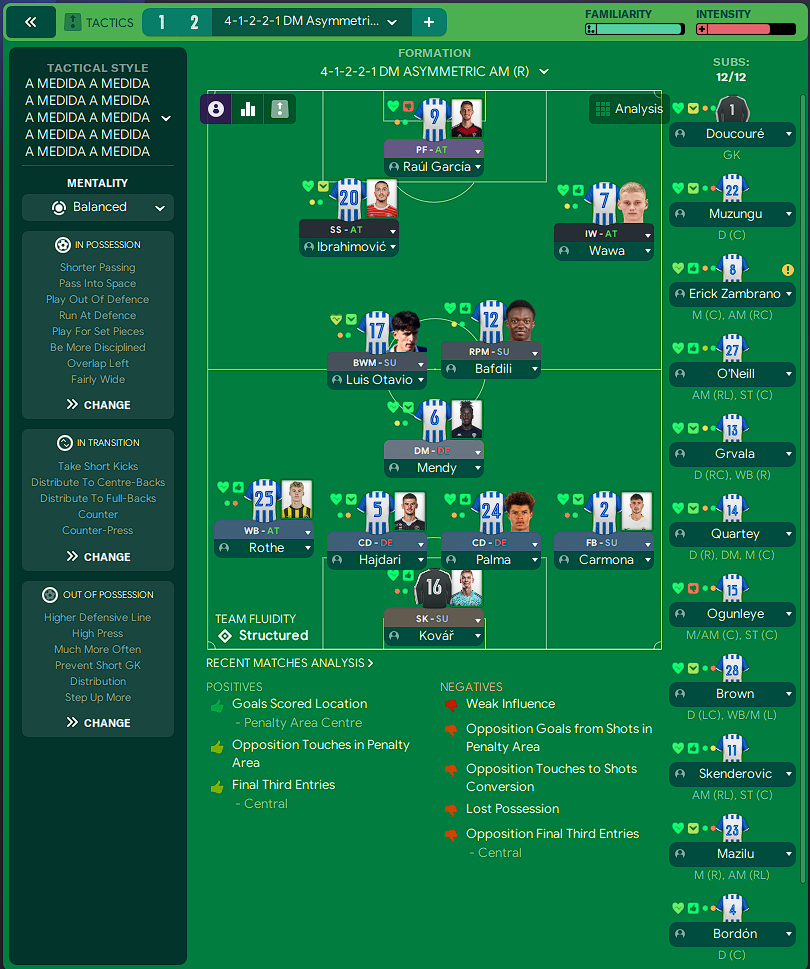
Guides for this formation
The tactical theory behind the 4-2-3-1 DM Asymmetric: roles, instructions, and the trade-offs that decide whether the system holds up.
Player pairings
Midfield Pairs in 4-2-3-1 and 4-4-2
Double pivots and flat pairs in 4-2-3-1 and 4-4-2: when each pairing works, when it collapses, and the AMC unicorn that rescues both.
Read guide
Playing styles
Gegenpressing: A Full Guide
Klopp-style gegenpressing in FM, including squad profile, line-and-press pairing, sustainable workload, and the antipatterns to avoid.
Read guide