Uploaded Tactic
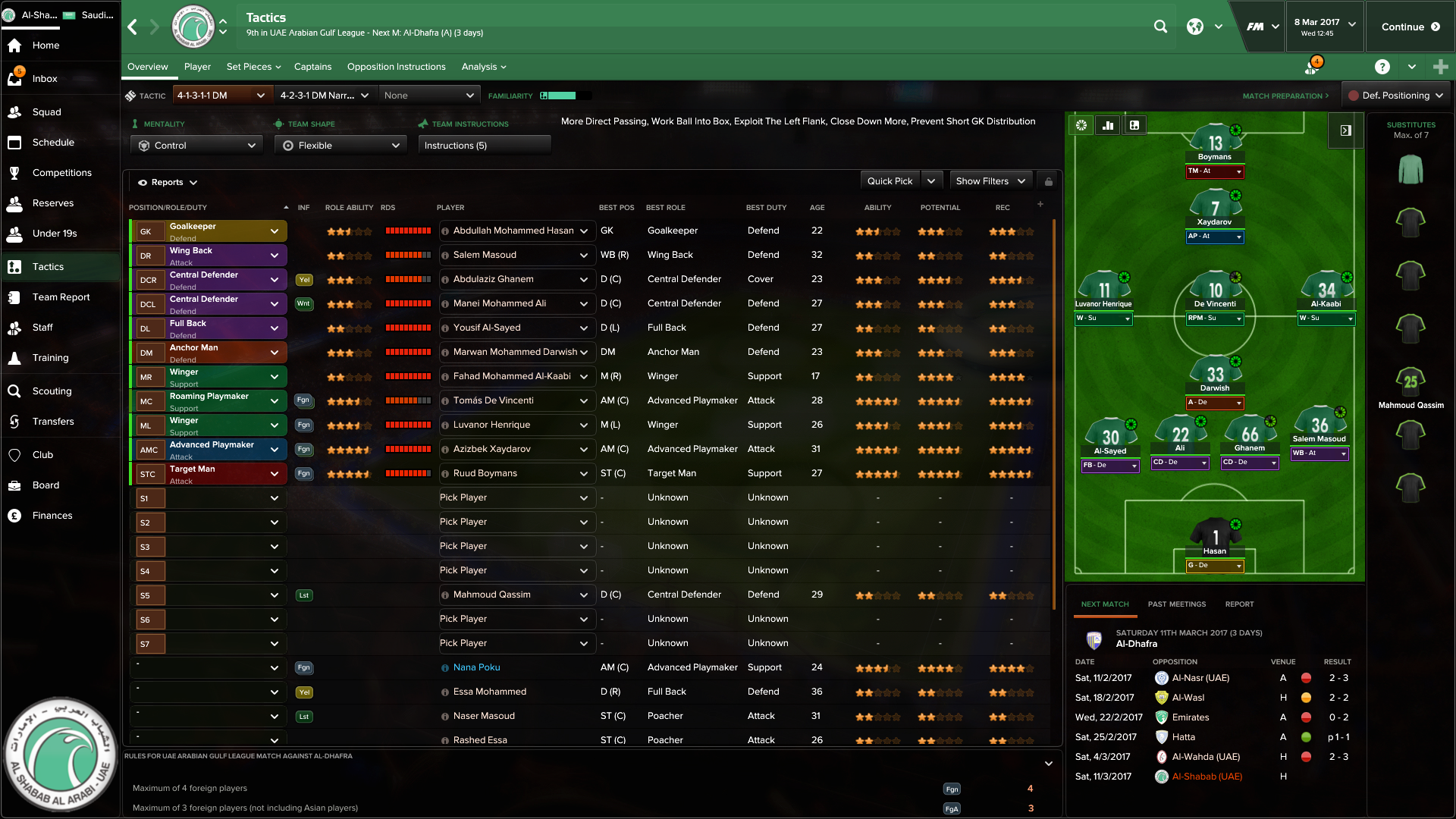
Formation & Style
Tactical Style:Control
Mentality:Positive
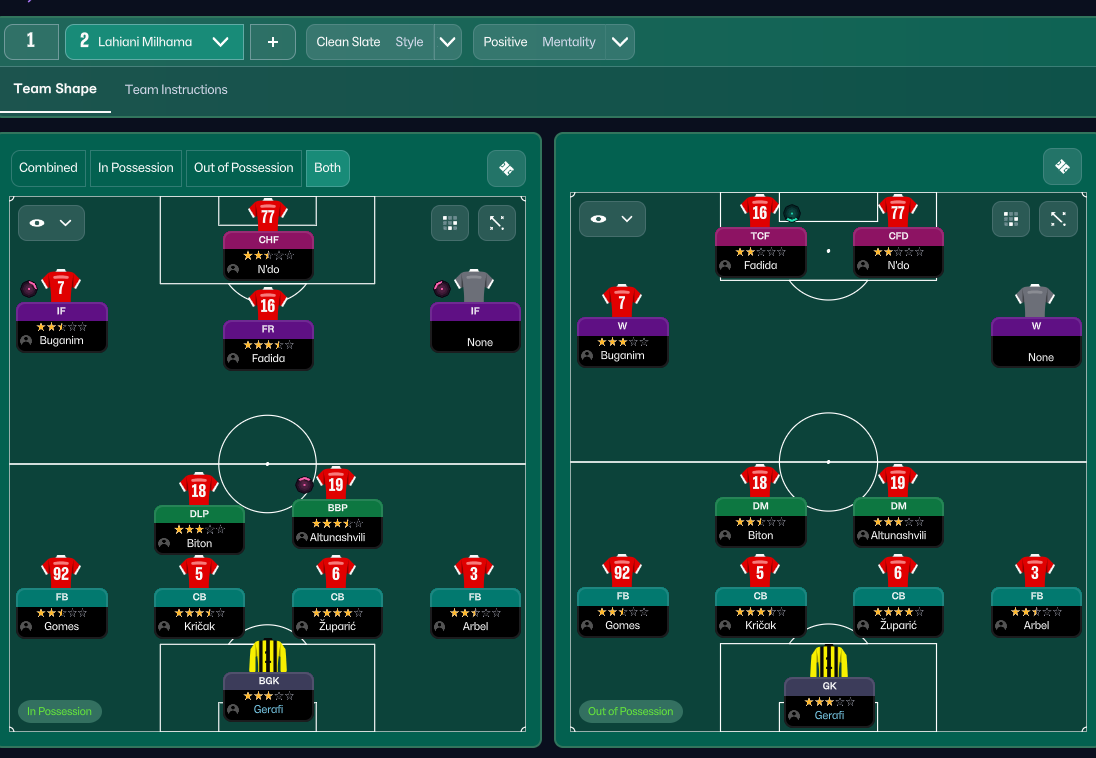
Formation:4-2-3-1 DM
Team Fluidity:Flexible
In Possession
More Direct Passing
Work Ball Into Box
Exploit The Left Flank
In Transition
Close Down More
Prevent Short GK Distribution
Out of Possession
Higher Defensive Line
Standard Defensive Width
Team Shape Without Ball
Shape:4-2
Description:A compact shape with two central midfielders aiding in defensive duties.
Evidence:Anchor Man (DM) at [3,3] provides stability in the midfield.
Team Shape With Ball
Shape:4-3
Description:Wide wingers aim to exploit flanks, while the central advanced playmaker supports buildup.
Evidence:Wingers (MR and ML) at [4,2] and [4,4] create width and help centralize play.
Phase Description
Attacking Play
The team utilizes width through wingers to stretch the opposition while creating central opportunities through the advanced playmaker.
Defensive Transition
Quickly transition to a compact shape to limit space and counter opponent's advances.
Main Focus
Control possession and create chances through progressive passing.
Key Strengths
Fluid Transition
The combination of advanced playmaker and anchor man allows for smooth transitions.
Wide Play
Strong use of wide players enables stretching defences and creating space.
Defensive Solidity
Stable back four supported by a disciplined anchor man provide a solid base.
Conflicting Directions
Over-reliance on Wings
Heavy focus on wing play might lead to predictability and reduced central penetration.
Anchor Man Risks
An anchor man might restrict fluid attacking play if too conservative.
Counterpress Issues
A rigid structure may struggle against quick counter-attacks.
Tactical Suggestions
Encourage Central Attacks
Incorporate central midfielders to support attacking plays.
Increase Defensive Flexibility
Adopt a more adaptive defensive strategy to combat quick transitions.
Utilize Deep Runs
Encourage midfielders to push forward into the box for support.
Ask Questions About Your Lineup
More Control tactics
Guides for this formation
The tactical theory behind the 4-2-3-1 DM: roles, instructions, and the trade-offs that decide whether the system holds up.
Player pairings
Midfield Pairs in 4-2-3-1 and 4-4-2
Double pivots and flat pairs in 4-2-3-1 and 4-4-2: when each pairing works, when it collapses, and the AMC unicorn that rescues both.
Read guide
Playing styles
Gegenpressing: A Full Guide
Klopp-style gegenpressing in FM, including squad profile, line-and-press pairing, sustainable workload, and the antipatterns to avoid.
Read guide