Uploaded Tactic
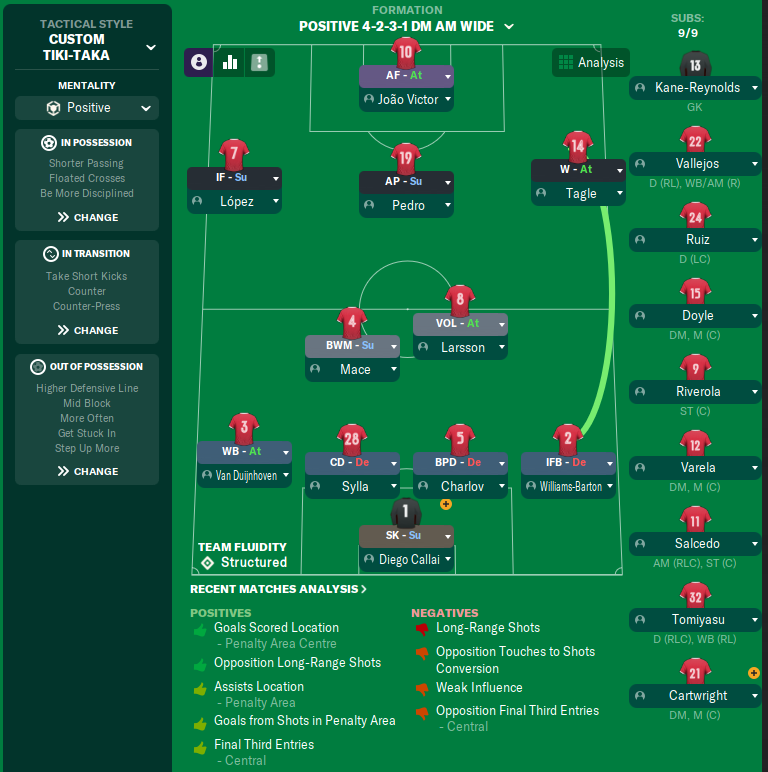
Formation & Style
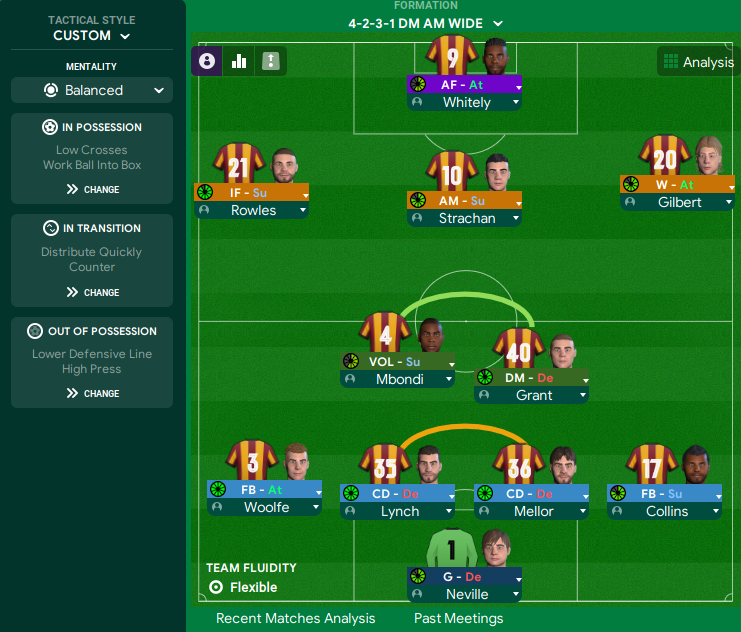
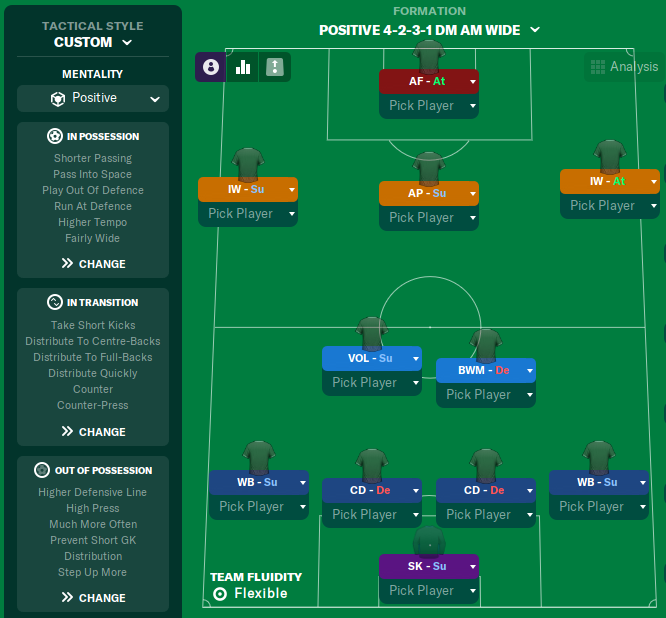
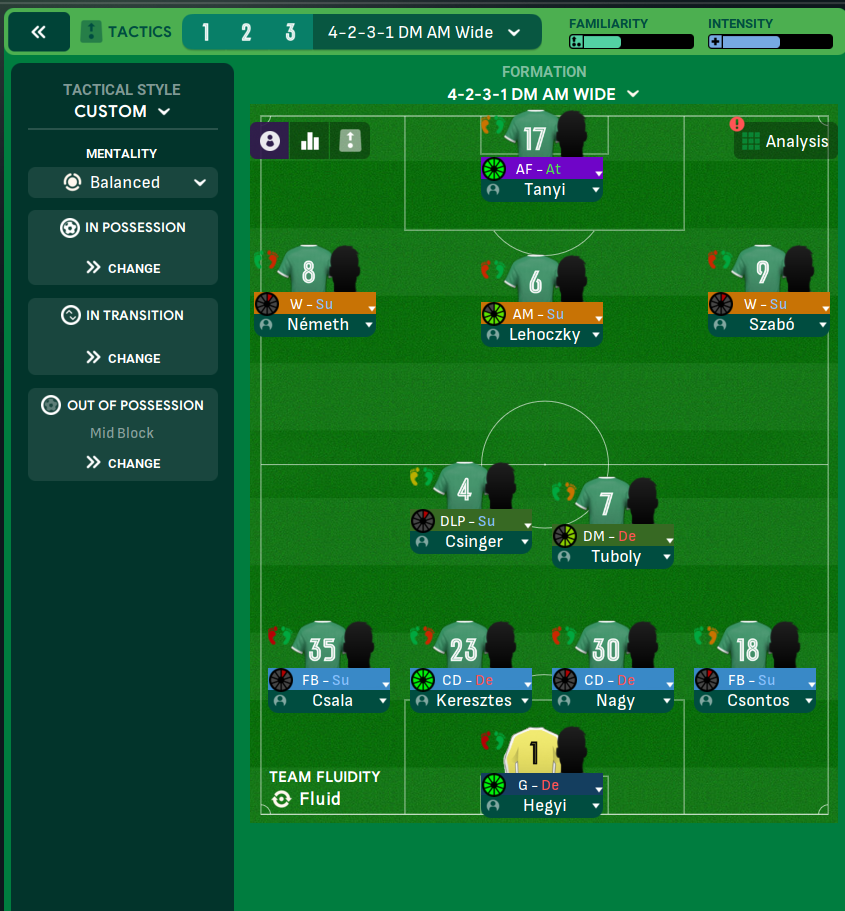
Tactical Style:Custom
Mentality:Balanced
Formation:4-2-3-1 DM Wide
Team Fluidity:Flexible
In Possession
Low Crosses
Work Ball Into Box
In Transition
Distribute Quickly
Counter
Out of Possession
Lower Defensive Line
High Press
Team Shape Without Ball
Shape:Compact
Description:The team maintains a balanced shape with a focus on pressing higher when the ball is lost, leveraging the high defensive line.
Evidence:Lower Defensive Line with High Pressing Strategy.
Team Shape With Ball
Shape:Fluid
Description:A flexible but structured approach with a focus on overlapping runs from full-backs and interchanges among the attacking midfielders.
Evidence:Utilizing FBs (Woolfe and Collins) for width with an AM and two wide players providing support.
Phase Description
Attacking Play
The team focuses on possession play, aiming for low crosses into the box while combining through the midfield.
Defensive Transition
Upon losing possession, the team is set to counter quickly, aiming to exploit the opponent's defensive gaps.
Main Focus
Creating width through full-backs and utilizing the attacking midfielders to penetrate defensive lines.
Key Strengths
Attacking Width
The formation effectively uses the width provided by the wingers and overlapping full-backs.
Midfield Control
The double pivot of DM and VOL allows for both defensive stability and attacking transitions.
Attacking Versatility
The combination of roles allows for varied attacking options, including direct through balls and low crosses.
Conflicting Directions
High Line with Counter Pressure
While the team presses high, it may leave defensive gaps if caught on the break.
Inconsistent Width When Transitioning
Relying heavily on controlled build-up may reduce width if full-backs do not join the attack quickly.
Midfield Overlap Risk
If the VOL and DM both engage in offensive play, it may leave defensive vulnerabilities.
Tactical Suggestions
Adjust Defensive Line
Consider raising the defensive line slightly to mitigate space for counter-attacks.
Utilize Full-Backs in Transition
Encourage full-backs to overlap more frequently when countering to provide width.
Introduce a Second DM
Adding a second DM could provide additional defensive cover, balancing attack and defence.
Ask Questions About Your Lineup
Related Tactics
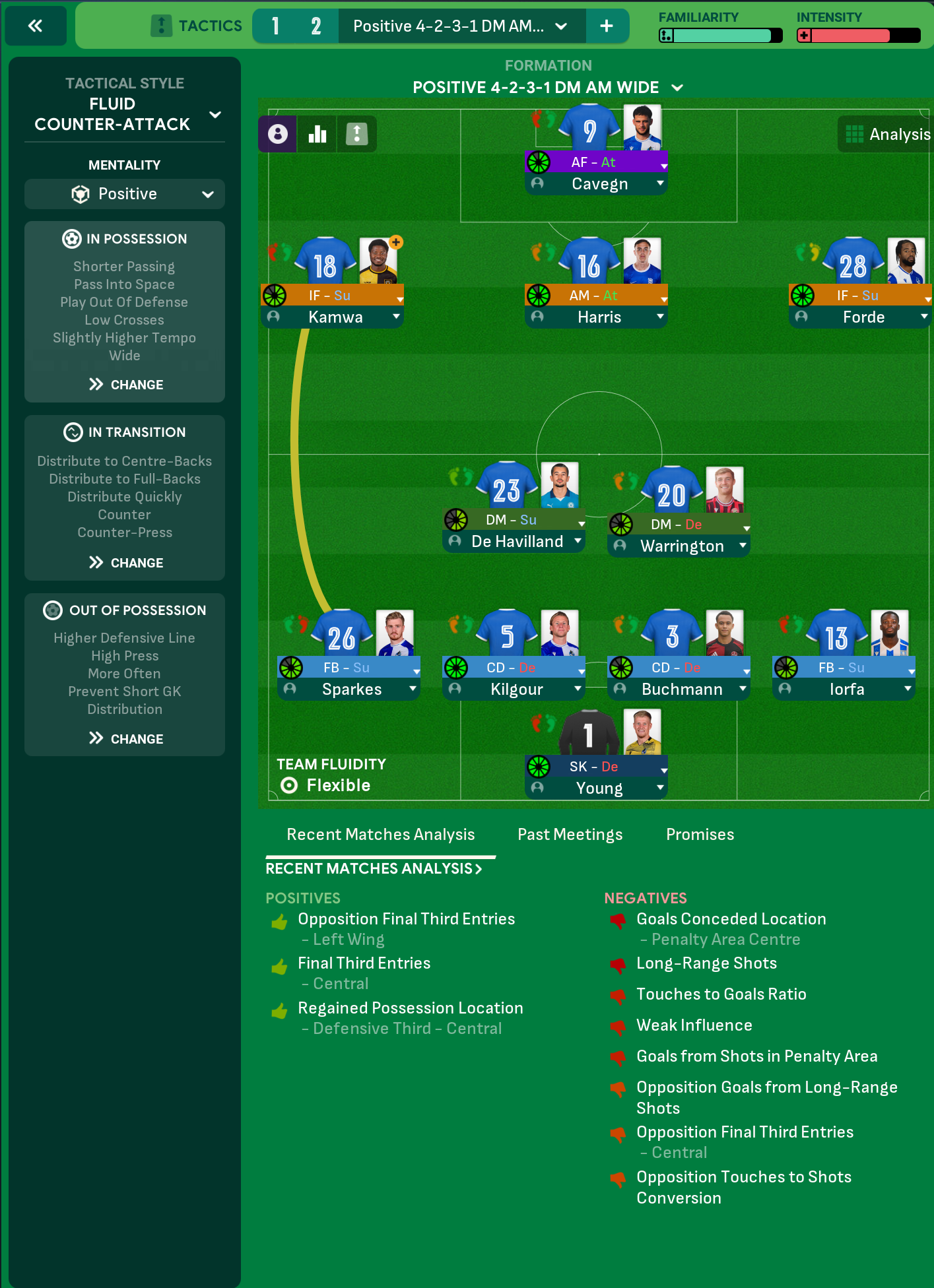
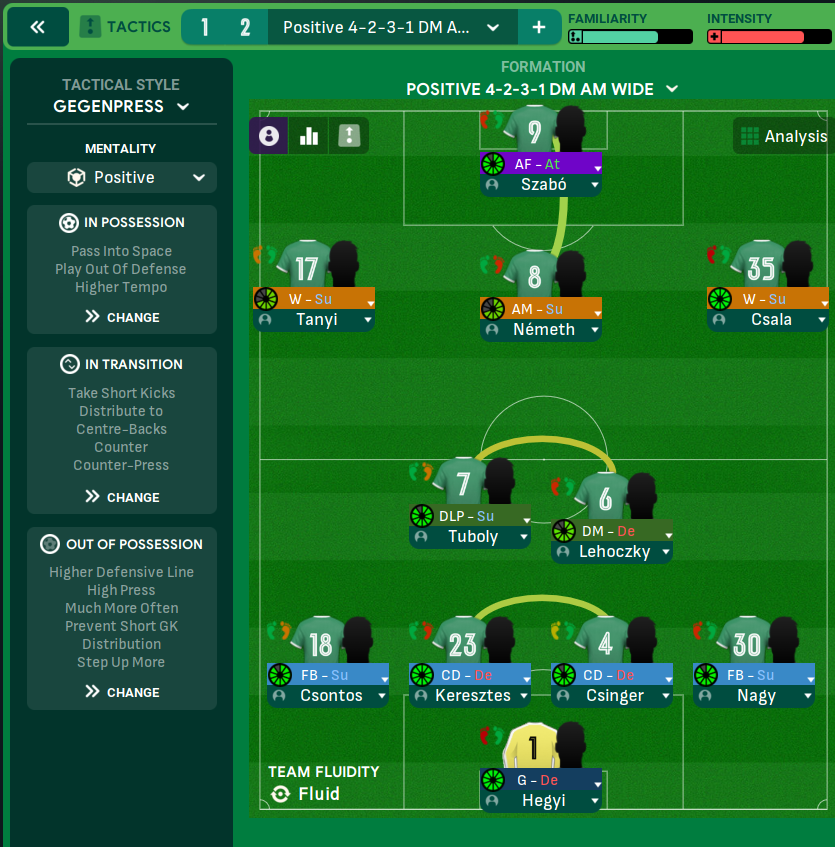
Guides for this formation
The tactical theory behind the 4-2-3-1 DM Wide: roles, instructions, and the trade-offs that decide whether the system holds up.
Player pairings
Midfield Pairs in 4-2-3-1 and 4-4-2
Double pivots and flat pairs in 4-2-3-1 and 4-4-2: when each pairing works, when it collapses, and the AMC unicorn that rescues both.
Read guide
Playing styles
Gegenpressing: A Full Guide
Klopp-style gegenpressing in FM, including squad profile, line-and-press pairing, sustainable workload, and the antipatterns to avoid.
Read guide